
Press Release Gland, Switzerland, 7 August 2025 (IUCN) – Poaching of African rhinos has decreased since 2021, but the gains have been offset by other threats such as drought and policy shifts, posing a challenge to future growth, a report from the International Union for Conservation of Nature (IUCN) and TRAFFIC finds.
The report, “African and Asian Rhinoceroses – Status, Conservation and Trade”, produced by experts from the IUCN Species Survival Commission’s African Rhino Specialist Group, Asian Rhino Specialist Group and TRAFFIC, was commissioned by the Secretariat of the Convention on International Trade in Endangered Species of Wild Fauna and Flora (CITES), ahead of CITES COP20 in November.
Population growth and poaching decrease masks losses in Africa
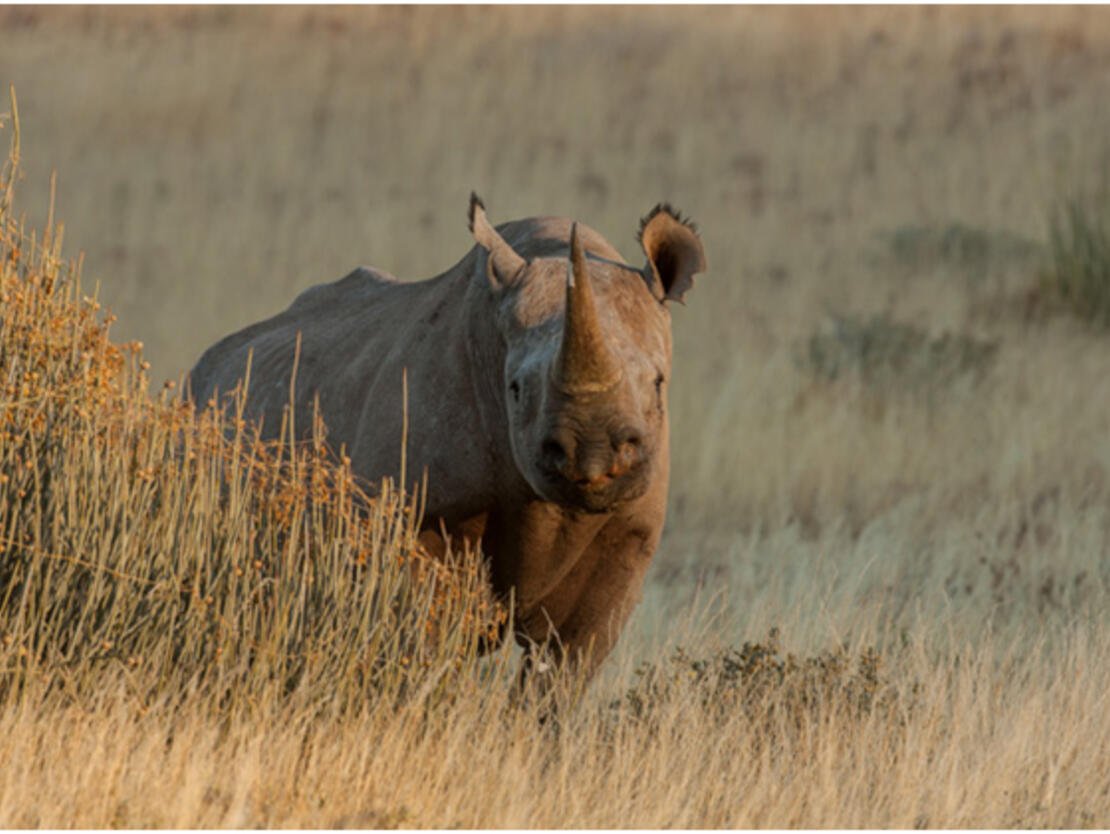
Overall, rhinos on the continent declined by 6.7% in 2024. By the end of 2024, reported estimates recorded 22,540 rhinos in Africa. This included 6,788 black rhinos (Diceros bicornis), Critically Endangered on the IUCN Red List of Threatened Species™, and 15,752 white rhinos, (Ceratotherium simum), Near Threatened. Black rhino numbers increased by 5.2% since 2023, while white rhinos declined by 11.2% over the same period.
The poaching rate[1] of African rhino species dropped to 2.15% last year, its lowest level since 2011. While encouraging, any population gains can be rapidly reversed. During the first three months of 2025, some range States experienced a surge in poaching. Chad had two black rhino cows poached, with only two males remaining in the country. South Africa reported at least 83 Southern white rhinos, and eight South-central black rhinos poached. Kruger National Park had at least 52 Southern white and five South-central black rhinos poached, and Hluhluwe-iMfolozi Park had six Southern white and two South-central black rhinos poached. Both parks are maintaining anti-poaching and dehorning schemes.
Slight increase in Asian rhinos thanks to targeted protection, but more enforcement needed
In Asia, rhino range States reported 4,159 to 4,172 rhinos living in India, Nepal and Indonesia by early 2025, higher than the range 4,124 to 4,137 reported in 2022 – an increase of 0.3%. This reflects gains made in India for greater one-horned rhinos, that helped to offset significant losses in Indonesia.
Greater one-horned rhinos (Rhinoceros unicornis), classified as Vulnerable, in India and Nepal have continued to increase since 2007, reaching 4,075 individuals by the end of March 2025, compared to 2,565. However, Asia’s Javan (Rhinoceros sondaicus) and Sumatran (Dicerorhinus sumatrensis) rhinos remain Critically Endangered, with only 50 Javan rhinos and an estimated 34-47 Sumatran rhinos surviving (total numbers falling from 280–320 in 2007). The significant loss of 26 Javan rhinos to poaching between 2019 and 2023, equal to one-third of the known population, has severely impacted the species and increased its risk of extinction. These trends highlight both the success of focused protection in India and Nepal, and the urgent need for stronger enforcement and recovery actions in Indonesia where populations of the Javan and Sumatran rhinos are highly at risk.
“Rhino conservation is proving that change is possible. While challenges do remain, successes in South Asia and parts of Africa show that intelligence-led enforcement, community engagement, and secure habitats can reverse declines. Lasting impact, however, demands sustained investment, political will, and global collaboration to disrupt trafficking and secure species’ survival. Expertise and collaboration – guided by tools like the IUCN Red List – are essential to prioritising action and saving species from extinction,” Dr Grethel Aguliar, IUCN Director General, said.
“While encouraging gains have been made in black rhino recovery, the recent decline in white rhino numbers is a stark reminder that conservation progress remains fragile. The African Rhino Specialist Group emphasises that lasting success depends not only on strong protection, but also on integrated management approaches that include and empower local people. Conservation efforts grounded in local stewardship, shared benefits, and collaborative governance are essential to secure the future of Africa’s rhinos,” said Dr Dave Balfour, Chair of the IUCN SSC African Rhino Specialist Group.
“While greater one-horned rhinos in India and Nepal have rebounded thanks to strong protection and declining poaching, Indonesia’s rhinos face a crisis. The loss of 26 Javan rhinos (2019–2023) and the absence of confirmed Sumatran rhinos in southern Sumatra highlight urgent threats. A time-bound recovery plan is critical to secure these Critically Endangered species,” said Dr Bibhab Kumar Talukdar, Chair of the Asian Rhino Specialist Group.
Conservation stopping sharp decline – but illegal trade impact still felt
Conservation efforts have been crucial in preventing worse species declines, the report finds, especially for black rhinos, though they still face a high extinction risk. Despite lower poaching rates in Africa and less horn entering the illegal market, recorded population growth was low, due to delayed impacts of past droughts, inaccuracies in previous surveys, and ongoing policy management challenges. Additionally, extensive translocations and dehorning efforts have affected rhino numbers and their distribution.
Positives in lessening poaching, according to the report, are overshadowed by the fact that the same countries are consistently impacted by the illegal trade of rhino horns. Horns continue to be the most prevalent illegal specimen seized, although seized weight and estimated number of horns continue to decline from the high noted in 2019. South Africa, which holds the largest populations of African rhinos, continues to be the Party most affected by illegal rhino horn trade. The most common illegal trade links for the Party were with Malaysia and Viet Nam, the second and third most affected Parties, respectively. This suggests that targeting law enforcement efforts among these most affected Parties might dismantle criminal networks responsible for the majority of illegal rhino horn trade.
Large gaps in horn stockpile data, and reporting on theft and destruction events, identified by the report, mean the true scale of horns sourced or being removed from the illegal market remains uncertain. Discrepancies in stockpile records and the absence of standardised monitoring further limit transparency and complicate efforts to assess the effectiveness of enforcement and deterrence measures.
Despite ongoing challenges, there are encouraging examples of successful enforcement and conservation. Approaches that integrate intelligence-led policing, community involvement, and secure habitat management have helped stabilise or even increase most rhino populations. However, lasting progress requires continued investment, strong political will, and global cooperation to combat poaching and dismantle trafficking networks. The mixed trends – positive in South Asia and parts of Eastern and Southern Africa, but negative in other regions of Southern Africa and Southeast Asia – highlight both the potential for success and the urgent need for action. Without strengthened enforcement, better trade oversight, and targeted conservation funding, the future of some rhino species remain at risk.
[1] Poaching rate is calculated by dividing the number of rhinos illegally killed in a year by the total rhino population at risk at the start of that year, then multiplying by 100 to get a percentage.