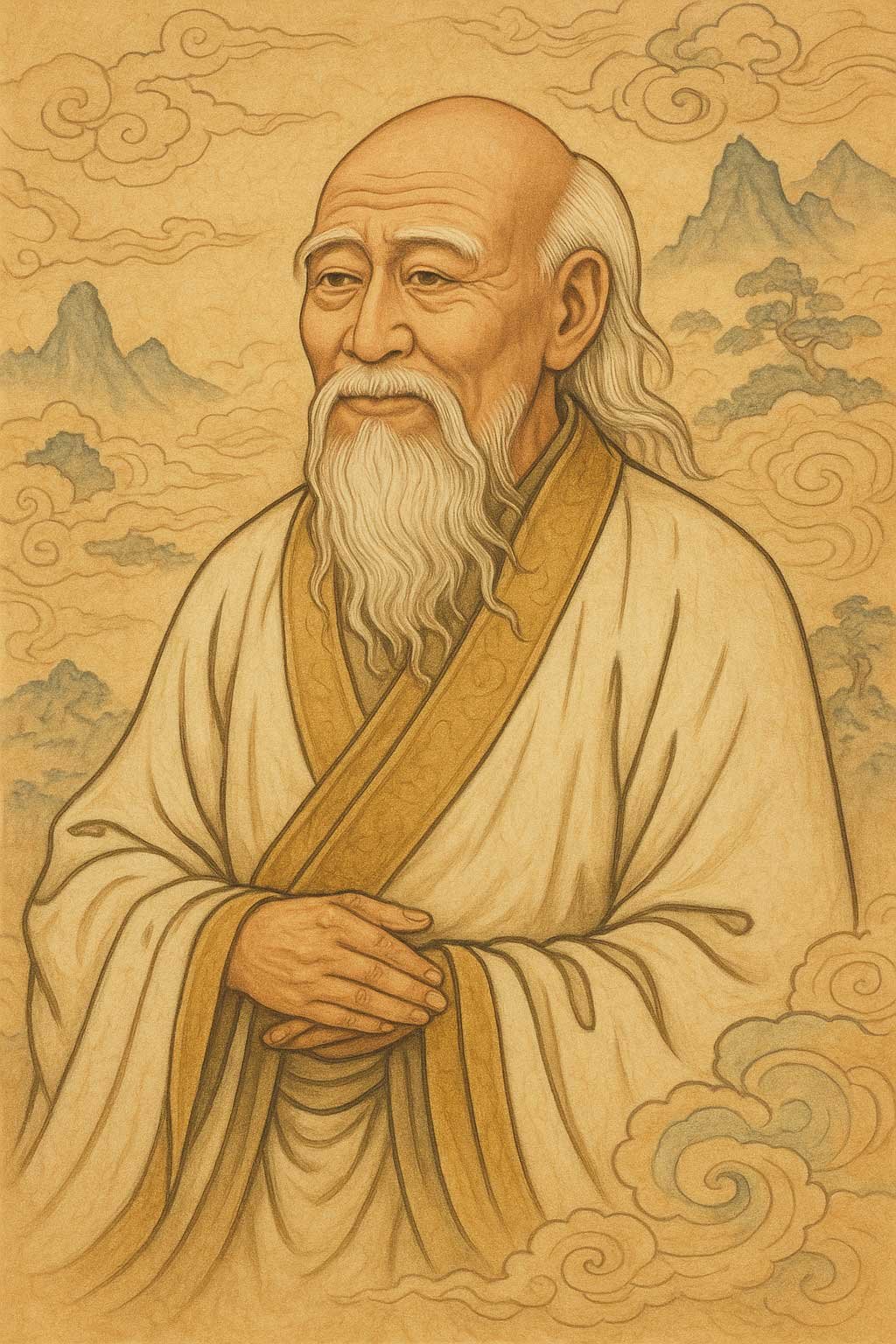

Taoism: Ancient Practice – Contemporary Relevance
Taoism, also spelled Daoism, is an ancient philosophical and religious tradition that originated in China over two millennia ago. Rooted deeply in harmony with nature, simplicity of living, and spiritual insight, Taoism has profoundly shaped Chinese culture and significantly influenced global philosophical thought. It offers practical wisdom relevant to modern challenges, encompassing ethics, spirituality, health, and ecology.
At its core, Taoism revolves around the concept of the Tao—an indefinable cosmic principle that translates literally as “The Way.” This central concept is articulated through rich metaphors and poetic imagery in foundational texts, notably the Tao Te Ching attributed to Lao Tzu, and further elaborated by influential sages such as Zhuang Zhou (Zhuangzi) and Lie Yukou (Liezi).
Historical Development of Taoism
Origins and Early History
Taoism emerged during the Eastern Zhou dynasty (770–256 BCE), especially flourishing in the philosophically vibrant Warring States Period (475–221 BCE). In this era of turmoil and political fragmentation, philosophers sought solutions beyond rigid societal structures. It was in this climate that the semi-mythical Lao Tzu (traditionally 6th century BCE) is said to have composed the Tao Te Ching, crystallizing the core philosophical tenets of Taoism.
Scholars debate Lao Tzu’s historicity, with some suggesting he was a legendary composite figure. Regardless of his historical reality, his attributed teachings profoundly shaped subsequent Taoist thought.
Foundational Texts and Their Teachings
Tao Te Ching (Dao De Jing)
The Tao Te Ching is a concise yet profoundly influential text, consisting of 81 short chapters. It emphasizes living in harmony with the Tao through principles like Wu Wei (“non-action” or “effortless action”) and embracing natural simplicity.
Consider the famous opening verse:
“The Tao that can be spoken is not the eternal Tao.
The name that can be named is not the eternal name.
The nameless is the beginning of heaven and earth.
The named is the mother of ten thousand things.”
(Tao Te Ching, Chapter 1, trans. Gia-Fu Feng and Jane English, 1972)
Historically, commentators like Wang Bi (226–249 CE), one of the greatest interpreters of the Tao Te Ching, explained that the “eternal Tao” is beyond conceptualization—thus, any attempt to describe it limits its true essence. Wang Bi emphasized the virtue of humility and quiet introspection as pathways to intuitively grasping the Tao.
In contemporary life, this verse resonates with themes of spirituality and mindfulness. Modern readers frequently interpret it as advocating silence, reflection, and openness to experiences beyond rational description, aligning closely with practices such as mindfulness meditation popular today.
Another celebrated verse illustrates Wu Wei:
“The supreme good is like water,
which nourishes all things without striving.
It flows to places men reject and so is like the Tao.”
(Tao Te Ching, Chapter 8, trans. Stephen Mitchell, 1988)
Historically, commentator Heshang Gong (2nd century CE) interpreted this passage as highlighting humility and adaptability as supreme virtues. In modern contexts, this principle translates into leadership strategies emphasizing flexibility, humility, and servant leadership styles that achieve goals without coercion or excessive force.
Zhuangzi
The philosopher Zhuang Zhou (369–286 BCE), known as Zhuangzi, expanded Taoism through imaginative parables and engaging dialogues, emphasizing relativism, spontaneity, and liberation from rigid conventions.
Consider his famous butterfly dream:
“Once I, Zhuang Zhou, dreamed I was a butterfly, fluttering here and there, content and unaware of being myself. Suddenly I awoke, and there I was, unmistakably myself again. Now I do not know whether I was a man dreaming I was a butterfly, or whether I am a butterfly dreaming that I am a man.”
(Zhuangzi, Chapter 2, trans. Burton Watson, 1968)
The historical commentator Guo Xiang (252–312 CE) saw this parable as illustrating Taoist skepticism toward fixed realities and identities. Guo Xiang argued that attachment to certainty restricts spiritual freedom, emphasizing flexibility of thought.
Today, Zhuangzi’s parable resonates with modern philosophies emphasizing psychological flexibility, openness to ambiguity, and embracing diverse perspectives—qualities increasingly valuable in navigating contemporary global complexity.
Liezi
The Liezi, attributed to Lie Yukou (circa 5th century BCE), complements Taoist teachings with vivid narratives emphasizing impermanence and detachment:
“Everything changes, everything passes, nothing remains. He who realizes this truth finds liberation.”
(Liezi, Chapter 1, trans. Eva Wong, 1995)
Historically, Liezi’s work was interpreted to mean that recognizing impermanence frees individuals from anxiety, fear, and attachments. Contemporary mindfulness therapies and psychological approaches also echo Liezi’s wisdom, using the recognition of impermanence as a method to manage stress, anxiety, and existential worry.
Principal Figures Beyond Lao Tzu
Beyond Lao Tzu, Taoism was significantly shaped by several historical figures:
- Zhuang Zhou advanced Taoist philosophy through accessible storytelling, advocating spontaneity and freedom from artificial constraints.
- Zhang Daoling (34–156 CE) formalized religious Taoism through the Celestial Masters movement, structuring rituals, morality codes, and communal practices.
- Ge Hong (283–343 CE) authored the Baopuzi, integrating alchemy, herbal medicine, and longevity techniques, significantly influencing Taoist medical traditions.
- Wang Chongyang (1113–1170 CE) established Quanzhen Taoism, emphasizing internal alchemy and spiritual asceticism, combining Confucian ethics, Buddhist meditation techniques, and Taoist principles.
Philosophical Components of Taoism
The Tao (Dao)
The Tao is the cosmic principle underpinning all existence, eternally present yet fundamentally ineffable. It represents unity, underlying interconnectedness, and inherent harmony in nature.
Wu Wei (Non-action)
Central to Taoism, Wu Wei advocates natural action aligned effortlessly with life’s inherent rhythms. It advises avoiding forceful intervention, as captured poetically by Lao Tzu:
“Practice non-doing, and everything will fall into place.”
(Tao Te Ching, Chapter 3, trans. Stephen Mitchell, 1988)
Yin and Yang
Yin and Yang symbolize complementary dualities such as dark/light, feminine/masculine, passive/active. Harmony arises from balancing these forces, central to Taoist cosmology.
Qi (Vital Energy)
Taoism views Qi as life’s fundamental energy, vital for physical health and spiritual vitality. Cultivation practices like Qigong, meditation, and dietary discipline optimize Qi flow, central to traditional Chinese medicine.
Deities and Religious Practices
Religious Taoism developed a vast pantheon and ritual traditions, prominently including:
- The Three Pure Ones (Sanqing): highest Taoist gods embodying purity and cosmic principles.
- The Jade Emperor: ruler of heavenly realms, overseeing earthly affairs.
- Queen Mother of the West (Xiwangmu): goddess representing immortality and longevity.
Taoist temples host rituals, ancestor veneration, and festivals such as the Lantern Festival, deeply embedding spirituality within community life.
Taoist Art and Symbolism
Taoist philosophy profoundly influenced visual arts. Landscapes depict harmony, minimalism, and contemplation. Calligraphy embodies simplicity, emptiness, and flow. Symbols such as Taijitu (Yin-Yang) and Bagua diagrams visually articulate cosmological principles.
Contemporary Taoism: Ancient Wisdom for Modern Challenges
In recent decades, Taoism has experienced a global renaissance, transforming from a tradition primarily associated with East Asian cultures into a significant philosophical, spiritual, and practical influence worldwide. The resurgence of interest in Taoist ideas reflects a broader quest within contemporary society for authentic spiritual practices, holistic wellness, ecological sustainability, and wisdom that promotes balanced living. Taoism’s adaptability, simplicity, and ecological consciousness uniquely position it to address modern challenges, inspiring cultural trends, environmental ethics, psychological approaches, leadership philosophies, and health practices.
Cultural Influence
Taoism’s cultural imprint extends far beyond its historical roots, permeating global literature, cinema, popular culture, and spiritual discourse. Perhaps the most celebrated example of Taoism’s contemporary cultural influence is Benjamin Hoff’s classic book, The Tao of Pooh (1982). Hoff introduces fundamental Taoist concepts through the character Winnie the Pooh, demonstrating how Taoist simplicity, contentment, and acceptance resonate profoundly with modern audiences. Hoff’s engaging interpretation illustrates principles like Wu Wei (effortless action), simplicity, and living harmoniously with nature, making Taoism accessible and relevant to everyday life.
Similarly, works like The Te of Piglet (Hoff, 1992) further explore Taoist themes, emphasizing humility, compassion, and interconnectedness. These books exemplify how Taoist thought is effectively re-contextualized, bridging ancient philosophy with contemporary concerns such as stress management, materialism, and ethical living.
Film and television have also widely embraced Taoist motifs. Movies such as Star Wars contain unmistakable Taoist influences, with concepts like “the Force” echoing Taoist understandings of Qi—the universal energy permeating all life. Directors and screenwriters frequently draw from Taoist archetypes and narratives, emphasizing balance, mindfulness, and inner peace to frame modern storytelling in a way that resonates universally.
In contemporary spirituality, Taoism offers an attractive alternative or complement to more structured religious paths. Its emphasis on individual spiritual freedom, personal experience, and intuitive understanding appeals strongly to those seeking authenticity and inner wisdom beyond institutionalized religion. This open-ended spiritual dimension of Taoism aligns seamlessly with contemporary pluralistic and individualized spiritual practices.
Environmentalism
Taoism’s inherent reverence for nature and its emphasis on harmony with the natural world align profoundly with modern environmental consciousness and ecological activism. At its core, Taoist philosophy teaches the interconnectedness of all life forms, advocating respectful coexistence rather than domination or exploitation of the environment.
Lao Tzu’s verses frequently emphasize this ecological wisdom:
“Man follows the earth,
Earth follows heaven,
Heaven follows the Tao,
Tao follows what is natural.”
(Tao Te Ching, Chapter 25, trans. Gia-Fu Feng and Jane English, 1972)
Contemporary Taoists and ecological advocates cite such verses to underline the urgency of adopting a harmonious relationship with nature, promoting ecological sustainability, and addressing global environmental crises. For instance, Taoist organizations across China and Taiwan have actively engaged in conservation efforts, reforestation projects, sustainable agriculture, and environmental education campaigns. Internationally, Taoist principles inform eco-spiritual movements, encouraging sustainable lifestyles characterized by simplicity, minimalism, and respect for ecological boundaries.
Moreover, Taoism inspires ecological ethics within environmental organizations advocating holistic stewardship, renewable energy, and climate responsibility. It articulates a vision of humanity as caretakers rather than conquerors of nature, providing an ethical and philosophical foundation for global environmental movements.
Philosophy and Health
Taoist philosophy profoundly influences contemporary approaches to mental, emotional, physical, and spiritual well-being. Its central principles—balance, simplicity, mindfulness, and harmonious living—align effectively with contemporary psychological therapies, holistic health practices, leadership philosophies, and personal growth strategies.
Psychological and Emotional Health
Taoist-inspired mindfulness practices have been integrated into modern psychological therapies, notably mindfulness-based stress reduction (MBSR) and cognitive-behavioral therapies (CBT). These approaches draw upon Taoism’s emphasis on present-moment awareness, non-attachment, acceptance of impermanence, and compassionate detachment from negative emotions.
For example, Lao Tzu’s counsel:
“If you are depressed, you are living in the past.
If you are anxious, you are living in the future.
If you are at peace, you are living in the present.”
(Popular interpretation, often attributed to Lao Tzu)
This advice encapsulates the Taoist psychological perspective, now foundational within therapeutic practices aimed at treating anxiety, depression, and stress. Therapists use these insights to guide patients towards emotional resilience, grounded presence, and inner calm.
Holistic Health and Wellness Practices
Taoism’s influence on physical wellness is particularly notable in traditional health practices such as Tai Chi, Qigong, and Traditional Chinese Medicine (TCM). These practices center around cultivating Qi (vital energy), harmonizing Yin and Yang, and achieving balance within the body-mind-spirit continuum. Contemporary research extensively documents their benefits, including enhanced cardiovascular health, stress reduction, improved immunity, increased flexibility, and greater psychological well-being.
Tai Chi, specifically, exemplifies Taoism’s contemporary health application. This gentle martial art combines movement, meditation, and breathing exercises, embodying the Taoist ideal of effortless action (Wu Wei). Its growing popularity worldwide, reflected in extensive medical research and widespread community classes, underscores the relevance and practicality of Taoist health principles today.
Similarly, dietary approaches based on Taoist wisdom emphasize balance, moderation, natural foods, and mindful eating. These ancient guidelines closely mirror contemporary dietary recommendations aimed at preventing chronic illnesses, promoting longevity, and enhancing overall well-being.
Leadership and Management Philosophies
Taoism has profoundly impacted modern theories of leadership and organizational management, particularly through the concept of Wu Wei. Contemporary leadership models, such as “servant leadership” and “transformational leadership,” embrace Taoist principles, emphasizing humility, adaptability, empathy, and collaboration rather than authoritarian control.
Consider Lao Tzu’s timeless advice to leaders:
“The best leaders are those the people hardly know exist.
When their work is done, their task fulfilled,
the people will say, ‘We did this ourselves.’”
(Tao Te Ching, Chapter 17, trans. Stephen Mitchell, 1988)
Modern business schools, leadership seminars, and organizational training programs frequently reference Taoist wisdom, advocating leadership styles that inspire self-motivation, autonomy, innovation, and harmonious team dynamics. This approach fosters environments that are flexible, adaptive, and resilient—qualities particularly valuable amid rapidly evolving global marketplaces and organizational change.
Personal Development and Life Guidance
Lastly, Taoism offers profound personal guidance in navigating contemporary complexities. Its teachings encourage authenticity, simplicity, humility, and inner harmony—qualities increasingly sought in modern self-improvement literature, personal coaching, and spiritual growth workshops.
Books such as Wayne Dyer’s Change Your Thoughts—Change Your Life: Living the Wisdom of the Tao (2007) explicitly apply Taoist teachings to contemporary life, illustrating how ancient verses provide practical guidance on relationships, career decisions, emotional management, and achieving personal fulfillment. Taoist insights thus become powerful tools for personal transformation, encouraging individuals to live authentically and meaningfully in a world often dominated by superficiality, competition, and stress.
Conclusion: Taoism’s Enduring Contemporary Relevance
Taoism’s contemporary influence demonstrates its timeless relevance. Its adaptable wisdom continues to address global concerns about ecological sustainability, emotional health, effective leadership, personal well-being, and meaningful living. Whether through literature, environmental activism, holistic health practices, or organizational leadership, Taoism remains deeply relevant, continually offering ancient wisdom to guide modern humanity toward greater balance, harmony, and fulfillment.
References (Selected)
Wong, Eva, trans. Liezi. Boston: Shambhala, 1995.
Feng, Gia-Fu, and Jane English, trans. Tao Te Ching. New York: Vintage, 1972.
Hoff, Benjamin. The Tao of Pooh. New York: Penguin Books, 1982.
Hoff, Benjamin. The Te of Piglet. New York: Penguin Books, 1992.
Dyer, Wayne W. Change Your Thoughts—Change Your Life: Living the Wisdom of the Tao. Carlsbad, CA: Hay House, 2007.
Mitchell, Stephen, trans. Tao Te Ching. New York: Harper Perennial, 1988.
Feng, Gia-Fu, and Jane English, trans. Tao Te Ching. New York: Vintage, 1972.
Palmer, Martin. The Book of Chuang Tzu. London: Penguin Classics, 2006.
Watts, Alan. Tao: The Watercourse Way. New York: Pantheon Books, 1975.
Watson, Burton, trans. The Complete Works of Zhuangzi. Columbia University Press, 1968.