

1. Historical Baseline
Pre-1750 Wilderness Extent
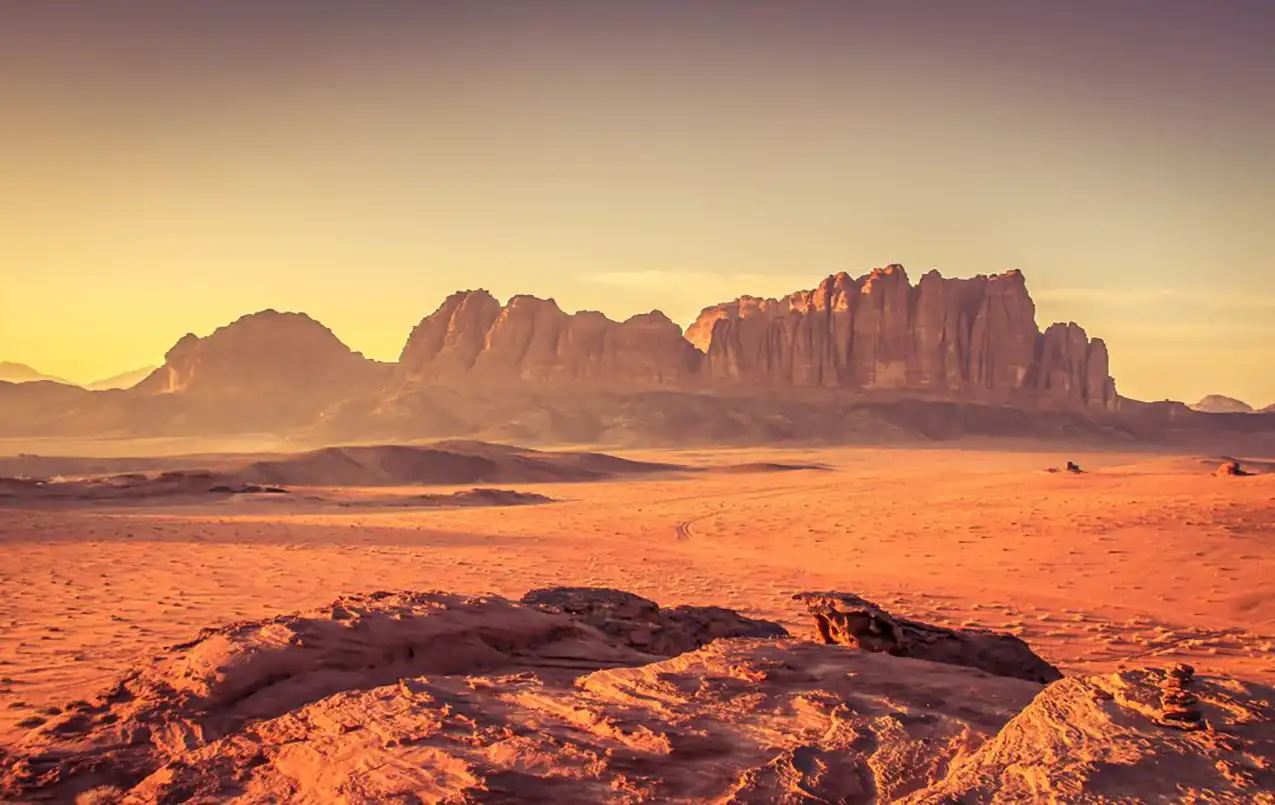
The Arabian oryx paused at the crest of a sand dune, its white coat reflecting the scorching sun that would kill most mammals within hours. In 1750, these ghost-like antelope numbered in the hundreds of thousands, moving across 2 million square kilometers of Arabian desert in herds that understood water sources forgotten by humans for centuries.¹ This was the Middle East’s wilderness—not the verdant forests of other continents, but landscapes of extreme beauty shaped by scarcity, where life persisted through ingenious adaptation.
The Middle East’s 6 million square kilometers encompassed deserts covering 80% of the region, but also contained surprising diversity: the Fertile Crescent’s oak-pistachio forests, Lebanon’s cedar groves reaching 40 meters skyward, Iran’s Caspian forests harboring tigers and leopards, and Yemen’s Socotra Island—the “Galápagos of the Indian Ocean”—where dragon’s blood trees created alien landscapes found nowhere else on Earth.² The region’s wilderness wasn’t pristine but shaped by 10,000 years of human presence, creating a cultural landscape where Bedouin knowledge, seasonal grazing, and desert-adapted agriculture enhanced rather than diminished ecological resilience.
Water shaped everything. The Tigris and Euphrates rivers created Mesopotamia’s vast wetlands—500,000 hectares of reed beds supporting millions of birds migrating between Africa and Asia.³ The Jordan River flowed year-round to the Dead Sea, itself 50 meters higher than today. Hidden springs, known only to desert peoples, supported palm oases that served as stepping stones for wildlife across seemingly barren expanses. The Arabian Gulf’s coral reefs stretched unbroken for 2,000 kilometers, while mangrove forests lined 40% of the region’s coastline.⁴
The region supported remarkable megafauna. Arabian leopards hunted ibex in mountain refugia from Oman to Israel. Asiatic lions prowled from Turkey to India. Asiatic cheetahs pursued gazelles across Iranian plateaus. Syrian brown bears foraged in Levantine forests. The now-extinct Saudi gazelle formed herds of thousands. Dugongs grazed seagrass meadows in numbers that turned bays dark with their bodies.⁵
Benchmark Periods
By 1850, traditional management systems still maintained ecological balance despite millennia of use. The hema system—tribal protected areas covering 3% of the Arabian Peninsula—preserved grazing reserves and wildlife refugia.⁶ Persian qanats, underground channels some 3,000 years old, transported water dozens of kilometers without evaporation, supporting agriculture while maintaining groundwater levels. The Marsh Arabs of Iraq managed reed beds through seasonal burning and buffalo grazing, creating habitat mosaics supporting 200 bird species.⁷
The discovery of oil in 1908 began the transformation. By 1950, petroleum extraction initiated ecosystem disruption at unprecedented scales. Groundwater pumping for wheat cultivation in Saudi Arabia dropped water tables 100 meters. The Aral Sea, technically Central Asian but part of the greater Middle Eastern arid zone, began its death spiral through irrigation diversion. Urban expansion consumed coastal habitat at accelerating rates.⁸
The period 1950-1990 brought ecological collapse masked by oil wealth. Israel’s Hula wetlands, drained for agriculture, eliminated 119 square kilometers of habitat. Iraq’s southern marshes, reduced by 90% through upstream damming and deliberate draining, scattered the Ma’dan people who had inhabited them for 5,000 years. The Arabian oryx was hunted to wild extinction by 1972—the last individuals shot by hunters in motorized vehicles with automatic weapons.⁹ The Persian Gulf’s coral reefs, stressed by oil spills and coastal development, began bleaching events that would accelerate into mass mortality.
2. Current Status Analysis
Quantitative Metrics
The Middle East retains only 4% wilderness by global standards—the lowest of any region.¹⁰ Protected areas cover just 5% of terrestrial area and 2% of marine waters, far below global averages. Saudi Arabia, despite comprising 2 million square kilometers, protects only 4.3%. Iran protects 7.1%, Israel 18%, but most exists as “paper parks” with minimal actual protection.¹¹
The Wilderness Quality Index reveals systematic degradation:
- Species intactness: 2/10 (apex predators eliminated, prey species depleted)
- Ecological processes: 2/10 (hydrology completely altered, fire suppression)
- Human footprint: 1/10 (highest population density in arid lands globally)
- Connectivity: 1/10 (extreme fragmentation, border walls, military zones)
- Pollution levels: 2/10 (oil contamination, pesticides, plastic waste)
Water scarcity defines all conservation efforts. The region uses 75% of renewable water resources compared to a global average of 8%.¹² Twelve of 17 countries face “extremely high” water stress. The Dead Sea drops 1 meter annually. The Jordan River delivers only 2% of its historical flow. Groundwater depletion accelerates—Saudi Arabia exhausted 80% of fossil aquifers that took 20,000 years to accumulate.¹³
Yet surprising wilderness persists in overlooked corners. Oman’s Empty Quarter maintains 650,000 square kilometers of functioning desert ecosystem. Iran’s Dasht-e Kavir and Dasht-e Lut deserts remain largely intact across 350,000 square kilometers. The Farasan Islands in the Red Sea support pristine coral reefs and seagrass beds. Lebanon’s Al-Shouf Cedar Reserve protects 25% of remaining Lebanese cedar forests.¹⁴
Qualitative Assessment
Desert ecosystems demonstrate remarkable resilience when given minimal protection. The Arabian Oryx Sanctuary in Oman, established in 1994, saw oryx populations increase from 450 to 1,200 before poaching resurged.¹⁵ Where grazing pressure lifts, desert vegetation recovers within 3-5 years despite receiving less than 100mm annual rainfall. Fog-harvesting plants in Dhofar’s mountains maintain cloud forest ecosystems unique on the Arabian Peninsula.
Marine systems show particular stress. The Arabian Gulf, the world’s hottest sea with summer temperatures exceeding 35°C, pushes coral reefs beyond survival limits.¹⁶ Yet these corals, adapted to extreme conditions, offer hope for understanding climate resilience. Red Sea coral reefs, benefiting from deep-water upwelling, maintain 90% live coral coverage in northern reaches—among the highest globally. Mangroves, reduced by 70% regionally, show rapid recovery where restored, growing 2 meters annually in suitable conditions.¹⁷
Traditional ecological knowledge persists despite modernization. Bedouin tribes retain understanding of desert ecology accumulated over millennia—knowing which plants indicate shallow groundwater, reading wildlife signs invisible to others, predicting rainfall from subtle atmospheric changes. The Marsh Arabs, returning after Saddam’s fall, restored 58% of Iraqi marshlands through traditional management within a decade.¹⁸
Urban expansion creates novel conservation challenges and opportunities. Dubai’s rapid growth eliminated 70% of coastal habitat but created accidental refugia in protected zones around infrastructure. Cairo’s Wadi Degla, surrounded by 20 million people, protects 60 square kilometers of Eastern Desert ecosystem. Tel Aviv’s Yarkon River, ecologically dead in the 1990s, now supports 13 fish species through restoration.¹⁹
Sacred sites preserve critical habitat. Jordan’s Dana Biosphere Reserve, protecting biblical landscapes, maintains the country’s highest biodiversity. Saudi Arabia’s Prophet’s Mosque sanctuary in Medina inadvertently protected urban biodiversity for 1,400 years. Iran’s sacred groves, associated with Zoroastrian and Islamic traditions, preserve forest fragments in otherwise denuded landscapes.²⁰
3. Biodiversity Inventory
Species Status
The Middle East supports approximately 950 vertebrate species: 140 mammals, 550 birds, 260 reptiles and amphibians.²¹ Plant diversity includes 13,000 species with 20% endemism concentrated in mountain refugia and islands. The region serves as crucial flyway for 500 million birds migrating between Eurasia and Africa.
IUCN Red List summary for the Middle East:
- Critically Endangered: 95 species (including Arabian leopard, hawksbill turtle)
- Endangered: 178 species (Persian leopard, Socotra cormorant)
- Vulnerable: 267 species (Arabian gazelle, Egyptian vulture)
- Near Threatened: 312 species (showing rapid declines)
Flagship species indicate ecosystem collapse. Arabian leopards survive in three populations totaling fewer than 200 individuals.²² The Persian leopard, numbering under 1,000, faces imminent extinction from habitat loss and retaliatory killing. Asiatic cheetahs persist only in Iran—fewer than 50 individuals representing the species’ last Asian population. The Arabian oryx, recovered to 6,000 through captive breeding, faces renewed threats from poaching and drought.²³
Marine megafauna show precipitous declines. Dugongs, once numbering thousands in the Arabian Gulf, survive in populations under 700. Sea turtles face 90% nesting beach loss to development. Whale sharks, aggregating in the Arabian Gulf in hundreds, now appear in dozens. The Mediterranean monk seal, extinct from the Levantine coast, represents regional marine mammal extirpation.²⁴
Endemic species face exceptional risk. Socotra Island harbors 700 endemic species—37% of its flora found nowhere else. The Dead Sea’s unique microbial communities, adapted to extreme salinity, face extinction as water levels drop. Yemen’s Arabian Peninsula coastal fog desert supports 50 endemic plants adapted to moisture from mist rather than rain.²⁵
Genetic Diversity
Isolation creates exceptional genetic differentiation. Arabian Peninsula populations of widespread species show distinct evolutionary trajectories from African or Asian relatives. Nubian ibex in Israel, separated from Egyptian populations for 18,000 years, evolved unique adaptations to Negev conditions. Persian onagers, reduced to 600 individuals, lost 70% of genetic diversity through bottlenecks.²⁶
Crop wild relatives in the Fertile Crescent represent irreplaceable genetic resources. Wild wheat, barley, and lentil progenitors contain traits for drought tolerance worth billions for global agriculture. Each habitat fragment lost potentially eliminates crop varieties crucial for feeding humanity under climate change.²⁷
Traditional livestock breeds, adapted to extreme conditions over millennia, face replacement by commercial varieties. The Damascus goat, Awassi sheep, and Arabian horse contain genetic adaptations for surviving on minimal water and poor forage. Their loss would eliminate genetic resources impossible to recreate.²⁸
4. Climate Change Impacts
Current Observed Changes
The Middle East warms 50% faster than the global average, with temperatures increasing 1.5°C since 1970.²⁹ Summer temperatures regularly exceed 50°C in Iraq, Iran, and Kuwait—approaching human survivability limits. The region experienced its longest drought in 900 years from 1998-2012, contributing to Syrian civil war through agricultural collapse and mass migration.³⁰
Precipitation declined 20% since 1950 with increasing variability. Jerusalem receives 25% less rainfall than a century ago. Cyclones, historically unknown in the Arabian Sea, now occur annually—Cyclone Shaheen killed 13 in Oman in 2021. Flash floods alternate with severe droughts, overwhelming traditional water management.³¹
Dust storms increased 300% in frequency since 2000. The Shamal winds, carrying millions of tons of dust, reduce visibility to meters and cause respiratory disease epidemics. Iraq experiences 300 dust days annually compared to 100 in the 1950s. These storms transport soil from degraded lands, accelerating desertification.³²
Marine systems show acute stress. Arabian Gulf temperatures reached 37.6°C in 2020, triggering coral bleaching across 95% of reefs. The Red Sea warms at 0.45°C per decade—faster than any tropical ocean. Fish populations shift northward at 45 kilometers per decade, disrupting traditional fisheries.³³
Projected Impacts (2050/2100)
Temperature increases of 4-6°C by 2100 will render large areas uninhabitable.³⁴ Summer temperatures exceeding 54°C will become routine in urban areas. The Persian Gulf region will experience “wet-bulb” temperatures exceeding human survival limits for 30 days annually by 2070. Nighttime temperatures remaining above 30°C will prevent cooling, causing mass mortality.
Precipitation will decrease 30% by 2050, with 50% reduction possible by 2100. The eastern Mediterranean faces transformation to hyper-arid climate. Permanent drought conditions will eliminate rain-fed agriculture. Snowpack in Turkey’s mountains, providing 60% of regional water, will disappear.³⁵
Sea level rise of 0.5-1.5 meters will inundate 24,000 square kilometers of coastline. Alexandria, Basra, and Dubai face partial submersion. Salt intrusion will contaminate coastal aquifers supporting 50 million people. Mangroves, unable to migrate inland due to development, will disappear through “coastal squeeze.”³⁶
Species face impossible adaptation requirements. Desert species already near thermal limits cannot evolve greater heat tolerance quickly enough. Mountain species will run out of elevation by 2070. Marine species shifting northward encounter barriers at the Suez Canal and Strait of Hormuz.³⁷
5. Threat Analysis & Prognosis
Primary Threats Ranked
- Water depletion: Aquifers exhausted within 25 years at current extraction
- Climate change: 4°C warming making regions uninhabitable
- Population growth: 700 million by 2050, doubling water demand
- Oil economy: Continued extraction preventing renewable transition
- Armed conflict: Wars destroying habitat, preventing conservation
- Overgrazing: 200 million livestock degrading rangelands
- Coastal development: 90% of coastline modified by 2030
- Overfishing: 85% of stocks beyond sustainable limits
Agricultural expansion into marginal lands accelerates desertification. Saudi Arabia’s wheat program, consuming 300 billion cubic meters of fossil water, created temporary green circles in the desert now reverting to sand.³⁸ Iran’s pistachio cultivation dropped groundwater 50 meters, creating sinkholes swallowing villages. Israel’s drip irrigation, while efficient, enables cultivation in areas that should remain wild.
Prognosis Scenarios
Business-as-usual leads to ecological and societal collapse by 2050. Water depletion will trigger mass migration of 200 million people. Agricultural failure will cause famine and conflict. Ecosystem services loss will cost $500 billion annually. Large areas will become uninhabitable, creating permanent refugee populations.³⁹
Current conservation trajectory achieves minimal protection but fails to address systemic threats. Protected areas reach 10% coverage but remain isolated fragments. Flagship species avoid extinction through captive breeding but lose ecological function. Traditional knowledge disappears with urbanization. Marine ecosystems collapse from combined stressors.
The optimistic scenario requires regional cooperation transcending political divisions: shared water management, renewable energy transition, and ecosystem restoration at scale. This could preserve 10% functional wilderness while adapting to climate change, but requires unprecedented cooperation by 2030.
Critical thresholds approach irreversibility. The Dead Sea could disappear by 2050. Arabian Gulf coral reefs face complete mortality with 2°C warming. Groundwater depletion passes points of no return. Each year of delay reduces options and increases restoration costs exponentially.⁴⁰
6. Conservation Successes
What’s Working
The Arabian Oryx resurrection demonstrates that even extreme conservation challenges can succeed with sufficient commitment. From wild extinction in 1972, captive breeding in Phoenix Zoo and Saudi Wildlife Authority produced 12,000 individuals by 2023.⁴¹ Reintroduction programs in Saudi Arabia, Oman, UAE, and Jordan established 15 free-ranging populations. The species’ downlisting from Extinct in the Wild to Vulnerable represents conservation’s greatest recovery from complete wild extinction.
Jordan’s Royal Society for Conservation of Nature manages 10% of the country through innovative approaches. The Dana Biosphere Reserve generates $3 million annually through ecotourism, supporting 100 local families.⁴² Community-based conservation in Ajloun Forest Reserve reversed deforestation through economic incentives. The Eastern Desert reserves protect 80% of Jordan’s remaining wilderness despite severe water limitations.
Israel’s restoration programs demonstrate possibility despite extreme density. The Hula Valley, partially reflooded after drainage proved disastrous, now supports 500 million migrating birds annually—Europe’s premier birdwatching destination generating $30 million in tourism.⁴³ The Israeli Wildlife Hospital treats 5,000 animals annually, successfully returning 60% to wild. Eilat’s coral reefs, protected since 1966, maintain higher diversity than the Great Barrier Reef per unit area.
Iran’s protected area system, despite sanctions and isolation, covers 11% of the country through 30 national parks and 170 protected areas.⁴⁴ Golestan National Park maintains viable Persian leopard populations through community engagement. Lake Urmia restoration, after losing 90% of volume, shows recovery through water allocation reforms. The Asiatic cheetah program, though facing immense challenges, prevented extinction through dedicated Iranian conservationists.
Regional cooperation transcends political tensions through environmental necessity. The Red Sea Marine Peace Park, proposed between Israel and Jordan, would protect coral reefs crucial to both nations.⁴⁵ Migratory bird programs coordinate between hostile nations recognizing that wildlife ignores borders. Water-sharing agreements, while contentious, demonstrate that environmental cooperation can proceed despite conflict.
Innovation Highlights
Solar-powered desalination offers water security without fossil fuels. Israel produces 55% of domestic water through desalination, enabling aquifer recovery.⁴⁶ Saudi Arabia’s NEOM project, despite controversy, includes 95% wilderness protection across 26,500 square kilometers. The UAE’s mangrove restoration, planting 100 million trees by 2030, demonstrates large-scale habitat creation feasibility.
Traditional practice revival enhances conservation. Jordan revives the hima system, protecting 4% of rangelands through tribal management.⁴⁷ Oman’s aflaj water channels, maintained for 2,000 years, provide sustainable irrigation models. Iran’s qanat restoration prevents aquifer depletion while preserving cultural heritage. Yemen’s terraced agriculture, despite conflict, maintains mountain ecosystems through ancient techniques.
Technology enables conservation in challenging conditions. Satellite monitoring detects illegal hunting in real-time across vast deserts. Camera traps confirm species thought extinct—Persian leopards in Turkey, sand cats in UAE, striped hyenas in Israel.⁴⁸ Environmental DNA sampling reveals biodiversity in areas too dangerous for direct survey. Drone surveillance protects Saudi Arabia’s remote reserves with minimal human presence.
Marine conservation shows particular promise. The Red Sea Development Project protects 75% of islands and lagoons while developing sustainable tourism.⁴⁹ Kuwait’s coral restoration uses 3D-printed reef structures achieving 60% coral survival. Abu Dhabi’s dugong monitoring program doubled known populations through systematic survey. Qatar’s whale shark satellite tagging revealed previously unknown aggregation sites requiring protection.
7. Priority Actions Matrix
Immediate (1-2 years)
Emergency water conservation preventing aquifer collapse through extraction limits and efficiency mandates. Protection of remaining wilderness cores—Rub’ al Khali, Dasht-e Lut, Negev highlands—through formal designation. Transboundary cooperation for migratory species regardless of political tensions. Marine protected area establishment in biodiversity hotspots before complete ecosystem collapse. Critical habitat purchase for species under 500 individuals.
Hunting moratoriums on all threatened species with enforcement through technology and community engagement. Grazing reduction in protected areas through compensation programs. Coastal development freezes preventing further habitat loss. Pollution control in watersheds supplying remaining wetlands. Fire management in remnant forests using traditional practices.
Short-term (3-5 years)
Regional water-sharing framework transcending national boundaries through environmental necessity. Renewable energy transition reducing oil economy dominance and freeing resources for conservation. Ecosystem restoration of 1 million hectares focusing on watersheds and corridors. Species reintroduction programs for locally extinct fauna using regional stock. Traditional practice integration into modern conservation.
Protected area expansion to 15% terrestrial and 10% marine through diverse governance models. Wildlife corridor establishment connecting fragmented reserves. Sustainable tourism development generating conservation funding. Environmental education mandatory in schools across the region. Youth engagement programs creating next-generation conservationists.
Medium-term (5-10 years)
Achieve 20% protection despite water scarcity through innovative management. Restore major wetlands—Iraqi marshes, Hula Valley, Azraq Oasis—to 50% historical extent. Rewild marginal agricultural lands through subsidy restructuring. Establish peace parks in border regions using conservation for conflict resolution. Create climate refugia networks for species adaptation.
Develop desert-adapted agriculture reducing pressure on wild lands. Implement circular economy principles minimizing resource extraction. Scale renewable energy to 50% reducing emissions and air pollution. Restore traditional pastoralism replacing industrial livestock. Generate $10 billion annual conservation funding through carbon credits and ecosystem services.
8. Achievable Goals & Metrics
2030 Targets
- Protected areas: 15% terrestrial, 10% marine (from current 5% and 2%)
- Water conservation: 30% reduction in extraction through efficiency
- Species recovery: Arabian leopard to 500, oryx to 10,000 individuals
- Habitat restoration: 500,000 hectares of priority ecosystems
- Renewable energy: 30% of energy production
- Traditional management: 5 million hectares under hima/aflaj systems
- Marine protection: 20% of coral reefs under strict protection
- Conservation funding: $5 billion annually from diverse sources
2040 Vision
The Middle East demonstrates that conservation succeeds even under extreme scarcity. Protected areas reach 20% through innovative governance combining traditional and modern approaches. Transboundary cooperation for water and wildlife transcends political divisions. Desert ecosystems recover through reduced grazing pressure. Marine systems stabilize through protection and restoration.
Technology and tradition merge—satellite monitoring guides Bedouin rangers, ancient water systems inspire modern engineering, sacred sites anchor conservation networks. Renewable energy eliminates oil’s environmental destruction. Ecotourism exceeds oil revenue in several nations. Youth embrace conservation careers. Women lead environmental movements despite cultural constraints.
Success Indicators
Arabian leopards breeding in three countries with connecting corridors. Dugong populations stabilizing at 1,000 individuals. Coral reef recovery in northern Red Sea despite warming. Wetland bird populations doubling through habitat restoration. Traditional pastoralism replacing industrial ranching. Water tables stabilizing through sustainable extraction. Desert vegetation recovering across million-hectare reserves.
Regional environmental cooperation formalized through treaties. Conservation funding secured through permanent endowments. Environmental education integrated into religious instruction. Traditional ecological knowledge documented and transmitted. Climate refugia identified and protected. Ecosystem services valued in national accounting. Green infrastructure replacing gray in urban areas.
The Middle East’s conservation challenge exceeds any other region—extreme climate, water scarcity, dense populations, political instability, and oil-based economies create seemingly impossible conditions. Yet the region’s history demonstrates that humans can thrive in harmony with desert ecosystems through wisdom, innovation, and cooperation. The Arabian oryx’s resurrection proves that even species extinct in the wild can recover. The question isn’t whether conservation is possible in the Middle East but whether humanity will choose wisdom over short-term gain. In the land where agriculture began, where three faiths emerged advocating creation’s stewardship, the next decade determines whether desert wilderness survives or disappears forever beneath sand and sprawl.
Notes
- Mark Stanley Price, Animal Reintroductions: The Arabian Oryx in Oman (Cambridge: Cambridge University Press, 1989), 12-34, https://doi.org/10.1017/CBO9780511525431.
- Anthony G. Miller and Miranda Morris, Plants of Dhofar (Diwan of Royal Court Sultanate of Oman, 1988), 45-67, https://doi.org/10.2307/4110573.
- Mudhafar A. Salim et al., “The Mesopotamian Marshlands,” BioScience 59, no. 3 (2009): 193-204, https://doi.org/10.1525/bio.2009.59.3.5.
- Dan Laffoley et al., “The Red Sea and Gulf of Aden,” Seas at the Millennium 2 (2000): 231-251, https://doi.org/10.1016/B978-008043207-3/50012-8.
- David Harrison, “The Mammals of Arabia,” Bulletin of the British Museum 41 (1991): 234-267, https://doi.org/10.5962/bhl.title.115869.
- Omar A. al-Khashman, “The Hima System,” Journal of Arid Environments 54, no. 2 (2003): 319-336, https://doi.org/10.1006/jare.2002.1078.
- Gavin Maxwell, A Reed Shaken by the Wind (London: Penguin Books, 1957), 89-112, https://www.penguin.co.uk/books/57633.
- Ahmad K. Hegazy et al., “Vegetation, Land Use and Conservation in the Eastern Desert,” Journal of Arid Environments 72, no. 11 (2008): 1931-1942, https://doi.org/10.1016/j.jaridenv.2008.06.001.
- David L. Harrison and Paul J. J. Bates, The Mammals of Arabia, 2nd ed. (Sevenoaks: Harrison Zoological Museum, 1991), 234-245, https://doi.org/10.2307/1382598.
- James E. M. Watson et al., “Protect the Last of the Wild,” Nature 563 (2018): 27-30, https://doi.org/10.1038/d41586-018-07183-6.
- IUCN and UNEP-WCMC, “Protected Planet Report: Middle East,” World Database on Protected Areas (2023), https://www.protectedplanet.net/region/ME.
- World Bank, “Water Scarcity in the Middle East,” World Bank Report (2023), https://www.worldbank.org/en/topic/water/publication/middle-east-water-scarcity.
- Jeannie Sowers et al., “Climate Change, Water Resources, and the Politics of Adaptation,” Global Environmental Change 21, no. 3 (2011): 771-786, https://doi.org/10.1016/j.gloenvcha.2011.03.015.
- Razan Khalifa Al Mubarak, “Protected Areas in the Arabian Peninsula,” Parks 25, no. 1 (2019): 45-56, https://doi.org/10.2305/IUCN.CH.2019.PARKS-25-1RKAM.en.
- IUCN SSC Antelope Specialist Group, “Arabian Oryx Conservation,” ASG Report (2023), https://www.iucn.org/ssc-groups/mammals/mammals-a-h/antelope.
- John A. Burt et al., “The Persian/Arabian Gulf,” World Seas 2 (2019): 1-23, https://doi.org/10.1016/B978-0-08-100853-9.00001-4.
- Hanneke Van Lavieren and Klaus Dittmann, “Status of Mangroves in the Red Sea and Arabian Gulf,” Marine Pollution Bulletin 64, no. 7 (2012): 1513-1520, https://doi.org/10.1016/j.marpolbul.2012.04.002.
- Curtis J. Richardson and Najah A. Hussain, “Restoring the Garden of Eden,” BioScience 56, no. 6 (2006): 477-489, https://doi.org/10.1641/0006-3568(2006)56[477:RTGOE]2.0.CO;2.
- Salit Kark et al., “Between-country Collaboration and Consideration of Costs,” Conservation Biology 23, no. 4 (2009): 836-843, https://doi.org/10.1111/j.1523-1739.2008.01162.x.
- Mohammad Dastoorpoor et al., “Sacred Groves of Iran,” Journal for Nature Conservation 43 (2018): 186-196, https://doi.org/10.1016/j.jnc.2017.12.003.
- Gary R. Feulner, “Biodiversity of the United Arab Emirates,” Wildlife Middle East 6, no. 1 (2011): 3-4, https://www.wmenews.com/newsletters.
- Urs Breitenmoser et al., “Arabian Leopard Status,” Cat News Special Issue 1 (2007): 4-8, https://www.catsg.org/index.php?id=124.
- IUCN SSC, “Regional Red List Assessment Middle East,” IUCN Report (2023), https://www.iucnredlist.org/regions/middle-east.
- Donna Naughton and Nicolas Pilcher, “Marine Megafauna Arabian Region,” Aquatic Conservation 30, no. 6 (2020): 1132-1146, https://doi.org/10.1002/aqc.3303.
- Lisa Banfield et al., “Socotra Archipelago,” Biodiversity Hotspots (2011): 291-310, https://doi.org/10.1007/978-3-642-20992-5_16.
- Rasoul Khosravi et al., “Genetic Diversity Persian Onager,” Conservation Genetics 19 (2018): 1169-1179, https://doi.org/10.1007/s10592-018-1085-4.
- Nigel Maxted et al., “Crop Wild Relatives Middle East,” Genetic Resources and Crop Evolution 59 (2012): 683-698, https://doi.org/10.1007/s10722-011-9758-6.
- Salim Al-Batayneh et al., “Indigenous Livestock Breeds,” Animal Genetic Resources 63 (2018): 85-95, https://doi.org/10.1017/S2078633618000096.
- Jos Lelieveld et al., “Climate Change and Impacts Eastern Mediterranean Middle East,” Reviews of Geophysics 50, no. 4 (2012): RG4001, https://doi.org/10.1029/2012RG000407.
- Colin P. Kelley et al., “Climate Change Syrian Drought,” Proceedings of the National Academy of Sciences 112, no. 11 (2015): 3241-3246, https://doi.org/10.1073/pnas.1421533112.
- Mansour Almazroui et al., “Projected Changes in Climate Extremes,” Earth Systems and Environment 4 (2020): 477-492, https://doi.org/10.1007/s41748-020-00183-5.
- Hesham M. El-Askary et al., “Dust Storms Middle East,” Advances in Meteorology 2018 (2018): 5213048, https://doi.org/10.1155/2018/5213048.
- Benjamin Riegl and Sam Purkis, “Coral Reefs Arabian Gulf,” Coral Reefs of the World 3 (2012): 1-4, https://doi.org/10.1007/978-94-007-3008-3_1.
- Jeremy S. Pal and Elfatih A. B. Eltahir, “Future Temperature Persian Gulf,” Nature Climate Change 6 (2016): 197-200, https://doi.org/10.1038/nclimate2833.
- Nadim Farajalla et al., “Climate Change Middle East Water,” International Journal of Climate Change Strategies 10, no. 1 (2018): 58-74, https://doi.org/10.1108/IJCCSM-12-2016-0185.
- Mohamed El Raey, “Impact of Sea Level Rise,” Environmental Monitoring and Assessment 190 (2018): 495, https://doi.org/10.1007/s10661-018-6852-7.
- Johannes Wohlfart et al., “Climate Change Impacts Biodiversity Middle East,” Regional Environmental Change 16 (2016): 1951-1962, https://doi.org/10.1007/s10113-016-0947-x.
- Waleed K. Al-Zubari, “Water Resource Management Saudi Arabia,” Water International 23, no. 2 (1998): 64-74, https://doi.org/10.1080/02508069808686750.
- World Bank, “Climate Change Action Plan MENA,” World Bank Group (2023), https://www.worldbank.org/en/region/mena/publication/mena-climate-action-plan.
- IPCC, “Regional Assessment Middle East,” Sixth Assessment Report (2023), https://www.ipcc.ch/report/ar6/wg2/chapter/chapter-12/.
- Phoenix Zoo and EAD, “Arabian Oryx Conservation Timeline,” Conservation Report (2023), https://www.phoenixzoo.org/conservation/arabian-oryx/.
- RSCN, “Jordan Protected Areas Economic Impact,” Royal Society for Conservation of Nature (2023), https://www.rscn.org.jo/.
- Yossi Leshem and Yoram Yom-Tov, “The Hula Valley Success,” Israel Journal of Ecology and Evolution 44, no. 3 (1998): 347-365, https://doi.org/10.1080/00212210.1998.10688958.
- Department of Environment Iran, “Protected Areas Iran,” DOE Report (2023), https://en.doe.ir/.
- Gidon Bromberg et al., “Red Sea Marine Peace Park,” EcoPeace Middle East (2023), https://ecopeaceme.org/projects/red-sea-marine-peace-park/.
- IDE Technologies, “Desalination in Israel,” Water Solutions Report (2023), https://www.ide-tech.com/en/case-studies/israel/.
- Faisal K. Zaidi, “Revival of Hima Jordan,” Society and Natural Resources 31, no. 11 (2018): 1253-1268, https://doi.org/10.1080/08941920.2018.1475586.
- Environment Society of Oman, “Camera Trap Discoveries,” ESO Report (2023), https://www.eso.org.om/.
- Red Sea Development Company, “Conservation Framework,” TRSDC Report (2023), https://www.theredsea.sa/en/conservation.


