

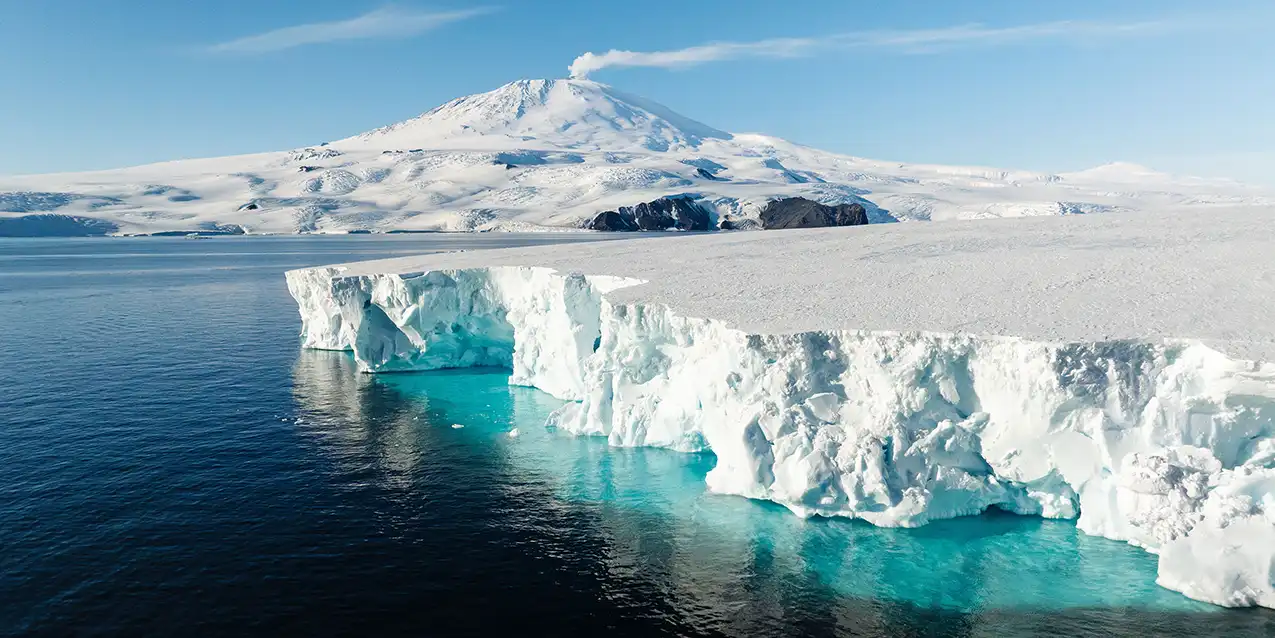
Opening: The Last Frontiers
“Great God! this is an awful place.” – Robert Falcon Scott, at the South Pole, 1912
The Arctic tern’s 44,000-mile annual journey—longest migration on Earth—connects the planet’s polar wildernesses in perpetual summer.¹ These five-ounce birds witness both Arctic tundra bloom and Antarctic krill swarms, experiencing more daylight than any other creature while traversing from 84°N to 78°S. Their pole-to-pole odyssey embodies the profound yet fragile connections binding Earth’s cryospheric extremes—regions where ice defines life, seasonality reaches ultimate expression, and wilderness persists at scales found nowhere else.
The poles encompass 20 million square kilometers of the Arctic Ocean and surrounding lands, plus Antarctica’s 14 million square kilometers—together larger than Africa.² Yet these regions, containing 99% of Earth’s freshwater ice and regulating global climate, warm twice as fast as the planetary average.³ Arctic summer sea ice declined 13% per decade since 1979; Antarctic ice shelves lost 12 trillion tons since 1990.⁴ These changes cascade globally: disrupting ocean circulation, accelerating sea-level rise, releasing methane from permafrost, and fundamentally altering Earth’s energy balance.
The poles present conservation’s ultimate paradox: the most pristine wildernesses face the most rapid anthropogenic change. Antarctica, Earth’s only continent without permanent human habitation, experiences tourism growth of 400% in two decades.⁵ The Arctic, home to 4 million people including 40 Indigenous groups, sees industrial extraction accelerating as ice retreats.⁶ Both regions demonstrate that nowhere remains beyond humanity’s reach—atmospheric pollution deposits microplastics on pristine snowfields, while climate change transforms ecosystems faster than species can adapt.
Structural Approach: Ice Worlds Apart, Yet Connected
We examine Earth’s polar wildernesses through three integrated perspectives:
Section A: The Arctic—Where Wilderness and Culture Converge
The circumpolar North where Indigenous peoples maintained sustainable relationships with extreme environments for millennia, now facing unprecedented change.
Section B: Antarctica—The Frozen Laboratory
Earth’s last continent, governed by international treaty as a reserve for peace and science, yet increasingly pressured by tourism and resource speculation.
Section C: Global Cryosphere Connections—Planetary Thermostat Under Threat
The interconnected ice systems regulating Earth’s climate, from mountain glaciers to ice sheets, and their cascading impacts on global systems.
SECTION A: THE ARCTIC—WHERE WILDERNESS AND CULTURE CONVERGE
1. Indigenous Arctic Heritage
Circumpolar Adaptation
For 5,000 years, Arctic peoples developed the most sophisticated cold-climate survival strategies on Earth.⁷ The Inuit qulliq (soapstone lamp) maintained dwelling temperatures 70°C above outside conditions using seal oil. Clothing systems utilizing caribou fur’s superior insulation (7× better than sheep wool) enabled activity at -50°C.⁸ Ice architecture—igloos achieving structural strength through catenary curves—provided shelter from materials seemingly unsuitable for construction.
Traditional ecological knowledge encoded in language preserved environmental observations across generations. Inuktitut’s dozens of terms for sea ice conditions communicate navigation safety with precision unmatched by scientific terminology.⁹ Sami reindeer herders recognize individual animals among thousands, understanding migration patterns, feeding preferences, and health indicators through subtle behavioral cues. Nenets navigate trackless tundra using wind patterns, snow formations, and stellar positions, maintaining orientation during months of polar night.
Sustainable Harvesting Systems
Arctic peoples maintained stable populations through sophisticated resource management despite extreme scarcity. Rotational hunting grounds prevented overexploitation. Selective harvesting—taking specific age/sex classes—maintained population structures. Sharing networks distributed resources, ensuring community survival when individual hunts failed.¹⁰
The bowhead whale hunt exemplifies sustainable practice: Iñupiat communities harvested 30-50 whales annually for 1,000+ years without population decline.¹¹ Every part was utilized—meat for food, blubber for fuel, baleen for tools, bones for construction. Distribution followed complex social protocols ensuring equitable access. This contrasts starkly with commercial whaling that nearly exterminated bowheads in mere decades.
2. Current Arctic Status
Quantitative Metrics
The Arctic faces transformation unprecedented in human history:
• Sea ice extent: Summer minimum declined from 7.5 to 4.3 million km² (1979-2023) • Ice-free predictions: Summer ice-free Arctic possible by 2040 • Permafrost: 24% of Northern Hemisphere land, thawing accelerating • Protected areas: 11% terrestrial (below 17% global target) • Indigenous lands: 40% of Arctic under Indigenous management
Temperature Changes:
- Arctic warming: 3.1°C since 1971 (vs 1.0°C global average)
- Winter warming: Up to 4°C in some regions
- Greenland ice loss: 280 billion tons annually
- Permafrost temperature: Increased 2-3°C at 10m depth
- Growing season: Extended 2-3 weeks since 1980s
Ecosystem Disruptions:
- Tundra greening: 30% increase in vegetation productivity
- Shrubification: Woody shrubs replacing graminoid tundra
- Wildlife shifts: 50% of Arctic species moving northward
- Polar bear habitat: 40% summer ice loss projected by 2050
- Ocean acidification: Arctic waters acidifying fastest globally
Qualitative Assessment
The Arctic transformation extends beyond statistics. Rain falls on Greenland’s summit for the first time in recorded history.¹² Thunder—previously unknown—now occurs above the Arctic Circle. Killer whales, historically excluded by ice, penetrate deep into Arctic waters, disrupting marine ecosystems. These novelties signal fundamental system change.
Indigenous communities face cultural disruption as environmental foundations erode. Ice roads connecting communities disappear earlier each spring. Traditional food preservation in permafrost fails as ground thaws. Hunting seasons shift beyond cultural calendars. Elders’ knowledge—accumulated over generations—becomes less reliable as unprecedented conditions emerge.¹³
Yet adaptation continues. Indigenous-led conservation initiatives protect 25 million hectares through Indigenous Protected Areas and Indigenous Guardian programs.¹⁴ Traditional knowledge combined with satellite monitoring enhances wildlife management. Community-based monitoring networks document changes while maintaining cultural practices.
3. Arctic Resource Pressures
The New Extraction Frontier
Retreating ice exposes vast resources: 30% of undiscovered gas, 13% of oil, plus rare earth elements essential for renewable technology.¹⁵ The Northern Sea Route, ice-free 3 months annually by 2030, reduces Asia-Europe shipping distance 40%. These opportunities drive geopolitical competition threatening the Arctic’s cooperative governance tradition.
Mining operations expand into previously inaccessible regions. The Mary River iron mine ships 6 million tons annually through fragile waters. Red Dog mine in Alaska—world’s largest zinc producer—operates in critical caribou habitat. These operations, while providing economic benefits, introduce industrial infrastructure into pristine wilderness.
Pollution Accumulation
The Arctic acts as a global pollution sink through atmospheric and oceanic circulation. Persistent organic pollutants concentrate in Arctic food chains—polar bear PCB levels exceed thresholds for immune dysfunction.¹⁶ Microplastics occur in Arctic snow at concentrations comparable to European cities. Mercury deposition from coal combustion biomagnifies through food webs, reaching dangerous levels in subsistence foods.
Black carbon from incomplete combustion accelerates ice melt by reducing albedo. Shipping emissions increase as routes open. Military activities expand with geopolitical tensions. These pollutants compound climate impacts, accelerating ecosystem disruption beyond natural resilience.
SECTION B: ANTARCTICA—THE FROZEN LABORATORY
1. The Pristine Continent
Evolutionary Isolation
Antarctica’s separation from Gondwana 34 million years ago created Earth’s most isolated ecosystem.¹⁷ The Antarctic Circumpolar Current, flowing at 130 million cubic meters per second, maintains thermal isolation while the polar vortex limits atmospheric exchange. This isolation produced unique evolutionary outcomes: antifreeze glycoproteins in fish blood, invertebrates surviving decades of desiccation, and microbes thriving in subglacial lakes isolated for millions of years.
Life persists in seemingly impossible conditions. Endolithic communities inhabit rock pores in the Dry Valleys—Earth’s closest Mars analog.¹⁸ Emperor penguins breed on sea ice through polar winter, males fasting 120 days while incubating eggs at -40°C. Antarctic krill—keystone species supporting entire food webs—exhibit the largest aggregations of any animal, with swarms visible from space.
The Southern Ocean, comprising 10% of global ocean, drives planetary circulation. Antarctic Bottom Water formation—dense water sinking around the continent—ventilates deep oceans globally. The biological pump, driven by phytoplankton blooms, sequesters more carbon than any other ocean region. These processes regulate Earth’s climate over millennial timescales.
Scientific Sanctuary
The Antarctic Treaty System, signed 1959, represents humanity’s most successful international wilderness protection.¹⁹ Designating Antarctica for peaceful scientific purposes, it prohibits military activities, nuclear testing, and waste disposal while ensuring research freedom. The Protocol on Environmental Protection (1991) established Antarctica as a “natural reserve devoted to peace and science” for 50 years minimum.
Scientific discoveries from Antarctica revolutionized understanding of Earth systems. Ice cores revealed 800,000 years of climate history, demonstrating CO₂-temperature relationships.²⁰ Ozone hole discovery catalyzed global environmental action through the Montreal Protocol. Subglacial lake exploration revealed life in extreme isolation. Meteorite collections, preserved in ice, provided insights into solar system formation.
2. Current Antarctic Status
Quantitative Metrics
Antarctica remains Earth’s most pristine continent yet faces accelerating change:
• Protected areas: 100% terrestrial via Antarctic Treaty • Marine Protected Areas: 2.2 million km² (5% of Southern Ocean) • Ice sheet volume: 26.5 million km³ (70% of freshwater) • Annual ice loss: 150 billion tons (tripled since 1990s) • Tourist visitors: 75,000 annually (pre-pandemic)
Climate Indicators:
- Peninsula warming: 3°C since 1950 (fastest on Earth)
- West Antarctic ice loss: 159 billion tons annually
- Ice shelf collapse: 10 major collapses since 1995
- Sea ice variability: Record low extent in 2023
- Ocean warming: 0.1-0.2°C at depth (accelerating ice melt)
Biodiversity Metrics:
- Endemic species: 80% of terrestrial invertebrates
- Breeding seabirds: 100+ million individuals
- Marine species: 16,000+ identified, many endemic
- Alien species: 11 established (all on sub-Antarctic islands)
- Fishing pressure: 300,000 tons krill harvested annually
Qualitative Assessment
Antarctica experiences changes previously considered impossible. Green algae blooms spread across snow, visible from space.²¹ Flowering plants expand range 25-fold as Peninsula warms. Invasive species establish on sub-Antarctic islands despite biosecurity. These biological invasions threaten ecosystems evolved in isolation.
Tourism growth strains wilderness values. Cruise ships carrying 500+ passengers visit penguin colonies. Adventure tourism—mountaineering, skiing, kayaking—penetrates remote areas. Despite IAATO self-regulation, cumulative impacts accumulate: trampling, wildlife disturbance, pollution.²² The COVID-19 pause demonstrated tourism’s economic importance to gateway cities, creating pressure for expansion.
Research station expansion introduces industrial infrastructure. Year-round stations house 4,000+ people in summer, generating waste requiring complex management. Airfields, roads, and buildings modify pristine landscapes. While science justifies presence, the footprint expands continuously.
3. Future Antarctic Governance
Resource Speculation
The Protocol on Environmental Protection prohibits mineral extraction until 2048 minimum, but pressure builds.²³ Estimated resources include 200 billion barrels of oil, vast coal deposits, and metallic minerals. Climate change improves accessibility while global resource demand intensifies. Some nations position for eventual exploitation through scientific presence.
Bioprospecting—harvesting genetic resources—operates in legal grey zones. Antarctic organisms’ adaptations offer biotechnology applications: antifreeze proteins, cold-adapted enzymes, UV-resistant compounds. Patent applications reference Antarctic organisms, raising questions about benefit sharing. The Antarctic Treaty System lacks clear bioprospecting governance.
Conservation Expansion
Marine Protected Area negotiations reveal governance challenges. The proposed East Antarctic MPA—3.2 million km²—remains blocked despite scientific consensus.²⁴ Fishing nations resist restrictions, prioritizing economic interests. Climate refugia identification becomes critical as species shift poleward. The Ross Sea MPA success (2016) demonstrates possibility but required decades of negotiation.
Wilderness designation could strengthen protection. Antarctic Specially Protected Areas cover only 0.005% of the continent. Inviolate areas—completely restricted zones—could preserve reference conditions. Technology enables remote monitoring without physical presence. Such designations require consensus among 54 treaty parties with diverse interests.
SECTION C: GLOBAL CRYOSPHERE CONNECTIONS—PLANETARY THERMOSTAT UNDER THREAT
1. Ice-Albedo Feedback Acceleration
The Amplification Engine
The ice-albedo feedback—reduced ice exposing dark surfaces that absorb more heat—drives polar amplification.²⁵ Arctic sea ice decline reduces planetary albedo equivalent to 25% of CO₂ warming. Greenland’s darkening ice sheet (algae growth, pollution deposition) accelerates surface melt. Antarctic ice shelf collapse exposes dark ocean, initiating local warming. These feedbacks, once triggered, become self-reinforcing.
Mountain glaciers worldwide retreat faster than projected. The Himalayas—”Third Pole”—lost 40% of ice since Little Ice Age.²⁶ Andean glaciers disappear entirely below 5,000m elevation. Alpine glaciers may vanish by 2100. These losses threaten water security for 2 billion people while contributing 30% of observed sea-level rise.
Permafrost thaw releases greenhouse gases, accelerating warming. Northern permafrost contains 1,700 billion tons of carbon—twice atmospheric CO₂.²⁷ Methane release from thawing permafrost and subsea hydrates could trigger runaway warming. Thermokarst lakes expand exponentially, creating emission hotspots. This carbon bomb, once activated, cannot be defused.
2. Oceanic Disruption Cascades
Circulation Breakdown
Polar ice melt disrupts ocean circulation with global consequences. Atlantic Meridional Overturning Circulation (AMOC) weakened 15% since 1950.²⁸ Freshwater from Greenland melt reduces North Atlantic density, slowing deep water formation. Complete AMOC shutdown—possible this century—would devastate European climate, shift monsoons, and reduce ocean carbon uptake.
Antarctic Bottom Water formation declined 30% since 1990s.²⁹ Freshening surface waters from ice melt reduce density, slowing abyssal ventilation. This disrupts nutrient distribution, reduces ocean oxygen, and weakens carbon sequestration. The global conveyor belt of ocean circulation, driven by polar processes, faces unprecedented disruption.
Marine ecosystems transform as polar waters warm. Arctic fisheries shift northward 50km per decade. Antarctic krill populations declined 80% since 1970s in some regions.³⁰ Polar cod—keystone Arctic species—face habitat loss. These changes cascade through food webs: seabirds, marine mammals, and commercial fisheries all affected.
3. Global Climate Regulation
Tipping Points Approaching
Multiple cryosphere tipping points approach simultaneously. West Antarctic Ice Sheet collapse appears underway, committing 3+ meters sea-level rise.³¹ Greenland Ice Sheet faces irreversible melt above 1.5°C warming. Arctic summer sea ice disappearance triggers regional climate shifts. These tipping points, once crossed, reshape Earth’s climate for millennia.
Polar changes drive extreme weather globally. Arctic warming weakens jet stream, causing persistent weather patterns.³² Polar vortex disruption brings Arctic air to lower latitudes. Antarctic sea ice loss intensifies Southern Ocean storms. These connections mean polar changes affect billions far from ice.
Integration: Polar Wilderness as Planetary Life Support
Indigenous Knowledge Integration
Indigenous peoples offer solutions developed over millennia. Traditional knowledge provides baseline data predating scientific observation. Indigenous-led conservation achieves better outcomes than state management in many Arctic regions.³³ Co-management structures incorporating Indigenous governance show promise. Recognition of Indigenous rights strengthens conservation while supporting cultural survival.
The Inuit Circumpolar Council’s advocacy shapes Arctic policy globally. Sami parliaments influence Nordic conservation strategies. Indigenous knowledge holders contribute to IPCC assessments. These contributions demonstrate that wilderness protection and cultural preservation are inseparable in the Arctic.
International Cooperation Imperatives
Polar conservation requires unprecedented international cooperation. The Arctic Council—eight nations plus Indigenous organizations—provides a model for consensus-based governance.³⁴ The Antarctic Treaty System demonstrates that territorial disputes can be suspended for common benefit. Both systems face pressure from resource extraction and sovereignty assertions.
Scientific collaboration enables polar understanding. International Polar Years mobilize global research efforts. Data sharing agreements ensure open access. Standardized monitoring protocols enable comparison. This scientific diplomacy builds trust essential for conservation agreements.
Technological Innovation Opportunities
Technology enables conservation at polar scales. Satellite monitoring tracks ice changes in real-time. Autonomous vehicles access dangerous regions. Environmental DNA reveals biodiversity in extreme environments. Artificial intelligence processes vast datasets identifying patterns invisible to human analysis.
Remote sensing reduces physical footprint while improving coverage. Drones monitor wildlife without disturbance. Satellite tags track migrations across hemispheres. Acoustic monitoring reveals underwater ecosystems. These tools enable protection without presence.
The 2050 Polar Vision
By 2050, polar regions could model international conservation cooperation. Expanded protected area networks could preserve climate refugia. Indigenous-led management could maintain cultural landscapes while protecting biodiversity. Technology could enable monitoring without infrastructure expansion. International agreements could prevent resource extraction while supporting sustainable development.
This vision requires fundamental changes. Economic systems must value ice sheets above oil fields. Governance must balance sovereignty with planetary stewardship. Technology must serve conservation rather than extraction. Most critically, humanity must recognize polar regions as essential life support systems rather than resource frontiers.
The Arctic tern’s pole-to-pole journey continues, but through increasingly turbulent skies. The distances remain vast, but the ice destinations shrink annually. These remarkable birds, witnessing Earth’s polar extremes each year, embody both vulnerability and resilience. Their survival depends on humanity recognizing that Earth’s poles are not remote wastelands but the beating hearts of planetary climate regulation. In protecting polar wilderness, we protect Earth’s thermostat—and ultimately, ourselves.
References
¹ Egevang, Carsten, et al. “Tracking of Arctic Terns Reveals Longest Animal Migration.” Proceedings of the National Academy of Sciences 107, no. 5 (2010): 2078-2081.
² Vaughan, David G., et al. “Observations: Cryosphere.” In Climate Change 2013: The Physical Science Basis, 317-382. Cambridge: Cambridge University Press, 2013.
³ Serreze, Mark C., and Roger G. Barry. “Processes and Impacts of Arctic Amplification: A Research Synthesis.” Global and Planetary Change 77, no. 1-2 (2011): 85-96.
⁴ Rignot, Eric, et al. “Four Decades of Antarctic Ice Sheet Mass Balance from 1979-2017.” Proceedings of the National Academy of Sciences 116, no. 4 (2019): 1095-1103.
⁵ Liggett, Daniela, et al. “Is It All Going South? Four Future Scenarios for Antarctica.” Polar Record 53, no. 5 (2017): 459-478.
⁶ Larsen, Joan Nymand, and Gail Fondahl, eds. Arctic Human Development Report: Regional Processes and Global Linkages. Copenhagen: Nordic Council of Ministers, 2014.
⁷ McGhee, Robert. The Last Imaginary Place: A Human History of the Arctic World. Oxford: Oxford University Press, 2005.
⁸ Oakes, Jill, and Rick Riewe. Spirit of Siberia: Traditional Native Life, Clothing, and Footwear. Washington: Smithsonian Institution Press, 1998.
⁹ Krupnik, Igor, and Dyanna Jolly, eds. The Earth Is Faster Now: Indigenous Observations of Arctic Environmental Change. Fairbanks: Arctic Research Consortium, 2002.
¹⁰ Wenzel, George W. Animal Rights, Human Rights: Ecology, Economy and Ideology in the Canadian Arctic. Toronto: University of Toronto Press, 1991.
¹¹ Stoker, S. W., and I. I. Krupnik. “Subsistence Whaling.” In The Bowhead Whale, edited by John J. Burns et al., 579-629. Lawrence: Society for Marine Mammalogy, 1993.
¹² National Snow and Ice Data Center. “Rain at the Summit of Greenland.” NSIDC, August 19, 2021.
¹³ Ford, James D., et al. “The Dynamic Multiscale Nature of Climate Change Vulnerability.” Annals of the Association of American Geographers 108, no. 2 (2018): 367-382.
¹⁴ Indigenous Leadership Initiative. “Indigenous Guardians: A Global Movement.” Toronto: ILI, 2022.
¹⁵ Gautier, Donald L., et al. “Assessment of Undiscovered Oil and Gas in the Arctic.” Science 324, no. 5931 (2009): 1175-1179.
¹⁶ Letcher, Sara J., et al. “A Review of Current Knowledge on Persistent Organic Pollutants in the Arctic.” Science of the Total Environment 408, no. 15 (2010): 2995-3009.
¹⁷ Kennett, James P. “Cenozoic Evolution of Antarctic Glaciation, the Circum-Antarctic Ocean, and Their Impact on Global Paleoceanography.” Journal of Geophysical Research 82, no. 27 (1977): 3843-3860.
¹⁸ Friedmann, E. Imre. “Endolithic Microorganisms in the Antarctic Cold Desert.” Science 215, no. 4536 (1982): 1045-1053.
¹⁹ Berkman, Paul Arthur, et al., eds. Science Diplomacy: Antarctica, Science, and the Governance of International Spaces. Washington, DC: Smithsonian Institution, 2011.
²⁰ Jouzel, Jean, et al. “Orbital and Millennial Antarctic Climate Variability over the Past 800,000 Years.” Science 317, no. 5839 (2007): 793-796.
²¹ Gray, Andrew, et al. “Remote Sensing Reveals Antarctic Green Snow Algae as Important Terrestrial Carbon Sink.” Nature Communications 11, no. 1 (2020): 2527.
²² Bender, Nicole A., et al. “Patterns of Tourism in the Antarctic Peninsula Region.” Polar Record 52, no. 4 (2016): 392-398.
²³ Dodds, Klaus, and Alan D. Hemmings. “Polar Oceans: Sovereignty and the Contestation of Territorial and Resource Rights.” In Handbook on the Politics of Antarctica, 235-251. Cheltenham: Edward Elgar, 2017.
²⁴ Brooks, Cassandra M., et al. “Reaching Consensus for Conserving the Global Commons: The Case of the Ross Sea, Antarctica.” Conservation Letters 13, no. 1 (2020): e12676.
²⁵ Pistone, Kristina, et al. “Observational Determination of Albedo Decrease Caused by Vanishing Arctic Sea Ice.” Proceedings of the National Academy of Sciences 111, no. 9 (2014): 3322-3326.
²⁶ Bolch, Tobias, et al. “The State and Fate of Himalayan Glaciers.” Science 336, no. 6079 (2012): 310-314.
²⁷ Schuur, Edward A. G., et al. “Climate Change and the Permafrost Carbon Feedback.” Nature 520, no. 7546 (2015): 171-179.
²⁸ Caesar, L., et al. “Current Atlantic Meridional Overturning Circulation Weakest in Last Millennium.” Nature Geoscience 14, no. 3 (2021): 118-120.
²⁹ Silvano, Alessandro, et al. “Recent Recovery of Antarctic Bottom Water Formation in the Ross Sea Driven by Climate Anomalies.” Nature Geoscience 13, no. 12 (2020): 780-786.
³⁰ Atkinson, Angus, et al. “Krill (Euphausia superba) Distribution Contracts Southward During Rapid Regional Warming.” Nature Climate Change 9, no. 2 (2019): 142-147.
³¹ Joughin, Ian, et al. “Marine Ice Sheet Collapse Potentially Under Way for the Thwaites Glacier Basin, West Antarctica.” Science 344, no. 6185 (2014): 735-738.
³² Francis, Jennifer A., and Stephen J. Vavrus. “Evidence for a Wavier Jet Stream in Response to Rapid Arctic Warming.” Environmental Research Letters 10, no. 1 (2015): 014005.
³³ Berkes, Fikret. Sacred Ecology: Traditional Ecological Knowledge and Resource Management. 4th ed. New York: Routledge, 2018.
³⁴ Young, Oran R. “The Arctic Council at Twenty: How to Remain Effective in a Rapidly Changing Environment.” UC Irvine Law Review 6, no. 1 (2016): 99-119.


