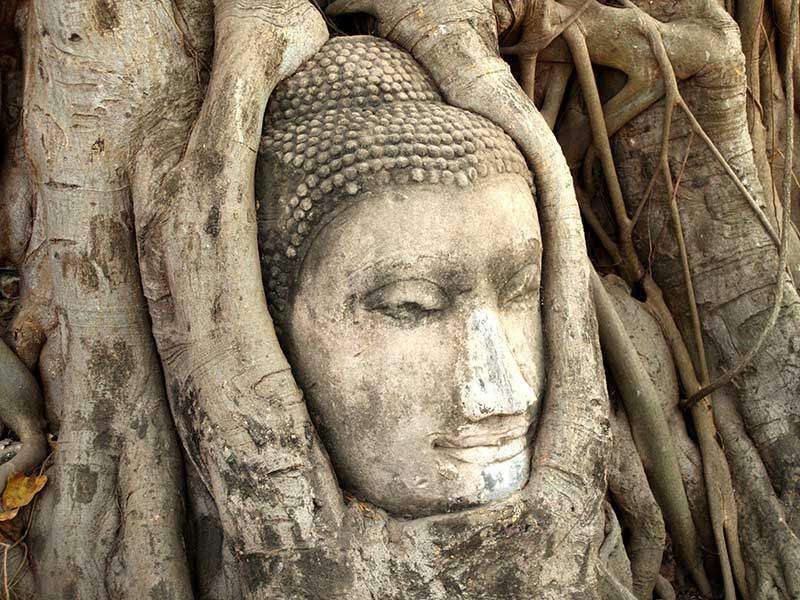

Introduction to Zen Buddhism
Zen Buddhism, originating in China during the Tang Dynasty as “Chan,” later spread to Korea (as Seon), Vietnam (as Thiền), and Japan, where it became known as Zen. This tradition is a unique synthesis of Indian Mahayana Buddhism and Chinese Daoist sensibilities. Its foundational principle lies in Dhyāna (meditative absorption), which is the root of the term “Zen.” Rather than focusing on doctrinal knowledge or scriptural study, Zen emphasizes experiential realization—direct insight into the nature of existence and the mind itself.^1
Zen can be understood as a radical return to the original spirit of the Buddha’s teachings: a lived experience grounded in awareness, simplicity, and compassion. It is often seen as a rebellion against over-intellectualization, offering instead a path of direct knowing, free from abstraction or reliance on intermediaries.^2
The Role of Mindfulness in Zen
Mindfulness (Pali: sati; Sanskrit: smṛti) is foundational in all schools of Buddhism but takes on a particularly pervasive and embodied form in Zen practice. In Zen, mindfulness extends beyond the meditation cushion into every act of daily life—eating, walking, cleaning, or even drinking tea becomes a sacred opportunity to fully inhabit the present moment.^3
This pervasive awareness fosters clarity, reduces compulsive mental patterns, and invites practitioners into a deep intimacy with each unfolding moment. As Thich Nhat Hanh writes, “Mindfulness is the miracle by which we master and restore ourselves”^4—a sentiment reflected in every aspect of Zen culture and ritual.
Zazen: The Heart of Zen Meditation
Zazen (seated meditation) is the core practice of Zen Buddhism. Practitioners sit in a grounded posture—often cross-legged on a cushion—and focus either on the breath, on “just sitting” (Shikantaza), or on a Koan (depending on the tradition). Unlike many forms of meditation that aim for altered states or progressive attainment, Zazen emphasizes presence over progress. As Dōgen Zenji, founder of the Sōtō Zen school in Japan, taught: “Zazen is itself enlightenment” (Shushō-itto).^5
The aim of Zazen is not to suppress thoughts or achieve peace but to become fully awake to what is—thoughts, feelings, silence, sensations—without clinging or aversion. This attitude dissolves the artificial separation between meditation and life, enabling practitioners to bring the stillness and insight of Zazen into daily experience.
Koan Practice and the Experience of Satori
One of the hallmarks of Rinzai Zen is the use of Koans—paradoxical questions or statements used to disrupt linear thinking and provoke a deeper, intuitive understanding of reality. Famous Koans such as “What is the sound of one hand clapping?” or “What was your original face before your parents were born?” cannot be solved by rational thought. Instead, they act as catalysts, exhausting the analytic mind and forcing a leap into direct experience.
The sudden breakthrough that may arise through Koan practice is known as Satori—an intuitive flash of awakening or insight into the non-dual nature of existence. Unlike gradual paths, Satori represents a moment of profound transformation, though Zen cautions against attachment to such experiences. As Zen master Linji (Rinzai) said, “If you meet the Buddha, kill him”—a reminder to avoid clinging to concepts, even of enlightenment itself.^6
Non-Self and the Nature of Emptiness
At the heart of Zen lies the doctrine of non-self (Anatta) and emptiness (Śūnyatā). According to this teaching, there is no fixed, independent “self”; rather, what we call the self is a constantly changing aggregate of conditions, perceptions, and habits.^7
Realizing non-self frees us from the prison of ego, allowing a more fluid, compassionate, and liberated mode of being. Zen expresses this not just as theory, but as lived experience. To see that “form is emptiness, emptiness is form,” as the Heart Sutra says, is to see the world afresh, stripped of conceptual overlays. In this vision, each moment is luminous, whole, and ungraspable.
Zen and the Problem of Suffering
Zen, like all Buddhist traditions, addresses the existential problem of Dukkha (suffering). According to the Four Noble Truths, suffering arises from craving and attachment, and it can be overcome through the Eightfold Path. In Zen, this path is simplified into a direct pointing to the mind, helping us see through illusion by cutting to the root of our dissatisfaction.^8
By practicing awareness and letting go of fixed identities and expectations, one can find profound peace—even amidst pain and chaos. Suffering is not denied but embraced, witnessed, and ultimately transformed through insight. Zen master Shunryu Suzuki put it simply: “Life is like stepping into a boat that is about to sink.” The practice is not to escape suffering but to awaken within it.
Contemporary Relevance of Zen in a Fast-Moving World
In today’s accelerated, hyper-connected, and attention-fragmented world, Zen Buddhism offers a potent antidote. Its teachings on stillness, simplicity, and presence counteract the constant drive toward distraction and overconsumption.
Modern psychological research has begun to validate many of Zen’s benefits. Studies show that mindfulness meditation improves emotional regulation, reduces anxiety, enhances focus, and boosts overall well-being.^9 Zen practitioners report a sense of grounding and spaciousness that helps them navigate work stress, information overload, and interpersonal conflict with greater clarity and compassion.
How to Incorporate Zen into Daily Life
Incorporating Zen into contemporary life doesn’t require monastic seclusion. Here are some practical ways:
- Daily Zazen Practice: Begin with 10–20 minutes of silent sitting each morning. Use a timer, find a quiet space, and simply observe the breath or body sensations without judgment.
- Mindful Living: Bring full attention to everyday tasks—brushing teeth, eating, or walking. Avoid multitasking. Cultivate presence in the ordinary.
- Digital Minimalism: Limit screen time and create spaces for silence. Let go of unnecessary input and cultivate stillness.
- Koan Reflection: Explore a Koan periodically as a journaling or contemplation tool—not to answer it, but to let it question you.
- Attend a Sesshin or Zen Group: Join a local Zen center or online Sangha for support and deeper exploration.
- Let Go of “Gaining Mind”: Practice for its own sake, without trying to become “better” or achieve anything. This is the spirit of Zen.
As Zen master Dōgen said, “To study the way is to study the self. To study the self is to forget the self. To forget the self is to be awakened by all things.” This is the heart of Zen—awakening not by changing the world, but by fully meeting it.
10 Koans for Daily Zen Practice
- What is the sound of one hand clapping?
– A famous Rinzai Zen koan designed to break conventional thinking and open perception to non-duality. - What was your original face before your parents were born?
– Invites inquiry into the nature of self beyond physical identity and time. - When you can do nothing, what can you do?
– Points to the space beyond control, effort, and conceptual grasping. - Does a dog have Buddha-nature?
– Answer: “Mu” (nothingness). This koan begins many practitioners’ journeys and challenges assumptions about existence and enlightenment. - When both hands are clapped a sound is produced; listen to the sound of one hand.
– A deeper variant of the first koan, emphasizing the experiential over the rational. - No mind, no Buddha. What is this?
– Challenges attachment to concepts of enlightenment or emptiness. - What is the Way?
– Master: “Ordinary mind is the Way.”
– Disciple: “Should I direct myself toward it?”
– Master: “If you try to direct yourself toward it, you go away from it.”
– A dialogue highlighting the paradox of seeking. - How do you step from the top of a 100-foot pole?
– Points to the necessity of transcendence, letting go even of spiritual attainment. - A monk asked Joshu, “What is Zen?” Joshu replied, “The cypress tree in the courtyard.”
– Directs the practitioner to the present moment and the essence of ordinary phenomena. - When the many are reduced to one, to what is the one reduced?
– An invitation to experience reality prior to dualistic distinctions.
Conclusion
Zen Buddhism continues to captivate seekers across cultures and centuries with its elegant simplicity, rigorous discipline, and transformative power. It challenges us to stop seeking outside ourselves and to awaken to the profound truth that is always already here. Through Zazen, mindfulness, and direct inquiry, Zen offers a path to freedom not by escaping life, but by stepping fully into it.
Classical Texts (Translations & Commentaries)
- The Platform Sutra of the Sixth Patriarch
Trans. Philip B. Yampolsky (Columbia University Press, 1967)
– A foundational Chan (Zen) text focusing on sudden enlightenment and the teachings of Huineng. - Shōbōgenzō (Treasury of the True Dharma Eye)
By Eihei Dōgen, trans. Kazuaki Tanahashi (Shambhala, 2010)
– A profound, poetic work exploring Zen philosophy and practice from the founder of Sōtō Zen in Japan. - The Gateless Gate (Mumonkan)
Trans. Koun Yamada or Robert Aitken
– A classic collection of 48 koans with commentary, widely used in Rinzai Zen training. - The Book of Serenity (Shōyōroku)
Trans. Thomas Cleary
– A compilation of 100 koans with subtle and poetic commentary, emphasizing harmony and non-duality. - Zen Mind, Beginner’s Mind
By Shunryu Suzuki (Weatherhill, 1970)
– A modern classic offering gentle, profound teachings on Zazen and everyday Zen practice.
References
Goyal, Madhav, et al. “Meditation Programs for Psychological Stress and Well-being: A Systematic Review and Meta-analysis.” JAMA Internal Medicine 174, no. 3 (2014): 357–368. https://doi.org/10.1001/jamainternmed.2013.13018
Dumoulin, Heinrich. Zen Buddhism: A History. Vol. 1, India and China. Bloomington: World Wisdom, 2005.
Suzuki, D. T. Zen Buddhism: Selected Writings of D. T. Suzuki. New York: Doubleday, 1956.
Hanh, Thich Nhat. The Miracle of Mindfulness: An Introduction to the Practice of Meditation. Boston: Beacon Press, 1975.
Ibid.
Dōgen, Eihei. Shōbōgenzō: Treasury of the True Dharma Eye. Translated by Kazuaki Tanahashi. Boston: Shambhala, 2010.
Yampolsky, Philip B., trans. The Platform Sutra of the Sixth Patriarch: The Text of the Tun-Huang Manuscript. New York: Columbia University Press, 1967.
Rahula, Walpola. What the Buddha Taught. New York: Grove Press, 1974.
Batchelor, Stephen. Buddhism Without Beliefs: A Contemporary Guide to Awakening. New York: Riverhead Books, 1997.