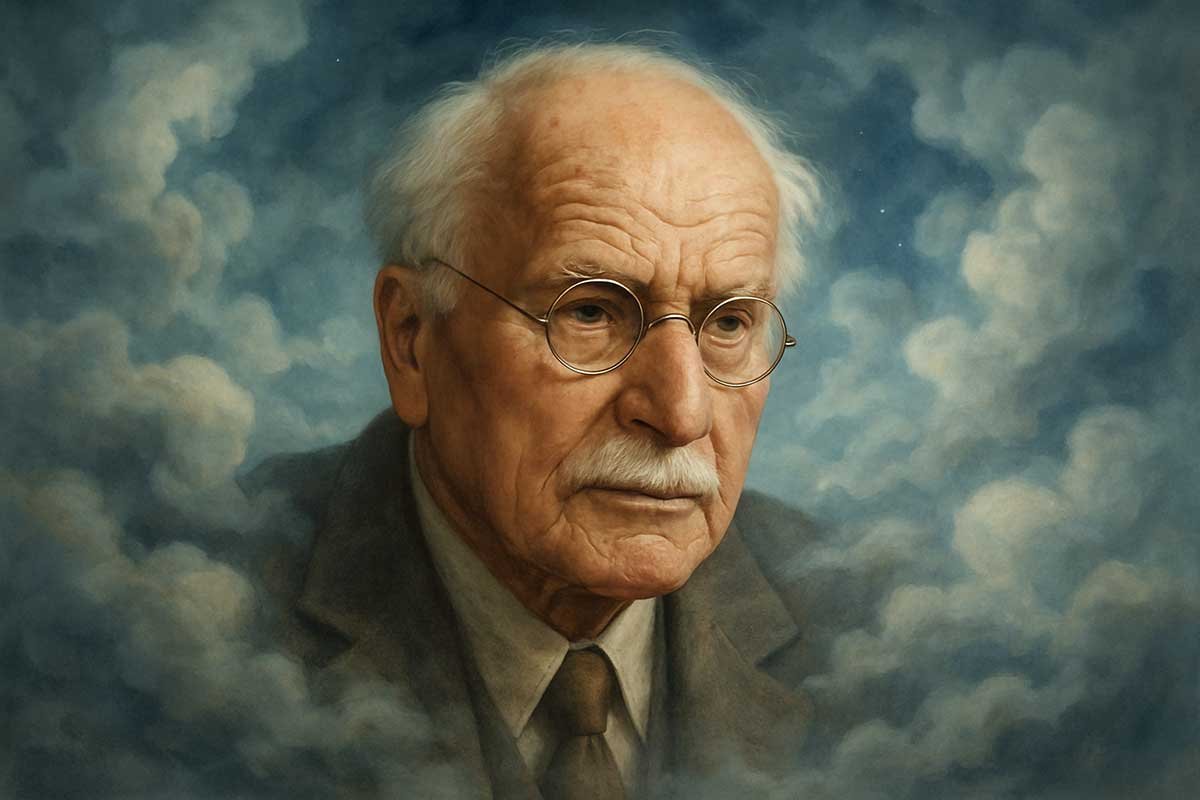

Carl Gustav Jung’s theories about dreams and the subconscious mind represent one of the most revolutionary departures from classical psychoanalysis in the history of psychology. Unlike his mentor Sigmund Freud, who viewed dreams as disguised wish-fulfillment requiring decoding, Jung proposed that dreams are natural, undisguised communications from the unconscious that serve vital compensatory and prospective functions¹. His groundbreaking concepts of the collective unconscious and archetypal imagery transformed our understanding of human psychology, suggesting that dreams provide access not only to personal memories but to universal patterns of human experience. Contemporary neuroscience research has increasingly validated Jung’s insights, with Harvard professor Allan Hobson concluding that Jung’s proposals about dream nature “profoundly resonate” with modern findings². Jung’s integration of mythological, cultural, and clinical material created a uniquely comprehensive framework that continues to influence therapeutic practice, sleep research, and our broader understanding of consciousness itself.
The great schism: Jung’s departure from Freudian orthodoxy
The philosophical chasm between Jung and Freud became irreparable in 1912 with Jung’s publication of “Psychology of the Unconscious,” marking a decisive theoretical departure that would reshape depth psychology³. Their initial collaboration, beginning in 1906, had been intensely productive—Jung served as president of the International Psychoanalytic Association and was widely regarded as Freud’s intellectual heir. However, fundamental disagreements over dream interpretation catalyzed their historic break.
Freud’s reductive approach treated dreams as “disguised fulfillment of repressed wishes,” primarily sexual in nature, requiring analysts to decode hidden meanings through interpretation of symbols⁴. Jung fundamentally rejected this framework, arguing instead that dreams are natural expressions of unconscious processes that communicate directly through symbols. As Jung emphasized, “the dream is only what it makes itself out to be. It is not a façade”⁵. This represented more than methodological disagreement—it constituted a paradigm shift from viewing dreams as pathological symptoms to understanding them as healthy, meaningful communications.
The personal dimensions of their split proved equally significant. Jung later described Freud’s “regrettable dogmatism” as the primary reason for their separation, stating his “scientific conscience would not allow me to lend support to an almost fanatical dogma based on a one-sided interpretation of the fact”⁶. A pivotal moment occurred during their 1909 voyage to Clark University, when Freud refused to share personal associations to his own dreams, claiming it would undermine his authority—an incident Jung later identified as revealing Freud’s fundamentally authoritarian approach to psychoanalytic inquiry.
The collective unconscious: Jung’s most radical contribution
Jung’s concept of the collective unconscious stands as perhaps his most revolutionary theoretical contribution, proposing a deeper layer of unconscious material shared by all humanity. In his definitive 1936 formulation, Jung described it as “a part of the psyche which can be negatively distinguished from the personal unconscious by the fact that it does not owe its existence to personal experience and consequently is not a personal acquisition”⁷. Unlike the personal unconscious, which contains forgotten or repressed individual memories, the collective unconscious consists of inherited, universal patterns Jung termed “archetypes.”
These archetypal patterns manifest most clearly in dreams, particularly what Jung distinguished as “big dreams”—those containing intense emotional content and unfamiliar imagery that transcends personal experience⁸. Jung observed that mythological motifs and symbols could appear spontaneously in dreams “without any sign” of cultural transmission or personal exposure, suggesting access to primordial psychological structures. His extensive cross-cultural research, including travels among the Pueblo Indians of New Mexico and tribes in East Africa, provided empirical support for universal symbolic patterns across disparate cultures⁹.
The distinction between personal and collective unconscious material proves crucial for dream interpretation. While personal unconscious content reflects individual complexes and forgotten experiences, collective unconscious material introduces archetypal figures—the Shadow (rejected aspects of personality), the Anima/Animus (contrasexual aspects), the Self (wholeness and integration), and the Wise Old Man/Woman (wisdom and guidance). These figures appear in dreams as autonomous entities with their own intelligence and purpose, often providing guidance for psychological development and individuation.
Compensation and prospection: Jung’s functional theory of dreams
Jung’s most significant theoretical innovation lay in reconceptualizing dream function through compensation theory. Rather than serving wish-fulfillment, dreams maintain “psychic homeostasis” by providing unconscious parallels to conscious attitudes¹⁰. This regulatory mechanism operates through three distinct patterns: opposite compensation (when conscious attitudes are one-sided, dreams present opposing perspectives), variation compensation (when conscious positions are balanced, dreams offer subtle variations), and reinforcement compensation (when conscious attitudes are appropriate, dreams emphasize and support these tendencies).
The compensatory mechanism operates as a natural self-regulating system. Jung illustrated this with clinical examples: a young, hesitant man dreams of a horse jumping over a ravine, encouraging boldness, while an older, consistently courageous man experiences the identical dream as a warning against recklessness¹¹. The same symbolic content serves opposite compensatory functions depending on the dreamer’s conscious psychological stance, demonstrating dreams’ sophisticated adaptive capacity.
Beyond compensation, Jung proposed a prospective function wherein dreams anticipate future psychological developments. As he explained, this function represents “an anticipation in the unconscious of future conscious achievements, something like a preliminary exercise or sketch, or a plan roughed out in advance”¹². This forward-looking capacity distinguishes Jung’s approach from purely causal interpretations, suggesting dreams actively guide psychological development rather than merely reflecting past conflicts.
Contemporary neuroscience research has remarkably validated these insights. Allan Hobson’s decades of neuropsychological dream research concluded that dreams prepare us for future challenges rather than disguising past conflicts, and that dream content has clear meaning without requiring interpretation of “latent” content—findings that directly support Jung’s theoretical framework over Freudian wish-fulfillment theory¹³.
Active imagination and amplification: Jung’s interpretive methodology
Jung developed sophisticated techniques for accessing and interpreting unconscious material, most notably through active imagination and amplification methods. Active imagination, refined during Jung’s own psychological crisis following his break with Freud, involves dialoguing with dream figures in waking consciousness. As contemporary practitioner Dale Kushner explains, this technique allows “dream figures to step out of our dreams and talk to us, and tell us why they have appeared and what they want”¹⁴.
Jung’s amplification method fundamentally differs from Freudian free association. Rather than following associative chains away from dream content, amplification involves “circling around the dream picture” to extract specific meaning¹⁵. This process begins with personal associations to dream imagery, then expands to cultural and mythological parallels when personal material is exhausted. The method preserves the dream’s symbolic integrity while enriching interpretation through collective understanding.
Jung’s systematic approach follows specific phases: establishing context through careful dream documentation, gathering personal and cultural amplifications, analyzing structural elements using dramatic principles (exposition, development, culmination), and determining whether interpretation should proceed on subjective levels (dream figures as personality aspects) or objective levels (dream figures as actual relationships)¹⁶.
Dreams and individuation: psychological development through symbolic communication
Central to Jung’s theoretical framework is the concept of individuation—the process of psychological development toward wholeness and self-realization. Dreams serve as primary guides for this developmental journey, revealing shadow content, integrating psychological opposites, and providing direction for personality growth¹⁷. Jung viewed dreams as “already a healing attempt” that constantly seeks to correct conscious attitudes and facilitate psychological integration.
The individuation process unfolds through dream series rather than isolated dreams. Jung emphasized that “a relative degree of certainty is reached only in the interpretation of a series of dreams, where the later dreams correct the mistakes we have made in handling those that went before”¹⁸. This sequential approach allows for the emergence of recurring themes, symbols, and developmental patterns that guide the individual toward psychological wholeness.
Dreams communicate through a symbolic language that Jung described as “the essential message carriers from the instinctive to the rational parts of the human mind”¹⁹. This symbolic communication transcends linguistic barriers, accessing deeper layers of psychological truth than ordinary rational discourse. The interpretation of dream symbolism requires cultural sensitivity, personal context, and understanding of archetypal patterns—a complex hermeneutical process that Jung viewed as fundamental to psychological healing and development.
Contemporary research supports Jung’s emphasis on dreams’ developmental function. The Structural Dream Analysis project, studying over 500 dreams from Jungian therapies, found that “typical changes in the dream series’ patterns could be identified which corresponded with therapeutic change,” validating Jung’s approach to dreams as instruments for psychological transformation²⁰.
Contemporary validation and modern applications
Recent empirical research has provided remarkable validation for Jung’s dream theories, challenging the dominance of Freudian approaches in academic psychology. Christian Roesler’s landmark 2020 study on Structural Dream Analysis found strong empirical support for Jung’s theoretical framework, identifying five major dream patterns directly connected to psychological problems, with changes in dream patterns correlating with therapeutic progress²¹.
Neuroscience research has been particularly supportive of Jungian concepts. Allan Hobson’s comprehensive review identified seven major findings that refute Freudian theory while supporting Jung’s approach: dreams are inherently meaningful rather than disguised, dream motivation is neural rather than defensive, dreams prepare for future challenges, process new information, maintain biological functions, contain clear rather than hidden meanings, and preserve unused neural circuits²².
Modern therapeutic applications integrate Jungian dream work with contemporary approaches including EMDR, cognitive-behavioral techniques, and trauma-informed therapy. Contemporary Jungian training programs, such as those offered by major institutes in Zurich, San Francisco, London, and New York, continue to emphasize dreams as fundamental tools for psychological healing and development²³.
However, Jung’s theories also face contemporary criticisms, particularly regarding the collective unconscious concept. Critics argue it lacks empirical verifiability and falsifiability, suffers from methodological ambiguity, and may conflate psychological insight with cultural romanticism²⁴. Contemporary Jungian analysts increasingly prefer terms like “autonomous psyche” or “objective psyche” while maintaining the clinical utility of archetypal concepts.
Modern research directions focus on neurobiological mechanisms underlying Jungian concepts, integration with trauma theory, multicultural applications, and empirical validation of therapeutic techniques. The International Association of Analytical Psychology, with over 4,000 members globally, continues advancing Jungian approaches while incorporating contemporary scientific understanding²⁵.
Conclusion
Carl Jung’s revolutionary understanding of dreams and the subconscious mind has proven remarkably prescient, with contemporary neuroscience and clinical research increasingly validating his insights over Freudian alternatives. His recognition of dreams as natural, meaningful communications rather than disguised pathology, his understanding of compensatory and prospective functions, and his sophisticated interpretive methodologies continue to influence therapeutic practice and psychological theory. While debates persist regarding the collective unconscious concept, Jung’s integration of individual psychology with universal patterns of human experience provides a compelling framework for understanding consciousness that transcends purely reductive approaches.
Jung’s lasting contribution lies not merely in specific theoretical formulations but in his recognition of dreams as sophisticated psychological phenomena deserving respectful interpretation rather than mechanistic decoding. His emphasis on the psyche’s self-regulating capacity, the importance of symbolic communication, and the developmental potential within psychological symptoms offers a fundamentally optimistic vision of human nature. As contemporary psychology increasingly recognizes the limitations of purely empirical approaches to human experience, Jung’s integration of scientific rigor with meaning-making provides a vital bridge between analytical precision and existential depth. His work reminds us that dreams remain among our most direct access points to the creative, autonomous dimensions of human consciousness—gateways to understanding not only individual psychology but our shared human heritage encoded in the collective patterns of symbolic experience.
Footnotes:
¹ Jung, C.G., “General Aspects of Dream Psychology,” Collected Works, Vol. 8 (Princeton: Princeton University Press, 1948), pp. 41-42.
² Allan Hobson, cited in “Jung’s Dream Theory and Modern Neuroscience: From Fallacies to Facts,” Psych Central, 2024.
³ McGuire, William, ed., The Freud/Jung Letters: The Correspondence between Sigmund Freud and C.G. Jung (Princeton: Princeton University Press, 1974).
⁴ Sigmund Freud, The Interpretation of Dreams (1900), Standard Edition, Vol. 4-5.
⁵ Jung quoted in “Dream Interpretation In Jung’s Theory: A Comparative Analysis,” The Jung Page, 2024.
⁶ Jung quoted in “Jung on Freud,” Jungian Center for the Spiritual Sciences, 2024.
⁷ Jung, C.G., “The Concept of the Collective Unconscious,” Collected Works, Vol. 9.1 (Princeton: Princeton University Press, 1959), §88.
⁸ Jung, C.G., “On the Nature of Dreams,” Collected Works, Vol. 8 (Princeton: Princeton University Press, 1948), §76.
⁹ International Association of Analytical Psychology, “The Collective Unconscious,” IAAP Short Articles, 2022.
¹⁰ Jung quoted in “Dream Interpretation In Jung’s Theory A Comparative Analysis,” The Jung Page, 2024.
¹¹ Rafael Krüger, “Carl Jung’s Original Dream Interpretation Method,” November 4, 2023.
¹² Jung, C.G., “General Aspects of Dream Psychology,” Collected Works, Vol. 8, pp. 41-42.
¹³ Allan Hobson research cited in “Jung’s Dream Theory and Modern Neuroscience,” Psych Central, 2024.
¹⁴ Dale M. Kushner, “Understand Your Dreams by Using Jung’s ‘Active Imagination’,” Psychology Today, October 23, 2016.
¹⁵ Jung quoted in Rafael Krüger, “Carl Jung’s Original Dream Interpretation Method.”
¹⁶ Krüger, “Carl Jung’s Original Dream Interpretation Method.”
¹⁷ Mohammad Khosravi et al., “Dreams In Jungian Psychology: The use of Dreams as an Instrument For Research, Diagnosis and Treatment,” PMC, 2024.
¹⁸ Jung, C.G., “The Practical Use of Dream Analysis” (1934), p. 98.
¹⁹ Jung, C.G., Man and His Symbols (New York: Dell Publishing, 1968).
²⁰ Christian Roesler, “Jungian theory of dreaming and contemporary dream research,” Journal of Analytical Psychology, 65, no. 1 (2020): 44-65.
²¹ Roesler, “Jungian theory of dreaming and contemporary dream research,” 44-65.
²² Hobson research cited in “Jung’s Dream Theory and Modern Neuroscience,” Psych Central, 2024.
²³ International Association of Analytical Psychology membership data, 2024.
²⁴ B. Kriger, “Reassessing the Theory of the Collective Unconscious: Symbolic Utility, Philosophical Depth, and Scientific Limitations,” Medium, 2024.
²⁵ International Association of Analytical Psychology, membership and research data, 2024.
Bibliography:
Hobson, Allan. Research on dreams and neuroscience, cited in “Jung’s Dream Theory and Modern Neuroscience: From Fallacies to Facts.” Psych Central, 2024.
International Association of Analytical Psychology. “The Collective Unconscious.” IAAP Short Articles, 2022.
Jung, C.G. “General Aspects of Dream Psychology.” Collected Works, Vol. 8. Princeton: Princeton University Press, 1948.
Jung, C.G. “The Concept of the Collective Unconscious.” Collected Works, Vol. 9.1. Princeton: Princeton University Press, 1959.
Jung, C.G. Man and His Symbols. New York: Dell Publishing, 1968.
Jung, C.G. “On the Nature of Dreams.” Collected Works, Vol. 8. Princeton: Princeton University Press, 1948.
Jung, C.G. “The Practical Use of Dream Analysis” (1934). In Dreams. Princeton: Princeton University Press, 1974.
Khosravi, Mohammad, et al. “Dreams In Jungian Psychology: The use of Dreams as an Instrument For Research, Diagnosis and Treatment.” PMC, 2024.
Kriger, B. “Reassessing the Theory of the Collective Unconscious: Symbolic Utility, Philosophical Depth, and Scientific Limitations.” Medium, 2024.
Krüger, Rafael. “Carl Jung’s Original Dream Interpretation Method.” November 4, 2023.
Kushner, Dale M. “Understand Your Dreams by Using Jung’s ‘Active Imagination’.” Psychology Today, October 23, 2016.
McGuire, William, ed. The Freud/Jung Letters: The Correspondence between Sigmund Freud and C.G. Jung. Princeton: Princeton University Press, 1974.
Roesler, Christian. “Jungian theory of dreaming and contemporary dream research – findings from the research project ‘Structural Dream Analysis’.” Journal of Analytical Psychology 65, no. 1 (2020): 44-65.
“Dream Interpretation In Jung’s Theory: A Comparative Analysis.” The Jung Page, 2024.
“Jung on Freud.” Jungian Center for the Spiritual Sciences, 2024.