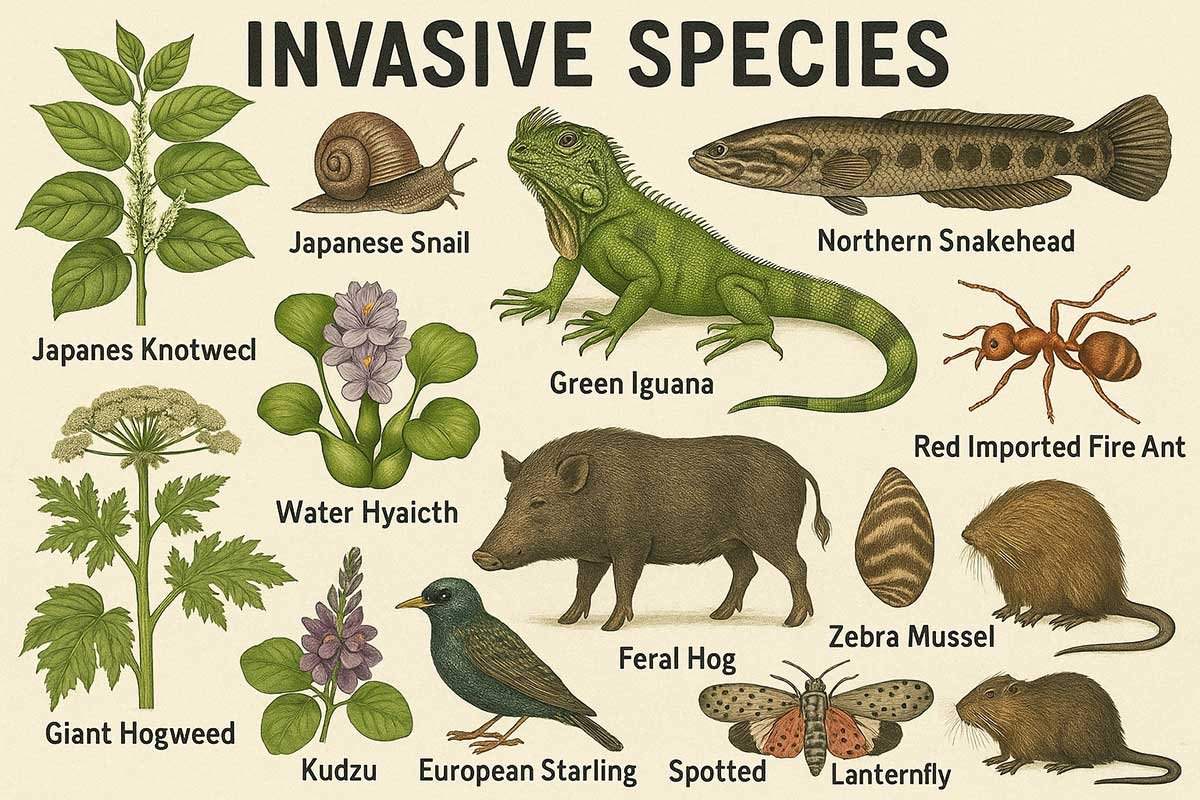

Listen our brief Deep Dive audio for an insight into the content of this article.
I. Introduction: Defining the Invasive Threat
The global ecosystem faces a pervasive and escalating threat from invasive alien species (IAS), organisms introduced outside their natural range that cause significant harm. These species, also known as alien invasive species, are defined by their capacity to threaten ecosystems, habitats, or other species, leading to social, economic, or environmental damage, or even harm to human health once established and spread in new areas. This definition is consistently applied by leading international bodies, including the Food and Agriculture Organization (FAO), the Convention on Biological Diversity (CBD), and the International Union for Conservation of Nature (IUCN).¹
Invasive species encompass an incredibly diverse array of life forms, ranging from microscopic organisms to large vertebrates, and include a wide variety of plants such as seaweeds, trees, shrubs, vines, forbs, and grasses.² What unites them is their non-native origin to the particular ecosystem they invade.³ Their introduction can occur through various human activities, either deliberately or unintentionally, as they hitchhike on global trade and travel.⁴ For an alien species to truly become invasive, it must not only survive its journey and establish itself in the new environment but also thrive by out-competing native organisms, often due to the absence of natural predators or competitors. Key characteristics that contribute to their invasiveness include rapid reproduction and growth rates, high dispersal ability, phenotypic plasticity—their remarkable capacity to adapt physiologically to new conditions—and the ability to survive on diverse food types and in a wide range of environmental conditions. A strong indicator of a species’ potential to become invasive is its history of successful invasions in other parts of the world.⁵
The proliferation of invasive species represents an accelerating global challenge. This surge is primarily driven by the increasing volume of international trade and human mobility, a trend further exacerbated by the profound impacts of climate change.⁶ The Intergovernmental Science-Policy Platform on Biodiversity and Ecosystem Services (IPBES) identifies IAS as one of the five major direct drivers of biodiversity loss globally, a group that also includes land and sea-use change, direct exploitation of organisms, climate change, and pollution.⁷ The financial burden imposed by biological invasions is staggering; globally, annual costs were estimated to exceed US$423 billion in 2019, a figure that has quadrupled every decade since 1970.⁸ This estimate is widely considered conservative, suggesting that the true economic impact of non-native species is substantially higher, with many hidden costs yet to be fully quantified.⁹ The comprehensive IPBES report, a monumental collaborative effort by 86 experts from 49 countries, underscores the severity of the problem, highlighting that over 3,500 of the approximately 37,000 alien species introduced by human activities worldwide pose significant global threats.¹⁰
The escalating rate of introduction and spread of invasive species is not an isolated environmental problem but a complex, deeply embedded consequence of interconnected global economic, social, and environmental trends. International trade and human mobility serve as primary vectors for species introduction, often unintentionally, as organisms are transported as “hitchhikers” on goods and various forms of transport. Climate change acts as a critical accelerant, altering environmental conditions such as warming temperatures and shifting precipitation patterns, which render previously inhospitable areas suitable for alien species to establish and flourish, thereby extending their potential ranges. Furthermore, climate change creates entirely new pathways for introduction, such as melting ice caps opening new Arctic shipping routes that reduce travel times and increase survival rates for stowaway species. Environmental degradation, often a direct consequence of human activities like land-use change, further weakens native ecosystems, reducing their inherent resistance and making them more susceptible to successful invasions. This complex interplay means that effective management of invasive species cannot be achieved in isolation; it necessitates a holistic, integrated approach that simultaneously addresses underlying drivers such as climate change mitigation, sustainable trade practices, and ecosystem restoration. The problem of invasive species is thus a critical indicator of broader systemic anthropogenic pressures on the planet.
The consistent reporting of “conservative” estimates for the economic costs of invasive species, coupled with the high proportion of “unspecified species” contributing to these costs, points to a significant knowledge gap in fully quantifying the true economic impact. This lack of precise, comprehensive data directly hinders effective policy formulation, resource allocation, and the ability to justify necessary proactive investments. If decision-makers are not fully aware of the true scale of the financial drain, they are less likely to commit adequate resources. This underestimation creates a vicious cycle: insufficient data leads to underfunding, which allows the problem to worsen, leading to even higher, still-underestimated costs. This highlights an urgent need for standardized, robust global cost reporting frameworks, such as the InvaCost database, to accurately capture the economic realities and build a compelling case for increased, proactive investment in prevention and early intervention.
This report will delve into the specific impacts of invasive species on indigenous biodiversity, agricultural systems, and human well-being, supported by a range of global examples. It will then examine current international and national containment measures and propose actionable strategies for a more resilient future.
II. Ecological Devastation: Impact on Indigenous Biodiversity
The introduction and spread of invasive alien species represent a profound threat to the delicate balance of indigenous biodiversity worldwide. These non-native organisms exert pressure on native species through a combination of direct and indirect mechanisms, often leading to significant declines and even extinctions.
Direct Threats: Predation, Herbivory, and Disease
Invasive species directly impact native populations through predation, herbivory, and the introduction or transmission of diseases.¹¹ These direct interactions can be swift and devastating, particularly for native species that have not evolved defenses against novel threats.
Predation by invasive animals has led to catastrophic losses in sensitive ecosystems. A stark and frequently cited example is the brown tree snake (Boiga irregularis) on Guam, which caused the extirpation, or local extinction, of nine native bird species.¹² This single predator dramatically altered the island’s avian fauna. In Australia, feral cats (Felis catus) are estimated to kill an astonishing 2.4 billion native animals annually, including 815 million mammals and 272 million birds, showcasing the immense scale of their predatory impact on indigenous wildlife.¹³ On Santa Cruz Island, the presence of feral pigs (Sus scrofa) not only directly degraded native ecosystems but also indirectly contributed to the decline of the endemic island fox population. The pigs provided an abundant food source for golden eagles, which subsequently established territories on the island and, in the absence of their usual prey, began to prey on the vulnerable island foxes, ultimately leading to the foxes’ endangered status.¹⁴
Herbivory by invasive species also inflicts severe damage on native plant communities. The hemlock woolly adelgid (Adelges tsugae) exemplifies destructive herbivory, causing widespread mortality of eastern hemlock trees by feeding on their sap.¹⁵ This tiny insect has altered forest ecosystems across North America. In Australia, European rabbits (Oryctolagus cuniculus), introduced for recreational hunting, compete intensely with native animals for food and cause extensive damage by grazing and ringbarking vegetation, contributing significantly to the decline and extinction of numerous native mammal species.¹⁶
The introduction or transmission of diseases by invasive species poses another critical direct threat, as native species often lack evolved resistance. Invasive species can introduce novel pathogens or act as vectors for existing diseases, against which native populations have no natural defenses.¹⁷ For instance, the reclassification of the northern long-eared bat as endangered is directly linked to the rangewide impacts of white-nose syndrome, a deadly fungal disease affecting hibernating bats across North America.¹⁸ This highlights how a single pathogen, potentially facilitated by invasive vectors or environmental changes, can decimate an entire species.
Indirect Threats: Resource Competition and Habitat Alteration
Beyond direct consumption or infection, invasive species indirectly contribute to native species declines by outcompeting them for essential resources and fundamentally altering habitats.¹⁹ These indirect impacts can be subtle initially but lead to profound, long-term ecological shifts.
Resource competition is a common indirect mechanism. Nonnative tree species, such as the tree of heaven and Chinese tallow tree, are gaining a firm foothold in American forest ecosystems by aggressively competing with native species for vital resources like sunlight, water, and space.²⁰ This competition can suppress native plant growth and regeneration. Similarly, garlic mustard (Alliaria petiolata) is a highly destructive invader in North America, hindering the survival of native plants and posing a particular threat to the rare West Virginia white butterfly (Pieris virginiensis) by altering its larval food source.²¹ In the Great Lakes, invasive carp voraciously consume plankton, a fundamental food source also favored by many native fish species. This intense competition for a shared resource disrupts the entire aquatic food web, potentially leading to declines in native fish populations.²²
Habitat alteration represents a more systemic form of indirect impact, where invasive species fundamentally change the physical or chemical characteristics of an ecosystem. Plant invasions, for example, can profoundly alter critical ecosystem processes, including carbon and nitrogen cycles and natural fire regimes.²³ The invasion of downy brome (Bromus tectorum) in Western U.S. grasslands, for instance, has led to a significant increase in the frequency and intensity of wildfires, creating a positive feedback loop that favors the invasive grass over native species.²⁴ Saltcedar (Tamarix spp.) alters soil chemistry by depositing large amounts of salt, making the environment inhospitable to native species that are not salt-tolerant.²⁵ Aquatic invasive plants like water hyacinth (Pontederia crassipes) can block waterways, destroy aquatic ecosystems, and severely reduce underwater light penetration, impacting submerged native vegetation and the species that rely on them.²⁶ These changes to nutrient cycling, fire regimes, and water quality are not merely about one species directly consuming or outcompeting another; they represent fundamental, often cascading, changes to the functioning and structure of an entire ecosystem. The invasive species acts as a “keystone disruptor,” creating new conditions that favor further invasions or destabilize the entire biological community. This degradation of fundamental ecosystem services, such as water purification, soil fertility, and climate regulation, extends far beyond visible population declines or extinctions, posing long-term consequences that are often harder to detect, quantify, and reverse. This necessitates a shift in management focus towards maintaining and restoring ecosystem-level health and resilience, rather than solely targeting individual invasive species.
The Role of IAS in Global Extinctions
Invasive alien species are widely recognized as one of the most significant causes of biodiversity loss globally, with island countries being particularly vulnerable due to their unique ecological characteristics.²⁷ Islands, shaped by geographic isolation, have historically shielded native species from a broad spectrum of continental predators, competitors, and diseases. This evolutionary trajectory means island species often lack the inherent defenses or competitive strategies needed to withstand the pressures introduced by alien species. The presence of “empty” ecological niches, due to limited natural colonization, provides fertile ground for invaders to establish rapidly and dominate.
The impact of IAS on global extinctions is profound. They play a key role, either solely or as a contributing factor alongside other drivers, in 60% of all recorded global plant and animal extinctions. They are identified as the sole driver in 16% of documented global extinctions.²⁸ The disproportionate severity of this impact is evident on islands, where a staggering 90% of documented global extinctions primarily attributed to IAS have occurred.²⁹ Globally, at least 218 invasive alien species have caused 1,215 documented local extinctions of native species across all taxonomic groups.³⁰ The IUCN Red List of Threatened Species further underscores this crisis, indicating that 1 in 10 species assessed are threatened by invasive alien species.³¹ This positions islands not merely as unique, vulnerable ecosystems, but as critical “early warning systems” and natural laboratories for understanding the full destructive potential of biological invasions. The extreme impacts observed on islands serve as a stark, accelerated model of what can, and often does, occur—albeit at a slower pace—on mainland ecosystems.
III. Economic Strain: Impact on Crops and Agriculture
Invasive species pose a significant and escalating economic threat to agricultural systems worldwide, leading to substantial financial losses and reductions in crop yields. Their rapid spread and the lack of natural enemies in new environments make them particularly challenging for farmers and agricultural industries to manage.
Global Economic Losses and Yield Reductions
The agriculture sector has been the most impacted globally by biological invasions. Between 1970 and 2020, the total estimated costs due to invasive species in agriculture alone reached up to US$509 billion (484 billion euros).³² This figure is considered conservative, as many hidden economic costs from non-native species were not fully captured in global databases, and a significant portion (83%) of reported costs in agriculture were attributed to diverse and unspecified species, making precise quantification and targeted interventions challenging.³³ This data void means that a substantial portion of the economic burden remains unquantified or is broadly categorized, making it exceedingly difficult to pinpoint the most problematic invasive species, accurately assess their specific impacts, or design targeted, cost-effective interventions. The problem’s true scale is likely far greater than the already staggering reported figures, hindering evidence-based policy and funding decisions.
Globally, an estimated 20% to 40% of crop production is lost to pests annually.³⁴ Breaking this down further, plant diseases account for approximately $220 billion in global economic losses each year, while invasive insects contribute around $70 billion to these annual costs.³⁵
Specific examples illustrate the devastating impact on crop yields and agricultural economies:
- The tomato leaf miner (Phthorimaea absoluta), native to South America, has become a severe pest in Africa, Europe, and Asia, devastating tomato crops by burrowing into leaves, stems, and fruit.³⁶
- Dodders (Cuscuta spp.), parasitic weeds that wrap around host plants and absorb nutrients, can inhibit growth for many agricultural crops, reducing tomato yields by up to 75% and carrot yields by up to 90%.³⁷
- Invasive insects, such as the European cherry fruit fly, are estimated to cost North America approximately $27 billion annually, with agriculture being the most affected sector.³⁸
- In the U.S. states of Idaho, Washington, Oregon, and Montana, where the cereal grass aphid is invasive, even moderate infestations can lead to an estimated economic loss of about $120 million for wheat growers.³⁹
- Feral rye, an invasive weed, can severely reduce wheat profits by 50% or more, even at low to moderate infestation levels.⁴⁰
- Potato wart, a soil-borne fungus, can deform potato tubers, causing yield reductions and marketability losses of 50-100%. This has led to significant trade interruptions and forced destruction of crops, such as the approximately 300 million pounds of surplus potatoes destroyed by Prince Edward Island farmers in 2022.⁴¹
- The spotted lanternfly (Lycorma delicatula), an invasive planthopper, feeds on economically important plants like grapevines and maple trees. Its infestations in New York State pose a direct threat to Ontario’s adjacent Niagara Peninsula, which alone accounts for 80% of Canada’s total grape and wine production, an industry valued at $5.9 billion in Ontario.⁴²
Pathways of Introduction
Invasive species are introduced through various pathways, with international trade and travel identified as the most common.⁴³ Insects, seeds, and plant pathogens frequently hitchhike on imported goods, agricultural produce, planting materials, and packaging.⁴⁴ Contaminated agricultural equipment, when moved between farms and regions, can inadvertently carry soil, seeds, pathogens, or larvae, facilitating spread.⁴⁵ The movement of livestock can also contribute to the spread of invasive weed seeds, carried in their fur or digestive systems over long distances.⁴⁶ Aquatic invasive species can spread via interconnected waterways and irrigation systems, as exemplified by the apple snail in Kenya.⁴⁷ Unintentional introductions through the global movement of commodities, such as the emerald ash borer (Agrilus planipennis) and the Asian long-horned beetle (Anoplophora glabripennis), have caused immense forestry costs, with just four such species accounting for US$100 billion in damages.⁴⁸
A striking paradox exists in the history of invasive species management: some species, initially introduced intentionally to tackle existing agricultural problems, have themselves become invasive and generated even greater costs. For example, out of 31 such species listed in the InvaCost database, 24 subsequently caused more economic burdens to agriculture.⁴⁹ This highlights a historical failure in comprehensive risk assessment and a lack of foresight regarding the complex, unpredictable nature of ecological interactions. The “knock-on effects” and “reverberations along supply chains” underscore how an initial, localized intervention can have far-reaching, detrimental consequences across broader systems. This underscores the critical importance of a stringent “precautionary principle” in all decisions involving the introduction of non-native species. It serves as a powerful cautionary tale, demonstrating that even seemingly benign or beneficial introductions—like popular horticultural plants escaping and naturalizing—can become highly problematic. This necessitates a robust, legally binding regulatory framework that mandates rigorous, long-term ecological impact assessments before any intentional introduction of non-native species, coupled with strict biosecurity measures to prevent accidental escapes. The lesson is clear: the perceived short-term benefits of intentional introductions are often dwarfed by the long-term, unforeseen ecological and economic burdens.
Increased Operational Costs and Pesticide Use
The presence of invasive species often necessitates increased use of pesticides, herbicides, and other control methods, along with greater labor inputs, all contributing to overall economic losses for agricultural producers.⁵⁰ The growing prevalence of herbicide-resistant weeds, such as waterhemp and lamb’s quarter, makes invasive plant management more challenging and costly. This resistance leads to increased reliance on and use of herbicides, coupled with reduced crop yields, estimated to cost Canadian growers up to $1.5 billion annually.⁵¹ Effective management of invasive agricultural pests requires comprehensive approaches that integrate an understanding of pest biology, the vulnerability of cropping systems, and the application of science-based management practices.⁵²
IV. Human Well-being at Risk: Health, Livelihoods, and Cultural Practices
The impacts of invasive species extend far beyond ecological and economic damage, directly threatening human health, disrupting livelihoods, and eroding cultural heritage across the globe.
Direct Health Impacts: Disease Transmission, Bites, Stings, and Allergens
Invasive species can directly compromise human health by introducing new diseases, serving as vectors for existing pathogens, or causing physical harm through bites, stings, allergens, or other toxins.⁵³
Disease vectors are a significant concern. The Asian tiger mosquito (Aedes albopictus), recognized as one of the most invasive mosquito species globally, is a significant vector for diseases such as West Nile Virus and Dengue fever.⁵⁴ Invasive species also facilitate the spread and survival of ticks, their hosts, and associated disease-causing pathogens. For instance, invasive plant species like Japanese honeysuckle and barberry have been definitively shown to harbor and enhance tick and pathogen populations by improving microhabitat and survival conditions. The introduction of new invasive tick species, such as the Asian longhorn tick, and potential new tick-borne pathogens, remains a future threat.⁵⁵ Globally, over 75% of emerging infectious diseases, including highly virulent ones like Ebola or Nipah virus, are zoonotic and frequently originate in areas where ecosystems and habitats have been disrupted by human activities.⁵⁶
Beyond disease transmission, invasive species can inflict direct physical harm. The Africanized honey bee (Apis mellifera scutellata) demonstrates more aggressive behavior than its European counterpart and has been known to attack humans and domestic animals in larger swarms and over extended distances.⁵⁷ The red imported fire ant (Solenopsis invicta) is notorious for inflicting extremely painful stings.⁵⁸ Some marine invasive species produce toxins that can accumulate in the tissues of fish and shellfish, posing potential health risks to humans who consume contaminated seafood; an example is the invasive Asian clam (Potamocorbula amurensis) in San Francisco Bay, which can accumulate high levels of toxic selenium.⁵⁹ Furthermore, certain poisonous weeds pose direct threats to the health of livestock and humans.⁶⁰ Beyond direct physical harm, invasive species can also lead to psychological effects, phobias, discomfort, and general nuisance for human populations.⁶¹
Indirect Health Impacts: Food Security and Water Quality
Invasive species pose major global threats to food security, with a reduction in food supply being the most frequently reported impact, affecting over 66% of documented cases.⁶² Biodiversity loss, to which IAS are a significant contributor, directly threatens essential ecosystem services vital for human well-being. For example, the decline in bee populations, responsible for pollinating crops worth over US$235 billion annually, directly jeopardizes global food security and nutrition.⁶³ Invasive species can severely impact water resources, particularly through aquatic weeds, leading to decreased water quality and quantity.⁶⁴ The degradation of wetlands, which naturally filter freshwater, has resulted in a 35% decline in global wetland coverage since 1970, contributing to increased waterborne diseases and reduced water availability for over 2 billion people.⁶⁵
Livelihood Disruptions: Fisheries, Aquaculture, Forestry, and Tourism
Invasive alien species inflict substantial economic damage on natural resource-based industries, including agriculture, forestry, and fisheries, with global costs estimated at over US$644 billion between 1970 and 2020.⁶⁶
Fisheries and Aquaculture: Invasive species negatively affect both commercial and recreational fisheries by preying on native species or outcompeting them for essential resources, leading to reduced catch rates, decreased profits for fishers, and potential job losses within the industry.⁶⁷ Aquaculture operations face reduced production, increased operational costs, and even collapse due to invasive species preying on farmed organisms, competing for resources, or introducing diseases and parasites.⁶⁸ The invasive lionfish (Pterois volitans, Pterois miles), native to the Indo-Pacific, has become a poster child for marine invasions in the Western North Atlantic, Gulf of America, and Caribbean. These voracious fish-eaters can reduce the recruitment of native reef fish by 79% and directly compete for prey with commercially important species like snappers and groupers, significantly impacting valuable fisheries.⁶⁹ Zebra mussels (Dreissena polymorpha) in the Great Lakes have caused significant economic impacts on the tourism industry due to the degradation of water quality and the loss of recreational opportunities. They also inflict infrastructure damage by attaching to underwater structures, leading to corrosion and fouling that require costly maintenance and repair.⁷⁰
Forestry: The emerald ash borer (Agrilus planipennis) and the Asian long-horned beetle (Anoplophora glabripennis) are prime examples of invasive insects that have caused billions of dollars in lost forestry value in North America.⁷¹
Tourism and Recreation: The degradation of natural environments by invasive species can diminish recreational opportunities and reduce property values, impacting local economies reliant on tourism.⁷²
The various impacts on human health, food, water, and livelihoods combine to disproportionately affect vulnerable, resource-dependent communities. This means that invasive species do not merely cause isolated problems; they trigger a cascading series of impacts that amplify human vulnerability, especially in communities heavily reliant on natural resources for their subsistence and economy. Reduced crop yields, depleted fish stocks, and contaminated water directly undermine the food security, income, and overall stability of these communities. This exacerbates existing socio-economic vulnerabilities, potentially leading to increased poverty, forced local migration, and even heightened political conflict over dwindling resources.⁷³ The lack of capacity in developing countries to manage these invasions further entrenches this vulnerability. This elevates invasive species from a purely environmental concern to a critical human security and development challenge. Effective management of IAS is therefore not just about conserving biodiversity; it is fundamentally intertwined with achieving several Sustainable Development Goals (SDGs), particularly those related to poverty eradication (SDG 1), zero hunger (SDG 2), good health and well-being (SDG 3), clean water and sanitation (SDG 6), and sustainable livelihoods (SDG 8). This underscores the moral and practical imperative for international aid and capacity building specifically targeted at vulnerable nations to address this pervasive threat.⁷⁴
Threats to Cultural Heritage and Traditional Practices
Many indigenous cultures perceive invasive species as a direct threat to their traditional ways of life and cultural practices, which are often deeply interwoven with the health of native ecosystems.⁷⁵ This represents a profound loss of tangible and intangible heritage. In Hawaii, the introduction of non-native species such as pigs and goats has been directly linked to the destruction of native ecosystems and the irreversible loss of cultural heritage, as these animals degrade habitats essential for traditional practices and resources.⁷⁶ In arid Australia, the widespread invasion of buffel grass (Cenchrus ciliaris) has severely impacted traditional land use for Indigenous communities, particularly affecting bush food collection, hunting practices, and overall access to ancestral lands.⁷⁷ The presence of invasive species can alter bio-physical systems and cultural practices, often necessitating significant public and private expenditure for control, further diverting resources from other community needs.⁷⁸ Globally, over 2,300 invasive alien species are found on lands traditionally managed by Indigenous Peoples, posing direct threats to their quality of life and cultural identities.⁷⁹
However, a complex dynamic exists where some invasive species can, unexpectedly, gain cultural acceptance and become integrated into local traditions, identities, and everyday life. Examples include the prickly pear cactus in parts of Africa, Asia, and Europe, which has become embedded in local recipes and symbols, or cattail in Mexico, which has become a popular resource for handicrafts.⁸⁰ This “cultural integration” can significantly complicate management efforts, as public resistance may stall or even block crucial conservation interventions. Furthermore, removing such culturally integrated invasive species could inadvertently trigger unexpected damage to ecosystems and disrupt local cultures, livelihoods, and economies that have come to rely on them.⁸¹ This phenomenon presents a significant ethical and practical dilemma for conservationists: what is ecologically harmful may have, over time, become socio-economically beneficial or culturally significant within a community. This creates a direct conflict between ecological restoration goals and the well-being and cultural continuity of human populations. This underscores the critical need for invasive species management to move beyond a purely biological or ecological framework and explicitly integrate social science, community engagement, and traditional ecological knowledge (TEK). Successful strategies must be co-developed with Indigenous Peoples and local communities (IPLCs), respecting their land tenure, access rights, and cultural values.⁸² This means conservation efforts must navigate the complexities of removing species that have become embedded in local cultures, potentially requiring alternative management solutions, compensation mechanisms, or long-term community-led restoration efforts that prioritize both ecological and cultural resilience.
V. Current Global Responses: Measures to Contain the Threat
Addressing the pervasive threat of invasive species requires a multi-faceted approach, encompassing prevention, various control mechanisms, and robust international cooperation.
Prevention: The Most Cost-Effective Strategy
Prevention is unequivocally identified as the most economical and safest approach to managing invasive species.⁸³ The principle behind this is clearly illustrated by the “invasion curve,” which graphically depicts that management costs increase exponentially as an invasive species becomes more established and widespread.⁸⁴ Early detection and rapid response (EDRR) mechanisms are significantly more effective and less costly than attempting to control widespread infestations. Small, localized infestations are considerably easier and cheaper to eradicate. Once an invasive species becomes widespread and established, eradication often becomes virtually impossible, leading to perpetual, escalating control costs that drain resources indefinitely. The current underinvestment in prevention is therefore a false economy, guaranteeing far greater and more intractable economic and ecological burdens in the long term. This implies a fundamental need for a paradigm shift in policy and funding. Instead of viewing prevention as an optional expense, it must be recognized as a strategic, high-return investment. Policy should proactively prioritize pre-border and border biosecurity measures, robust surveillance, and rapid response mechanisms, even when the immediate threat is not yet visible or widely understood by the public.
Strictly enforced pre-border quarantine measures, robust import controls, and comprehensive border biosecurity protocols have demonstrably increased the interception rates of potential invaders.⁸⁵ Examples of proactive prevention measures include thorough watercraft inspection and decontamination before moving between bodies of water, systematic environmental monitoring, widespread public education campaigns, and continuous research into novel detection and control technologies.⁸⁶ Public awareness and individual actions, such as cleaning boots before hiking in new areas to remove hitchhiking seeds or not releasing exotic pets into the wild, are critical components of a comprehensive prevention strategy.⁸⁷
Control Mechanisms: Chemical, Biological, Mechanical, Cultural, and Physical Methods
When eradication is no longer feasible, control and management efforts become necessary to mitigate the impacts of established invasive species.⁸⁸ These methods are often employed in combination as part of an Integrated Pest Management (IPM) approach.
Chemical Control: This involves the application of pesticides, herbicides, fungicides, and insecticides. While potentially highly effective in reducing invasive populations, chemical use carries significant risks, including danger to non-target native species, broader ecosystem contamination, high costs, and environmental health concerns.⁸⁹
Biological Control: This method utilizes living organisms, known as biocontrol agents, to reduce or eliminate invasive populations. These agents may consume the invasive pest or introduce diseases. This method requires extensive research and rigorous testing to ensure the biocontrol agent specifically targets the invasive species and does not harm native biodiversity.⁹⁰ For instance, lady beetles are effective natural predators for aphids, reducing the need for chemical pesticides.⁹¹ Globally, biological control has shown considerable success, particularly for some invasive alien plants and invertebrates, with over 60% success rates in documented cases.⁹²
Mechanical Control: This employs tools or machinery for direct removal or disruption, such as mowing, hoeing, tilling, girdling, chopping, or constructing barriers. It can also involve “harvesting” invasive plants by removing and collecting them.⁹³
Cultural Control: This focuses on manipulating habits or environmental conditions to increase mortality of invasives or reduce their damage. This includes selecting pest-resistant crops, utilizing winter cover crops, adjusting planting dates, mulching, soil solarization, thermal weed control (e.g., flaming), prescribed burning, water manipulation (e.g., drawdowns), and prescribed grazing with domesticated herbivores. Cultural measures also encompass changing human behavior through public awareness campaigns and educational initiatives to prevent spread.⁹⁴
Physical/Manual Control: This involves direct physical activities such as hand-pulling, digging, flooding, de-watering, dredging, mulching, manual destruction or removal of nests, egg masses, or other life stages, or shading. While effective for small-scale infestations, it is often labor-intensive, costly, and may only provide temporary control.⁹⁵
Integrated Pest Management (IPM): This is a comprehensive, multi-strategic approach that combines compatible control techniques and methods to maintain pest populations below levels that cause significant economic and environmental damage. This adaptive strategy emphasizes prevention and uses a combination of methods tailored to the specific context.⁹⁶
International Cooperation and Policy Frameworks
The transboundary nature of invasive species necessitates coordinated action at regional and international levels, as these threats do not respect political borders.⁹⁷ Despite the clear need, measures in place to tackle these challenges are often insufficient. While 80% of countries have targets related to managing invasive alien species in their national biodiversity plans, only 17% have national laws or regulations specifically addressing these issues. Nearly half of all countries (45%) do not invest in the management of invasive alien species.⁹⁸ This highlights significant gaps and overlaps in responsibilities among agencies, leading to underfunded, cumbersome, and patchy efforts. The lack of clear authority for regulating the introduction and spread of certain invasive organisms further complicates effective management.⁹⁹
Convention on Biological Diversity (CBD): Adopted in 1992, the CBD is the foremost international convention obliging its contracting parties to take action on invasive alien species. Specifically, Article 8(h) requires parties to “prevent the introduction of, control or eradicate those alien species which threaten ecosystems, habitats, or species.”¹⁰⁰ The CBD further endorsed these principles by adopting Aichi Target 9 in its 2011-2020 Global Biodiversity Strategy.¹⁰¹
International Plant Protection Convention (IPPC): In force since 1952, the IPPC aims to prevent the international spread and introduction of pests of plants and plant products and to promote appropriate control measures. Its definition of a quarantine pest largely overlaps with IAS as defined by the CBD. Crucially, the IPPC’s scope extends beyond cultivated plants to include all plants, wild flora, and natural and semi-natural habitats.¹⁰² Since 2001, the CBD and IPPC have actively collaborated to avoid duplication of efforts and ensure complementary approaches.¹⁰³
IPBES (Intergovernmental Science-Policy Platform on Biodiversity and Ecosystem Services): In 2023, IPBES published a major thematic assessment on Invasive Alien Species and their Control, providing comprehensive scientific evidence, practical tools, and policy options for governments and stakeholders.¹⁰⁴ This report specifically confirmed that the European Union’s Invasive Alien Species Regulation is aligned with effective strategies.¹⁰⁵ The EU Biodiversity Strategy for 2030 further commits to managing established IAS and reducing the number of Red List species they threaten by 50% by 2030.¹⁰⁶
Other International Agreements: Additional instruments addressing IAS in specific contexts include the Convention on the Conservation of Migratory Species of Wild Animals, the Agreement on the Conservation of African-Eurasian Migratory Waterbirds, the Convention on International Trade in Endangered Species of Wild Fauna and Flora (CITES), the International Convention for the Control and Management of Ships’ Ballast Water and Sediments, and the FAO Code of Conduct for Responsible Fisheries.¹⁰⁷
Success Stories
Despite the daunting nature of the challenge, there are notable successes in invasive species management globally, demonstrating that effective abatement is achievable with concerted effort and strategic investment.
- Australia has emerged as a world leader in the eradication of invasive species from islands, with notable successes on Macquarie and Dirk Hartog islands. These efforts highlight the potential for complete removal in isolated ecosystems.¹⁰⁸
- The successful biological control of prickly pear in Australia, which had blanketed over 20 million hectares of land, was achieved through the introduction of a tiny moth from South America. This case demonstrates the potential of well-researched and carefully implemented biocontrol agents to tame widespread invasive plants.¹⁰⁹
- The Nature Conservancy’s decade-long effort to remove approximately 37,000 destructive sheep from Santa Cruz Island led to an inspiring ecological rebound, showcasing the effectiveness of sustained removal efforts in restoring degraded habitats.¹¹⁰
- Successful rat eradications on islands globally have frequently led to remarkable native species restoration stories, proving that focused eradication campaigns can yield significant conservation benefits.¹¹¹
These success stories underscore that while biological invasions are complex and persistent, significant advancements can be made through investments in science and technology, coupled with collaborative efforts across jurisdictions. The common goal of preventing invasive species from expanding and damaging ecosystems and economies provides a sturdy framework for effective action.¹¹²
VI. Future Actions and Recommendations
The escalating threat of invasive alien species demands immediate, strategic, and sustained action. While current measures provide a foundation, significant enhancements are required to effectively mitigate their impacts on biodiversity, agriculture, and human well-being. A multi-faceted approach, integrating scientific innovation, robust governance, public engagement, and sustained international cooperation, is essential.
Strengthen Prevention and Early Detection
Prevention remains the most cost-effective strategy. Future efforts must prioritize and strengthen pre-border and border biosecurity measures, including rigorous import controls and quarantine protocols for all goods and travelers. This proactive stance, informed by predictive modeling to identify high-risk species and pathways, can intercept potential invaders before they establish. Enhancing environmental monitoring systems, particularly in vulnerable ecosystems and at key entry points, is crucial for early detection. The strategic deployment of advanced detection technologies, such as environmental DNA (eDNA) and remote sensing, can significantly improve surveillance capabilities. Furthermore, fostering citizen science initiatives can expand monitoring networks, leveraging public participation for early warning systems, provided data quality is rigorously maintained.
Enhance Research and Innovation
Despite progress, significant knowledge gaps persist. Future research must move beyond species-specific, short-term, and qualitative studies to conduct quantitative, long-term impact assessments across larger, regional scales. This includes a deeper understanding of how invasive species alter ecosystem processes, such as nutrient cycling and fire regimes, and how these impacts cascade across trophic levels. Crucially, research must focus on the complex interactions between invasive species and climate change, developing predictive models that account for climatic variability and its influence on invasion dynamics, including species adaptation and the effectiveness of control agents. Investing in cutting-edge tools and technologies, such as genetic technologies for novel control methods, bioinformatics for data analysis, and advanced remote sensing, will be vital for increasing management efficiencies and developing innovative solutions for detection, prevention, and control. Furthermore, a well-developed knowledge base and infrastructure for ecosystem restoration, including improved plant seeding technology and native plant breeding programs, are essential for rehabilitating invaded areas.
Foster Integrated Governance and Policy Coherence
The transboundary nature of invasive species necessitates a highly coordinated and integrated governance approach. While international agreements like the CBD and IPPC provide frameworks, their implementation at national levels remains inconsistent. Governments must develop and enforce comprehensive national legislation specifically addressing the prevention and control of IAS, ensuring policy coherence across relevant sectors (e.g., agriculture, environment, trade, transport). Enhanced coordination among federal, state, and local agencies, as well as with international partners, is critical to bridge existing gaps and overlaps in responsibilities and ensure efficient resource allocation. The Kunming-Montreal Global Biodiversity Framework, particularly Target 6, offers a significant opportunity for national governments to develop or update ambitious approaches to prevent and control invasive alien species, aligning national efforts with global commitments.
Prioritize Capacity Building and Public Engagement
Effective invasive species management hinges on broad public awareness, commitment, and participation. Public education campaigns are vital to inform individuals about the risks of IAS and the simple actions they can take to prevent their spread (e.g., cleaning gear, not releasing exotic pets). Capacity-building programs are essential, particularly in developing countries that are highly vulnerable to biological invasions but often lack the resources and expertise for prevention and management. This includes training for land managers, biologists, and policymakers, as well as empowering local communities with the knowledge and tools needed for detection and control. Engaging the private sector and fostering community-driven campaigns can further amplify prevention and control efforts.
Integrate Socio-Cultural Dimensions
Invasive species management must move beyond purely biological or ecological considerations to explicitly integrate social science, community engagement, and traditional ecological knowledge (TEK). Strategies should be co-developed with Indigenous Peoples and local communities (IPLCs), respecting their land tenure, access rights, and cultural values. This is particularly important where invasive species have, over time, become culturally integrated into local traditions or livelihoods, creating complex dilemmas for conservation. Understanding these cultural perspectives and their influence on management practices is crucial for developing policies that are sensitive to diverse community needs and concerns. This may involve exploring alternative management solutions or compensation mechanisms to ensure that ecological restoration efforts do not inadvertently cause new social, economic, or cultural harms. Fostering interdisciplinary research between biological and social scientists can unveil new approaches to address these complexities and reduce potential conflicts among stakeholder groups.
In conclusion, the threat posed by invasive alien species is a complex, rapidly escalating challenge with profound ecological, economic, and social ramifications. While the scale of the problem is immense, global efforts have demonstrated that effective prevention, control, and eradication are achievable. The path forward requires a fundamental shift towards proactive, integrated, and culturally sensitive approaches, underpinned by sustained investment in science, technology, and collaborative governance. By prioritizing prevention, enhancing research, strengthening policy frameworks, building capacity, and fostering inclusive engagement, humanity can work towards mitigating this silent invasion and safeguarding the planet’s biodiversity and human well-being for future generations.
Notes
- UNDRR, “Invasive Species,” 1; Convention on Biological Diversity, “What are Invasive Alien Species?”2; IUCN, “Invasive alien species,” 3; Convention on Biological Diversity, “Article 8. In-situ Conservation,”.4
- UNDRR, “Invasive Species,”.1
- Convention on Biological Diversity, “What are Invasive Alien Species?”.2
- UNDRR, “Invasive Species,” 1; Convention on Biological Diversity, “Introduction,”.5
- Convention on Biological Diversity, “Introduction,”.5
- UNDRR, “Invasive Species,” 1; IUCN, “Invasive alien species and climate change,”.6
- European Commission (Environment), “Biodiversity: new IPBES report finds invasive alien species a growing and costly threat worldwide,” 7; Intergovernmental Science-Policy Platform on Biodiversity and Ecosystem Services (IPBES), “Invasive Alien Species Assessment: Summary for Policymakers,”.8
- European Commission (Environment), “Biodiversity: new IPBES report finds invasive alien species a growing and costly threat worldwide,” 7; Intergovernmental Science-Policy Platform on Biodiversity and Ecosystem Services (IPBES), “Invasive Alien Species Assessment: Summary for Policymakers,” 8; UNDRR, “Invasive Species,”.1
- European Commission (Environment), “Agriculture, forestry and fishery industries have lost hundreds of billions due to invasive alien species,”.9
- European Commission (Environment), “Biodiversity: new IPBES report finds invasive alien species a growing and costly threat worldwide,” 7; Intergovernmental Science-Policy Platform on Biodiversity and Ecosystem Services (IPBES), “Invasive Alien Species Assessment: Summary for Policymakers,” 8; IPBES, “InvasiveAlienSpecies,”.10
- Invasive Species Info, “Environmental and Ecological Impacts,” 11; National Wildlife Federation, “Invasive Species,”.12
- Invasive Species Info, “Environmental and Ecological Impacts,” 11; Invasive Species Info, “Environmental and Ecological Impacts,”.11
- Wikipedia, “Invasive species in Australia,”.13
- U.S. Department of the Interior, “Protecting What Matters: Stories of Success,” 14; U.S. Department of the Interior, “Protecting What Matters: Stories of Success,”.14
- Invasive Species Info, “Environmental and Ecological Impacts,” 11; Invasive Species Info, “Environmental and Ecological Impacts,”.11
- Wikipedia, “Invasive species in Australia,”.13
- Wildlife.CA.GOV, “Marine Invasive Species Program,” 15; Invasive Species Info, “Environmental and Ecological Impacts,”.11
- Invasive Species Info, “Environmental and Ecological Impacts,”.11
- Invasive Species Info, “Environmental and Ecological Impacts,” 11; Invasive Species Info, “Environmental and Ecological Impacts,”.11
- Invasive Species Info, “Environmental and Ecological Impacts,”.11
- Invasive Species Info, “Environmental and Ecological Impacts,” 11; Invasive Species Info, “Environmental and Ecological Impacts,”.11
- National Wildlife Federation, “Invasive Species,”.16
- Invasive Species Info, “Environmental and Ecological Impacts,”.11
- Invasive Species Info, “Environmental and Ecological Impacts,” 11; Invasive Species Info, “Environmental and Ecological Impacts,”.11
- Invasive Species Info, “Environmental and Ecological Impacts,” 11; Invasive Species Info, “Environmental and Ecological Impacts,”.11
- IPBES, “InvasiveAlienSpecies,” 10; Wikipedia, “Invasive species in Australia,”.13
- UNDRR, “Invasive Species,” 1; IUCN, “Invasive alien species and climate change,”.6
- Intergovernmental Science-Policy Platform on Biodiversity and Ecosystem Services (IPBES), “Invasive Alien Species Assessment: Summary for Policymakers,” 8; WHO, “Biodiversity,” 17; European Commission (Environment), “Biodiversity: new IPBES report finds invasive alien species a growing and costly threat worldwide,”.7
- Intergovernmental Science-Policy Platform on Biodiversity and Ecosystem Services (IPBES), “Invasive Alien Species Assessment: Summary for Policymakers,”.8
- Intergovernmental Science-Policy Platform on Biodiversity and Ecosystem Services (IPBES), “Invasive Alien Species Assessment: Summary for Policymakers,”.8
- IUCN, “Invasive alien species,”.3
- European Commission (Environment), “Agriculture, forestry and fishery industries have lost hundreds of billions due to invasive alien species,”.9
- European Commission (Environment), “Agriculture, forestry and fishery industries have lost hundreds of billions due to invasive alien species,” 9; European Commission (Environment), “Agriculture, forestry and fishery industries have lost hundreds of billions due to invasive alien species,”.9
- USDA NIFA, “Researchers Helping Protect Crops from Pests,”.18
- USDA NIFA, “Researchers Helping Protect Crops from Pests,”.18
- Plantwise Blog, “Understanding invasive species in agriculture: introduction, impact and management,”.19
- Invasive Species Centre, “Economic Impacts of Invasive Species to Canada’s Agricultural Sector,”.20
- Invasive Species Centre, “Economic Impacts of Invasive Species to Canada’s Agricultural Sector,”.20
- USDA NIFA, “Researchers Helping Protect Crops from Pests,”.18
- USDA NIFA, “Researchers Helping Protect Crops from Pests,”.18
- Invasive Species Centre, “Economic Impacts of Invasive Species to Canada’s Agricultural Sector,”.20
- Invasive Species Centre, “Economic Impacts of Invasive Species to Canada’s Agricultural Sector,”.20
- Plantwise Blog, “Understanding invasive species in agriculture: introduction, impact and management,”.19
- Plantwise Blog, “Understanding invasive species in agriculture: introduction, impact and management,”.19
- Plantwise Blog, “Understanding invasive species in agriculture: introduction, impact and management,”.19
- Plantwise Blog, “Understanding invasive species in agriculture: introduction, impact and management,”.19
- Plantwise Blog, “Understanding invasive species in agriculture: introduction, impact and management,”.19
- European Commission (Environment), “Agriculture, forestry and fishery industries have lost hundreds of billions due to invasive alien species,” 9; Number Analytics, “Devastating Effects of Invasive Species on Ecosystems and Economies,”.21
- European Commission (Environment), “Agriculture, forestry and fishery industries have lost hundreds of billions due to invasive alien species,”.9
- Plantwise Blog, “Understanding invasive species in agriculture: introduction, impact and management,”.19
- Invasive Species Centre, “Economic Impacts of Invasive Species to Canada’s Agricultural Sector,”.20
- USDA NIFA, “Researchers Helping Protect Crops from Pests,”.18
- Invasive Species Info, “Human Health Impacts,” 22; Invasive Species Info, “Human Health Impacts,”.22
- Invasive Species Info, “Human Health Impacts,”.22
- Invasive Species Info, “Human Health Impacts,”.22
- WHO, “Biodiversity,”.17
- Invasive Species Info, “Human Health Impacts,” 22; Invasive Species Info, “Human Health Impacts,”.22
- Invasive Species Info, “Human Health Impacts,”.22
- Wildlife.CA.GOV, “Marine Invasive Species Program,” 15; Wildlife.CA.GOV, “Marine Invasive Species Program,”.15
- UNDRR, “Invasive Species,” 1; UNDRR, “Invasive Species,”.1
- Invasive Species Info, “Human Health Impacts,”.22
- Intergovernmental Science-Policy Platform on Biodiversity and Ecosystem Services (IPBES), “Invasive Alien Species Assessment: Summary for Policymakers,”.8
- WHO, “Biodiversity,”.17
- UNDRR, “Invasive Species,” 1; UNDRR, “Invasive Species,” 1; Wikipedia, “Invasive species in Australia,”.13
- WHO, “Biodiversity,”.17
- European Commission (Environment), “Agriculture, forestry and fishery industries have lost hundreds of billions due to invasive alien species,”.9
- Wildlife.CA.GOV, “Marine Invasive Species Program,” 15; Wildlife.CA.GOV, “Marine Invasive Species Program,”.15
- Wildlife.CA.GOV, “Marine Invasive Species Program,” 15; Wildlife.CA.GOV, “Marine Invasive Species Program,”.15
- NOAA Fisheries, “Impacts of Invasive Lionfish,”.23
- Number Analytics, “Devastating Effects of Invasive Species on Ecosystems and Economies,”.21
- European Commission (Environment), “Agriculture, forestry and fishery industries have lost hundreds of billions due to invasive alien species,” 9; Number Analytics, “Devastating Effects of Invasive Species on Ecosystems and Economies,”.21
- Number Analytics, “Devastating Effects of Invasive Species on Ecosystems and Economies,”.21
- WHO, “Biodiversity,”.17
- IUCN, “Invasive alien species and climate change,” 6; UNDP Viet Nam, “Strengthening Cooperation in Managing Invasive Alien Species Towards Biodiversity Conservation and Sustainable Development,”.24
- Number Analytics, “Cultural Perspectives on Invasive Species,”.25
- Number Analytics, “Cultural Perspectives on Invasive Species,” 25; Number Analytics, “Cultural Perspectives on Invasive Species,”.26
- Wikipedia, “Invasive species in Australia,”.13
- Invasive Species Info, “Human Health Impacts,”.22
- Intergovernmental Science-Policy Platform on Biodiversity and Ecosystem Services (IPBES), “Invasive Alien Species Assessment: Summary for Policymakers,”.8
- Number Analytics, “Cultural Perspectives on Invasive Species,”.27
- Number Analytics, “Cultural Perspectives on Invasive Species,”.27
- ResearchGate, “(PDF) Invasive Species, Indigenous Stewards, and Vulnerability Discourse,” 28; Intergovernmental Science-Policy Platform on Biodiversity and Ecosystem Services (IPBES), “Invasive Alien Species Assessment: Summary for Policymakers,”.8
- Invasive Species Info, “Control Mechanisms,”.29
- U.S. Department of the Interior, “Invasive Species: Finding Solutions to Stop Their Spread,”.30
- Intergovernmental Science-Policy Platform on Biodiversity and Ecosystem Services (IPBES), “Invasive Alien Species Assessment: Summary for Policymakers,”.8
- U.S. Department of the Interior, “Invasive Species: Finding Solutions to Stop Their Spread,”.30
- Nature Conservancy, “Invasive Species: What You Can Do,” 31; Nature Conservancy, “Invasive Species: What You Can Do,”.31
- Invasive Species Info, “Control Mechanisms,” 29; Invasive Species Centre, “Response and Control,”.32
- Invasive Species Info, “Control Mechanisms,”.29
- Invasive Species Info, “Control Mechanisms,” 29; Invasive Species Centre, “Response and Control,”.32
- Invasive Species Info, “Control Mechanisms,”.29
- Intergovernmental Science-Policy Platform on Biodiversity and Ecosystem Services (IPBES), “Invasive Alien Species Assessment: Summary for Policymakers,”.8
- Invasive Species Info, “Control Mechanisms,”.29
- Invasive Species Info, “Control Mechanisms,”.29
- Invasive Species Info, “Control Mechanisms,”.29
- Invasive Species Info, “Control Mechanisms,”.29
- UNDRR, “Invasive Species,” 1; Invasive Species Centre, “Response and Control,” 32; IUCN, “Invasive alien species and climate change,”.6
- European Commission (Environment), “Biodiversity: new IPBES report finds invasive alien species a growing and costly threat worldwide,” 7; UNDP Viet Nam, “Strengthening Cooperation in Managing Invasive Alien Species Towards Biodiversity Conservation and Sustainable Development,”.24
- U.S. Department of the Interior, “Invasive Species: Finding Solutions to Stop Their Spread,”.33
- Food and Agriculture Organization of the United Nations (FAO), “The International Plant Protection Convention,” 34; Food and Agriculture Organization of the United Nations (FAO), “The International Plant Protection Convention (IPPC),”.35
- UNDRR, “Invasive Species,”.1
- Food and Agriculture Organization of the United Nations (FAO), “The International Plant Protection Convention (IPPC),” 35; Food and Agriculture Organization of the United Nations (FAO), “The International Plant Protection Convention,”.34
- Food and Agriculture Organization of the United Nations (FAO), “The International Plant Protection Convention,” 34; Food and Agriculture Organization of the United Nations (FAO), “The International Plant Protection Convention (IPPC),”.35
- European Commission (Environment), “Biodiversity: new IPBES report finds invasive alien species a growing and costly threat worldwide,” 7; IPBES, “InvasiveAlienSpecies,”.10
- European Commission (Environment), “Biodiversity: new IPBES report finds invasive alien species a growing and costly threat worldwide,”.7
- European Commission (Environment), “Biodiversity: new IPBES report finds invasive alien species a growing and costly threat worldwide,”.7
- Food and Agriculture Organization of the United Nations (FAO), “The International Plant Protection Convention,” 34; Food and Agriculture Organization of the United Nations (FAO), “The International Plant Protection Convention,” 34; World Seed, “Global Conventions / Treaties That Cover Alien Species,”.36
- Invasives.org.au, “Success stories,”.37
- Invasives.org.au, “Success stories,”.37
- U.S. Department of the Interior, “Protecting What Matters: Stories of Success,” 14; U.S. Department of the Interior, “Protecting What Matters: Stories of Success,”.14
- U.S. Department of the Interior, “Invasive Species: Finding Solutions to Stop Their Spread,”.30
- U.S. Department of the Interior, “Protecting What Matters: Stories of Success,”.14
Bibliography
Convention on Biological Diversity. “Article 8. In-situ Conservation.” Accessed October 26, 2024. https://www.cbd.int/decision/cop/?id=7753. 4
—. “Introduction.” Accessed October 26, 2024. https://www.cbd.int/invasive/introduction.shtml. 5
—. “What are Invasive Alien Species?” Accessed October 26, 2024.(https://www.cbd.int/invasive/WhatareIAS#:~:text=An%20invasive%20alien%20species%20(IAS,environmental%2C%20economic%20and%20social%20impacts)). 2
European Commission (Environment). “Agriculture, forestry and fishery industries have lost hundreds of billions due to invasive alien species.” Last updated February 24, 2025. https://environment.ec.europa.eu/news/agriculture-forestry-and-fishery-industries-have-lost-hundreds-billions-due-invasive-alien-species-2025-02-24_en. 9
—. “Biodiversity: new IPBES report finds invasive alien species a growing and costly threat worldwide.” Last updated September 4, 2023. https://environment.ec.europa.eu/news/biodiversity-new-ipbes-report-finds-invasive-alien-species-growing-and-costly-threat-worldwide-2023-09-04_en. 7
Food and Agriculture Organization of the United Nations (FAO). “The International Plant Protection Convention.” Accessed October 26, 2024. https://www.fao.org/4/y5968e/y5968e04.htm. 34
—. “The International Plant Protection Convention (IPPC).” Accessed October 26, 2024. https://www.fao.org/4/y5968e/y5968e05.htm. 35
Intergovernmental Science-Policy Platform on Biodiversity and Ecosystem Services (IPBES). “Invasive Alien Species Assessment: Summary for Policymakers.” Published January 18, 2024. https://zenodo.org/records/11254974. 8
—. “InvasiveAlienSpecies.” Accessed October 26, 2024. https://onet.ipbes.net/ias. 10
International Union for Conservation of Nature (IUCN). “Invasive alien species.” Accessed October 26, 2024. https://iucn.org/our-work/topic/invasive-alien-species. 3
—. “Invasive alien species and climate change.” Accessed October 26, 2024. https://iucn.org/resources/issues-brief/invasive-alien-species-and-climate-change. 6
Invasives.org.au. “Success stories.” Accessed October 26, 2024. https://invasives.org.au/our-work/threats-to-nature-home/success-stories/. 37
Invasive Species Centre. “Economic Impacts of Invasive Species to Canada’s Agricultural Sector.” Accessed October 26, 2024. https://www.invasivespeciescentre.ca/economic-impacts-of-invasive-species-to-canadas-agricultural-sector/. 20
—. “Response and Control.” Accessed October 26, 2024. https://www.invasivespeciescentre.ca/forest-invasives/response-and-control/. 32
Invasive Species Info. “Control Mechanisms.” Accessed October 26, 2024. https://www.invasivespeciesinfo.gov/subject/control-mechanisms. 29
—. “Environmental and Ecological Impacts.” Accessed October 26, 2024. https://www.invasivespeciesinfo.gov/subject/environmental-and-ecological-impacts. 11
—. “Human Health Impacts.” Accessed October 26, 2024. https://www.invasivespeciesinfo.gov/subject/human-health-impacts. 22
National Wildlife Federation. “Invasive Species.” Accessed October 26, 2024.(https://www.nwf.org/Educational-Resources/Wildlife-Guide/Threats-to-Wildlife/Invasive-Species). 12
Nature Conservancy. “Invasive Species: What You Can Do.” Last updated June 28, 2023. https://www.nature.org/en-us/what-we-do/our-priorities/protect-water-and-land/land-and-water-stories/invasive-plant-species-invasive-species-education-1/. 31
NOAA Fisheries. “Impacts of Invasive Lionfish.” Last updated May 22, 2025. https://www.fisheries.noaa.gov/southeast/ecosystems/impacts-invasive-lionfish. 23
Number Analytics. “Cultural Perspectives on Invasive Species.” Accessed October 26, 2024. https://www.numberanalytics.com/blog/cultural-perspectives-invasive-species. 25
—. “Devastating Effects of Invasive Species on Ecosystems and Economies.” Accessed October 26, 2024. https://www.numberanalytics.com/blog/devastating-effects-invasive-species-ecosystems-economies. 21
Plantwise Blog. “Understanding invasive species in agriculture: introduction, impact and management.” Last updated July 15, 2025. https://blog.plantwise.org/2025/07/15/understanding-invasive-species-in-agriculture-introduction-impact-and-management/. 19
ResearchGate. “(PDF) Invasive Species, Indigenous Stewards, and Vulnerability Discourse.” Accessed October 26, 2024.(https://www.researchgate.net/publication/319079990_Invasive_Species_Indigenous_Stewards_and_Vulnerability_Discourse). 28
UNDP Viet Nam. “Strengthening Cooperation in Managing Invasive Alien Species Towards Biodiversity Conservation and Sustainable Development.” Accessed October 26, 2024. https://www.undp.org/vietnam/press-releases/strengthening-cooperation-managing-invasive-alien-species-towards-biodiversity-conservation-and-sustainable-development. 24
UNDRR. “Invasive Species.” Accessed October 26, 2024. https://www.undrr.org/understanding-disaster-risk/terminology/hips/bi0005. 1
U.S. Department of the Interior. “Invasive Species: Finding Solutions to Stop Their Spread.” Accessed October 26, 2024. https://www.doi.gov/blog/invasive-species-finding-solutions-stop-their-spread. 30
—. “Protecting What Matters: Stories of Success.” Accessed October 26, 2024. https://www.doi.gov/sites/doi.gov/files/uploads/protecting-what-matters-stories-of-success.pdf. 14
USDA NIFA. “Researchers Helping Protect Crops from Pests.” Accessed October 26, 2024. https://www.nifa.usda.gov/about-nifa/blogs/researchers-helping-protect-crops-pests. 18
WHO. “Biodiversity.” Accessed October 26, 2024. https://www.who.int/news-room/fact-sheets/detail/biodiversity. 17
Wikipedia. “Invasive species in Australia.” Accessed October 26, 2024. https://en.wikipedia.org/wiki/Invasive_species_in_Australia. 13
Wildlife.CA.GOV. “Marine Invasive Species Program.” Accessed October 26, 2024.(https://wildlife.ca.gov/OSPR/Science/Marine-Invasive-Species-Program/Definition). 15
World Seed. “Global Conventions / Treaties That Cover Alien Species.” Accessed October 26, 2024.(https://worldseed.org/wp-content/uploads/2015/10/Global_Conventions_Treaties_That_Cover_Alien_Species.pdf). 36