HomeConsciousness & SpiritSacred Geometry: Unlocking the...

Sacred Geometry: Unlocking the Secrets of the Universe

Sacred geometry involves the study of geometric shapes and patterns found throughout the natural world and in various spiritual and religious artworks and structures. This discipline ascribes symbolic and sacred meanings to certain geometric proportions and shapes. Here, we’ll start with the Pythagorean Solids and then discuss other sacred patterns, including the Flower of Life.

Pythagorean Solids (Platonic Solids)

The Pythagorean Solids, more commonly known as Platonic Solids, are a set of five three-dimensional shapes that are highly symmetrical and were studied by the ancient Greeks, including Pythagoras and later Plato, from whom they derive their most popular name. These solids are unique because each face is the same regular polygon, the same number of polygons meet at each vertex, and the angles and edges are all congruent. The five Platonic Solids are:

  1. Tetrahedron – Composed of 4 equilateral triangles, symbolizing fire.
  2. Cube (Hexahedron) – Made of 6 square faces, representing earth.
  3. Octahedron – Consisting of 8 equilateral triangles, symbolizing air.
  4. Dodecahedron – Made up of 12 pentagons, often associated with the universe or ether.
  5. Icosahedron – Composed of 20 equilateral triangles, representing water.
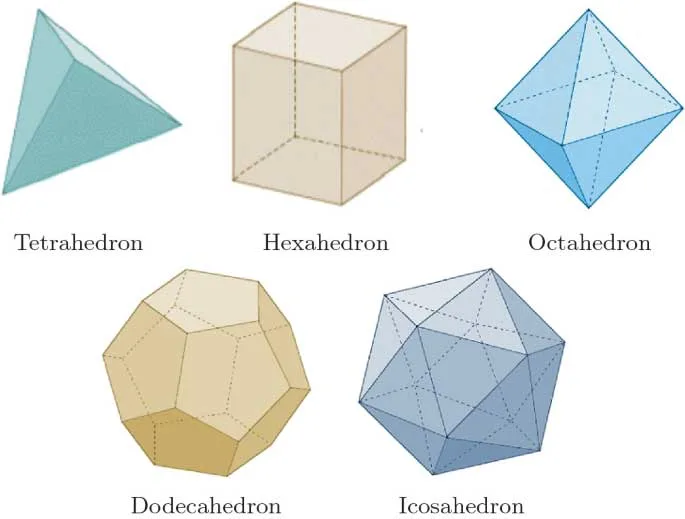
platonic solids
The Platonic Solids

These solids are considered sacred in various spiritual traditions due to their perfect, symmetrical shapes and the belief that they represent the fundamental structures of the natural world.

Other Sacred Patterns

Flower of Life

The Flower of Life is a geometric pattern consisting of multiple evenly-spaced, overlapping circles arranged in a flower-like pattern with a sixfold symmetry, like a hexagon. This pattern forms a part of the sacred geometry and is believed to represent the cycle of creation, depicting how all life comes from one singular source, represented by the circle in the center of the pattern.
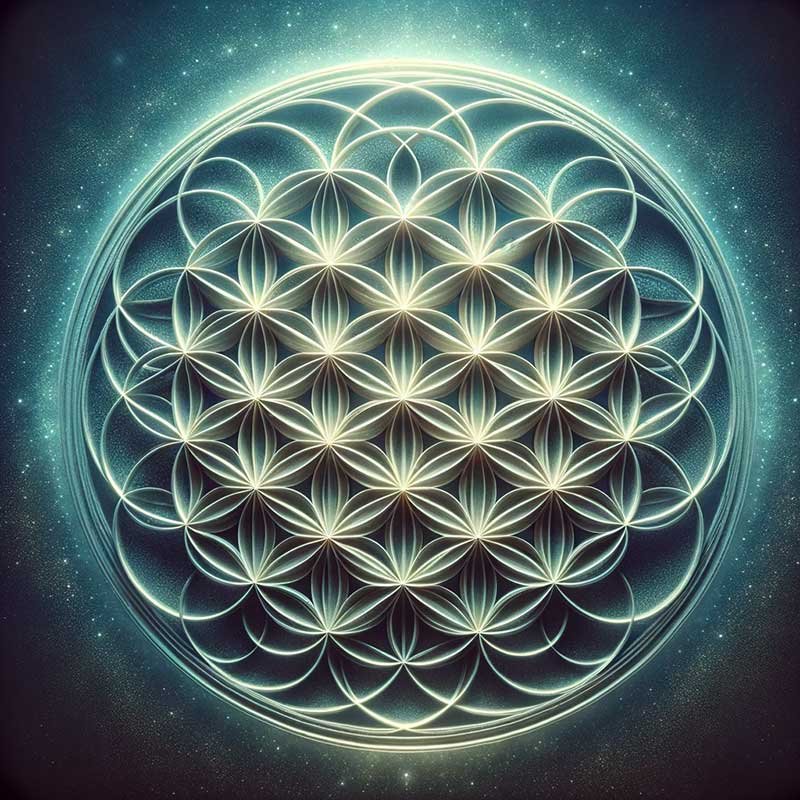
flower of life
Flower of Life. Credit. The Shamanic Garden.Earth. Creative impulse Kevin Parker. Execution Dalle-E

Seed of Life

The Seed of Life is a symbol made of seven interlocking circles. It is considered the basic unit of the Flower of Life’s pattern and symbolizes the seven days of creation, serving as a template from which the Flower of Life arises.
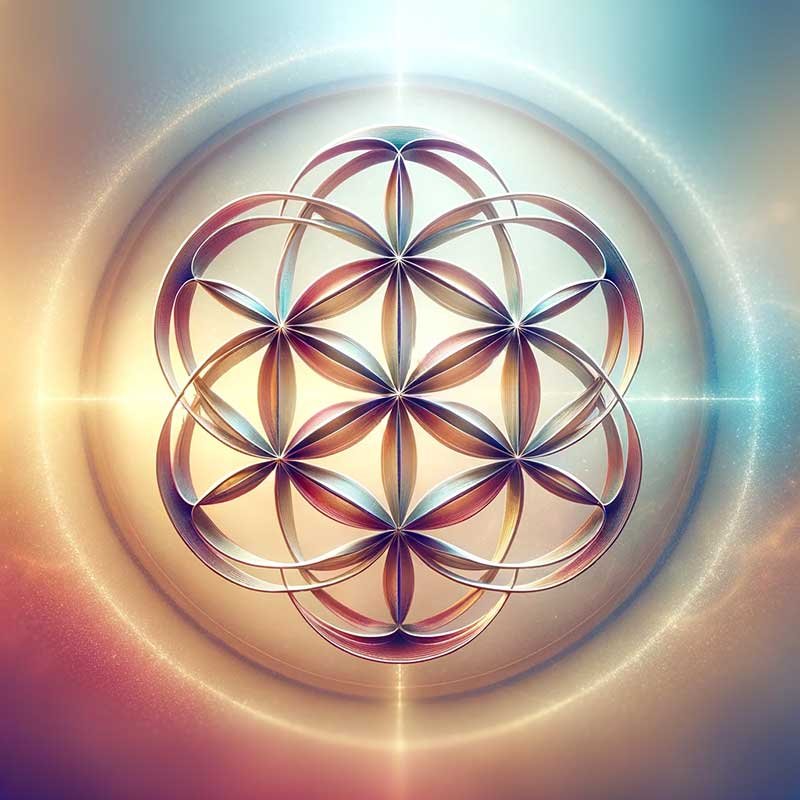
Seed-of-Life
Seed of Life. Credit shamanicgarden.earth. Creative impulse Kevin Parker. Execution Dalle-E

Tree of Life

The Tree of Life is another significant symbol found in many spiritual and religious traditions around the world. It is often depicted as a large tree with spreading branches and roots, symbolizing the interconnectedness of all life on Earth and the link between the earth and the heavens.
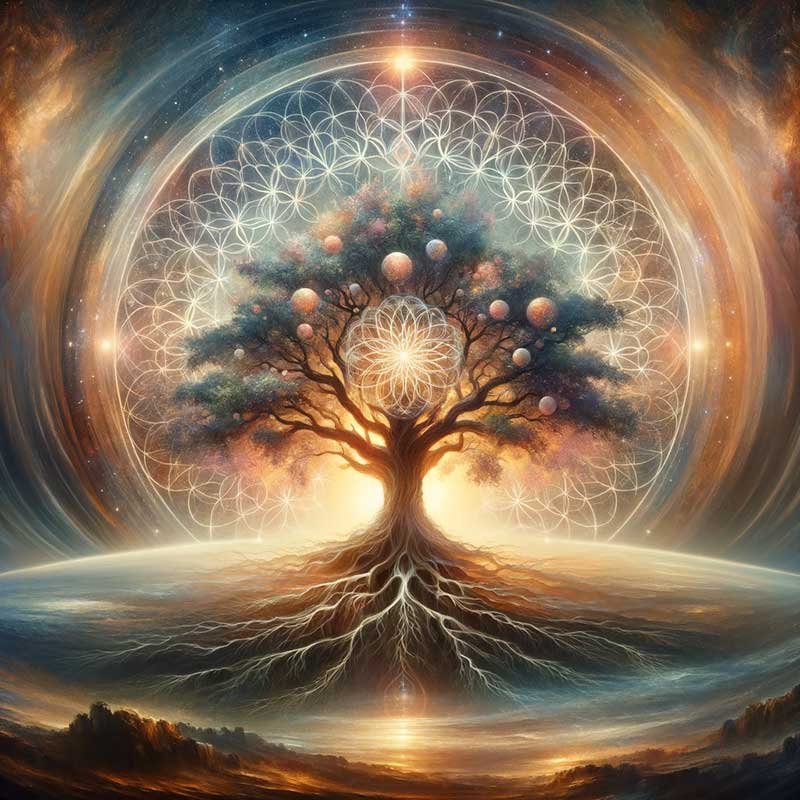
Colourful-Tree-of-Life
Tree of Life. Credit shamanicgarden.eart. Creative impulse Kevin Parker. Execution Dalle-E

Metatron’s Cube

Derived from the Flower of Life, Metatron’s Cube contains all five Platonic Solids. This symbol is named after the Archangel Metatron, who is said to watch over the flow of energy in creation and provides a connection to the divine. It is believed to represent the balance and harmony in the cosmos.
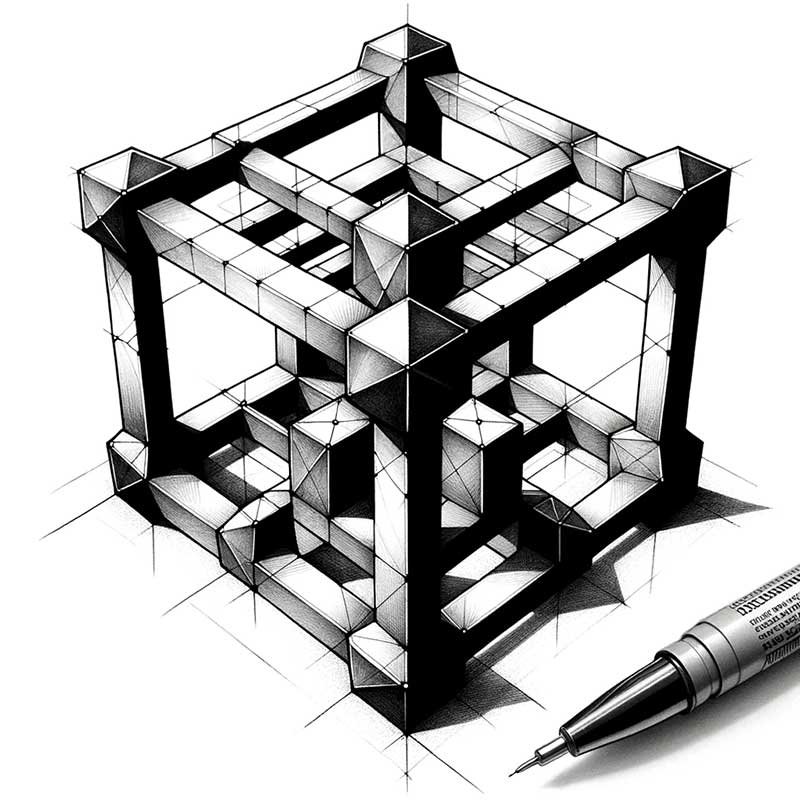
Metatrons-Cube-in-a-3-Dt
Metatrons Cube in 3-D Pen and Ink. Credit shamanicgarden.earth. Creative impulse Kevin Parker. Execution Dalle-E

Sri Yantra

The Sri Yantra, or Shri Chakra, is a complex geometric figure that consists of nine interlocking triangles that radiate out from the central point. Four triangles point upwards, representing Shiva or the masculine, and five downward-pointing triangles represent Shakti or the feminine. This symbol is used in the Hindu tantra to represent the union of the divine masculine and feminine, creating a representation of the entire cosmos.
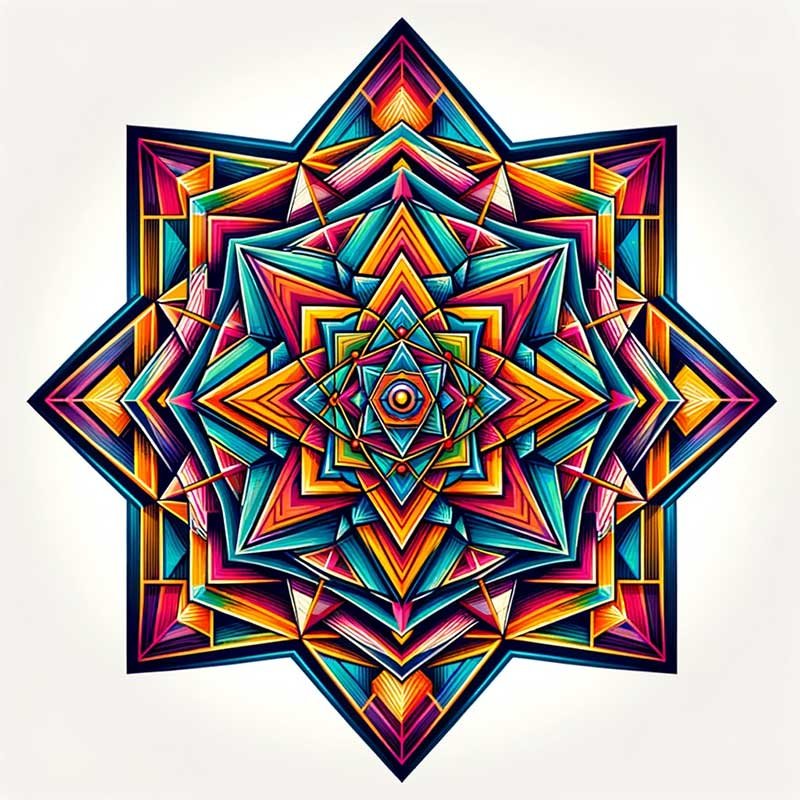
Sri-Yantra-also-known-as-the-Shri-Chakra
Sri Yantra also known as the Shri Chakra. Credit shamanicgarden.earth. Creative impulse Kevin Parker. Execution Dalle-E

Conclusion

Sacred geometry is a vast field that encompasses various symbols and shapes, each with its own unique significance and symbolism. The study of these shapes, from the perfect symmetry of the Platonic Solids to the intricate patterns of the Flower of Life, reflects the human quest for understanding the universe and finding spiritual significance in the patterns and structures that make up the world around us.

Latest Posts

More from Author

The Common Table in a Burning World: Why the United Nations Must Be Revived, Not Abandoned

The chamber still looks improbably calm. Green marble. Translation headsets. Country...

Los Angeles: Reinventing the Concrete River

Explore Los Angeles' ambitious efforts to transform its concrete flood-control river back into a living ecological corridor amidst urban and climate challenges.

Shanghai, China: Sponge City on the Delta

GREEN CITIES SERIES  |  ARTICLE 12 Shanghai is sinking. The city centre...

The Living Marsh: The World’s Remaining Wetlands and the Intelligence of Water

The Living Marsh Feature · The Living World The world’s remaining wetlands, the...

Read Now

The Common Table in a Burning World: Why the United Nations Must Be Revived, Not Abandoned

The chamber still looks improbably calm. Green marble. Translation headsets. Country names set out in alphabetical order, as though the world’s grief can be organised by stationery. Afghanistan sits near Albania. Tuvalu speaks into the same record as the United States. Delegates rise, denounce, defend, abstain and...

Los Angeles: Reinventing the Concrete River

Explore Los Angeles' ambitious efforts to transform its concrete flood-control river back into a living ecological corridor amidst urban and climate challenges.

Shanghai, China: Sponge City on the Delta

GREEN CITIES SERIES  |  ARTICLE 12 Shanghai is sinking. The city centre has subsided more than three metres since the late nineteenth century, while the sea rises around it. In response, China has rolled out the most ambitious urban water-management programme in history — the Sponge City Initiative...

The Living Marsh: The World’s Remaining Wetlands and the Intelligence of Water

The Living Marsh Feature · The Living World The world’s remaining wetlands, the work they do for the planet, and the intelligence of water At first light, the marsh breathes. Mist rises off black water in slow exhalations, and the reeds shiver under the weight of birds too small to...

Modern Slavery in the Twenty-First Century

Is modern slavery surging, or just better counted? Inside the contested 49.6 million figure, forced-labour supply chains and the new trade crackdown.

Shenzhen, China: Electrifying the Megacity

GREEN CITIES SERIES  |  ARTICLE 10 In 2017, Shenzhen became the first city in the world to operate a fully electric public bus fleet. In 2019, its entire taxi fleet followed. These are not incremental improvements or pilot schemes — they are structural transformations, achieved at a speed...

World Environment Day 2026: Climate Action – Why It’s Still So Hard — and What Works

Clean energy is booming, yet emissions keep breaking records. A clear-eyed 2026 look at climate action—what's working, what's failing, and what it will take.

Barcelona Superblocks: The Radical Battle for Quiet, Green Cities

Inside Barcelona's radical push to reclaim streets from cars. How the superblock grid battles noise, heat, and tourism to recover Cerdà's vision.

The Large Language Model Landscape of May 2026: The Architecture of Alignment and Narrative Ethics

May 2026 LLM Landscape: AI becomes vital infrastructure, forcing a pivot to narrative ethics as global challengers disrupt Big Tech's oligopoly

Bogotá, Colombia: Mobility as Democratic Space

GREEN CITIES SERIES  |  ARTICLE 8 Every Sunday, Bogotá returns the streets to its people. That act — repeated for fifty years, in a city of nine million at 2,600 metres above sea level, in a country still reckoning with decades of violence — is both a practical...

The Great Unraveling: A Requiem for the Democracy?

Global democracy is in a high-velocity retreat. Explore the 2026 V-Dem data on systemic autocratisation and blueprints for democratic resilience.

Seoul, and the Return of Water

GREEN CITY SERIES| ARTICLE 11 How river daylighting changed the argument in South Korea’s capital — and why the harder work of a green city lies beyond one celebrated stream Few urban projects have entered the global planning imagination as forcefully as Seoul’s restoration of the Cheonggyecheon. The removal...