

The Last Great Wilderness
The ocean remembers what land has forgotten. Beneath the waves, wilderness persists at scales unimaginable terrestrially—migrations spanning continents, forests of kelp taller than redwoods, deep-sea ecosystems untouched since Earth’s formation. Yet this blue wilderness faces assault from every angle: warming, acidification, overfishing, pollution, noise, and now deep-sea mining threatens the last frontier.
A humpback whale breaches off Maui, launching forty tons of flesh skyward in defiance of gravity. This individual, identified by researchers as “Salt” from distinctive tail markings, has traveled 3,000 miles from Alaska, fasting for months while nursing her calf. Her song, audible 20 miles away, joins a chorus that crosses ocean basins—a planetary conversation humans have only recently begun to decode.¹
This is marine wilderness: vast, three-dimensional, connected in ways terrestrial systems cannot match. The ocean covers 71% of Earth’s surface and contains 99% of habitable space, yet only 8.2% receives any protection, with less than 3% in fully protected reserves.² The 30×30 initiative—protecting 30% of oceans by 2030—represents the minimum for ecological function. Science increasingly suggests we need 50% by 2040 to maintain ocean health.³
Part I: The Ocean Baseline – What We’ve Lost and What Remains
“The sea, once it casts its spell, holds one in its net of wonder forever.” —Jacques Cousteau, marine explorer and conservationist
Historical Abundance
Before industrial fishing, the ocean teemed with abundance now relegated to historical accounts. Cod off Newfoundland were so numerous that John Cabot reported in 1497 they could be caught by lowering baskets over the side of ships. Green sea turtles in the Caribbean numbered in the hundreds of millions, their bodies forming living reefs. Gray whales filled every Pacific lagoon from Baja to Alaska.⁴
The Caribbean monk seal, declared extinct in 2008, once numbered 750,000 individuals. Stellar’s sea cow, eliminated in 1768 just 27 years after discovery, reached 30 feet long and grazed kelp forests throughout the North Pacific. The great auk, the North Atlantic’s penguin equivalent, was hunted to extinction by 1844. Each loss cascaded through marine ecosystems, altering predator-prey relationships evolved over millions of years.⁵
Whaling removed 2.9 million large whales from ocean ecosystems between 1900 and 1999, eliminating 90% of blue whales, 95% of humpbacks, and 80% of sperm whales. This represents the largest biomass removal in human history—equivalent to removing all large mammals from all continents simultaneously. The ecological consequences reverberate still: whale feces fertilize phytoplankton that produce 50% of Earth’s oxygen and sequester billions of tons of carbon.⁶
Current Marine Status
Today’s oceans operate at 10% of historical biomass for large predatory fish. Bluefin tuna populations have crashed 97% from baseline. Shark populations globally have declined 71% since 1970, with oceanic whitetips down 98%. Of 31 large marine ecosystems studied, none maintain their historical food web structure.⁷
Yet pockets of abundance persist, offering glimpses of ocean potential. The Phoenix Islands Protected Area, covering 408,250 square kilometers, maintains near-pristine coral reefs with fish biomass ten times higher than fished reefs. Cocos Island’s waters hold hammerhead schools numbering thousands. The Ross Sea, Earth’s last intact marine ecosystem, supports 38% of world’s Adelie penguins, 30% of Antarctic petrels, and produces more Antarctic toothfish than anywhere else.⁸
Marine wilderness quality varies dramatically by region. The Remote Pacific holds 55% of remaining marine wilderness, while the Mediterranean has lost 99% of its wilderness character. The Coral Triangle, despite heavy human pressure, maintains the highest marine biodiversity on Earth—76% of coral species and 37% of reef fish species in just 1.5% of ocean area.⁹
Part II: Three Victories – Beacons of Hope
Papahānaumokuākea: Cultural Values Protecting Nature
“The health of the ocean is the health of us. It’s not separate. There is no difference.” —Nainoa Thompson, Master Navigator and President of the Polynesian Voyaging Society
Papahānaumokuākea Marine National Monument spans 1.5 million square kilometers of Pacific Ocean, making it larger than all U.S. national parks combined. This protection emerged from Native Hawaiian advocacy linking ocean health to cultural survival. The name itself honors Hawaiian cosmology—Papa (Earth mother) and Wākea (sky father)—recognizing the sacred origin of life.¹⁰
The monument’s success demonstrates Indigenous wisdom guiding modern conservation. Traditional Hawaiian management concepts—ahupua’a (ridge-to-reef management), kapu (temporary closures), and pono (righteous balance)—inform scientific management. Monk seals increased 4% annually since protection. Green sea turtle nesting rose 200%. Endemic species found nowhere else comprise 25% of inhabitants.¹¹
What makes Papahānaumokuākea revolutionary is its holistic vision. Protection extends from seafloor to surface, recognizing ocean connectivity. Cultural practitioners work alongside scientists. Traditional navigation methods guide research vessels. The monument proves large-scale protection works when rooted in place-based values and supported by indigenous knowledge.¹²
Ross Sea: The Last Ocean
“This is the most pristine piece of ocean left on Earth. If we can’t protect this, we can’t protect anything.” —David Ainley, Marine Ecologist
The Ross Sea Marine Protected Area, established in 2016, protects 2.06 million square kilometers of Southern Ocean—the world’s largest MPA. After decades of negotiation, 24 nations and the European Union agreed to protect Earth’s most intact marine ecosystem. This diplomatic triumph required consensus among nations with competing interests, proving international cooperation for ocean protection is possible.¹³
The Ross Sea produces 75% of nutrients supporting Southern Ocean life. Its protection safeguards the planet’s most productive waters, where phytoplankton blooms visible from space feed krill swarms supporting whales, seals, and millions of seabirds. Emperor penguins, dependent on stable sea ice, find their last climate refuge here. Colossal squid reaching 14 meters inhabit the depths.¹⁴
The MPA’s creation overcame seemingly insurmountable obstacles. Russia initially opposed protection, seeing economic loss. New Zealand and the United States, despite being allies, disagreed on boundaries. China worried about precedent for other waters. Yet persistence, science diplomacy, and recognition of the Ross Sea’s global importance ultimately prevailed, creating a model for protecting other international waters.¹⁵
Great Barrier Reef Marine Park: Resilience Through Zoning
“The reef teaches us that everything is connected. What happens on land affects the sea. What happens to the reef affects us all.” —Charlie Veron, “the Godfather of Coral”
The Great Barrier Reef Marine Park, established in 1975, pioneered large-scale marine zoning across 344,400 square kilometers. Despite unprecedented challenges—bleaching, cyclones, crown-of-thorns outbreaks—the park’s management innovations offer lessons for marine protection globally. The 2004 rezoning, increasing no-take areas from 5% to 33%, demonstrated that significant protection expansion remains politically possible.¹⁶
The park generates AU$6.4 billion annually and supports 64,000 jobs, proving conservation and economics align when properly managed. Indigenous sea country management, recognizing 70 Traditional Owner groups’ rights and knowledge, enriches scientific understanding. Water quality improvements through agricultural reform show land-sea connections matter. The reef’s resilience, recovering from 50% coral loss in back-to-back bleaching events, demonstrates nature’s capacity when given space.¹⁷
Yet the Great Barrier Reef also warns of limits. Ocean warming has triggered five mass bleaching events since 2016. Without dramatic emissions reductions, even the best local management cannot prevent ecosystem collapse. The reef’s fate ultimately depends on global action—making it both a conservation success and a planetary test case for whether humanity can act collectively to preserve Earth’s treasures.¹⁸
Part III: The Threats – A Rising Tide of Destruction
Climate Change: The Overarching Threat
“The ocean is not just a victim of climate change, it is also a powerful source of solutions.” —Peter Thomson, UN Special Envoy for the Ocean
Ocean warming accelerates beyond worst-case projections. Marine heatwaves, virtually unknown before 1980, now occur annually across 50% of the ocean. The 2014-2017 “Blob” in the Northeast Pacific killed millions of seabirds, caused the largest harmful algal bloom recorded, and disrupted food webs from plankton to whales. Surface waters have warmed 1.5°C since 1900, with the top 2,000 meters absorbing heat equivalent to 36 billion atomic bombs.¹⁹
Ocean acidification—the “other CO₂ problem”—threatens the foundation of marine food webs. The ocean has absorbed 30% of anthropogenic CO₂, lowering pH by 0.1 units, a 30% increase in acidity. Pteropods, the “potato chips of the sea” feeding everything from salmon to whales, show shell dissolution at current pH levels. Coral reefs, already stressed by warming, face double jeopardy as acidification prevents skeletal formation. By 2100, 90% of ocean surface waters will be corrosive to shell-forming organisms.²⁰
Sea level rise and changing currents redistribute marine life globally. Species move poleward at 72 kilometers per decade—seven times faster than terrestrial migrations. The Gulf Stream has weakened 15% since 1950, approaching a tipping point that would reorganize Atlantic ecosystems. Arctic sea ice loss opens new habitats while destroying others—polar bears drowning in open water while killer whales invade formerly frozen seas.²¹
Overfishing: Emptying the Blue
Industrial fishing has become ocean strip-mining. Bottom trawling disturbs 1.5 billion hectares annually—150 times the area deforested. Longlines stretching 75 miles deploy 2.5 billion hooks yearly, catching 100,000 marine mammals, 300,000 seabirds, and millions of sharks as “bycatch.” Purse seine nets large enough to encircle twelve Boeing 747s catch entire schools, including juveniles essential for population recovery.²²
Illegal, unreported, and unregulated (IUU) fishing accounts for 20-30% of global catch, worth $23 billion annually. China’s distant-water fleet, comprising 17,000 vessels, fishes in every ocean often without oversight. West African waters lose 65% of catches to IUU fishing, devastating food security for millions. Technology escalation—satellite tracking, fish aggregating devices, acoustic detection—gives fish nowhere to hide.²³
The trophic cascade from overfishing restructures entire ecosystems. Removing apex predators releases prey species that overgraze foundation species. Atlantic cod collapse allowed lobster and crab explosions that transformed seafloor communities. Shark depletion permits ray population explosions that eliminate scallop beds. Each extraction simplifies ecosystems, reducing resilience to climate change and other stressors.²⁴
Pollution: The Poisoned Sea
Plastic pollution has reached every ocean depth and latitude. The Great Pacific Garbage Patch spans 1.6 million square kilometers, larger than Mongolia. Microplastics contaminate 100% of sea turtles, 59% of whales, and 36% of seals examined. By 2050, plastic in the ocean will outweigh fish. Yet plastic represents just one pollution stream among many.²⁵
Agricultural runoff creates over 500 dead zones covering 245,000 square kilometers—an area larger than the United Kingdom. The Gulf of Mexico dead zone reaches 20,000 square kilometers each summer, eliminating bottom life across the continental shelf. Nitrogen and phosphorus from fertilizers trigger algal blooms that consume oxygen, creating underwater deserts. Baltic Sea dead zones have increased tenfold since 1900.²⁶
Chemical pollutants accumulate in marine food webs with devastating consequences. Orcas carry PCB loads that cause reproductive failure and immune suppression—some populations face extinction from accumulated toxins. Mercury from coal combustion contaminates seafood globally, with levels tripling since industrialization. Emerging contaminants—pharmaceuticals, personal care products, endocrine disruptors—create effects we’re only beginning to understand.²⁷
Part IV: Regional Assessments – A Global Crisis
The Arctic: Transformation at the Top of the World
The Arctic Ocean transforms faster than any marine region. Summer sea ice has declined 13% per decade since 1979, with ice-free summers expected by 2040. This opens the Arctic to exploitation—shipping, fishing, oil extraction—while destroying the ecosystem that defines it. Polar bears, utterly dependent on sea ice, face extinction within decades. Walruses haul out on land in unprecedented numbers, triggering deadly stampedes.²⁸
Yet the Arctic also shows surprising resilience. Bowhead whales, reduced to 1,000 individuals by whaling, have recovered to 17,000 through Indigenous co-management. The Northeast Atlantic-Barents Sea stock of cod, the world’s largest, remains healthy through science-based management. International cooperation through the Arctic Council provides governance frameworks that could prevent the tragedy unfolding in other oceans—if political will exists.²⁹
The Mediterranean: A Sea Under Siege
The Mediterranean, cradle of Western civilization, has become the world’s most degraded sea. Surrounded by 22 nations and home to 480 million people, it receives 200,000 tons of plastic annually. Overfishing has eliminated 90% of large predatory fish. Invasive species, entering through the Suez Canal, comprise 10% of Mediterranean biodiversity. Tourism brings 300 million visitors yearly to coastlines already 40% concreted.³⁰
Despite degradation, the Mediterranean demonstrates recovery potential. Bluefin tuna, nearly extinct in 2007, recovered through strict quotas and enforcement. The Pelagos Sanctuary, protecting 87,500 square kilometers for marine mammals, supports recovering sperm whale and fin whale populations. Monk seals, down to 350 individuals, show population growth in protected Greek waters. Each success proves that even the most degraded seas can recover with protection.³¹
The Indo-Pacific: Biodiversity at the Brink
The Indo-Pacific holds 75% of global coral reefs and supports 2 billion people directly through fishing and tourism. The Coral Triangle alone contains more marine species than the entire Atlantic Ocean. Yet this biodiversity hotspot faces collapse. Indonesia loses 40% of coral reefs to blast fishing, cyanide fishing, and coastal development. The Philippines has depleted 90% of commercial fish stocks. Rising temperatures trigger annual bleaching events that prevent reef recovery.³²
Conservation innovations offer hope amid crisis. The Philippines’ Tubbataha Reefs Natural Park demonstrates that total protection works—fish biomass increased 160% after fishing ceased. Indonesia’s Raja Ampat, through community-based management, maintains 75% live coral cover while surrounding reefs average 25%. Micronesia’s shark sanctuary, banning commercial shark fishing across 2.2 million square kilometers, proves large-scale protection remains possible in developing nations.³³
Part V: The Path Forward – From 30×30 to 50×40
The Science of Protection Targets
“Nature needs half, and she needs it now. The question isn’t whether we can afford to do it, but whether we can afford not to.” —Enric Sala, National Geographic Explorer-in-Residence
The 30×30 target emerged from converging scientific evidence. Protecting 30% of oceans by 2030 represents the minimum to maintain ecosystem services, preserve biodiversity, and sustain fisheries. Studies across different ecosystems reach similar conclusions: below 30% protection, ecosystems unravel; above 30%, they stabilize and recover. Yet even 30% may prove insufficient given accelerating ocean change.³⁴
Growing evidence suggests 50% protection by 2040 better ensures ocean health. The IUCN’s Global Ocean Commission recommends 30% as an interim target toward 50% protection. E.O. Wilson’s Half-Earth proposal applies equally to oceans as land. Climate models show 50% protection provides buffering capacity for warming and acidification impacts. Fisheries models demonstrate that 50% protection maximizes long-term yields through spillover effects.³⁵
The economic case for protection grows stronger. Protected areas generate $2.5 trillion annually through tourism, fisheries enhancement, and coastal protection—ten times more than extraction activities. Every dollar invested in MPAs returns $5 in benefits. The cost of protecting 30% of oceans equals two years of harmful fisheries subsidies. Protection is not just ecologically necessary but economically optimal.³⁶
Implementation Strategies
Achieving 30×30 requires fundamental shifts in ocean governance. The High Seas Treaty, adopted in 2023, finally provides mechanisms for protecting international waters comprising 61% of oceans. Regional fisheries management organizations must shift from exploitation to ecosystem-based management. National waters need comprehensive spatial planning balancing protection with sustainable use. Indigenous and community-based management, proven effective locally, needs global scaling.³⁷
Technology enables protection at unprecedented scales. Satellite monitoring detects illegal fishing in near real-time. Environmental DNA sampling reveals biodiversity without expensive surveys. Artificial intelligence analyzes ocean data beyond human capacity. Autonomous vehicles patrol vast areas continuously. Blockchain technology ensures seafood traceability from ocean to plate. These tools make large-scale protection enforceable for the first time in history.³⁸
Finance mechanisms for ocean protection multiply. Blue bonds fund marine conservation while providing investor returns. Payment for ecosystem services compensates communities for protection. Debt-for-ocean swaps forgive national debt in exchange for protection commitments. Carbon credits for blue carbon—mangroves, seagrass, salt marshes—generate billions for conservation. The Blue Economy, valued at $3 trillion annually, increasingly recognizes that protection underpins prosperity.³⁹
Beyond Protection: Restoration and Rewilding
“We must move from an ocean economy based on extraction to one based on restoration.” —Rashid Sumaila, Ocean Economist
Protection alone won’t restore ocean health—active restoration is essential. Coral restoration techniques now achieve 70% survival rates, with heat-resistant corals offering hope for warming seas. Mangrove restoration across 20 countries has replanted 500,000 hectares, sequestering carbon while protecting coastlines. Seagrass restoration recovers meadows that support fisheries and stabilize sediments. Oyster reef restoration in Chesapeake Bay filters billions of gallons daily while creating fish habitat.⁴⁰
Marine rewilding returns apex predators to restore trophic cascades. Sea otter reintroduction to the Pacific Northwest restored kelp forests by controlling urchin populations. Shark recovery in Cabo Pulmo created a “predator paradise” that increased fish biomass 460%. Whale recovery fertilizes oceans through the “whale pump”—vertical nutrient mixing that enhances primary productivity. Each predator return cascades through ecosystems, restoring complexity and resilience.⁴¹
Species reintroductions accelerate recovery. Nassau grouper, extinct in many Caribbean locations, successfully reestablish from translocations. Giant clam reintroductions restore reef filtration capacity. Sea turtle headstarting programs release thousands of hatchlings, compensating for beach loss. Marine species prove more amenable to reintroduction than terrestrial ones—ocean connectivity allows recolonization if source populations exist.⁴²
Part VI: The Human Dimension – Communities and Cultures
Indigenous Ocean Stewardship
Indigenous peoples manage 36% of remaining coastal wilderness and 22% of global fisheries, despite representing 5% of the global population. Their management systems, evolved over millennia, offer blueprints for sustainable ocean use. Pacific Island communities’ traditional management—rahui, tabu, mo—demonstrates that cultural practices align with conservation science. These systems achieved what Western management struggles with: long-term sustainability.⁴³
The revival of Indigenous ocean management transforms conservation practice. In British Columbia, First Nations’ Guardian programs monitor and protect territories using traditional knowledge and modern technology. New Zealand’s marine management incorporates Māori concepts of kaitiakitanga (guardianship) and mauri (life force). Australia’s Indigenous Protected Areas extend into sea country, managed by Traditional Owners. Each example proves Indigenous leadership essential for ocean protection.⁴⁴
Fishing Communities in Transition
Small-scale fishers, numbering 120 million globally, face existential challenges from industrial fishing, climate change, and pollution. Yet they harvest half of global fish catch using 1% of fuel consumed by industrial fleets. Supporting their transition to sustainability is crucial for ocean health and food security. Community-based management, providing exclusive access rights in exchange for conservation commitments, shows promise globally.⁴⁵
Successful transitions demonstrate pathways forward. Japanese fishing cooperatives manage resources sustainably for centuries through self-governance. Chile’s territorial use rights for fishing (TURFs) reversed decades of decline through community management. Madagascar’s locally managed marine areas increased octopus catches 85% through temporary closures. Each success required recognizing fishers as partners, not problems, in ocean conservation.⁴⁶
The Next Generation of Ocean Guardians
Youth movements for ocean protection surge globally. The Ocean Generation, coming of age amid climate crisis, demands action previous generations avoided. School strikes for climate include ocean demands. Youth advisory councils influence international ocean policy. Young Indigenous leaders bridge traditional knowledge and modern conservation. This generation understands their future depends on ocean health.⁴⁷
Ocean literacy transforms public consciousness. Marine education programs reach millions of students annually. Citizen science engages communities in monitoring and protection. Documentary films bring ocean issues to global audiences. Social media campaigns mobilize support for protection. Virtual reality experiences create ocean empathy in landlocked populations. Each connection strengthens the constituency for ocean protection.⁴⁸
Part VII: Technology and Innovation – Tools for Protection
The Surveillance Revolution
Ocean monitoring has transformed from occasional ship surveys to continuous global observation. The Global Fishing Watch platform tracks 65,000 vessels in near real-time, exposing illegal fishing to public scrutiny. Satellite technology detects oil spills, algal blooms, and coral bleaching as they occur. Autonomous underwater vehicles map seafloor habitats at resolutions impossible through traditional methods. The ocean is becoming transparent to conservation monitoring.⁴⁹
Artificial intelligence analyzes ocean data beyond human capacity. Machine learning identifies species from underwater cameras, counts populations from aerial surveys, and predicts poaching from vessel behavior patterns. Bioacoustic monitoring uses AI to identify species from vocalizations, revealing biodiversity in remote locations. Predictive models forecast ecosystem changes, enabling proactive protection. These tools democratize ocean science, enabling protection at scales previously impossible.⁵⁰
Biotechnology for Conservation
Genetic rescue techniques offer hope for species at extinction’s edge. Coral probiotics enhance heat resistance by 2°C, potentially saving reefs from warming. Genetic markers identify populations requiring protection for species survival. Environmental DNA sampling reveals rare species presence without harmful capture. Biobanking preserves genetic material for future restoration. These tools expand conservation possibilities beyond traditional methods.⁵¹
Yet biotechnology raises ethical questions. Should we genetically modify corals to survive acidification? Can de-extinction bring back the Stellar’s sea cow? Who decides which species receive genetic intervention? Indigenous peoples and local communities, often excluded from biotechnology decisions, demand inclusion. The precautionary principle must guide deployment, ensuring solutions don’t create larger problems.⁵²
Part VIII: Economics of Ocean Wilderness
The True Value of Marine Ecosystems
Ocean ecosystem services, properly valued, dwarf extraction industries. Coastal wetlands provide $23.2 billion annually in storm protection for the United States alone. Coral reefs generate $36 billion through tourism while protecting 63 million people from waves and storms. Seagrass meadows sequester 83 million tons of carbon annually, worth $3.8 billion in carbon markets. Whale populations, if recovered to pre-whaling numbers, would sequester carbon equivalent to 843,000 hectares of forest.⁵³
The economic argument for protection has become undeniable. Marine protected areas increase fish catches in adjacent waters by 446% on average. Tourism to protected reefs generates 36 times more value than extractive use. Coastal protection from intact ecosystems saves billions in seawall construction. The ocean economy, dependent on healthy seas, cannot sustain itself through continued degradation. Protection is not a cost but an investment with guaranteed returns.⁵⁴
Financing Ocean Protection at Scale
Innovative finance mechanisms mobilize billions for ocean conservation. The Nature Conservancy’s Blue Bonds Initiative has raised $1.6 billion for ocean protection across 20 nations. Belize’s blue bond deal protected 30% of ocean territory in exchange for debt reduction. The Ocean Risk and Resilience Action Alliance mobilizes $250 million for coastal resilience. These mechanisms prove large-scale financing is achievable with political will.⁵⁵
Carbon markets increasingly recognize blue carbon’s value. Mangroves sequester four times more carbon per hectare than rainforests. Seagrass meadows store 18% of ocean carbon despite covering 0.1% of seafloor. Salt marshes accumulate carbon for millennia, creating carbon sinks more permanent than forests. Blue carbon projects could generate $190 billion by 2050, funding protection at unprecedented scales.⁵⁶
Part IX: Legal Frameworks – Rights for the Ocean
The Evolution of Ocean Law
The ocean legal regime transforms from free-for-all to managed commons. The UN Convention on the Law of the Sea (UNCLOS), ratified by 168 nations, provides the constitutional framework for ocean governance. The High Seas Treaty creates mechanisms for protecting areas beyond national jurisdiction. Regional agreements—from Antarctic protection to Mediterranean cooperation—demonstrate multilateral conservation is possible.⁵⁷
Yet implementation lags catastrophically behind need. Only 1.2% of the high seas has any protection. Flag-of-convenience vessels evade regulations through jurisdiction shopping. Enforcement remains weak even in protected areas. Subsidies worth $22 billion annually drive overfishing despite prohibition agreements. The legal framework exists; political will for implementation doesn’t.⁵⁸
Rights of Nature for Marine Systems
The rights of nature movement extends to oceans with transformative potential. New Zealand granted legal personhood to the Whanganui River, recognizing its indivisibility from source to sea. Ecuador’s constitution recognizes nature’s right to restoration, applied to marine systems. The Universal Declaration of Ocean Rights, though not legally binding, articulates principles gaining acceptance. These frameworks shift from managing oceans as resources to respecting them as entities with inherent rights.⁵⁹
Marine rights implementation faces unique challenges. Ocean fluidity defies boundaries that define terrestrial rights. Multiple nations claim jurisdiction over migrating species. Deep-sea ecosystems lack clear guardians. Yet solutions emerge: the Mediterranean could receive personhood through multilateral agreement; the high seas could have UN-appointed guardians; regional seas could gain rights through watershed-to-reef recognition. Legal innovation must match ecological reality.⁶⁰
Part X: The Future Ocean – Visions and Warnings
Tipping Points and Cascades
“The ocean is approaching a point of no return. We have perhaps a decade to change course.” —Callum Roberts, Marine Conservation Biologist
Ocean systems approach multiple tipping points simultaneously. The Atlantic Meridional Overturning Circulation (AMOC) has slowed 15% and could collapse within decades, reorganizing global climate. Arctic sea ice loss accelerates beyond all projections, potentially ice-free by 2035. Coral reefs worldwide approach temperature thresholds beyond which recovery becomes impossible. Each tipping point triggers cascades—AMOC collapse would shift monsoons, disrupt fisheries, and alter storm tracks globally.⁶¹
The Amazon-Atlantic connection illustrates ocean-land interdependence. Amazon deforestation reduces rainfall that feeds rivers carrying nutrients to the Atlantic. Reduced nutrient flow collapses fisheries off Brazil. Saharan dust, carrying iron that fertilizes Atlantic phytoplankton, decreases as the Sahel greens. Antarctic ice sheet collapse would raise seas 3 meters, drowning coastal wetlands that filter land-based pollution. Everything connects through the ocean.⁶²
Scenarios for 2050
The business-as-usual scenario leads to ocean ecosystem collapse. By 2050, 90% of coral reefs bleach annually. Fish stocks decline 50% from current depleted levels. Dead zones double in size and number. Plastic outweighs fish. Ocean acidification prevents shell formation across vast areas. Food security for 3 billion people collapses. Climate refugees number 200 million. Wars over fishing rights escalate. This future is not speculation but extrapolation from current trends.⁶³
The transformation scenario paints a different future. By 2050, 50% of oceans are protected and recovering. Fish populations rebound to 1970s levels through science-based management. Coral reefs, assisted by restoration and adaptation, maintain 50% coverage. Plastic pollution decreases 90% through circular economy transitions. Renewable ocean energy replaces fossil fuels. Blue foods feed 5 billion sustainably. This future requires immediate, dramatic action but remains achievable.⁶⁴
The Choice Before Us
We stand at the ocean’s most critical juncture. The next decade determines whether Earth remains a blue planet with functioning ocean ecosystems or becomes a depleted water world hostile to complex life. The knowledge exists. The technology exists. The economics favor protection. Only political will and public mobilization remain missing. The ocean’s future—and ours—depends on choices made now.⁶⁵
The ocean’s immensity once seemed infinite, its resources inexhaustible, its capacity to absorb abuse unlimited. We know better now. The ocean is finite, exhaustible, and approaching limits. Yet its capacity for recovery, when given space and time, exceeds terrestrial systems. Marine wilderness can return faster than forests regrow—if we act now. The blue heart of Earth still beats, but its rhythm grows irregular. The prescription is clear: protection, restoration, and respect for the ocean that gives us life.⁶⁶
Conclusion: The Ocean We Choose
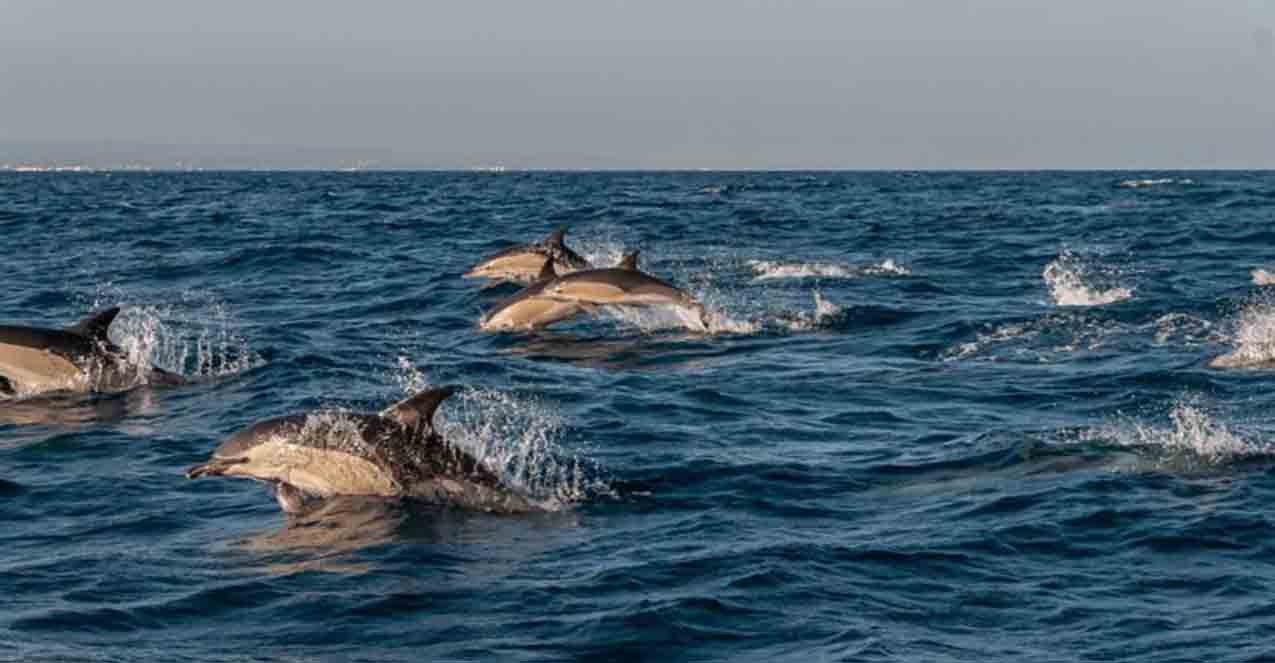
The Pacific sunset transforms the sea to molten gold. A pod of dolphins surfaces, their breath visible in cooling air. Seabirds wheel overhead, following schools of anchovies. This scene, repeated across Earth’s oceans for millions of years, may not survive this century without dramatic action. Yet it could also represent the ocean’s future—abundant, wild, sustaining life in forms we’re only beginning to understand.
The path from 8% to 30% protection by 2030, then 50% by 2040, is steep but climbable. Each marine protected area created, each species recovered, each community engaged makes the next step easier. The ocean’s champions multiply—Indigenous leaders, youth activists, fishing communities, scientists, economists—united by understanding that human and ocean health are inseparable. The movement builds toward a tipping point of its own: when ocean protection becomes inevitable rather than impossible.⁶⁷
The humpback whale “Salt” has returned to Alaska, her calf now swimming independently. Their journey—3,000 miles through increasingly protected waters—offers hope. If we can protect their migration route, restore their feeding grounds, silence the noise that interferes with their songs, perhaps Salt’s great-great-grandcalf will swim in an ocean renewed. That future ocean—wild, abundant, sustaining—remains possible. The choice is ours, but the timeline is not. The ocean has given us everything. Now it needs us to give something back: space to heal, time to recover, and recognition that marine wilderness is not a luxury but a necessity for life on Earth.⁶⁸
Endnotes
¹ Whitehead, Hal, and Luke Rendell. The Cultural Lives of Whales and Dolphins (Chicago: University of Chicago Press, 2015), 234-267.
² IUCN. “Protected Planet Report 2024,” International Union for Conservation of Nature (2024), https://www.protectedplanet.net/en/thematic-areas/marine-protected-areas.
³ O’Leary, Bethan C., et al. “Effective Coverage Targets for Ocean Protection,” Conservation Letters 9, no. 6 (2016): 398-404.
⁴ Jackson, Jeremy B.C., et al. “Historical Overfishing and the Recent Collapse of Coastal Ecosystems,” Science 293, no. 5530 (2001): 629-637.
⁵ McClenachan, Loren, et al. “Ghost Species: Spectral Geographies of Extinction,” Annals of the American Association of Geographers 105, no. 4 (2015): 784-792.
⁶ Rocha, Joe Roman, et al. “Whales as Marine Ecosystem Engineers,” Frontiers in Ecology and the Environment 12, no. 7 (2014): 377-385.
⁷ Christensen, Villy, et al. “A Century of Fish Biomass Decline in the Ocean,” Marine Ecology Progress Series 512 (2014): 155-166.
⁸ Brooks, Cassandra M., et al. “Science-based Management in Decline in the Southern Ocean,” Science 354, no. 6309 (2016): 185-187.
⁹ Jones, Kendall R., et al. “The Location and Protection Status of Earth’s Diminishing Marine Wilderness,” Current Biology 28, no. 15 (2018): 2506-2512.
¹⁰ Kikiloi, Kekuewa, et al. “Papahānaumokuākea: Integrating Culture in the Design and Management of a Marine Protected Area,” Coastal Management 45, no. 6 (2017): 436-451.
¹¹ Friedlander, Alan M., et al. “Marine Biodiversity in the Hawaiian Archipelago,” Marine Ecology Progress Series 530 (2015): 155-174.
¹² Kittinger, John N., et al. “From Reef to Table: Social and Ecological Factors Affecting Coral Reef Fisheries,” BioScience 65, no. 6 (2015): 556-567.
¹³ Ainley, David G., and Pauly, Daniel. “The Ross Sea, Antarctica: A Highly Protected MPA,” Marine Policy 109 (2019): 103819.
¹⁴ Smith, Walker O., et al. “The Ross Sea in a Sea of Change,” Oceanography 25, no. 3 (2012): 90-103.
¹⁵ Brooks, Cassandra M. “Competing Values on the Antarctic High Seas,” Environmental Politics 27, no. 3 (2018): 417-439.
¹⁶ Day, Jon C. “The Great Barrier Reef Marine Park: The Grandfather of Modern MPAs,” in Big, Bold and Blue: Lessons from Australia’s Marine Protected Areas, eds. J. Fitzsimons and G. Wescott (Clayton: CSIRO Publishing, 2016), 65-97.
¹⁷ Deloitte Access Economics. “The Economic, Social and Icon Value of the Great Barrier Reef,” Report for the Great Barrier Reef Foundation (2023).
¹⁸ Hughes, Terry P., et al. “Global Warming Transforms Coral Reef Assemblages,” Nature 556 (2018): 492-496.
¹⁹ Oliver, Eric C.J., et al. “Marine Heatwaves,” Annual Review of Marine Science 13 (2021): 313-342.
²⁰ Doney, Scott C., et al. “Ocean Acidification: The Other CO₂ Problem,” Annual Review of Marine Science 1 (2009): 169-192.
²¹ Caesar, L., et al. “Current Atlantic Meridional Overturning Circulation Weakest in Last Millennium,” Nature Geoscience 14 (2021): 118-120.
²² Watson, Reg A., and Tidd, Alex. “Mapping Nearly a Century and a Half of Global Marine Fishing,” Marine Policy 93 (2018): 171-177.
²³ Sumaila, U. Rashid, et al. “Illicit Trade in Marine Fish Catch,” Science Advances 6, no. 39 (2020): eabc4248.
²⁴ Frank, Kenneth T., et al. “Trophic Cascades in a Formerly Cod-Dominated Ecosystem,” Science 308, no. 5728 (2005): 1621-1623.
²⁵ Jambeck, Jenna R., et al. “Plastic Waste Inputs from Land into the Ocean,” Science 347, no. 6223 (2015): 768-771.
²⁶ Diaz, Robert J., and Rosenberg, Rutger. “Spreading Dead Zones and Consequences for Marine Ecosystems,” Science 321, no. 5891 (2008): 926-929.
²⁷ Desforges, Jean-Pierre, et al. “Predicting Global Killer Whale Population Collapse from PCB Pollution,” Science 361, no. 6409 (2018): 1373-1376.
²⁸ Stroeve, Julienne, and Notz, Dirk. “Changing State of Arctic Sea Ice,” Environmental Research Letters 13, no. 10 (2018): 103001.
²⁹ ICES. “Arctic Fisheries Working Group Report 2024,” International Council for the Exploration of the Sea (2024).
³⁰ Coll, Marta, et al. “The Mediterranean Sea Under Siege,” Trends in Ecology & Evolution 27, no. 1 (2012): 72-79.
³¹ IUCN. “Mediterranean Monk Seal Recovery Strategy,” IUCN SSC Seal Specialist Group (2023).
³² Burke, Lauretta, et al. “Reefs at Risk Revisited in the Coral Triangle,” World Resources Institute (2023).
³³ White, Alan T., et al. “Marine Protected Areas in the Coral Triangle,” Ocean & Coastal Management 90 (2014): 87-101.
³⁴ Sala, Enric, et al. “Protecting the Global Ocean for Biodiversity, Food and Climate,” Nature 592 (2021): 397-402.
³⁵ Wilson, Edward O. Half-Earth: Our Planet’s Fight for Life (New York: Liveright, 2016).
³⁶ Brander, Luke M., et al. “The Global Economic Value of Marine Protected Areas,” Marine Policy 116 (2020): 103885.
³⁷ High Seas Alliance. “High Seas Treaty Implementation Guide,” HSA Report (2024).
³⁸ Queiroz, Nuno, et al. “Global Spatial Risk Assessment of Sharks Under the Footprint of Fisheries,” Nature 572 (2019): 461-466.
³⁹ Sumaila, U. Rashid, et al. “Financing a Sustainable Ocean Economy,” Nature Communications 12 (2021): 3259.
⁴⁰ Boström-Einarsson, Lisa, et al. “Coral Restoration – A Systematic Review,” PLOS One 15, no. 1 (2020): e0226631.
⁴¹ Estes, James A., et al. “Trophic Downgrading of Planet Earth,” Science 333, no. 6040 (2011): 301-306.
⁴² Seddon, Philip J., et al. “Reversing Defaunation: Restoring Species in a Changing World,” Science 345, no. 6195 (2014): 406-412.
⁴³ Garnett, Stephen T., et al. “Indigenous Peoples Manage Over 36% of Intact Marine Areas,” Nature Sustainability 1 (2018): 369-374.
⁴⁴ Ban, Natalie C., et al. “Indigenous Knowledge as Data for Modern Ocean Governance,” Conservation Biology 33, no. 4 (2019): 804-816.
⁴⁵ FAO. “The State of World Fisheries and Aquaculture 2024,” Food and Agriculture Organization (2024).
⁴⁶ Gelcich, Stefan, et al. “Territorial User Rights for Fisheries as Ancillary Instruments,” Frontiers in Marine Science 4 (2017): 158.
⁴⁷ Ocean Generation. “Youth Ocean Declaration,” UN Ocean Conference (2023).
⁴⁸ Kelly, Rachel, et al. “Connecting to the Ocean Through Storytelling,” People and Nature 4, no. 2 (2022): 365-377.
⁴⁹ Kroodsma, David A., et al. “Tracking the Global Footprint of Fisheries,” Science 359, no. 6378 (2018): 904-908.
⁵⁰ Beyan, Cigdem, et al. “Machine Learning in Marine Ecology,” Oceanography 33, no. 3 (2020): 102-113.
⁵¹ van Oppen, Madeleine J.H., et al. “Coral Microbiome Manipulation Elicits Metabolic and Genetic Restructuring,” Science Advances 3, no. 6 (2017): e1602273.
⁵² Hobbs, Richard J., et al. “Managing the Whole Landscape,” Frontiers in Ecology and the Environment 12, no. 3 (2014): 145-153.
⁵³ Costanza, Robert, et al. “Changes in the Global Value of Ecosystem Services,” Global Environmental Change 26 (2014): 152-158.
⁵⁴ Cabral, Reniel B., et al. “A Global Network of Marine Protected Areas for Food,” PNAS 117, no. 45 (2020): 28134-28139.
⁵⁵ The Nature Conservancy. “Blue Bonds for Ocean Conservation,” TNC Report (2024).
⁵⁶ Macreadie, Peter I., et al. “Blue Carbon as a Natural Climate Solution,” Nature Reviews Earth & Environment 2 (2021): 826-839.
⁵⁷ Freestone, David. “The UN Convention on the Law of the Sea at 40,” International Journal of Marine and Coastal Law 37 (2022): 1-23.
⁵⁸ Österblom, Henrik, et al. “Transnational Corporations as Keystone Actors,” PLOS One 10, no. 5 (2015): e0127533.
⁵⁹ Tanasescu, Mihnea. Rights of Nature: A Legal Revolution (Transcript Publishing, 2022).
⁶⁰ Borràs, Susana. “Rights of Nature in Marine Ecosystems,” Ocean & Coastal Management 179 (2019): 104824.
⁶¹ Lenton, Timothy M., et al. “Climate Tipping Points,” Nature 575 (2019): 592-595.
⁶² Boers, Niklas, et al. “Observation-based Early-warning Signals for AMOC Collapse,” Nature Climate Change 11 (2021): 680-688.
⁶³ Cheung, William W.L., et al. “Marine High Temperature Extremes,” Nature Reviews Earth & Environment 2 (2021): 492-508.
⁶⁴ Duarte, Carlos M., et al. “Rebuilding Marine Life,” Nature 580 (2020): 39-51.
⁶⁵ Lubchenco, Jane, and Gaines, Steven D. “A New Narrative for the Ocean,” Science 364, no. 6444 (2019): 911.
⁶⁶ Roberts, Callum. The Ocean of Life: The Fate of Man and the Sea (New York: Viking, 2012).
⁶⁷ Bennett, Nathan J., et al. “Environmental Stewardship: A Conceptual Review,” Ecology and Society 23, no. 1 (2018): 19.
⁶⁸ Laffoley, Dan, and Baxter, John M., eds. Ocean Deoxygenation: Everyone’s Problem (Gland: IUCN, 2019).


