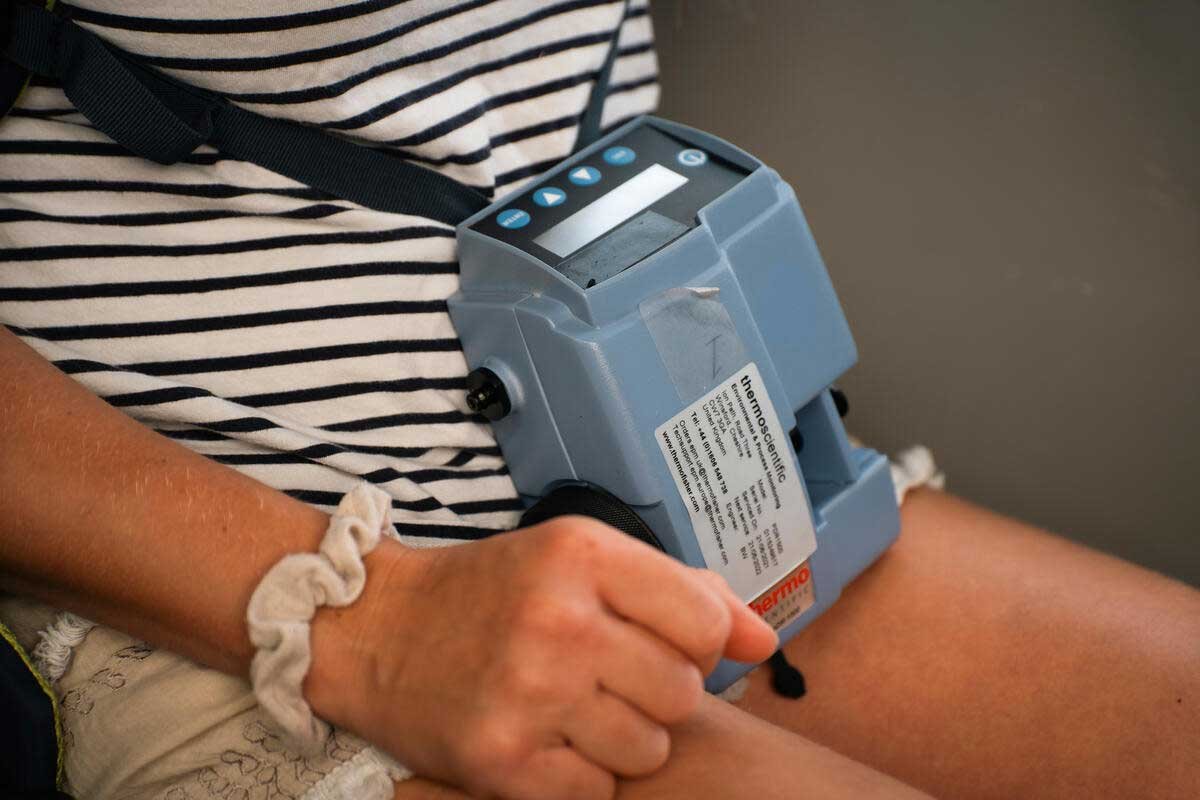

Press Release 11th August, 2025 – Geneva, Switzerland — A new Greenpeace International investigation confirms that airborne microplastics are present in the urban air of Geneva, after sampling outdoors and in indoor spaces like cafés, public transport, and shops. As governments enter the second week of the Global Plastics Treaty negotiations, the research highlights an invisible but widespread part of the plastic pollution crisis.
Graham Forbes, Global Plastics Campaign Lead for Greenpeace USA and Greenpeace Head of Delegation for the Global Plastics Treaty negotiation said: “Investigations like this show why we need to cut plastic production at the source. But the petrochemical industry continues to push for massive expansion in plastic production, which could triple by 2060. Just by walking around their cities, fossil fuel and petrochemical lobbyists are inhaling the plastics that they have produced, giving themselves potential health issues – and that includes here in Geneva as they hammer out the treaty.”
Key findings include:
- 165 total particles, analysed under high magnification and infrared spectroscopy, including:
- 94 fragments, many under 20 microns — too small to be seen with the naked eye.
- 71 fibres, ranging in length and diameter, with a majority made from cellulose or modified natural materials.
- 12 confirmed microplastic particles (6 fibres, 6 fragments) and 3 more tentatively identified as synthetic polymers.
- Confirmed microplastics include polyester, nylon, polyethylene, vinyl copolymers, and cellulose acetate, typical of clothing, packaging, and furnishings.
These particles were collected over 8 hours with a sample volume of 1.7 m³, a person typically breathes much more air in the same time [1]. Also, we only analysed particles larger than 10 microns; recent research suggests much smaller microplastics (1–10 µm) are likely to be present in even greater quantities, which are small enough to penetrate deep into the lungs, raising serious health concerns.
Switzerland ranks 8th globally in waste management, yet Geneva’s air contains microplastic pollution, revealing just how pervasive and uncontainable plastic has become once released into the environment. As plastic production continues to grow, so will the scale and severity of this pollution.
Joëlle Hérin, expert and campaigner on consumption systems at Greenpeace Switzerland, said: “Even the best waste management systems can’t stop plastic from turning into air pollution. We are breathing in plastic, and it’s getting into our lungs. That should be a wake-up call for any government serious about public health and planetary survival.”
Greenpeace is calling for a legally binding treaty that cuts plastic production by at least 75% by 2040. Currently, the petrochemical industry continues to push for massive expansion in plastic production, which could triple by 2060 [2]. Much of this is for short-lived products like single-use packaging and fast fashion, leading to a future of escalating plastic waste and microplastic exposure, regardless of how it is managed or recycled.
Hérin added: “We need political courage. Every year we delay means more plastic in the air, water, and our bodies. The science is clear: the time to act is now. We need a strong Global Plastics Treaty that cuts plastic production at the source, or it will fail.”
ENDS
Full report: Living in Plastic Air
Photos and videos can be accessed in the Greenpeace Media Library.
Notes:
[1] A researcher wore a modified personal air quality monitor (PDR-1500) which collected airborne particles over eight hours in various points in Geneva. The locations visited were the Greenpeace Switzerland office, a coworking space, railway station, clothes shops, an indoor shopping centre, a restaurant and a coffee shop, using public transport and on foot. Outdoor air between these locations was also part of the sample.
[2] Scenario is from a baseline of 428 MT in 2019, in OECD. Global Plastics Outlook: Policy Scenarios to 2060; Organisation for Economic Co-operation and Development: Paris, 2022. https://doi.org/10.1787/aa1edf33-en
Contacts:
Fanny Eternod, Press Officer, Greenpeace Switzerland, fanny.eternod@greenpeace.org, +41 78 662 07 31
Angelica Carballo Pago, Global Plastics Campaign Media Lead, Greenpeace USA, angelica.pago@greenpeace.org, +63 917 1124492
Greenpeace International Press Desk, +31 (0) 20 718 2470 (available 24 hours), pressdesk.int@greenpeace.org