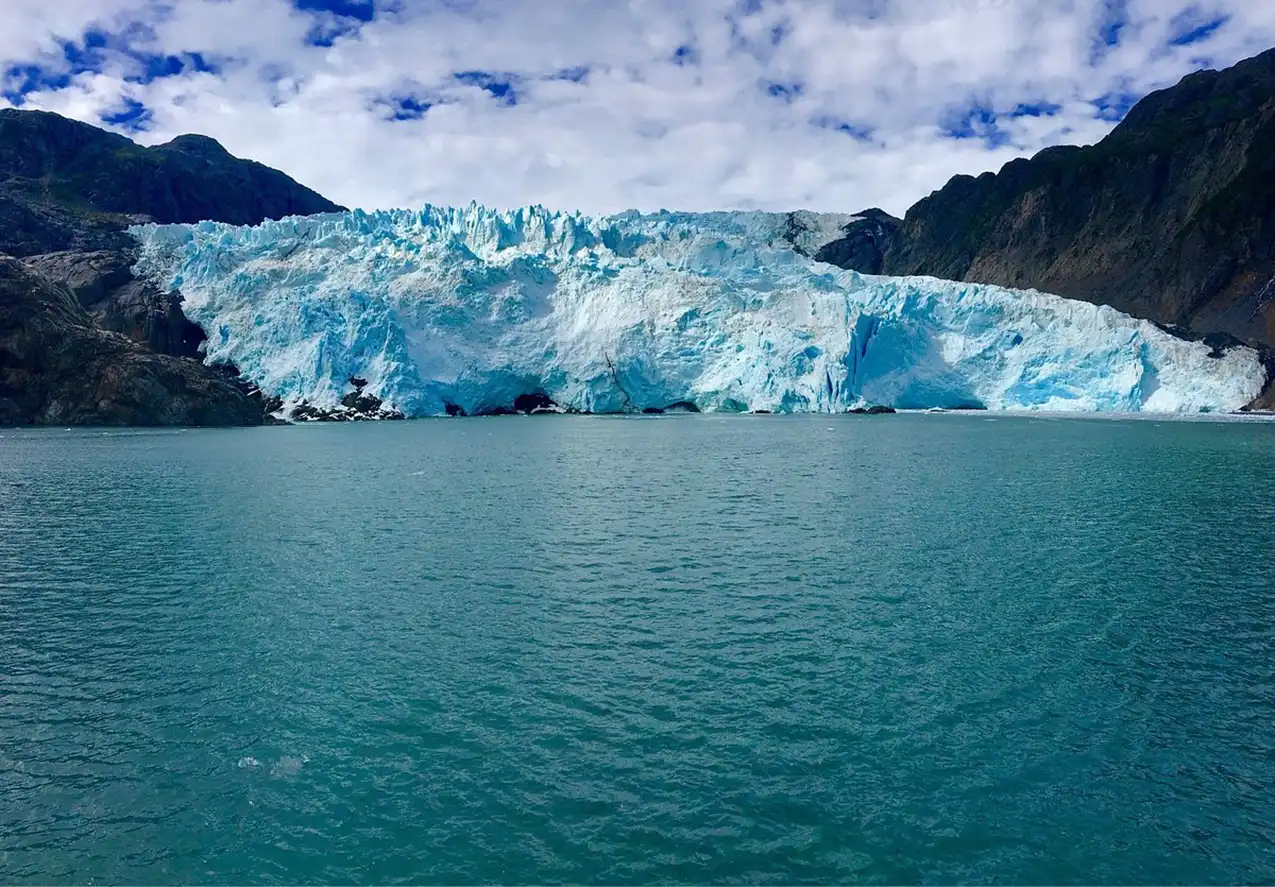

1. Introduction: The Global Cryosphere and Glaciological Significance
The cryosphere, derived from the Greek word kryos meaning cold, constitutes the frozen water component of the Earth system. It is a fundamental regulator of the global climate, a primary reservoir of freshwater, and a potent geomorphological agent that has sculpted the planet’s surface over geological timescales. Within this domain, glaciers represent dynamic, moving masses of ice that respond sensitively to atmospheric forcing, making them one of the most visible and impactful indicators of climate variability.1 Covering approximately 700,000 square kilometers and constituting about 10% of Earth’s land surface, glaciers and ice sheets store the vast majority of the planet’s freshwater.2 Their influence extends far beyond their immediate icy bounds, affecting global sea levels, regional hydrology, ocean circulation patterns, and the habitability of downstream environments.2
A glacier is defined not merely by the presence of ice, but by its motion. It is a body of snow and ice that has accumulated over many years, compacted into a dense state, and flows under the influence of gravity due to its own weight.4 This movement distinguishes glaciers from stagnant ice fields or seasonal snowpack. The formation and survival of a glacier depend on a delicate mass balance—the equilibrium between the input of mass (accumulation) and the loss of mass (ablation).6 When accumulation exceeds ablation over a sustained period, the ice mass thickens and deforms, initiating flow. Conversely, when ablation dominates, the glacier retreats, thinning and pulling back from its terminus.
Glaciers are found on every continent except Australia, ranging from the vast continental ice sheets of Antarctica and Greenland to the smaller, yet hydrologically vital, alpine glaciers of the Himalayas, Andes, Alps, and Rocky Mountains.2 Their morphology is dictated by the interplay between climate, which controls mass balance, and topography, which confines and directs flow.7 While the immense ice sheets of Antarctica and Greenland contain the bulk of the global ice volume—potentially contributing roughly 65 meters to sea level rise if fully melted—the smaller mountain glaciers and ice caps are currently significant contributors to sea level rise and are rapidly responding to anthropogenic warming.3 The sheer scale of these bodies is immense; continental ice sheets can submerge entire continents under kilometers of ice, while even smaller alpine glaciers can reshape entire mountain ranges.7
The significance of glaciers extends beyond their role as reservoirs. They are powerful agents of erosion, capable of carving deep U-shaped valleys, plucking bedrock, and transporting vast quantities of sediment.5 The landscapes of high-latitude and high-altitude regions bear the indelible scars of past glaciations, with features such as cirques, horns, and moraines providing a geological record of Earth’s climatic history.11 Today, the retreat of these ice masses poses severe risks, including the destabilization of mountain slopes, the formation of hazardous glacial lakes, and the alteration of runoff regimes that sustain billions of people downstream.13
This report provides an exhaustive examination of glacial systems, detailing the physical processes of their formation, the mechanics of their movement, the landscapes they create, and their precarious state in the Anthropocene. By synthesizing data from glaciological monitoring, remote sensing, and field investigations, we explore the complex feedbacks between ice, land, and atmosphere.
2. Formation and Metamorphism: The Transformation of Snow to Ice
The genesis of a glacier is a transformative process termed firnification, where low-density atmospheric precipitation (snow) evolves into high-density glacial ice. This metamorphism is driven by the thermodynamics of ice crystals and the physical pressure of overlying accumulation. It is a continuum of density and structure that can span anywhere from a few years to several millennia, depending on the climatic setting.
2.1 The Physics of Snow Metamorphism
Glaciers form in areas where snow persists through the summer melt season, allowing for perennial accumulation. The transformation begins with fresh snowfall, which typically has a low density (50–70 kg m⁻³) and a high porosity due to the complex, hexagonal structure of snowflakes.15 The initial structure of new snow is fragile; the dendritic arms of the crystals are mechanically weak and prone to breaking.
As snow accumulates, the delicate points of the crystals break due to wind packing and the weight of subsequent layers. This process, known as destructive metamorphism or settling, causes the snow grains to become rounded and granular. The reduction in surface area to volume ratio minimizes the free energy of the crystals. This “settled snow” reaches densities of 200–300 kg m⁻³ within days or weeks of deposition.15 Wind plays a crucial role in this early stage, fragmenting crystals and packing them into denser slabs, known as wind slab or wind-packed snow, which can reach densities of 350–400 kg m⁻³.15
If this snow survives the summer ablation season, it is termed “firn” (or névé). Firn is an intermediate stage between snow and glacial ice, characterized by a density ranging from 400 to 830 kg m⁻³.15 Physically, firn is granular and porous, with interconnected air passages between the ice grains.18 It has survived at least one ablation season and represents the net accumulation of that year. The transition from firn to glacier ice is defined physically by the closure of these air passages. When the density reaches approximately 830 kg m⁻³, the pore spaces are sealed off, isolating the air into discrete bubbles.15 At this point, the material is impermeable to air and water and is classified as glacier ice. Pure glacier ice has a density of approximately 917 kg m⁻³.15
2.2 Sintering and Crystal Growth Mechanisms
The physical mechanism driving this densification is sintering, where ice grains bond and grow at the expense of smaller grains to minimize surface free energy. As the overburden pressure increases with the accumulation of new snow layers, the firn compacts. This process involves several microphysical mechanisms:
- Vapor Transfer: Water vapor moves from convex surfaces (high curvature/high vapor pressure) to concave surfaces (low curvature/low vapor pressure) between grains. This strengthens the bonds between grains (sintering) and increases the bulk density.16
- Recrystallization: As grains bond, larger crystals grow at the expense of smaller ones, a process driven by the reduction of grain boundary energy. In very old glacier ice, crystals can grow to substantial sizes, sometimes exceeding the size of a human fist or baseball.2
- Bubble Compression: At depths where the density approaches that of solid ice, air bubbles are compressed. In very old, deep ice (such as at the bottom of the Antarctic Ice Sheet), these bubbles can be pressurized to the point where the air molecules are forced into the ice crystal lattice, forming clathrate hydrates. Upon retrieval to the surface, these bubbles can depressurize, causing the ice to crackle.18
2.3 Environmental Controls on Transformation Rates
The rate of transformation from snow to ice is highly dependent on temperature and precipitation rates, leading to vastly different timescales in different glacial environments.
2.3.1 Temperate Regimes
In warmer climates like the Alps, the Cascades, or Patagonia, the presence of meltwater accelerates the process significantly. During the summer, surface snow melts, and the water percolates down into the firn layer. When this water encounters sub-freezing firn deeper in the pack, it refreezes. This refreezing releases latent heat, which warms the surrounding firn, and adds mass to the grains, filling pore spaces rapidly.16 This process, known as “wet metamorphism,” allows firn to become glacier ice in as little as 1 to 5 years, at relatively shallow depths of roughly 10 to 30 meters.16 The result is often “warm” ice that is near its pressure melting point.
2.3.2 Polar Regimes
In the extremely cold, dry environments of Antarctica and central Greenland, surface melting is rare or absent. The transformation is driven almost entirely by dry sintering and mechanical compression, a much slower process. At Vostok Station in East Antarctica, where mean temperatures are extremely low (-55°C), the transformation of firn to ice takes approximately 2,500 years and occurs at a depth of 95 meters.15 At Byrd Station, which is comparatively warmer, the process takes about 280 years and occurs at 64 meters depth.15 The lack of liquid water acts as a rate-limiting factor. The preservation of air bubbles in this “cold” ice is scientifically invaluable; these bubbles serve as archives of past atmospheric composition, allowing researchers to reconstruct greenhouse gas concentrations from hundreds of thousands of years ago.19
Table 1: Comparative Snow-to-Ice Transformation Rates
Data synthesized from AntarcticGlaciers.org and NSIDC 15
| Location | Climate Regime | Approx. Time to Ice Formation | Depth of Transformation | Dominant Mechanism |
| European Alps | Temperate / Wet | 1 – 5 years | 10 – 30 m | Meltwater refreezing, wet sintering |
| Byrd Station (Antarctica) | Polar / Dry | ~280 years | 64 m | Dry sintering, mechanical compression |
| Vostok Station (Antarctica) | Polar / Extreme Cold | ~2,500 years | 95 m | Dry sintering (slow), compression |
3. Mass Balance Dynamics: The Glacial Budget
The health and behavior of a glacier are governed by its mass balance (or mass budget)—the net change in its mass over a specific period, typically a hydrological year.6 Understanding mass balance is fundamental to predicting glacier response to climate change, as it represents the direct link between atmospheric conditions and glacier dynamics.
3.1 Inputs and Outputs: The Balance Equation
The glacier system is defined by the flux of mass through it. The fundamental equation for mass balance () at any point on the glacier is the sum of accumulation (
) and ablation (
):

(Note: Ablation is typically expressed as a negative value).
3.1.1 Accumulation Processes
The primary input is precipitation in the form of snow. However, the “catchment” of a glacier often exceeds its topographic area due to other accumulation processes.
- Wind-blown Snow: In high mountain environments, wind redistributes snow from ridges and windward slopes onto the glacier surface, significantly augmenting accumulation beyond direct precipitation.20
- Avalanching: For cirque and valley glaciers surrounded by steep rock walls, avalanches are a critical source of mass. They transport snow from high, precipitous slopes where it cannot accumulate onto the lower, flatter glacier surface.20
- Superimposed Ice: In some regimes, rain or meltwater percolates into the snowpack and refreezes at the base of the snow layer, forming a layer of ice that adds to the glacier’s mass even if the snow above it eventually melts.20
3.1.2 Ablation Processes
Mass loss occurs through several mechanisms, the dominance of which varies by climate.
- Surface Melt: Driven by solar radiation and sensible heat transfer (warm air), this is the most dominant process for most mountain glaciers.20
- Sublimation: The direct phase change from solid ice to water vapor. This is particularly important in dry, high-radiation environments like the tropical Andes or the dry valleys of Antarctica, where the air is too dry for melting to occur efficiently.20
- Calving: For glaciers terminating in the ocean (tidewater glaciers) or lakes (lacustrine terminating), the mechanical breaking of ice chunks from the terminus is a major ablation term. In some cases, such as the outlet glaciers of Greenland, calving and subaqueous melting account for more mass loss than surface melt.20
- Wind Erosion: Strong winds can scour snow and ice from the surface, effectively removing mass (deflation).20
3.2 The Equilibrium Line and Mass Balance Gradients
A glacier is spatially divided into two zones based on its annual mass budget.
- Accumulation Zone: The upper part of the glacier where mass gain exceeds loss over the year (positive net balance). Here, snow persists year-round.20
- Ablation Zone: The lower part where mass loss exceeds gain (negative net balance). Here, old glacier ice is exposed in late summer.20
The boundary separating these zones is the Equilibrium Line Altitude (ELA), where the net mass balance is zero ().20 The ELA is a critical climatic indicator; if the climate warms or snowfall decreases, the ELA rises, expanding the ablation zone and shrinking the accumulation zone. For a glacier to be in equilibrium, the accumulation area typically needs to cover about 60-70% of the total glacier surface (Accumulation Area Ratio, AAR).20
The mass balance gradient describes how the net balance changes with altitude. This gradient dictates the glacier’s sensitivity to climate change.
- Maritime Glaciers: Found in wet, coastal regions (e.g., Norway, Alaska, New Zealand), these glaciers have high turnover. They experience heavy winter snowfall and high summer melt rates. Their mass balance gradients are steep, meaning mass balance changes rapidly with elevation. This makes them highly sensitive to temperature changes; a small rise in ELA exposes a large area to melt.20
- Continental Glaciers: Found in dry, interior regions (e.g., dry Andes, parts of Antarctica), these have low turnover. Accumulation is low, and ablation is often driven by sublimation or slow melt. Their gradients are shallow. They are generally less sensitive to small temperature fluctuations but are highly sensitive to changes in precipitation.7
3.3 Temporal Variability and Measurement
Mass balance varies seasonally (winter accumulation vs. summer ablation) and interannually. The “net annual balance” is the single metric summarizing the volumetric change of the glacier.20 Since the late 1950s, the USGS has maintained a long-term glacier mass-balance program at key North American benchmark glaciers, including South Cascade Glacier (Washington), Gulkana Glacier (Alaska), and Wolverine Glacier (Alaska).22 These long-term records are vital for distinguishing between interannual weather variability and long-term climate trends. The data from these benchmark glaciers show a consistent and accelerating trend of mass loss since the mid-20th century.21 For example, in 2005 and 2006, net annual balances averaged -1.0 meter water equivalent (m w.e.), indicating significant thinning.21
4. Ice Dynamics and Flow Physics: The Mechanics of Motion
The defining characteristic of a glacier is its ability to move. Driven by gravity, ice flows from the accumulation zone to the ablation zone. This movement is a complex interplay of internal deformation, basal sliding, and subglacial sediment deformation.
4.1 Stress and Deformation
The primary force driving glacier movement is gravity acting on the ice mass. The driving stress () is proportional to the ice thickness (
), the density of ice (
), gravitational acceleration (
), and the surface slope (
) 23:

This equation highlights that glaciers flow due to their surface slope and thickness. Even on a flat bed, a glacier will flow if its surface is sloped (e.g., an ice sheet dome flowing outward).23
4.2 Mechanisms of Movement
Glacier motion is not a single process but a combination of three distinct mechanisms, the relative importance of which depends on the glacier’s thermal regime and bed properties.
4.2.1 Internal Deformation (Creep)
All glaciers move by internal deformation, a process where ice crystals deform under stress. This occurs through the movement of dislocations within the crystal lattice and the sliding of crystals past one another along basal planes.25 The rate of deformation is described by Glen’s Flow Law, which establishes a non-linear relationship between strain rate () and stress (
):

where is typically around 3, and
is a “softness parameter” dependent on ice temperature, crystal fabric, and impurity content.23 Because of the exponent
, a small increase in stress leads to a large increase in deformation rate. Deformation is highest near the bed where shear stress is greatest, but the cumulative velocity is highest at the surface because surface layers ride atop the deforming layers below.23 Cold glaciers (below pressure melting point) move almost exclusively by this mechanism, as they are frozen to their beds.23
4.2.2 Basal Sliding
For “temperate” or “warm-based” glaciers, where the basal ice is at the pressure melting point, sliding over the bedrock contributes significantly to velocity—often accounting for up to 90% of the total motion in fast-moving glaciers.23 Basal sliding is facilitated by a thin film of water at the ice-bed interface, which reduces friction.24 Two coupled processes enable sliding over rough beds:
- Regelation: As ice encounters a small obstacle (bedrock bump), pressure increases on the upstream side. Since the melting point of ice decreases with pressure, this high pressure causes the ice to melt. The water flows around the obstacle to the low-pressure downstream side, where it refreezes (regelates) because the melting point rises back to normal.23 This mechanism allows ice to move past small obstacles (typically < 1 meter) efficiently.29 The latent heat released by refreezing is conducted back through the obstacle to aid melting on the upstream side.
- Enhanced Creep: For larger obstacles (which regelation cannot bypass efficiently due to the slowness of heat conduction through rock), the stress concentration on the upstream side causes the ice to deform plastically (creep) around the bump.23 The combination of regelation (for small bumps) and enhanced creep (for large bumps) allows the glacier to slide over irregular terrain.27
4.2.3 Subglacial Bed Deformation
If a glacier rests on a bed of weak, unlithified sediment (till) rather than solid bedrock, the sediment itself can deform under the shear stress of the overlying ice.23 This “conveyor belt” mechanism can dominate the motion of ice streams and surging glaciers. High pore water pressure within the till reduces the effective pressure (the contact force between sediment grains), allowing the till to shear easily.27 Research suggests that for some glaciers, such as the Whillans Ice Stream in West Antarctica or the lobes of the former Laurentide Ice Sheet, subglacial deformation is the primary flow mechanism.23
4.3 The Role of Subglacial Hydrology
Water is the lubricant of the glacial engine. The relationship between water pressure () and ice overburden pressure (
) defines the effective pressure (
):

When water pressure is high (e.g., during summer melt or heavy rain), effective pressure drops. This reduces the friction at the bed, effectively “floating” the glacier and decoupling it from the rock. This leads to velocity speed-ups.23 However, the configuration of the subglacial drainage system dictates the pressure response.
- Distributed System: Consists of linked cavities or a widespread water film. This system is inefficient at draining water, so input leads to high pressure and promoted sliding.27
- Channelized System: Consists of efficient conduits (R-channels) carved into the ice. This system evacuates water quickly, lowering water pressure. Consequently, the development of efficient channels in late summer can actually slow a glacier down despite high melt volumes, because the water pressure drops.27 This seasonal evolution from distributed to channelized drainage explains the complex velocity variations observed in many alpine glaciers.
4.4 Surge-Type Glaciers
Some glaciers exhibit unsteady flow, characterized by long periods of quiescence (stagnation) followed by brief, rapid “surges” where velocities can increase by orders of magnitude (10–100 times normal speed).30 During a surge, a glacier can transfer a vast volume of ice from its reservoir area (upper glacier) to its receiving area (terminus), leading to rapid terminus advance.30 Surges are often linked to a switch in the basal hydraulic system. For example, at Variegated Glacier in Alaska, surges occur when the subglacial drainage system remains distributed (cavity-based) and fails to channelize, trapping high-pressure water that lubricates the bed for extended periods.30 Other mechanisms, such as the thermal switch model (e.g., Trapridge Glacier), involve the bed thawing from cold (frozen) to warm (sliding) conditions, activating motion.30
5. Glacial Geomorphology: Erosion and Landscape Evolution
Glaciers are among the most effective erosional agents on Earth. Through the physical processes of abrasion and plucking, they sculpt mountains into distinctive alpine forms and produce vast quantities of sediment that form moraines and drift deposits. The efficiency of glacial erosion can exceed that of fluvial erosion by orders of magnitude in high-relief terrain.
5.1 Erosional Mechanisms
5.1.1 Abrasion
Abrasion acts analogously to sandpaper. Rock fragments (clasts) embedded in the basal ice are dragged across the bedrock, scratching, grooving, and polishing it.5 This process produces striations (linear grooves parallel to flow) and glacial polish (extremely smooth surfaces).11 The rate of abrasion depends on the basal sliding velocity, the concentration of debris in the ice (tools), and the effective contact pressure.26 Interestingly, the relationship is non-linear; abrasion is most effective at moderate sliding speeds and pressures. If the ice floats due to excessive water pressure, abrasion halts because the tools are no longer pressed against the bed. The byproduct of abrasion is “rock flour,” a fine clay-sized silt that gives glacial meltwater its characteristic turquoise or milky color.31
5.1.2 Plucking (Quarrying)
Plucking, or quarrying, is the removal of large blocks of bedrock. It occurs primarily on the lee side of obstacles where pressure fluctuations (cavitation) facilitate fracturing.12
- Mechanism: As ice slides over a bump, cavities form on the downstream (lee) side due to the inability of the ice to close strictly behind the obstacle at high speeds. This reduces the confining pressure on the rock, allowing existing joints to open (stress release). Meltwater fluctuating in these cavities can freeze and thaw (frost wedging), further loosening blocks which are then entrained into the ice flow.32
- Efficiency: Quarrying is significantly more efficient than abrasion at removing mass, often accounting for >90% of bedrock erosion in jointed rock.33 It leaves behind a rough, jagged surface, contrasting with the smoothed surface of abrasion.
5.2 Erosional Landforms
The combination of abrasion and plucking creates asymmetric bedrock features known as Roche Moutonnées, which are smooth and striated on the upstream side (abrasion) and steep and jagged on the downstream side (plucking).33 At the landscape scale, glacial erosion produces a distinct suite of landforms:
- Cirques: Amphitheater-like hollows at the head of a valley, formed by rotational sliding and intense freeze-thaw weathering at the bergschrund (crevasse near the headwall).10
- Arêtes and Horns: When multiple cirques erode back-to-back, they leave knife-edge ridges (arêtes) and sharp, pyramidal peaks (horns), such as the Matterhorn.5
- U-Shaped Valleys (Glacial Troughs): Glaciers widen and deepen pre-existing V-shaped river valleys, creating a characteristic U-profile with steep walls and a flat floor (e.g., Yosemite Valley).5
- Hanging Valleys: Tributary glaciers, having less erosive power/mass than the main trunk glacier, carve shallower valleys. When the ice retreats, these tributary valleys are left “hanging” high above the main valley floor, often creating spectacular waterfalls.5
6. Glacial Geomorphology: Deposition and Landforms
As glaciers melt, they deposit their sediment load, known generically as drift. This material constructs landforms that often dominate the topography of post-glacial regions.
6.1 Till and Moraines
Till is unsorted, unstratified sediment deposited directly by the ice. It ranges from clay to massive boulders and is often compacted by the weight of the glacier.10
- Terminal Moraines: Ridges of till marking the furthest advance of the glacier. Long Island, New York, is essentially composed of two massive terminal moraines from the Laurentide Ice Sheet.5
- Lateral Moraines: Ridges forming along the sides of the glacier from debris falling from valley walls.
- Medial Moraines: Distinct dark stripes on a glacier surface formed when two glaciers merge, and their lateral moraines join in the middle of the ice stream.5
6.2 Streamlined and Stratified Features
- Drumlins: Streamlined, tear-drop shaped hills of till formed beneath the moving ice, oriented parallel to flow. Their formation mechanism (erosional vs. depositional) remains a subject of debate, though subglacial deformation of soft beds is a leading theory.10
- Glaciofluvial Deposits: Sediment sorted and deposited by meltwater streams. These include eskers (sinuous ridges of sand and gravel formed in subglacial tunnels) and outwash plains (broad fans of sediment beyond the terminus).5
- Varves: Annual sediment layers in glacial lakes, consisting of a coarse light layer (summer melt/high energy) and a fine dark layer (winter settling/low energy). These are vital for high-resolution geochronology.5
7. Global Glacier Classification
Glaciers are classified based on their thermal regime and morphology, which dictate their behavior and impact on the landscape.
7.1 Thermal Classification
- Temperate (Warm-based) Glaciers: The ice is at the pressure melting point throughout the glacier (except perhaps the surface layer in winter). Liquid water coexists with ice, facilitating basal sliding and rapid erosion. These are common in the Alps, New Zealand, Southern Andes, and Scandinavia.23
- Cold-based (Polar) Glaciers: The ice is well below the pressure melting point and is frozen to the bed. Movement is entirely by internal deformation. Since there is no sliding, these glaciers cause very little erosion and can even preserve pre-glacial landscapes (such as delicate mosses) beneath them for thousands of years. They are found in high polar regions (e.g., parts of Antarctica, high Arctic Canada).7
- Polythermal Glaciers: These exhibit a complex thermal structure, often with a cold surface layer and a warm basal layer (or vice versa). This is common in Svalbard and the Canadian Arctic, where the thick ice insulates the bed from the cold atmosphere, allowing geothermal heat to warm the base to the melting point.16
7.2 Morphological Classification
- Ice Sheets: Continental-scale masses (>50,000 km²) flowing outward in all directions, submerging the underlying topography. The only two modern examples are the Antarctic Ice Sheet and the Greenland Ice Sheet.4
- Ice Caps: Smaller dome-shaped masses (<50,000 km²) that submerge topography but are smaller than ice sheets (e.g., Vatnajökull in Iceland).2
- Ice Fields: Extensive ice masses where the flow is influenced by the underlying topography (e.g., Patagonia Ice Fields). Unlike ice caps, they are not dome-shaped but constrained by mountain peaks (nunataks).7
- Valley Glaciers: Confined within valley walls, flowing down from ice fields or cirques. They are the classic “river of ice”.9
- Piedmont Glaciers: Form when valley glaciers spill out onto a flat plain and spread into a bulbous lobe (e.g., Malaspina Glacier, Alaska).9
- Cirque Glaciers: Small glaciers occupying armchair-shaped hollows high in the mountains. They are often the remnants of larger valley glaciers.9
8. Glaciers in a Warming World: Observations and Climate Feedbacks
The relationship between glaciers and climate is reciprocal: climate drives glacier mass balance, and glaciers influence global climate through albedo and freshwater discharge. Currently, this relationship is defined by rapid disequilibrium.
8.1 Global Mass Loss Trends
Recent assessments provide a stark picture of global glacier health. According to Zemp et al. (2019) and the IPCC AR6, glaciers worldwide (excluding the ice sheets) lost more than 9,000 gigatons (Gt) of ice between 1961 and 2016.3 This loss has accelerated significantly; from 2006 to 2016, the loss rate was roughly 335 Gt per year, corresponding to a sea level rise contribution of nearly 1 mm per year.3
- Sea Level Contribution: Glaciers and ice caps (distinct from the Greenland and Antarctic Ice Sheets) accounted for 25–30% of observed global sea level rise during this period.3 The total loss of land ice (glaciers + ice sheets) was the largest contributor to sea level rise from 2006–2018, overtaking thermal expansion.35
- Regional Hotspots: The largest mass contributors to sea level rise were glaciers in Alaska, followed by the Southern Andes (Patagonia) and Arctic Canada.3 While glaciers in the European Alps and New Zealand are shrinking rapidly (high relative mass loss), their total volume is too small to contribute significantly to global sea level compared to the giant Alaskan and Patagonian ice fields.3
- 2023-2024 Records: Recent data indicates that 2023 and 2024 saw extreme mass loss across all observed glacier regions, a “global bleaching” event where even usually stable regions lost mass. In 2024, Scandinavian glaciers lost -2.3 m w.e., and Svalbard lost -1.6 m w.e..37
8.2 The Ice-Albedo Feedback Loop
A critical mechanism accelerating this loss is the ice-albedo feedback. Clean snow and ice have a high albedo (0.7–0.9), reflecting most solar radiation back into space. As glaciers melt, they darken due to several factors:
- Water Content: Wet snow absorbs more radiation than dry snow.38
- Impurity Concentration: Melting consolidates dust, black carbon (soot), and rock debris on the surface, which were previously dispersed in the snow column.38
- Biological Activity: “Glacier mice” and snow algae bloom in liquid water on the surface, darkening the ice (bio-albedo feedback).38
- Exposure of Dark Surfaces: The retreat of snow cover exposes darker rock or ocean water, which absorbs more solar energy, warming the local environment and causing further melt.39
This positive feedback loop amplifies warming in the Arctic and high mountain regions, a phenomenon known as “Arctic Amplification”.40
8.3 Future Projections
The IPCC AR6 and SROCC reports project continued glacier mass loss throughout the 21st century, regardless of emission scenarios.
- RCP2.6 (Low Emissions): Glaciers are projected to lose 18% (±7%) of their 2015 mass by 2100.
- RCP8.5 (High Emissions): Mass loss is projected to reach 36% (±10%) by 2100.41
Crucially, the impact is spatially uneven. For regions with smaller glaciers like the European Alps, Tropical Andes, and Caucasus, projections indicate a loss of more than 80% of current ice mass by 2100 under high emission scenarios, leading to the virtual disappearance of glaciers in these mountain ranges.41 The contribution to sea level rise from glaciers alone by 2100 is estimated to be between 94 mm (RCP2.6) and 200 mm (RCP8.5).41
Table 2: Regional Glacier Mass Loss Contributions
Data synthesized from Zemp et al. (2019) and IPCC SROCC 3
| Region | Primary Contribution Trend | Future Outlook (RCP 8.5) |
| Alaska | Highest regional contributor to SLR | Continued massive volume loss |
| Southern Andes | Second highest contributor | Rapid retreat of Patagonian ice fields |
| Arctic Canada | High contributor | Large area, increasing surface melt |
| European Alps | Low global SLR contribution | >80% mass loss (Virtual disappearance) |
| High Mountain Asia | Moderate SLR contribution | Critical impact on regional water security |
9. Hydrological Impacts: The Crisis of the “Water Towers”
Mountains are the “Water Towers” of the world, providing freshwater to billions of people downstream. Glaciers act as buffers, storing water during cold/wet periods and releasing it during warm/dry periods, smoothing out the hydrological cycle.13
9.1 Peak Water
As glaciers retreat, runoff initially increases—a phenomenon known as the “dividend” of deglaciation. This can temporarily boost water availability for agriculture and hydropower. However, this is a finite resource. Once the glacier shrinks beyond a critical threshold, runoff begins to decline irreversibly.13 This turning point is called “Peak Water.” Many basins in the Andes and parts of the Himalayas have likely already passed “peak water” or will do so in the coming decades.13
9.2 Regional Vulnerability
- The Andes: In the tropical Andes (Peru, Bolivia), glaciers are critical for dry-season flow. They buffer the extreme seasonality of precipitation. Rapid retreat threatens water security for major cities like La Paz (which relies on glacial melt for ~30% of its water) and rural communities reliant on glacial melt for irrigation.13 The loss of this buffer could lead to severe socio-economic instability in the region.
- The Himalayas (The Third Pole): The Hindu Kush Himalaya region holds the largest ice mass outside the poles and sustains 1.65 billion people. Accelerated melting threatens the seasonal flow of major rivers (Indus, Ganges, Brahmaputra), impacting agriculture and food security.14 The IPCC notes high confidence that glacier runoff changes will impact local water resources, particularly in the Indus basin where glacial melt is a large component of total flow.42
10. Cryospheric Hazards: Glacial Lake Outburst Floods (GLOFs)
One of the most immediate and catastrophic dangers of glacier retreat is the formation and expansion of proglacial lakes. As glaciers recede, meltwater becomes trapped behind natural dams formed by terminal moraines. These dams are often unstable, composed of loose debris and melting ice cores. A failure of the dam can release a catastrophic Glacial Lake Outburst Flood (GLOF).45
10.1 Mechanisms of Failure
Moraine dams can fail due to several triggers:
- Overtopping: Caused by a displacement wave (seiche) generated by an avalanche, landslide, or calving event falling into the lake.
- Erosion: Seepage through the dam washes out fine material (piping), weakening the structure until it collapses.
- Earthquakes: Seismic activity can destabilize the moraine or trigger landslides into the lake.46 GLOFs are characterized by extreme peak discharges, often orders of magnitude higher than normal rainfall floods, and can transport massive boulders and debris, turning into highly destructive debris flows.46
10.2 Case Study: The South Lhonak Lake Disaster (2023)
The fragility of these systems was tragically demonstrated in Sikkim, India, on October 4, 2023. South Lhonak Lake, a large glacial lake formed by the retreat of the South Lhonak Glacier, burst its banks.
- Preconditions: The lake had been expanding rapidly due to glacier retreat. It was identified as a “potentially dangerous glacial lake” years prior.45
- The Trigger: The event was triggered by heavy rainfall compounded by a likely avalanche or landslide of a waterlogged lateral moraine into the lake. This impact generated a displacement wave that overtopped the terminal moraine, eroding it rapidly.45
- The Cascade: The sudden release of water caused a flash flood down the Teesta River. The floodwaters reached the Teesta III hydroelectric dam at Chungthang. The dam was unable to handle the surge and failed, releasing even more water downstream.45
- Consequences: The flood destroyed 15 bridges, washed away portions of the national highway, and resulted in at least 92 deaths, with many more missing.45 This disaster highlights the “cascading hazard” nature of GLOFs, where a meteorological event (rain) triggers a geomorphic event (landslide), causing a hydrological disaster (flood) that destroys infrastructure (dam failure).45
10.3 Global Risk and Mitigation
The risk of GLOFs is increasing globally. The number and volume of glacial lakes have grown significantly, particularly in the Himalayas and Andes.46 Mitigation requires rigorous monitoring using satellite InSAR to detect ground motion (dam instability) and optical imagery to track lake growth.50 Engineering interventions, such as siphoning water to lower lake levels or reinforcing moraines, have been attempted (e.g., at Imja Tsho in Nepal) but are logistically difficult and expensive in remote high-altitude terrain.49
11. Conclusion
The global cryosphere is in a state of rapid and accelerating transformation. Glaciers, once persistent and imposing features of the Earth’s landscape, are retreating at rates unprecedented in the Holocene. This retreat is driven unequivocally by anthropogenic climate change, primarily the rise in global surface temperatures which elevates the equilibrium line and intensifies ablation processes.
The physical consequences of this decline are multifaceted and far-reaching. We are witnessing rising sea levels driven by mass loss from Alaska, Patagonia, and the Arctic; altering hydrological regimes in the Andes and Asia that threaten the water security of billions; and increasing geohazard risks for mountain communities as evidenced by the South Lhonak disaster. The physics of ice flow—governed by stress, temperature, and hydrology—dictates that these systems have long response times. Even if global temperatures were stabilized today, glaciers would continue to lose mass for decades as they adjust to the current climate disequilibrium.52
However, the magnitude of future loss depends heavily on human decisions. The divergence between IPCC emissions scenarios (RCP2.6 vs. RCP8.5) by 2100 represents the difference between preserving substantial ice mass in high-latitude regions versus a near-total loss of alpine glaciers in the mid-latitudes.41 The future of Earth’s glaciers—and the water resources, coastlines, and ecosystems they influence—is thus directly linked to near-term climate mitigation efforts. The scientific evidence indicates that we are moving from a period of glacial stability to one of irreversible decline, with profound implications for the Earth system and human civilization.
Table 3: Projected Global Glacier Mass Loss by 2100 (Relative to 2015)
Data from IPCC SROCC & AR6 41
| Scenario | Mass Loss (%) | Sea Level Equivalent (mm) | Notes |
| RCP 2.6 (Low Emissions) | 18 ± 7% | 94 (69–119) | Stabilization possible in some polar regions. |
| RCP 8.5 (High Emissions) | 36 ± 10% | 200 (156–240) | Near disappearance of glaciers in Alps, Caucasus, Tropics. |
Report prepared with the aid of Gemini Pro AI
12. Endnotes
6 USGS. “Text – Glossary of Glacier Terminology.” pubs.usgs.gov. Accessed via research snippet.620 AntarcticGlaciers.org. “Introduction to Glacier Mass Balance.” Accessed via research snippet.201 USGS. “Mass Balance Methods.” usgs.gov. Accessed via research snippet.122 USGS. “Benchmark Glaciers.” usgs.gov. Accessed via research snippet.2221 USGS. “Publication 70208460.” pubs.usgs.gov. Accessed via research snippet.2125 NSIDC. “Science of Glaciers.” nsidc.org. Accessed via research snippet.252 NASA Earth Data. “Glaciers and Ice Sheets.” earthdata.nasa.gov. Accessed via research snippet.27 AntarcticGlaciers.org. “Types of Glaciers.” Accessed via research snippet.74 NASA JPL. “Glaciers and Ice Sheets.” podaac.jpl.nasa.gov. Accessed via research snippet.49 National Park Service. “Types of Glaciers.” nps.gov. Accessed via research snippet.910 AntarcticGlaciers.org. “Introduction to Glacial Landforms.” Accessed via research snippet.105 LibreTexts. “Glacial Erosion and Deposition.” geo.libretexts.org. Accessed via research snippet.511 Wikipedia. “Glacial Landform.” en.wikipedia.org. Accessed via research snippet.1134 Lyell Collection. “Glacial Geomorphology.” lyellcollection.org. Accessed via research snippet.3412 University of Wyoming. “Glacial Environment.” geoweb.uwyo.edu. Accessed via research snippet.1223 AntarcticGlaciers.org. “Glacier Flow.” Accessed via research snippet.2324 Mirante. “The Physics of Glaciers.” mirante.sema.ce.gov.br. Accessed via research snippet.2427 University of Washington. “Glacier Sliding Lecture.” courses.washington.edu. Accessed via research snippet.2742 IPCC. “SROCC Report.” ipcc.ch. Accessed via research snippet.4235 IPCC. “AR6 WGI Chapter 9 Corrigenda.” ipcc.ch. Accessed via research snippet.3536 IPCC. “AR6 WGI Chapter 9.” ipcc.ch. Accessed via research snippet.363 WGMS. “Sea Level Rise.” wgms.ch. Accessed via research snippet.352 IPCC. “AR6 WGI Chapter 9 Full Text.” ipcc.ch. Accessed via research snippet.5219 NSIDC. “Parts of Cryosphere.” nsidc.org. Accessed via research snippet.1918 NASA Earth Data. “How Do Glaciers Form.” earthdata.nasa.gov. Accessed via research snippet.1817 Britannica. “Firn.” britannica.com. Accessed via research snippet.1715 AntarcticGlaciers.org. “From Snow to Glacier Ice.” Accessed via research snippet.1516 Alpecole. “Transformation from Snow to Ice.” microsite.geo.uzh.ch. Accessed via research snippet.1632 Cambridge Core. “Glacial Quarrying.” cambridge.org. Accessed via research snippet.3212 University of Wyoming. “Glacial Erosion.” geoweb.uwyo.edu. Accessed via research snippet.1226 AntarcticGlaciers.org. “Subglacial Erosion.” Accessed via research snippet.2633 University of Washington. “Glacial Erosion Processes.” earthweb.ess.washington.edu. Accessed via research snippet.3331 LibreTexts. “Glacial Erosion.” geo.libretexts.org. Accessed via research snippet.3113 AntarcticGlaciers.org. “Future of Andes Water Towers.” Accessed via research snippet.1314 Carbon Brief. “Glacier Melt Threatens Water Supplies.” carbonbrief.org. Accessed via research snippet.1443 Ohio State News. “Climate Change Water Shortage Andes Himalayas.” news.osu.edu. Accessed via research snippet.4344 UNESCO. “Impact of Glacier Retreat.” unesdoc.unesco.org. Accessed via research snippet.4445 Penn State IEE. “Glacier Lake Outburst Floods.” iee.psu.edu. Accessed via research snippet.4547 UNDRR. “GLOF Terminology.” undrr.org. Accessed via research snippet.4746 AntarcticGlaciers.org. “Glacial Lake Outburst Floods.” Accessed via research snippet.4649 UNU-EHS. “GLOFs Growing Climate Threat.” unu.edu. Accessed via research snippet.4950 Copernicus. “NHESS Article 22/3765.” nhess.copernicus.org. Accessed via research snippet.5028 Cambridge Core. “Pressure Melting Effects.” cambridge.org. Accessed via research snippet.2829 Royal Society. “Subtemperate Regelation.” royalsocietypublishing.org. Accessed via research snippet.2923 AntarcticGlaciers.org. “Glacier Flow 2.” Accessed via research snippet.2330 Taylor & Francis. “Journal of Glaciology.” tandfonline.com. Accessed via research snippet.3041 IPCC. “SROCC Chapter 2.” ipcc.ch. Accessed via research snippet.418 PubMed. “Zemp et al 2019.” pubmed.ncbi.nlm.nih.gov. Accessed via research snippet.837 Copernicus. “ESSD Article 17/1977.” essd.copernicus.org. Accessed via research snippet.3753 EGU Blogs. “South Lhonak GLOF.” blogs.egu.eu. Accessed via research snippet.5348 Wikipedia. “2023 Sikkim Flash Floods.” en.wikipedia.org. Accessed via research snippet.4851 MDPI. “Remote Sensing Article.” mdpi.com. Accessed via research snippet.5145 Penn State IEE. “Tejal Shirsat Blog.” iee.psu.edu. Accessed via research snippet.4538 Wikipedia. “Ice-Albedo Feedback.” en.wikipedia.org. Accessed via research snippet.3840 GRID-Arendal. “Feedback Mechanisms.” grida.no. Accessed via research snippet.4039 NASA SVS. “Ice Albedo Animation.” svs.gsfc.nasa.gov. Accessed via research snippet.39
Works cited
- Mass Balance Methods – Measuring Glacier Change | U.S. Geological Survey – USGS.gov, accessed on January 27, 2026, https://www.usgs.gov/programs/ecosystems-land-change-science-program/science/mass-balance-methods-measuring-glacier
- Glaciers/Ice Sheets | NASA Earthdata, accessed on January 27, 2026, https://www.earthdata.nasa.gov/topics/cryosphere/glaciers-ice-sheets
- contribution to sea-level rise – World Glacier Monitoring Service, accessed on January 27, 2026, https://wgms.ch/sea-level-rise/
- Glaciers/Ice Sheets – PO.DAAC – NASA, accessed on January 27, 2026, https://podaac.jpl.nasa.gov/Glaciers-IceSheets
- 20.1: Glacial Erosion and Deposition – Geosciences LibreTexts, accessed on January 27, 2026, https://geo.libretexts.org/Courses/Lumen_Learning/Earth_Science_(Lumen)/20%3A_Glaciers/20.01%3A_Glacial_Erosion_and_Deposition
- Glossary of Glacier Terminology – Text Version – USGS.gov, accessed on January 27, 2026, https://pubs.usgs.gov/of/2004/1216/text.html
- Types of glaciers – AntarcticGlaciers.org, accessed on January 27, 2026, https://www.antarcticglaciers.org/glacier-processes/glacier-types/types-of-glaciers/
- Global glacier mass changes and their contributions to sea-level rise from 1961 to 2016 – PubMed, accessed on January 27, 2026, https://pubmed.ncbi.nlm.nih.gov/30962533/
- Types of Glaciers – National Park Service, accessed on January 27, 2026, https://www.nps.gov/subjects/glaciers/types-of-glaciers.htm
- Introduction to glacial landforms – AntarcticGlaciers.org, accessed on January 27, 2026, https://www.antarcticglaciers.org/glacial-geology/glacial-landforms/introduction-to-glacial-landforms/
- Glacial landform – Wikipedia, accessed on January 27, 2026, https://en.wikipedia.org/wiki/Glacial_landform
- glacial erosion, deposition, – and landforms, accessed on January 27, 2026, https://geoweb.uwyo.edu/geol2100/Glacial%20Environment.pdf
- Policy brief: The future of the Andes Water Towers – AntarcticGlaciers.org, accessed on January 27, 2026, https://www.antarcticglaciers.org/2025/03/policy-brief-the-future-of-the-andes-water-towers/
- Glacier melt threatens water supplies for two billion people, UN warns – Carbon Brief, accessed on January 27, 2026, https://www.carbonbrief.org/glacier-melt-threatens-water-supplies-for-two-billion-people-un-warns/
- From Snow to Firn to Glacier ice – AntarcticGlaciers.org, accessed on January 27, 2026, https://www.antarcticglaciers.org/glacier-processes/from-snow-to-glacier-ice/
- Ice formation & firn facies – Snow and perennial ice, accessed on January 27, 2026, https://microsite.geo.uzh.ch/alpecole/static/course/lessons/04/04b.htm
- Firn | Glacial, Snowpack, Cryosphere – Britannica, accessed on January 27, 2026, https://www.britannica.com/science/firn
- Glacier Power: How do Glaciers Form? – NASA Earthdata, accessed on January 27, 2026, https://www.earthdata.nasa.gov/topics/cryosphere/glaciers/glacier-power/how-do-glaciers-form
- Glaciers | National Snow and Ice Data Center, accessed on January 27, 2026, https://nsidc.org/learn/parts-cryosphere/glaciers
- An introduction to Glacier Mass Balance, accessed on January 27, 2026, https://www.antarcticglaciers.org/glacier-processes/mass-balance/introduction-glacier-mass-balance/
- Mass balance of a cirque glacier in the U.S. Rocky Mountains – USGS Publications Warehouse, accessed on January 27, 2026, https://pubs.usgs.gov/publication/70208460
- Glacier-Wide Mass Balance and Compiled Data Inputs – USGS.gov, accessed on January 27, 2026, https://www.usgs.gov/data/glacier-wide-mass-balance-and-compiled-data-inputs-usgs-benchmark-glaciers
- Deformation and sliding – Antarctic Glaciers, accessed on January 27, 2026, https://www.antarcticglaciers.org/glacier-processes/glacier-flow-2/glacier-flow/
- The Physics Of Glaciers – Sema, accessed on January 27, 2026, https://mirante.sema.ce.gov.br/sites/explore/605753/mLBGDC/The%20Physics%20Of%20Glaciers.pdf
- Science of Glaciers | National Snow and Ice Data Center, accessed on January 27, 2026, https://nsidc.org/learn/parts-cryosphere/glaciers/science-glaciers
- Subglacial erosion – AntarcticGlaciers.org, accessed on January 27, 2026, https://www.antarcticglaciers.org/glacial-geology/glacial-landforms/glacial-erosional-landforms/subglacial-erosion/
- GLACIER SLIDING and HYDROLOGY, accessed on January 27, 2026, https://courses.washington.edu/ess431/LECTURES/LECTURE_2016/Lect_08_Glacier_sliding_2016.pdf
- Pressure-Melting Effects in Basal Ice of Temperate Glaciers: Laboratory Studies and Field Observations Under Glacier D’Argentière | Journal of Glaciology, accessed on January 27, 2026, https://www.cambridge.org/core/journals/journal-of-glaciology/article/pressuremelting-effects-in-basal-ice-of-temperate-glaciers-laboratory-studies-and-field-observations-under-glacier-dargentiere/E39DB7370F7CAB117BAA1E2FEE54FAE2
- Subtemperate regelation exhibits power-law premelting | Proceedings A | The Royal Society, accessed on January 27, 2026, https://royalsocietypublishing.org/rspa/article/480/2290/20240032/66723/Subtemperate-regelation-exhibits-power-law
- Full article: Glacier and ice sheet flow – Taylor & Francis, accessed on January 27, 2026, https://www.tandfonline.com/doi/full/10.1080/03091929.2024.2346588
- 7.10: Glacial Erosion – Geosciences LibreTexts, accessed on January 27, 2026, https://geo.libretexts.org/Bookshelves/Geography_(Physical)/The_Environment_of_the_Earth’s_Surface_(Southard)/07%3A_Glaciers/7.10%3A_Glacial_Erosion
- Glacial quarrying: a simple theoretical model | Annals of Glaciology | Cambridge Core, accessed on January 27, 2026, https://www.cambridge.org/core/journals/annals-of-glaciology/article/glacial-quarrying-a-simple-theoretical-model/16A34743DFF24D6B5D1F4588569FDF8E
- Glacial Erosion: Processes, Rates & Landforms – UW ESS, accessed on January 27, 2026, https://earthweb.ess.washington.edu/Glaciology/courses/ess431/LECTURES/2006/Lect_11_Glacial_erosion_Proc1_2005.pdf
- Glacial processes and landforms | Geological Society, London, Memoirs – Lyell Collection, accessed on January 27, 2026, https://www.lyellcollection.org/doi/full/10.1144/M58-2021-17
- P54/WGI-14 – Changes to the underlying scientific-technical assessment to ensure consistency with the approved SPM These trickle – IPCC, accessed on January 27, 2026, https://www.ipcc.ch/report/ar6/wg1/downloads/report/IPCC_AR6_WGI_Chapter_09.pdf
- Chapter 9: Ocean, Cryosphere and Sea Level Change, accessed on January 27, 2026, https://www.ipcc.ch/report/ar6/wg1/downloads/report/IPCC_AR6_WGI_Chapter09.pdf
- Annual mass change of the world’s glaciers from 1976 to 2024 by temporal downscaling of satellite data with in situ observations – ESSD Copernicus, accessed on January 27, 2026, https://essd.copernicus.org/articles/17/1977/2025/essd-17-1977-2025.html
- Ice–albedo feedback – Wikipedia, accessed on January 27, 2026, https://en.wikipedia.org/wiki/Ice%E2%80%93albedo_feedback
- Ice Albedo: Bright White Reflects Light – NASA Scientific Visualization Studio, accessed on January 27, 2026, https://svs.gsfc.nasa.gov/20022/
- Climate feedbacks-The connectivity of the positive ice/snow albedo feedback, terrestrial snow and vegetation feedbacks and the negative cloud/radiation feedback | GRID-Arendal, accessed on January 27, 2026, https://www.grida.no/resources/5261
- Chapter 2: High Mountain Areas — Special Report on the Ocean and Cryosphere in a Changing Climate, accessed on January 27, 2026, https://www.ipcc.ch/srocc/chapter/chapter-2/
- Special Report on the Ocean and Cryosphere in a Changing Climate —, accessed on January 27, 2026, https://www.ipcc.ch/srocc/
- Climate change leading to water shortage in Andes, Himalayas – Ohio State News, accessed on January 27, 2026, https://news.osu.edu/climate-change-leading-to-water-shortage-in-andes-himalayas/
- The Andean glacier and water atlas: the impact of glacier retreat on water resources – UNESCO Digital Library, accessed on January 27, 2026, https://unesdoc.unesco.org/ark:/48223/pf0000265810
- Glacier lake outburst floods: Loss of life and infrastructure, accessed on January 27, 2026, https://iee.psu.edu/news/blog/glacier-lake-outburst-floods-loss-life-and-infrastructure
- Glacial Lake Outburst Floods (GLOFs) – AntarcticGlaciers.org, accessed on January 27, 2026, https://www.antarcticglaciers.org/glaciers-and-climate/glacier-hazards/glacial-lake-outburst-floods/
- Glacial Lake Outburst Flooding (MH0607) – UNDRR, accessed on January 27, 2026, https://www.undrr.org/understanding-disaster-risk/terminology/hips/mh0607
- 2023 Sikkim flash floods – Wikipedia, accessed on January 27, 2026, https://en.wikipedia.org/wiki/2023_Sikkim_flash_floods
- Glacial Lake Outburst Floods: A Growing Climate Threat | United Nations University, accessed on January 27, 2026, https://unu.edu/ehs/commentary/glacial-lake-outburst-floods-growing-climate-threat
- Glacial lake outburst flood hazard under current and future conditions: worst-case scenarios in a transboundary Himalayan basin – NHESS, accessed on January 27, 2026, https://nhess.copernicus.org/articles/22/3765/2022/
- Retrospective Analysis of Glacial Lake Outburst Flood (GLOF) Using AI Earth InSAR and Optical Images: A Case Study of South Lhonak Lake, Sikkim – MDPI, accessed on January 27, 2026, https://www.mdpi.com/2072-4292/16/13/2307
- Chapter 9: Ocean, Cryosphere and Sea Level Change, accessed on January 27, 2026, https://www.ipcc.ch/report/ar6/wg1/chapter/chapter-9/
- A ‘Ticking Bomb’: Understanding the 2023 Glacial Lake Outburst Flood (GLOF) in Sikkim Himalaya – EGU Blogs, accessed on January 27, 2026, https://blogs.egu.eu/divisions/cr/2023/11/02/a-ticking-bomb-understanding-the-2023-glacial-lake-outburst-flood-glof-in-sikkim-himalaya/
THE CRYOSPHERE IN CRISIS
Global Glacial Retreat & Climate Implications
An analysis of mass balance decline, regional thinning, and the hydrological consequences of a warming world.
1. The State of Ice
Glaciers act as the planet’s water towers, storing approximately 69% of the world’s freshwater. However, recent data from the World Glacier Monitoring Service (WGMS) indicates a catastrophic shift in equilibrium. Since the industrial revolution, and accelerating sharply after 1970, glaciers have shifted from a state of dynamic equilibrium to rapid ablation.¹
Global Ice Volume Distribution
While the Antarctic Ice Sheet holds the majority of ice, mountain glaciers contribute disproportionately to sea-level rise due to their rapid reaction to temperature changes.
Cumulative Mass Balance (1970–2024)
Measured in meters of water equivalent (m.w.e.), this metric shows the average thickness lost across reference glaciers. The trajectory is clearly non-linear and accelerating.⁴
2. Glacial Morphology & Dynamics
A glacier is an open system. Its survival depends on the balance between the Accumulation Zone (inputs: snow, avalanches) and the Ablation Zone (outputs: melting, calving). The dividing line is the Equilibrium Line Altitude (ELA).⁵
Accumulation Zone
Ablation Zone
Regional Thinning Rates (2000–2020)
Not all ice melts at the same speed. The Andes and Alps are witnessing some of the most dramatic thickness losses due to lower elevation and proximity to human activity.⁶
Temperature Anomaly vs. Mass Loss
The correlation between global mean temperature anomalies and annual glacial mass loss is statistically significant, highlighting the direct coupling of atmosphere and cryosphere.
Projected Contribution to Sea Level Rise (2020–2100)
Under high-emission scenarios (RCP 8.5), glacier contributions to sea-level rise could exceed 200mm by 2100, threatening coastal infrastructure globally. Note: This chart specifically tracks contribution from mountain glaciers, excluding the massive Greenland and Antarctic sheets.⁷