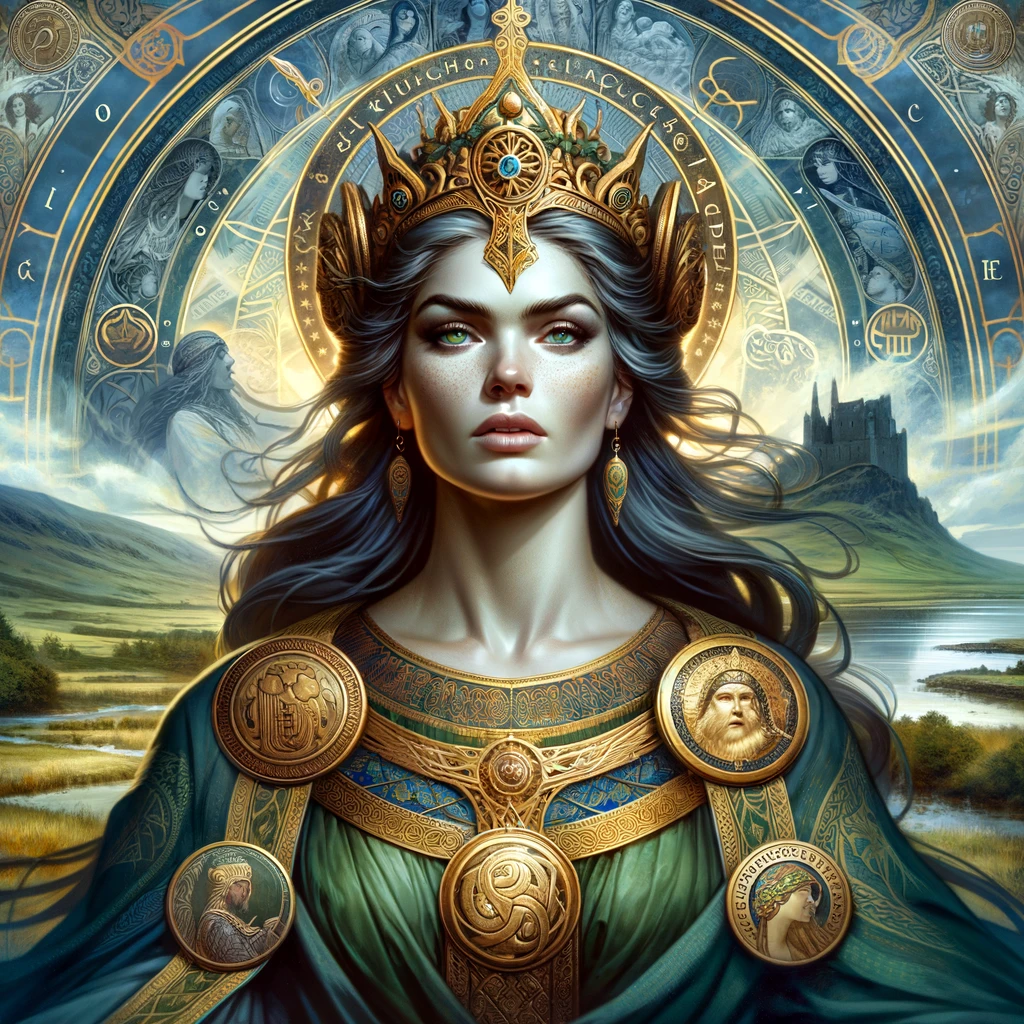

In the lush, verdant landscapes of Ireland, a profound legacy resonates through the ages, embodied in the figure of Maeve, or Medb, an ancient deity whose essence is intertwined deeply with the very fabric of the land. Maeve, a goddess characterized by immense power and complexity, epitomizes the enduring reverence for the Divine Feminine, manifesting roles as a war leader, protectress, and personification of Ireland itself. Her narrative transcends mere myth, presenting a dynamic and resonant presence that continues to inspire contemporary explorations of spirituality and feminine empowerment.
Maeve as Sovereign Goddess and Protector of Tara
Central to Maeve’s mythology is her indelible connection to the Hill of Tara, the ceremonial and spiritual heart of ancient Ireland. Tara functioned not only as a political and cultural nucleus but also symbolized Irish sovereignty and spiritual vitality. Maeve, as the personification of sovereignty, inherently embodies Tara’s attributes—strength, fertility, and royal dignity. This connection highlights her role as a divine mediator between the human realm and the profound energies of the earth itself.
Queen of the Fae: Maeve’s Role as an Intermediary
As queen of the fae, Maeve’s influence surpasses human affairs, bridging the tangible world and the realm of the unseen. Her guardianship over the mystical and natural domains underscores ancient Irish beliefs in the interconnectedness of all forms of life and energies. Maeve represents the primordial wisdom inherent within nature, serving as a conduit through which divine guidance and ecological consciousness flow. Her stewardship emphasizes the importance ancient cultures placed on respecting and maintaining harmony with natural forces.
Maeve: She Who Intoxicates
Maeve’s epithet, “She Who Intoxicates,” vividly encapsulates her powerful, transformative, and alluring presence. Comparable to mead—the honey-infused wine celebrated for its sacred and intoxicating qualities—Maeve symbolizes the transformative power of nature and life itself. This intoxicating influence serves as a metaphor for inspiration, courage, and personal empowerment. The symbolism of mead, traditionally associated with divine inspiration and spiritual ecstasy, further underscores Maeve’s importance as an archetype for artists, visionaries, and spiritual practitioners who seek deep, creative insights.
Sovereignty Ritual: Sacred Union and Leadership
In Ireland’s ancient matrilineal traditions, sovereignty was more than a political ideal; it was a sacred spiritual agreement between the divine feminine and mortal leadership. Maeve, as the sovereign goddess, was pivotal to this ritualistic union, determining and endorsing kingship through symbolic tests of worthiness. This sacred union, typically marked by the sharing of the mead cup, symbolized mutual commitment between the goddess and the king, ensuring the land’s prosperity and the harmony of society. Through this ritual, Maeve embodied the spiritual essence of the land and legitimized the king’s role as its earthly protector and steward.
Maeve’s Legacy: Feminine Empowerment and Environmental Guardianship
Maeve’s legacy has endured, symbolizing strength, empowerment, leadership, and an enduring connection to nature. Her portrayal as a powerful war leader underscores the importance of courage, strategic thinking, and unwavering commitment to justice. Simultaneously, her role as protector and nurturer highlights the imperative of ecological responsibility and harmony with the environment. Maeve reminds contemporary societies of humanity’s deep-seated obligations to act as stewards of the earth, preserving its balance and acknowledging its wisdom.
Contemporary Relevance: Honoring Maeve and the Divine Feminine
Today, Maeve serves as a potent symbol in modern spiritual practices, particularly those emphasizing the reclamation and celebration of the Divine Feminine. Practitioners often honor her in rituals that highlight personal sovereignty, leadership qualities, environmental activism, and creativity. Maeve’s narratives and symbolism have also become integral to feminist spiritual frameworks, celebrating female empowerment, independence, and the sacredness inherent in femininity. Festivals, literary explorations, and ecological initiatives frequently invoke Maeve, bridging historical reverence with contemporary spiritual practice.
Thus, Maeve’s rich mythology not only illuminates ancient Irish culture but also continues to resonate deeply within contemporary spiritual discourse, urging a balanced, empowered, and harmonious engagement with the natural and divine worlds.
References
Condren, Mary. The Serpent and the Goddess: Women, Religion, and Power in Celtic Ireland. San Francisco: Harper & Row, 1989.
Green, Miranda. Celtic Goddesses: Warriors, Virgins, and Mothers. London: British Museum Press, 1995.
Mac Cana, Proinsias. Celtic Mythology. London: Hamlyn, 1970.
Monaghan, Patricia. The Encyclopedia of Celtic Mythology and Folklore. New York: Facts on File, 2004.
Ní Bhrolcháin, Muireann, ed. Goddesses in Celtic Religion: Cult and Mythology. Lampeter, Wales: Edwin Mellen Press, 2004.