

Short on time? Listen to our five-minute summary of the article below.
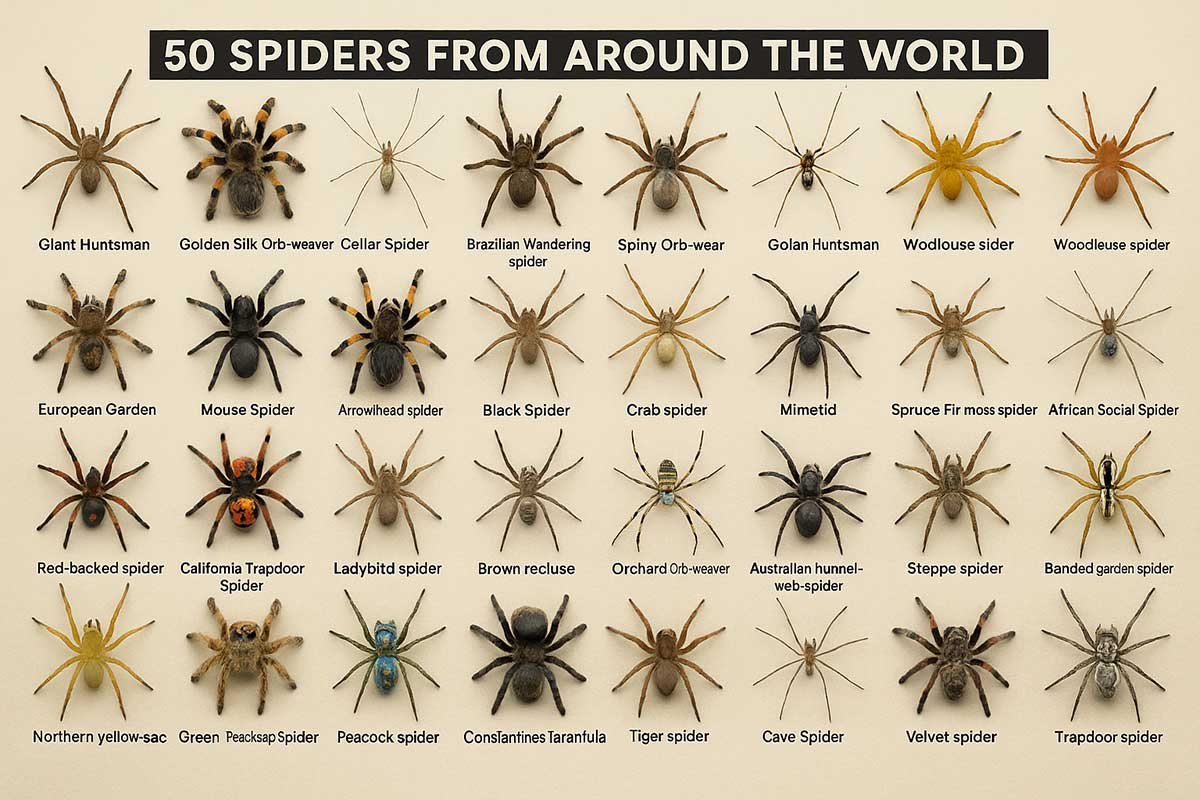
Despite a pervasive public image often tinged with fear and misunderstanding, spiders represent one of Earth’s most successful and diverse groups of predators. These ancient arthropods, with a lineage stretching back hundreds of millions of years, have colonized nearly every terrestrial environment, from arid deserts to high-altitude mountains, and are estimated to number in the trillions globally.1 This widespread presence and sheer abundance underscore their profound ecological significance and evolutionary success.2 Far from being mere creepy-crawlies, spiders are a remarkably diverse, ecologically vital, and fascinating group whose complex biology, sophisticated behaviors, and profound evolutionary history warrant deeper understanding and appreciation.
I. Anatomy and Physiology: The Intricate Engineering of Arachnids
Spiders are biological marvels, exhibiting a unique anatomical design that sets them apart from other arthropods. Their body plan and internal systems are exquisitely adapted for their predatory lifestyle and diverse habitats.
Body Plan
Unlike insects, a spider’s body is distinctly divided into two fused sections: the cephalothorax, or prosoma, which integrates the head and thorax, and the abdomen, or opisthosoma.3 These two primary body segments are connected by a slender, cylindrical pedicel, a flexible waist that allows the abdomen remarkable freedom of movement.4 This flexibility is crucial for activities such as silk spinning and intricate mating displays.5 The cephalothorax bears the spider’s eyes, which are typically eight but sometimes six, arranged in varying patterns along the front of the carapace.6 It also houses the mouthparts and eight walking legs. The abdomen, typically covered with a thinner and more flexible cuticle, allows for expansion during feeding or egg development and contains vital internal organs and the silk-spinning apparatus.7 The entire body is enveloped by a rigid exoskeleton, or cuticle, composed of protein and chitin, which provides both protection and internal attachment points for muscles.8 This exoskeleton also accommodates the spider’s sense organs, featuring various types of innervated hairs and pits for sensory input.9 The semi-rigid nature of the exoskeleton, enclosing a blood-filled body space, allows for variations in blood pressure, influencing limb extension and overall movement.10 The internal non-chitinous skeletal plate, the endosternite, serves as a central attachment point for muscles from limbs, gut, and carapace, further illustrating the intricate internal support system of these creatures.11
Sensory and Feeding Apparatus
Spiders possess unique sensory and feeding structures that distinguish them from other arthropods. Conspicuously, they lack antennae, a feature common to insects.12 Instead, their primary appendages ahead of the mouth are a pair of chelicerae, large, robust jaws ending in piercing fangs.13 These fangs are generally capable of injecting venom, which is produced by venom glands located within the cephalothorax.14 The upper sections of the chelicerae often feature thick “beards” that filter solid food, a necessary adaptation given that spiders cannot ingest solid food due to their narrow guts.15 They must liquefy their prey externally or internally using digestive enzymes before consumption. Behind the chelicerae are the mouthparts, including an upper plate, the labrum, and a lower, more visible plate, the labium.16 The first appendages behind the mouth are the pedipalps, which are relatively small in most spiders and whose bases extend the mouth; in males, however, the last sections of the pedipalps are notably enlarged and specialized for sperm transfer during reproduction.17 A fascinating physiological adaptation is that spiders lack extensor muscles in their limbs; instead, they extend their legs by increasing hydraulic pressure, a mechanism supported by their open circulatory system.18 This hydraulic system represents a highly efficient and specialized adaptation for locomotion, enabling rapid, powerful movements without the need for a complex array of muscles. This unique mechanism is a core functional aspect that dictates their movement capabilities and limitations, contributing significantly to their success as predators.
Internal Systems
The internal workings of a spider are equally complex and highly specialized. Their nervous system is remarkably centralized, with all ganglia (nerve tissue masses) fused into a single mass that largely fills the cephalothorax in most species.19 This represents a significant evolutionary step from more primitive arthropod arrangements, where ganglia are typically paired and segmented. This centralized neural architecture supports complex behaviors, including the surprising cognitive flexibility observed in some hunting spiders like Portia, which can employ trial-and-error learning, challenging previous assumptions about invertebrate cognitive abilities.20 Spiders possess an open circulatory system, where a tubular heart, located in the abdomen, pumps blood (haemolymph) into a body cavity, the hemocoel, bathing tissues and organs directly before gradually circulating back to the heart.21 The blood of many spiders, particularly those with book lungs, contains hemocyanin, a respiratory pigment that enhances oxygen transport.22 Respiration occurs through book lungs, which are air-filled cavities containing thin, leaf-like lamellae for gas exchange, and/or fine tracheal tubes.23 Mygalomorph and some araneomorph spiders possess two pairs of book lungs. However, most modern araneomorphs have only the anterior pair intact, with the posterior pair modified into more efficient tracheal tubes.24 This evolutionary transition signifies a critical adaptation for terrestrial life, as tracheal tubes allow for more efficient gas exchange and better water conservation, providing a significant selective advantage for spiders colonizing diverse and often drier land habitats.25 This adaptation allowed for more active lifestyles and broader geographical distribution, directly contributing to the vast diversification of modern spiders. A few tiny spiders living in moist, sheltered habitats have no specialized breathing organs, with gas exchange taking place directly across their thin body cuticle, further illustrating how respiratory solutions are finely tuned to environmental pressures.26
The Marvel of Silk
A hallmark of spiders is their extraordinary ability to produce silk, a liquid protein extruded from specialized spinnerets located on the abdomen.27 Spiders can possess up to six different types of silk glands, each producing silk with distinct properties for various applications.28 This versatile biomaterial is fundamental to their survival, used for constructing intricate webs for prey capture, building protective retreats and egg sacs, aiding in dispersal through “ballooning” (where young spiders use silk threads to catch wind currents), and even as a “safety line” during falls.29 The exceptional strength, elasticity, and unique characteristics of spider silk have garnered significant scientific interest, holding promise for the development of bio-inspired materials in fields ranging from medical sutures to advanced textiles, and even bulletproof vests.30 This expands the traditional understanding of silk’s role; it is not merely a hunting tool but a fundamental biological material integral to reproduction, communication, dispersal, and a source of inspiration for human technological innovation. This highlights silk as a highly versatile biomaterial, showcasing the depth of spider adaptations beyond their predatory prowess.
Table 1: Key Anatomical Features and Functions
| Body Part | Primary Function/Description |
| Cephalothorax | Fusion of head and thorax; bears eyes, mouthparts, legs |
| Abdomen | Houses vital organs, spinnerets; expands for feeding/eggs |
| Pedicel | Slim waist connecting cephalothorax and abdomen, allowing movement |
| Exoskeleton | Rigid outer covering for protection, muscle attachment, water retention |
| Eyes | Vision (usually 8 simple eyes) |
| Chelicerae (with Fangs) | Piercing jaws with fangs for venom injection |
| Pedipalps | Appendages near mouth; sensory, modified for sperm transfer in males |
| Book Lungs | Breathing organs with leaf-like lamellae for gas exchange |
| Tracheal Tubes | Fine tubes for efficient gas exchange, water conservation |
| Silk Glands | Produce liquid protein for silk |
| Heart | Pumps blood (haemolymph) in open circulatory system |
| Brain Ganglia | Mass of nerve tissue, centralized in cephalothorax |
| Venom Glands | Produce venom to subdue prey |
II. A Tapestry of Life: Spider Diversity and Evolutionary Journeys
The “World of Spiders” is a testament to millions of years of evolution, resulting in an astonishing array of forms and functions. Their lineage is ancient, and recent scientific discoveries continue to reshape our understanding of their deep history.
Classification
Spiders belong to the Order Araneae, making them air-breathing arthropods within the class Arachnida, a diverse group that also includes scorpions, mites, and horseshoe crabs.31 Araneae is the largest order of arachnids, boasting over 51,000 classified species, a number that continues to grow with ongoing discoveries, such as new peacock spiders in Australia and a rare giant trapdoor spider, Euoplos dignitas, in 2023.32 This immense diversity places them seventh in total species diversity among all orders of organisms.33 Spiders are broadly classified into three suborders: Mesothelae, the most primitive group, which includes the family Liphistiidae, notable for retaining visible abdominal segmentation; Mygalomorphae, often referred to as primitive spiders, encompassing tarantulas and funnel-web spiders; and Araneomorphae, the modern spiders, which comprise the vast majority of known species and exhibit the most advanced adaptations.34
Global Richness
Spiders have achieved remarkable ecological success, colonizing nearly every terrestrial habitat on Earth.35 They thrive in diverse environments, from arid deserts and subterranean caves to high-altitude mountains, with some even adapting to freshwater and, rarely, saltwater environments.36 Their widespread distribution and abundance—estimated at trillions of individuals globally, with one study counting 131 spiders per square meter in a meadow—underscore their ecological dominance.37 Spiders are recognized as key indicators of environmental change and community-level diversity, reflecting the health of their ecosystems.38 The fact that they are sensitive to disturbances across the feeding network means they serve as good early warners for changes in more resilient taxa, emphasizing their deep integration and importance in ecosystems over geological timescales.39 Taxonomic diversity is high across many families, with Linyphiidae, Lycosidae, Gnaphosidae, and Araneidae frequently showing the highest species richness in various regions, further showcasing their deep integration into ecosystems.40
Evolutionary Milestones
The evolutionary narrative of arachnids, including spiders, is more intricate than previously understood. Traditional theories posited a single transition from water to land for all arachnids.41 However, recent phylogenomic studies challenge this view, indicating that horseshoe crabs are nested within the arachnid group rather than forming a separate lineage.42 This suggests that different arachnid groups may have independently adapted to terrestrial life through multiple colonization events.43 This re-evaluation represents a significant shift in evolutionary biology, implying that distinct environmental pressures and genetic changes drove separate terrestrial adaptations, forcing a rethinking of existing evolutionary models.
The fossil record indicates that spider-like arachnids with silk-producing spigots, such as Attercopus fimbriunguis, appeared in the Devonian period, approximately 386 million years ago.44 These early forms likely lacked true spinnerets, suggesting that early silk use was for purposes like nest lining or egg cases rather than complex webs.45 True spiders, resembling the primitive Mesothelae, are found in Carboniferous rocks dating from 318 to 299 million years ago.46 A pivotal discovery in arachnid evolution is the role of whole-genome duplications, identified in spiders and scorpions. These events, which duplicate entire genomes, are believed to have significantly contributed to the diversification of these groups by enabling the evolution of new biological functions, most notably the sophisticated mechanisms for silk production and venom synthesis.47 Genome duplication provides redundant gene copies, allowing one copy to mutate and acquire a new function without compromising the original, essential function of the other. This genetic raw material for innovation is presented as crucial for the diversification and evolutionary success of these groups, explaining a fundamental genetic process that likely enabled the remarkable complexity, diversity, and potency of these traits, directly contributing to their predatory prowess and ecological dominance. The main modern spider groups, Mygalomorphae and Araneomorphae, first emerged in the Triassic period, over 200 million years ago, with the development of orb-web weaving appearing later.48 Their ancient lineage combined with their widespread diversity and colonization of nearly all terrestrial habitats suggests an incredibly successful and long-running adaptive radiation, likely driven by their specialized predatory niche.
Table 2: Major Spider Suborders: Characteristics and Evolutionary Significance
| Suborder | Key Characteristics | Evolutionary Significance/Examples |
| Mesothelae | Most primitive; retains segmented abdomen; two pairs of book lungs | Oldest surviving group (e.g., Liphistiidae); resembles Carboniferous fossils |
| Mygalomorphae | Primitive; two pairs of book lungs | Appeared Triassic; includes tarantulas and funnel-web spiders (e.g., Sydney funnel-web) |
| Araneomorphae | Modern; typically one pair of book lungs and tracheal tubes; highly centralized nervous system (ganglia fused) | Appeared Triassic; comprises the vast majority of modern spiders; includes orb-web weavers, jumping spiders, wolf spiders |
Note: All true spiders lack antennae and extend limbs by hydraulic pressure.
III. Masters of the Hunt: Diverse Strategies for Survival
Spiders are renowned for their predatory prowess, employing a remarkable array of strategies to capture prey, from the intricate engineering of webs to the agile pursuit of active hunters.
Web Weavers
Many spider species are expert architects, constructing diverse web types as their primary means of prey capture. These include the iconic orb webs (e.g., Araneidae, Tetragnathidae), funnel webs (Agelenidae), sheet webs (Linyphiidae), tube webs (Diguetidae), cobwebs (Theridiidae), and irregular webs (Dictynidae).49 Building these traps requires a significant upfront investment of energy.50 Once an insect strikes the web, the spider is alerted by precise vibrations, which provide crucial information about the prey’s size, location, and activity level.51 Based on this sensory input, the spider decides whether to attack.52
A key ecological principle observed in web-building spiders is a trade-off: species building highly effective, long-retaining webs (like vertical orb webs) can afford slower attack times, while those constructing less retentive webs (such as sheet webs) must react and capture prey more rapidly.53 This implies that different web architectures represent distinct evolutionary solutions to the problem of prey capture, balancing the energy invested in web construction against the need for rapid prey subjugation. A highly retentive web allows a spider more time to approach and subdue prey, reducing the need for immediate, high-risk attacks. Conversely, a less retentive web demands faster, more agile attacks. Sheet webs, for instance, despite lower capture effectiveness, compensate with reduced maintenance costs.54 The entire process, from the initial impact to biting or wrapping the prey, relies on the web’s ability to retain the victim, with shorter retention times necessitating faster spider reactions and potentially higher risks during capture.55
Active Hunters
Not all spiders rely on silk traps; many are agile, active hunters.56 These webless species employ speed, camouflage, and acute sensory perception to ambush or pursue their prey.57 Examples include the Pantropical huntsman spiders (Heteropoda species), which utilize powerful chelicerae and rapid movements to capture insects and other soft-bodied pests.58 Jumping spiders (Salticidae) are particularly notable for their exceptional vision, which rivals that of some vertebrates, and their sophisticated hunting tactics.59 Species within the genus Portia, for instance, demonstrate remarkable signs of intelligence, including the ability to choose and develop new strategies through a trial-and-error learning approach.60 This challenges the common perception of spiders as simple automatons driven solely by instinct, highlighting surprising neurological sophistication despite their relatively small and centralized nervous systems. The ability to learn and adapt hunting tactics suggests a capacity for complex decision-making and environmental assessment, opening fascinating avenues for further research into invertebrate cognition and the evolutionary pressures that might drive such intelligence in a predatory context. Wolf spiders (Lycosidae) are another prominent group of active hunters, identifiable by their characteristic eye patterns, which aid in their visual hunting.61
Reproductive Complexities
Spider reproductive behaviors are intricately linked to their predatory adaptations and often involve complex rituals. Adult female spiders are typically solitary, carnivorous, and generally larger with a longer life expectancy than males.62 This size disparity creates a unique dynamic where the female has the “alternative of mating with or preying upon attending males.”63 While this may appear to be simple predation, its inclusion within discussions of spider reproductive behaviors implies a deeper, strategic dimension. Sexual cannibalism, while seemingly detrimental to the male, can be a complex evolutionary strategy. For the female, consuming the male provides a significant nutritional boost, which can directly translate into increased egg production, larger egg sacs, or higher offspring viability. For the male, in some species, allowing himself to be eaten might ensure paternity by prolonging copulation or reducing the likelihood of the female mating again. This suggests a co-evolved, albeit grim, aspect of their reproductive ecology, where the male’s sacrifice can enhance the overall reproductive success of the pair.
After a male undergoes his final molt, he charges his pedipalps with sperm and embarks on a quest for a female, often following silk lines that contain alluring pheromones.64 Courtship can involve elaborate dances, vibrations, or gift-giving, all designed to placate the female and avoid being consumed. Males may exhibit various tactics, including guarding the female before or after mating, or departing to seek other mates.65 Female receptivity can vary, occurring after their final molt, during feeding, or at other times, further adding to the complexity of these interactions.66
Table 3: Diverse Hunting Strategies and Web Types
| Strategy Type | Examples of Spiders/Families | Key Tactics/Web Types | Prey Capture Mechanism |
| Web Weaving | Orb-web weavers (Araneidae, Nephilidae, Tetragnathidae), Sheet-web weavers (Linyphiidae), Funnel-web weavers (Agelenidae), Cobweb weavers (Theridiidae) | Orb webs (vertical/horizontal), Sheet webs, Funnel webs, Tube webs, Cobwebs, Irregular webs | Trapping via silk; alerted by vibrations; chemical/physical assessment |
| Active Hunting | Huntsman spiders (Heteropoda), Jumping spiders (Salticidae), Wolf spiders (Lycosidae) | Ambush/Pursuit, Acute Vision, Hydraulic Movement, Intelligence/Learning (e.g., Portia) | Direct attack; speed and powerful chelicerae; visual tracking |
IV. Spiders and Our World: Ecological Contributions and Human Interactions
Often misunderstood and feared, spiders play an indispensable role in maintaining ecological balance and offer surprising benefits to human society, far outweighing the minimal risks posed by a very small number of species.
Ecological Pillars
Spiders are crucial components of virtually all terrestrial ecosystems, recognized as one of the most prevalent and important groups of predators.67 They are biological control agents, playing a vital role in maintaining ecological balance by preying on a vast array of insects and other small invertebrates.68 This includes controlling populations of nuisance animals such as mosquitoes, flies, and cockroaches, thereby reducing the need for chemical pesticides in agriculture and homes.69 By consuming disease-carrying insects, spiders indirectly contribute to public health by slowing the spread of illnesses like malaria and West Nile virus.70 This positions spiders not just as individual predators but as crucial bio-regulators that actively maintain ecosystem stability and health. Their impact on pest populations has direct economic benefits and significant public health benefits. Furthermore, spiders serve as a vital food source for a diverse range of other animals, including birds, lizards, frogs, and bats, firmly establishing their position within intricate food webs.71 Their widespread presence is often considered a reliable indicator of a healthy and balanced ecosystem.72 Spiders can also help to aerate soil, enriching it with vital nutrients, further illustrating their function as ecosystem engineers.73
Unsung Benefits
Beyond their critical ecological functions, spiders offer surprising and significant benefits to human society, particularly in scientific and medical research. Spider venom, a complex cocktail of bioactive compounds, has proven instrumental in the development of new drugs, including those for treating heart disease and high blood pressure.74 The extraordinary strength, elasticity, and unique molecular structure of spider silk hold immense potential for bio-inspired materials, with promising applications ranging from sustainable textiles to advanced medical sutures and even bulletproof vests.75 This positions spiders as a valuable, yet largely untapped, biological resource for medical and material science, suggesting that the unique biochemical properties of spider venom and the exceptional mechanical properties of spider silk represent a frontier for significant breakthroughs in human health and technology. While not primary pollinators, some spider species can indirectly aid pollination by controlling pest populations around flowers and moving between plants, thus supporting agricultural ecosystems.76 Spiders also provide valuable educational insights into predator-prey dynamics, arachnid biology, and environmental science. Their relatively long lifespan and ease of maintenance in laboratory settings make them ideal subjects for repeated experiments, facilitating ongoing research.77
Dispelling Myths
A significant barrier to appreciating spiders stems from widespread misconceptions and irrational fears. It is crucial to understand the technical distinction between “poisonous” and “venomous.”78 Spiders are venomous, meaning their toxins (proteins) are injected, typically through fangs. They are not “poisonous,” which would imply harm upon ingestion, inhalation, or touch.79 Almost all spiders produce venom, primarily as an insecticide to subdue their prey. However, this venom is rarely potent enough to cause significant harm to humans.80 This highlights a significant and persistent gap between scientific understanding and public perception, often fueled by sensationalist media portrayals.
Out of approximately 50,000 known spider species, a mere 25 species (less than 0.05%) are considered “medically significant,” meaning their venom can cause illness in humans to a greater or lesser extent.81 Even among these, severe symptoms are rare, and other creatures like bees and wasps pose a far greater danger to human fatalities annually.82 Medically significant genera include the widely distributed widow spiders (Latrodectus spp.) and recluse spiders (Loxosceles spp.), as well as regional species like Brazilian wandering spiders (Phoneutria spp.) and Australian funnel-web spiders (Atrax spp.).83 Many spiders commonly feared, such as hobo spiders or wolf spiders (Lycosa tarantula), have historically false reputations for being harmful.84 This discrepancy directly impacts conservation efforts, making it difficult to garner public support or funding for spider protection.
Table 4: Medically Significant Spider Genera and Their Characteristics
| Genus (Common Name) | Key Characteristics/Distribution | Typical Symptoms (General) | Severity/Note |
| Latrodectus (Widow spiders) | Shiny black, red hourglass/marks; worldwide | Neurotoxic: Muscle spasms, severe pain, nausea, sweating | Only ~25 species globally medically significant; severe symptoms are rare; bees/wasps are far more dangerous to humans. |
| Loxosceles (Recluse spiders) | Yellowish-brown, dark violin mark on cephalothorax; Americas (esp. SW USA) | Cytotoxic: Localized pain, blister, tissue necrosis (rarely severe) | |
| Phoneutria (Brazilian wandering spiders) | Large brown, nocturnal ground hunters; Central/South America | Neurotoxic: Intense pain, priapism (males), systemic effects | |
| Atrax (Australian funnel-web spiders) | Large, aggressive, glossy black; Eastern Australia | Neurotoxic: Rapid onset, severe pain, profuse sweating, muscle spasms | |
| Sicarius (Six-eyed sand spiders) | Flat, sand-dwelling; Southern Hemisphere | Cytotoxic: Skin lesions, tissue necrosis | |
| Hexophthalma (Six-eyed sand spiders) | Similar to Sicarius; Southern Africa | Cytotoxic: Skin lesions, tissue necrosis | |
| Hadronyche (Australian funnel-web spiders) | Related to Atrax; Eastern Australia | Neurotoxic: Similar to Atrax | |
| Illawarra (Australian funnel-web spiders) | Related to Atrax; Eastern Australia | Neurotoxic: Similar to Atrax | |
| Macrothele (Funnel-web spiders) | Large, dark, funnel webs; Asia | Neurotoxic: Similar to Atrax | |
| Missulena (Mouse spiders) | Stout, dark, burrowing; Australia | Neurotoxic: Localized pain, nausea, sweating |
V. The Future of Spiders: Conservation Challenges and Imperatives
Despite their critical ecological importance, spiders face significant threats, often overlooked in broader conservation efforts.85 Safeguarding these vital arthropods requires addressing data deficiencies and implementing targeted conservation strategies.
Threats to Survival
Spiders, despite their prominent ecological roles, are notably endangered and significantly underrepresented in current conservation initiatives.86 A global expert assessment identifies several primary anthropogenic threats. Agriculture, livestock farming, and forestry are the most frequently cited, leading to extensive habitat fragmentation, destruction, and conversion, often through deforestation and burning.87 These practices drastically reduce spider density, species richness, and functional diversity, impacting their crucial predatory roles.88 Climate change is another pervasive threat, exposing species to unprecedented temperatures, drastically reducing available habitat, and potentially driving the extinction of restricted endemic species.89 Urbanization also poses complex challenges; while some land-dwelling, open-habitat species may thrive, forest-dwelling spiders often suffer, and urbanization can alter spider traits like body size and web structure.90 Pollution, particularly from pesticides, has direct lethal and sub-lethal impacts on spiders, causing deaths and reduced fitness, as well as indirect effects through prey availability.91
Other identified threats include invasive species, which can cause competitive exclusion; transportation and service corridors, leading to mortality, acting as dispersal barriers, and exposing spiders to heavy pollutants; energy production and mining, causing habitat destruction, especially for troglobiont (cave-dwelling) species; dams and water management projects, which rarely consider riparian spider communities and lead to direct habitat loss and community shifts; and increasingly frequent and intense wildfires, exacerbated by climate change.92 Illegal hunting and trapping, particularly of mygalomorphs like tarantulas for the pet trade, also pose a significant threat in tropical regions.93
Data Gaps
A significant impediment to effective spider conservation is the pervasive lack of comprehensive data, often referred to as “shortfalls.”94 These include the Linnean shortfall, which denotes limited knowledge on species identities and taxonomy; the Wallacean shortfall, indicating insufficient data on species distribution; the Prestonian shortfall, representing the absence of information on population abundances and their variability over time and space; and the Hutchinsonian shortfall, reflecting a poor understanding of species ecology and their sensitivity to habitat change.95 The lack of this fundamental scientific data directly prevents the adequate assessment of the conservation status of most spider species, such as for the IUCN Red List, and consequently hinders the implementation of effective, targeted protection measures.96 Tropical species are particularly underrepresented in global conservation studies.97 This highlights that increased funding and effort in basic arachnological research, systematic global inventory, and long-term monitoring are prerequisites for any successful spider conservation strategy.
Conservation Pathways
Despite the challenges, a global roadmap for spider conservation is emerging, emphasizing a multi-faceted approach. Key measures include land protection, seen as the most effective way to ensure low human impact on spider habitats, through the establishment and careful selection of protected areas that can also mitigate effects of wildfires and invasive species.98 Education and awareness programs are crucial, given the often negative public perception of spiders. These programs aim to counter myths, foster empathy, and engage citizens through initiatives like museums, zoos, and citizen science.99 This addresses a significant challenge and opportunity: the public’s widespread fear and apathy towards spiders directly impede conservation efforts, but active education can transform this barrier into a powerful tool for conservation.
Land management practices are vital, including implementing biodiversity-friendly agroforestry, promoting organic farming, which has been shown to increase spider density, and undertaking restoration efforts in disturbed areas.100 Robust law and policy at international, regional, and national levels are also necessary, though existing frameworks often lack comprehensive coverage for invertebrates like spiders and can be biased towards vertebrates.101 Economic incentives and sustainable use models, such as legal trade programs for tarantulas, can help offset illegal harvesting.102 Filling data gaps through global inventory and monitoring schemes, and utilizing advanced methods like machine learning for rapid assessments, are urgent future directions to ensure spiders are adequately protected.103 Spiders’ sensitivity to disturbances across the feeding network means they are good early warners for change in more resilient taxa.104 This provides a compelling argument for their inclusion in biodiversity monitoring programs and strengthens the case for their conservation, as protecting spiders contributes to the early detection and mitigation of wider environmental issues.
Table 5: Major Threats to Spider Conservation and Proposed Measures
| Threat Category | Specific Impacts | Conservation Measures |
| Agriculture, Livestock & Forestry | Habitat fragmentation, destruction, conversion; reduced spider density/richness | Land Protection (protected areas, careful reserve selection), Land Management (biodiversity-friendly agroforestry, organic farming, restoration) |
| Climate Change | Exposure to unfamiliar temperatures; habitat reduction; potential extinctions | Climate Change Mitigation, Land Protection |
| Urbanisation | Habitat loss; altered spider traits; complex community shifts | Land Protection, Land Management |
| Pollution (Pesticides) | Direct mortality; reduced fitness; impacts on prey availability | Land Management (reduced pesticide use) |
| Invasive Species & Diseases | Competitive exclusion; direct harm to native spiders | Land Protection, Species Management (where applicable) |
| Hunting & Trapping | Overharvesting of specific species (e.g., tarantulas) for pet trade | Law & Policy, Livelihood/Economic Incentives (legal trade programs) |
| Data Gaps (Shortfalls) | Lack of knowledge on species identities, distribution, abundance, ecology; inadequate conservation assessment | Global Inventory & Monitoring, Machine Learning for assessments, Education & Awareness (citizen science) |
Conclusion
The world of spiders, often shrouded in misconception and fear, reveals itself upon closer examination to be a realm of extraordinary biological complexity, ancient lineage, and indispensable ecological contribution. These arthropods, with their unique two-part body plan, sophisticated hydraulic limb extension, and highly centralized nervous systems, showcase a remarkable evolutionary journey that includes multiple independent terrestrial colonization events and the pivotal role of whole-genome duplications in enabling traits like silk production and venom synthesis. From the intricate engineering of web-weavers to the surprising cognitive abilities of active hunters, spiders employ a diverse array of survival strategies that underscore their adaptive prowess.
Beyond their fascinating biology, spiders are ecological cornerstones, serving as vital bio-regulators that control insect populations, including disease vectors, and contributing to ecosystem health as bio-indicators and even subtle engineers of soil aeration. Their overlooked benefits extend to human society, offering a rich source of novel compounds for biomedical research and inspiring advancements in material science. The widespread fear of spiders stands in stark contrast to the scientific reality that only a minute fraction of the nearly 50,000 known species pose any medical significance to humans.
However, despite their critical importance, spiders face escalating threats from human activities, particularly habitat destruction through agriculture and urbanization, the pervasive impacts of climate change, and widespread pollution. A fundamental barrier to their effective conservation is the significant lack of basic biological data, encapsulated by the “shortfalls” in species identity, distribution, abundance, and ecology. Addressing these knowledge gaps and mitigating anthropogenic pressures requires a concerted, multi-faceted approach. Protecting the world of spiders is not merely about preserving a species; it is about safeguarding the delicate balance and resilience of our planet’s intricate ecosystems, recognizing these eight-legged architects as invaluable components of Earth’s biodiversity.
Notes
- EBSCO Research Starters, “Spiders,” EBSCO Research Starters, accessed July 26, 2024, https://www.ebsco.com/research-starters/anatomy-and-physiology/spiders; “Spider fauna (Arachnida, Araneae) in Mordovia State Nature Reserve and National Park “Smolny” (Russia) – PMC – PubMed Central,” PubMed Central, accessed July 26, 2024, https://pmc.ncbi.nlm.nih.gov/articles/PMC10612110/.
- “Basic external characteristics of spiders useful for identifying individuals to species,” ResearchGate, accessed July 26, 2024, https://www.researchgate.net/figure/Basic-external-characteristics-of-spiders-useful-for-identifying-individuals-to-species_fig1_242278779.
- Australian Museum, “Spider Structure,” Australian Museum, accessed July 26, 2024, https://australian.museum/learn/animals/spiders/spider-structure/; “Spider,” Wikipedia, last modified August 8, 2025, https://en.wikipedia.org/wiki/Spider.
- “Spider,” Wikipedia, last modified August 8, 2025, https://en.wikipedia.org/wiki/Spider; Australian Museum, “What is a Spiders?,” Australian Museum, accessed July 26, 2024, https://australian.museum/learn/species-identification/ask-an-expert/what-is-a-spiders/.
- Australian Museum, “What is a Spiders?,” Australian Museum, accessed July 26, 2024, https://australian.museum/learn/species-identification/ask-an-expert/what-is-a-spiders/; Australian Museum, “Spider Structure,” Australian Museum, accessed July 26, 2024, https://australian.museum/learn/animals/spiders/spider-structure/.
- EBSCO Research Starters, “Spiders,” EBSCO Research Starters, accessed July 26, 2024, https://www.ebsco.com/research-starters/anatomy-and-physiology/spiders; Australian Museum, “Spider Structure,” Australian Museum, accessed July 26, 2024, https://australian.museum/learn/animals/spiders/spider-structure/.
- Australian Museum, “Spider Structure,” Australian Museum, accessed July 26, 2024, https://australian.museum/learn/animals/spiders/spider-structure/.
- Australian Museum, “Spider Structure,” Australian Museum, accessed July 26, 2024, https://australian.museum/learn/animals/spiders/spider-structure/.
- Australian Museum, “Spider Structure,” Australian Museum, accessed July 26, 2024, https://australian.museum/learn/animals/spiders/spider-structure/.
- Australian Museum, “Spider Structure,” Australian Museum, accessed July 26, 2024, https://australian.museum/learn/animals/spiders/spider-structure/.
- Australian Museum, “Spider Structure,” Australian Museum, accessed July 26, 2024, https://australian.museum/learn/animals/spiders/spider-structure/; Australian Museum, “What is a Spiders?,” Australian Museum, accessed July 26, 2024, https://australian.museum/learn/species-identification/ask-an-expert/what-is-a-spiders/.
- “Spider,” Wikipedia, last modified August 8, 2025, https://en.wikipedia.org/wiki/Spider; EBSCO Research Starters, “Spiders,” EBSCO Research Starters, accessed July 26, 2024, https://www.ebsco.com/research-starters/anatomy-and-physiology/spiders.
- “Spider,” Wikipedia, last modified August 8, 2025, https://en.wikipedia.org/wiki/Spider; “Spider,” Wikipedia, last updated August 8, 2025, https://en.wikipedia.org/wiki/Spider; Australian Museum, “Spider Structure,” Australian Museum, accessed July 26, 2024, https://australian.museum/learn/animals/spiders/spider-structure/.
- “Spider,” Wikipedia, last modified August 8, 2025, https://en.wikipedia.org/wiki/Spider; EBSCO Research Starters, “Spiders,” EBSCO Research Starters, accessed July 26, 2024, https://www.ebsco.com/research-starters/anatomy-and-physiology/spiders; Australian Museum, “Spider Structure,” Australian Museum, accessed July 26, 2024, https://australian.museum/learn/animals/spiders/spider-structure/.
- “Spider,” Wikipedia, last modified August 8, 2025, https://en.wikipedia.org/wiki/Spider; “Spider,” Wikipedia, last updated August 8, 2025, https://en.wikipedia.org/wiki/Spider.
- Australian Museum, “Spider Structure,” Australian Museum, accessed July 26, 2024, https://australian.museum/learn/animals/spiders/spider-structure/.
- “Spider,” Wikipedia, last modified August 8, 2025, https://en.wikipedia.org/wiki/Spider; “Spider,” Wikipedia, last updated August 8, 2025, https://en.wikipedia.org/wiki/Spider.
- “Spider,” Wikipedia, last updated August 8, 2025, https://en.wikipedia.org/wiki/Spider; “Spider,” Wikipedia, last modified August 8, 2025, https://en.wikipedia.org/wiki/Spider.
- “Spider,” Wikipedia, last modified August 8, 2025, https://en.wikipedia.org/wiki/Spider; Australian Museum, “Spider Structure,” Australian Museum, accessed July 26, 2024, https://australian.museum/learn/animals/spiders/spider-structure/; “Spider,” Wikipedia, last updated August 8, 2025, https://en.wikipedia.org/wiki/Spider.
- “Spider,” Wikipedia, last updated August 8, 2025, https://en.wikipedia.org/wiki/Spider; “Spider,” Wikipedia, last modified August 8, 2025, https://en.wikipedia.org/wiki/Spider.
- “Spider,” Wikipedia, last modified August 8, 2025, https://en.wikipedia.org/wiki/Spider; Australian Museum, “Spider Structure,” Australian Museum, accessed July 26, 2024, https://australian.museum/learn/animals/spiders/spider-structure/.
- “Spider,” Wikipedia, last modified August 8, 2025, https://en.wikipedia.org/wiki/Spider.
- Australian Museum, “What is a Spiders?,” Australian Museum, accessed July 26, 2024, https://australian.museum/learn/species-identification/ask-an-expert/what-is-a-spiders/; Australian Museum, “Spider Structure,” Australian Museum, accessed July 26, 2024, https://australian.museum/learn/animals/spiders/spider-structure/; “Spider,” Wikipedia, last modified August 8, 2025, https://en.wikipedia.org/wiki/Spider.
- Australian Museum, “Spider Structure,” Australian Museum, accessed July 26, 2024, https://australian.museum/learn/animals/spiders/spider-structure/; Australian Museum, “What is a Spiders?,” Australian Museum, accessed July 26, 2024, https://australian.museum/learn/species-identification/ask-an-expert/what-is-a-spiders/; “Spider,” Wikipedia, last modified August 8, 2025, https://en.wikipedia.org/wiki/Spider.
- “Spider,” Wikipedia, last modified August 8, 2025, https://en.wikipedia.org/wiki/Spider.
- Australian Museum, “Spider Structure,” Australian Museum, accessed July 26, 2024, https://australian.museum/learn/animals/spiders/spider-structure/; Australian Museum, “What is a Spiders?,” Australian Museum, accessed July 26, 2024, https://australian.museum/learn/species-identification/ask-an-expert/what-is-a-spiders/.
- “Spider,” Wikipedia, last updated August 8, 2025, https://en.wikipedia.org/wiki/Spider; “Basic external characteristics of spiders useful for identifying individuals to species,” ResearchGate, accessed July 26, 2024, https://www.researchgate.net/figure/Basic-external-characteristics-of-spiders-useful-for-identifying-individuals-to-species_fig1_242278779; EBSCO Research Starters, “Spiders,” EBSCO Research Starters, accessed July 26, 2024, https://www.ebsco.com/research-starters/anatomy-and-physiology/spiders; Australian Museum, “What is a Spiders?,” Australian Museum, accessed July 26, 2024, https://australian.museum/learn/species-identification/ask-an-expert/what-is-a-spiders/.
- Australian Museum, “Spider Structure,” Australian Museum, accessed July 26, 2024, https://australian.museum/learn/animals/spiders/spider-structure/.
- “Alternative Reproductive Tactics in Spiders1,” Integrative and Comparative Biology 24, no. 2 (1984): 321, https://academic.oup.com/icb/article-pdf/24/2/321/5917716/24-2-321.pdf; “An expert-based assessment of global threats and conservation measures for spiders,” ResearchGate, last updated August 6, 2025, https://www.researchgate.net/publication/344438830_An_expert-based_assessment_of_global_threats_and_conservation_measures_for_spiders.
- Southern Pest Control, “The Many Benefits of Spiders,” Southern Pest Control, last updated November 18, 2024, https://southernpestcontrol.com/the-many-benefits-of-spiders/; Southern Pest Control, “The Many Benefits of Spiders,” Southern Pest Control, last updated November 18, 2024, https://southernpestcontrol.com/the-many-benefits-of-spiders/.
- EBSCO Research Starters, “Spiders,” EBSCO Research Starters, accessed July 26, 2024, https://www.ebsco.com/research-starters/anatomy-and-physiology/spiders; “Spider,” Wikipedia, last updated August 8, 2025, https://en.wikipedia.org/wiki/Spider.
- “Spider,” Wikipedia, last updated August 8, 2025, https://en.wikipedia.org/wiki/Spider; EBSCO Research Starters, “Spiders,” EBSCO Research Starters, accessed July 26, 2024, https://www.ebsco.com/research-starters/anatomy-and-physiology/spiders; “Spider fauna (Arachnida, Araneae) in Mordovia State Nature Reserve and National Park “Smolny” (Russia) – PMC – PubMed Central,” PubMed Central, accessed July 26, 2024, https://pmc.ncbi.nlm.nih.gov/articles/PMC10612110/.
- “Spider,” Wikipedia, last updated August 8, 2025, https://en.wikipedia.org/wiki/Spider.
- EBSCO Research Starters, “Spiders,” EBSCO Research Starters, accessed July 26, 2024, https://www.ebsco.com/research-starters/anatomy-and-physiology/spiders.
- EBSCO Research Starters, “Spiders,” EBSCO Research Starters, accessed July 26, 2024, https://www.ebsco.com/research-starters/anatomy-and-physiology/spiders; “Spider fauna (Arachnida, Araneae) in Mordovia State Nature Reserve and National Park “Smolny” (Russia) – PMC – PubMed Central,” PubMed Central, accessed July 26, 2024, https://pmc.ncbi.nlm.nih.gov/articles/PMC10612110/.
- EBSCO Research Starters, “Spiders,” EBSCO Research Starters, accessed July 26, 2024, https://www.ebsco.com/research-starters/anatomy-and-physiology/spiders.
- EBSCO Research Starters, “Spiders,” EBSCO Research Starters, accessed July 26, 2024, https://www.ebsco.com/research-starters/anatomy-and-physiology/spiders.
- “Basic external characteristics of spiders useful for identifying individuals to species,” ResearchGate, accessed July 26, 2024, https://www.researchgate.net/figure/Basic-external-characteristics-of-spiders-useful-for-identifying-individuals-to-species_fig1_242278779; “An expert-based assessment of global threats and conservation measures for spiders,” ResearchGate, last updated August 6, 2025, https://www.researchgate.net/publication/344438830_An_expert-based_assessment_of_global_threats_and_conservation_measures_for_spiders.
- “An expert-based assessment of global threats and conservation measures for spiders,” ResearchGate, last updated August 6, 2025, https://www.researchgate.net/publication/344438830_An_expert-based_assessment_of_global_threats_and_conservation_measures_for_spiders.
- “Spider fauna (Arachnida, Araneae) in Mordovia State Nature Reserve and National Park “Smolny” (Russia) – PMC – PubMed Central,” PubMed Central, accessed July 26, 2024, https://pmc.ncbi.nlm.nih.gov/articles/PMC10612110/; “Spider fauna (Arachnida, Araneae) in Mordovia State Nature Reserve and National Park “Smolny” (Russia) – PMC – PubMed Central,” PubMed Central, accessed July 26, 2024, https://pmc.ncbi.nlm.nih.gov/articles/PMC10612110/.
- EurekAlert!, “A new study challenges traditional views on arachnid evolution,” EurekAlert!, accessed July 26, 2024, https://www.eurekalert.org/news-releases/1074229; Sanjana Gajbhiye, “Rethinking Arachnid Evolution: The Surprising History of Spiders,” Earth.com, accessed July 26, 2024, https://www.earth.com/news/rethinking-arachnid-evolution-the-surprising-history-of-spiders/.
- EurekAlert!, “A new study challenges traditional views on arachnid evolution,” EurekAlert!, accessed July 26, 2024, https://www.eurekalert.org/news-releases/1074229; Sanjana Gajbhiye, “Rethinking Arachnid Evolution: The Surprising History of Spiders,” Earth.com, accessed July 26, 2024, https://www.earth.com/news/rethinking-arachnid-evolution-the-surprising-history-of-spiders/.
- EurekAlert!, “A new study challenges traditional views on arachnid evolution,” EurekAlert!, accessed July 26, 2024, https://www.eurekalert.org/news-releases/1074229; Sanjana Gajbhiye, “Rethinking Arachnid Evolution: The Surprising History of Spiders,” Earth.com, accessed July 26, 2024, https://www.earth.com/news/rethinking-arachnid-evolution-the-surprising-history-of-spiders/.
- “Spider,” Wikipedia, last updated August 8, 2025, https://en.wikipedia.org/wiki/Spider.
- “Spider,” Wikipedia, last updated August 8, 2025, https://en.wikipedia.org/wiki/Spider.
- “Spider,” Wikipedia, last updated August 8, 2025, https://en.wikipedia.org/wiki/Spider; “Spider,” Wikipedia, last modified August 8, 2025, https://en.wikipedia.org/wiki/Spider.
- EurekAlert!, “A new study challenges traditional views on arachnid evolution,” EurekAlert!, accessed July 26, 2024, https://www.eurekalert.org/news-releases/1074229; Sanjana Gajbhiye, “Rethinking Arachnid Evolution: The Surprising History of Spiders,” Earth.com, accessed July 26, 2024, https://www.earth.com/news/rethinking-arachnid-evolution-the-surprising-history-of-spiders/.
- “Spider,” Wikipedia, last updated August 8, 2025, https://en.wikipedia.org/wiki/Spider; “Spider,” Wikipedia, last modified August 8, 2025, https://en.wikipedia.org/wiki/Spider.
- “Alternative Reproductive Tactics in Spiders1,” Integrative and Comparative Biology 24, no. 2 (1984): 321, https://academic.oup.com/icb/article-pdf/24/2/321/5917716/24-2-321.pdf; ResearchGate, “(PDF) Prey-capture strategies in sympatric web building spiders – ResearchGate,” ResearchGate, last updated July 17, 2025, https://www.researchgate.net/publication/233862447_Prey-capture_strategies_in_sympatric_web_building_spiders.
- ResearchGate, “(PDF) Prey-capture strategies in sympatric web building spiders – ResearchGate,” ResearchGate, last updated July 17, 2025, https://www.researchgate.net/publication/233862447_Prey-capture_strategies_in_sympatric_web_building_spiders.
- ResearchGate, “(PDF) Prey-capture strategies in sympatric web building spiders – ResearchGate,” ResearchGate, last updated July 17, 2025, https://www.researchgate.net/publication/233862447_Prey-capture_strategies_in_sympatric_web_building_spiders.
- ResearchGate, “(PDF) Prey-capture strategies in sympatric web building spiders – ResearchGate,” ResearchGate, last updated July 17, 2025, https://www.researchgate.net/publication/233862447_Prey-capture_strategies_in_sympatric_web_building_spiders.
- ResearchGate, “(PDF) Prey-capture strategies in sympatric web building spiders – ResearchGate,” ResearchGate, last updated July 17, 2025, https://www.researchgate.net/publication/233862447_Prey-capture_strategies_in_sympatric_web_building_spiders; ResearchGate, “(PDF) Prey-capture strategies in sympatric web building spiders – ResearchGate,” ResearchGate, last updated July 17, 2025, https://www.researchgate.net/publication/233862447_Prey-capture_strategies_in_sympatric_web_building_spiders.
- ResearchGate, “(PDF) Prey-capture strategies in sympatric web building spiders – ResearchGate,” ResearchGate, last updated July 17, 2025, https://www.researchgate.net/publication/233862447_Prey-capture_strategies_in_sympatric_web_building_spiders.
- ResearchGate, “(PDF) Prey-capture strategies in sympatric web building spiders – ResearchGate,” ResearchGate, last updated July 17, 2025, https://www.researchgate.net/publication/233862447_Prey-capture_strategies_in_sympatric_web_building_spiders.
- “Basic external characteristics of spiders useful for identifying individuals to species,” ResearchGate, accessed July 26, 2024, https://www.researchgate.net/figure/Basic-external-characteristics-of-spiders-useful-for-identifying-individuals-to-species_fig1_242278779; “Spider,” Wikipedia, last updated August 8, 2025, https://en.wikipedia.org/wiki/Spider.
- “Basic external characteristics of spiders useful for identifying individuals to species,” ResearchGate, accessed July 26, 2024, https://www.researchgate.net/figure/Basic-external-characteristics-of-spiders-useful-for-identifying-individuals-to-species_fig1_242278779.
- “Basic external characteristics of spiders useful for identifying individuals to species,” ResearchGate, accessed July 26, 2024, https://www.researchgate.net/figure/Basic-external-characteristics-of-spiders-useful-for-identifying-individuals-to-species_fig1_242278779.
- “Basic external characteristics of spiders useful for identifying individuals to species,” ResearchGate, accessed July 26, 2024, https://www.researchgate.net/figure/Basic-external-characteristics-of-spiders-useful-for-identifying-individuals-to-species_fig1_242278779.
- “Spider,” Wikipedia, last updated August 8, 2025, https://en.wikipedia.org/wiki/Spider; “Spider,” Wikipedia, last modified August 8, 2025, https://en.wikipedia.org/wiki/Spider.
- “Basic external characteristics of spiders useful for identifying individuals to species,” ResearchGate, accessed July 26, 2024, https://www.researchgate.net/figure/Basic-external-characteristics-of-spiders-useful-for-identifying-individuals-to-species_fig1_242278779.
- “Alternative Reproductive Tactics in Spiders1,” Integrative and Comparative Biology 24, no. 2 (1984): 321, https://academic.oup.com/icb/article-pdf/24/2/321/5917716/24-2-321.pdf.
- “Alternative Reproductive Tactics in Spiders1,” Integrative and Comparative Biology 24, no. 2 (1984): 321, https://academic.oup.com/icb/article-pdf/24/2/321/5917716/24-2-321.pdf.
- “Alternative Reproductive Tactics in Spiders1,” Integrative and Comparative Biology 24, no. 2 (1984): 321, https://academic.oup.com/icb/article-pdf/24/2/321/5917716/24-2-321.pdf; “Spider,” Wikipedia, last modified August 8, 2025, https://en.wikipedia.org/wiki/Spider.
- “Alternative Reproductive Tactics in Spiders1,” Integrative and Comparative Biology 24, no. 2 (1984): 321, https://academic.oup.com/icb/article-pdf/24/2/321/5917716/24-2-321.pdf.
- “Alternative Reproductive Tactics in Spiders1,” Integrative and Comparative Biology 24, no. 2 (1984): 321, https://academic.oup.com/icb/article-pdf/24/2/321/5917716/24-2-321.pdf.
- “Basic external characteristics of spiders useful for identifying individuals to species,” ResearchGate, accessed July 26, 2024, https://www.researchgate.net/figure/Basic-external-characteristics-of-spiders-useful-for-identifying-individuals-to-species_fig1_242278779.
- “Basic external characteristics of spiders useful for identifying individuals to species,” ResearchGate, accessed July 26, 2024, https://www.researchgate.net/figure/Basic-external-characteristics-of-spiders-useful-for-identifying-individuals-to-species_fig1_242278779.
- “Basic external characteristics of spiders useful for identifying individuals to species,” ResearchGate, accessed July 26, 2024, https://www.researchgate.net/figure/Basic-external-characteristics-of-spiders-useful-for-identifying-individuals-to-species_fig1_242278779; Southern Pest Control, “The Many Benefits of Spiders,” Southern Pest Control, last updated November 18, 2024, https://southernpestcontrol.com/the-many-benefits-of-spiders/; Southern Pest Control, “The Many Benefits of Spiders,” Southern Pest Control, last updated November 18, 2024, https://southernpestcontrol.com/the-many-benefits-of-spiders/.
- Southern Pest Control, “The Many Benefits of Spiders,” Southern Pest Control, last updated November 18, 2024, https://southernpestcontrol.com/the-many-benefits-of-spiders/; Southern Pest Control, “The Many Benefits of Spiders,” Southern Pest Control, last updated November 18, 2024, https://southernpestcontrol.com/the-many-benefits-of-spiders/.
- “Basic external characteristics of spiders useful for identifying individuals to species,” ResearchGate, accessed July 26, 2024, https://www.researchgate.net/figure/Basic-external-characteristics-of-spiders-useful-for-identifying-individuals-to-species_fig1_242278779; Southern Pest Control, “The Many Benefits of Spiders,” Southern Pest Control, last updated November 18, 2024, https://southernpestcontrol.com/the-many-benefits-of-spiders/; Southern Pest Control, “The Many Benefits of Spiders,” Southern Pest Control, last updated November 18, 2024, https://southernpestcontrol.com/the-many-benefits-of-spiders/.
- “Basic external characteristics of spiders useful for identifying individuals to species,” ResearchGate, accessed July 26, 2024, https://www.researchgate.net/figure/Basic-external-characteristics-of-spiders-useful-for-identifying-individuals-to-species_fig1_242278779; Southern Pest Control, “The Many Benefits of Spiders,” Southern Pest Control, last updated November 18, 2024, https://southernpestcontrol.com/the-many-benefits-of-spiders/; Southern Pest Control, “The Many Benefits of Spiders,” Southern Pest Control, last updated November 18, 2024, https://southernpestcontrol.com/the-many-benefits-of-spiders/.
- Southern Pest Control, “The Many Benefits of Spiders,” Southern Pest Control, last updated November 18, 2024, https://southernpestcontrol.com/the-many-benefits-of-spiders/; Southern Pest Control, “The Many Benefits of Spiders,” Southern Pest Control, last updated November 18, 2024, https://southernpestcontrol.com/the-many-benefits-of-spiders/.
- Southern Pest Control, “The Many Benefits of Spiders,” Southern Pest Control, last updated November 18, 2024, https://southernpestcontrol.com/the-many-benefits-of-spiders/; Southern Pest Control, “The Many Benefits of Spiders,” Southern Pest Control, last updated November 18, 2024, https://southernpestcontrol.com/the-many-benefits-of-spiders/.
- Southern Pest Control, “The Many Benefits of Spiders,” Southern Pest Control, last updated November 18, 2024, https://southernpestcontrol.com/the-many-benefits-of-spiders/; Southern Pest Control, “The Many Benefits of Spiders,” Southern Pest Control, last updated November 18, 2024, https://southernpestcontrol.com/the-many-benefits-of-spiders/.
- Southern Pest Control, “The Many Benefits of Spiders,” Southern Pest Control, last updated November 18, 2024, https://southernpestcontrol.com/the-many-benefits-of-spiders/; Southern Pest Control, “The Many Benefits of Spiders,” Southern Pest Control, last updated November 18, 2024, https://southernpestcontrol.com/the-many-benefits-of-spiders/.
- Southern Pest Control, “The Many Benefits of Spiders,” Southern Pest Control, last updated November 18, 2024, https://southernpestcontrol.com/the-many-benefits-of-spiders/; Southern Pest Control, “The Many Benefits of Spiders,” Southern Pest Control, last updated November 18, 2024, https://southernpestcontrol.com/the-many-benefits-of-spiders/.
- Burke Museum, “Myth: Some spiders are poisonous and others are not,” Burke Museum, accessed July 26, 2024, https://www.burkemuseum.org/collections-and-research/biology/arachnology-and-entomology/spider-myths/myth-some-spiders-are; Burke Museum, “Myth: Some spiders are poisonous and others are not,” Burke Museum, accessed July 26, 2024, https://www.burkemuseum.org/collections-and-research/biology/arachnology-and-entomology/spider-myths/myth-some-spiders-are.
- Burke Museum, “Myth: Some spiders are poisonous and others are not,” Burke Museum, accessed July 26, 2024, https://www.burkemuseum.org/collections-and-research/biology/arachnology-and-entomology/spider-myths/myth-some-spiders-are; Burke Museum, “Myth: Some spiders are poisonous and others are not,” Burke Museum, accessed July 26, 2024, https://www.burkemuseum.org/collections-and-research/biology/arachnology-and-entomology/spider-myths/myth-some-spiders-are.
- Burke Museum, “Myth: Some spiders are poisonous and others are not,” Burke Museum, accessed July 26, 2024, https://www.burkemuseum.org/collections-and-research/biology/arachnology-and-entomology/spider-myths/myth-some-spiders-are; Burke Museum, “Myth: Some spiders are poisonous and others are not,” Burke Museum, accessed July 26, 2024, https://www.burkemuseum.org/collections-and-research/biology/arachnology-and-entomology/spider-myths/myth-some-spiders-are.
- Burke Museum, “Myth: Some spiders are poisonous and others are not,” Burke Museum, accessed July 26, 2024, https://www.burkemuseum.org/collections-and-research/biology/arachnology-and-entomology/spider-myths/myth-some-spiders-are; Burke Museum, “Myth: Some spiders are poisonous and others are not,” Burke Museum, accessed July 26, 2024, https://www.burkemuseum.org/collections-and-research/biology/arachnology-and-entomology/spider-myths/myth-some-spiders-are.
- Burke Museum, “Myth: Some spiders are poisonous and others are not,” Burke Museum, accessed July 26, 2024, https://www.burkemuseum.org/collections-and-research/biology/arachnology-and-entomology/spider-myths/myth-some-spiders-are; Burke Museum, “Myth: Some spiders are poisonous and others are not,” Burke Museum, accessed July 26, 2024, https://www.burkemuseum.org/collections-and-research/biology/arachnology-and-entomology/spider-myths/myth-some-spiders-are.
- “Medically Important Spiders and Other Arachnids,” Rutgers New Jersey Agricultural Experiment Station, accessed July 26, 2024, https://njaes.rutgers.edu/FS1121/; “List of medically significant spider bites,” Wikipedia, accessed July 26, 2024, https://en.wikipedia.org/wiki/List_of_medically_significant_spider_bites; “Top 10 most venomous spiders in the world,” Science Focus, accessed July 26, 2024, https://www.sciencefocus.com/nature/most-venomous-deadly-dangerous-spiders.
- “List of medically significant spider bites,” Wikipedia, accessed July 26, 2024, https://en.wikipedia.org/wiki/List_of_medically_significant_spider_bites; “Top 10 most venomous spiders in the world,” Science Focus, accessed July 26, 2024, https://www.sciencefocus.com/nature/most-venomous-deadly-dangerous-spiders.
- “An expert-based assessment of global threats and conservation measures for spiders,” ResearchGate, last updated August 6, 2025, https://www.researchgate.net/publication/344438830_An_expert-based_assessment_of_global_threats_and_conservation_measures_for_spiders; “An expert-based assessment of global threats and conservation measures for spiders,” ResearchGate, last updated August 6, 2025, https://www.researchgate.net/publication/344438830_An_expert-based_assessment_of_global_threats_and_conservation_measures_for_spiders.
- “An expert-based assessment of global threats and conservation measures for spiders,” ResearchGate, last updated August 6, 2025, https://www.researchgate.net/publication/344438830_An_expert-based_assessment_of_global_threats_and_conservation_measures_for_spiders.
- “An expert-based assessment of global threats and conservation measures for spiders,” ResearchGate, last updated August 6, 2025, https://www.researchgate.net/publication/344438830_An_expert-based_assessment_of_global_threats_and_conservation_measures_for_spiders.
- “An expert-based assessment of global threats and conservation measures for spiders,” ResearchGate, last updated August 6, 2025, https://www.researchgate.net/publication/344438830_An_expert-based_assessment_of_global_threats_and_conservation_measures_for_spiders.
- Vicky Santos and Chris Lane, “Climate change to push species, reduce habitats,” UBNow, May 30, 2023, https://www.buffalo.edu/ubnow/stories/2023/05/wilson-climate-change.html; “An expert-based assessment of global threats and conservation measures for spiders,” ResearchGate, last updated August 6, 2025, https://www.researchgate.net/publication/344438830_An_expert-based_assessment_of_global_threats_and_conservation_measures_for_spiders.
- “An expert-based assessment of global threats and conservation measures for spiders,” ResearchGate, last updated August 6, 2025, https://www.researchgate.net/publication/344438830_An_expert-based_assessment_of_global_threats_and_conservation_measures_for_spiders.
- “An expert-based assessment of global threats and conservation measures for spiders,” ResearchGate, last updated August 6, 2025, https://www.researchgate.net/publication/344438830_An_expert-based_assessment_of_global_threats_and_conservation_measures_for_spiders.
- “An expert-based assessment of global threats and conservation measures for spiders,” ResearchGate, last updated August 6, 2025, https://www.researchgate.net/publication/344438830_An_expert-based_assessment_of_global_threats_and_conservation_measures_for_spiders.
- “An expert-based assessment of global threats and conservation measures for spiders,” ResearchGate, last updated August 6, 2025, https://www.researchgate.net/publication/344438830_An_expert-based_assessment_of_global_threats_and_conservation_measures_for_spiders.
- “An expert-based assessment of global threats and conservation measures for spiders,” ResearchGate, last updated August 6, 2025, https://www.researchgate.net/publication/344438830_An_expert-based_assessment_of_global_threats_and_conservation_measures_for_spiders.
- “An expert-based assessment of global threats and conservation measures for spiders,” ResearchGate, last updated August 6, 2025, https://www.researchgate.net/publication/344438830_An_expert-based_assessment_of_global_threats_and_conservation_measures_for_spiders.
- “An expert-based assessment of global threats and conservation measures for spiders,” ResearchGate, last updated August 6, 2025, https://www.researchgate.net/publication/344438830_An_expert-based_assessment_of_global_threats_and_conservation_measures_for_spiders.
- “An expert-based assessment of global threats and conservation measures for spiders,” ResearchGate, last updated August 6, 2025, https://www.researchgate.net/publication/344438830_An_expert-based_assessment_of_global_threats_and_conservation_measures_for_spiders.
- “An expert-based assessment of global threats and conservation measures for spiders,” ResearchGate, last updated August 6, 2025, https://www.researchgate.net/publication/344438830_An_expert-based_assessment_of_global_threats_and_conservation_measures_for_spiders.
- “An expert-based assessment of global threats and conservation measures for spiders,” ResearchGate, last updated August 6, 2025, https://www.researchgate.net/publication/344438830_An_expert-based_assessment_of_global_threats_and_conservation_measures_for_spiders.
- “An expert-based assessment of global threats and conservation measures for spiders,” ResearchGate, last updated August 6, 2025, https://www.researchgate.net/publication/344438830_An_expert-based_assessment_of_global_threats_and_conservation_measures_for_spiders.
- “An expert-based assessment of global threats and conservation measures for spiders,” ResearchGate, last updated August 6, 2025, https://www.researchgate.net/publication/344438830_An_expert-based_assessment_of_global_threats_and_conservation_measures_for_spiders.
- “An expert-based assessment of global threats and conservation measures for spiders,” ResearchGate, last updated August 6, 2025, https://www.researchgate.net/publication/344438830_An_expert-based_assessment_of_global_threats_and_conservation_measures_for_spiders.
- “An expert-based assessment of global threats and conservation measures for spiders,” ResearchGate, last updated August 6, 2025, https://www.researchgate.net/publication/344438830_An_expert-based_assessment_of_global_threats_and_conservation_measures_for_spiders.
- “An expert-based assessment of global threats and conservation measures for spiders,” ResearchGate, last updated August 6, 2025, https://www.researchgate.net/publication/344438830_An_expert-based_assessment_of_global_threats_and_conservation_measures_for_spiders.
Bibliography
“Alternative Reproductive Tactics in Spiders1.” Integrative and Comparative Biology 24, no. 2 (1984): 321. https://academic.oup.com/icb/article-pdf/24/2/321/5917716/24-2-321.pdf.
“An expert-based assessment of global threats and conservation measures for spiders.” ResearchGate. Last updated August 6, 2025. https://www.researchgate.net/publication/344438830_An_expert-based_assessment_of_global_threats_and_conservation_measures_for_spiders.
Australian Museum. “Spider Structure.” Australian Museum. Accessed July 26, 2024. https://australian.museum/learn/animals/spiders/spider-structure/.
———. “What is a Spiders?.” Australian Museum. Accessed July 26, 2024. https://australian.museum/learn/species-identification/ask-an-expert/what-is-a-spiders/.
“Basic external characteristics of spiders useful for identifying individuals to species.” ResearchGate. Accessed July 26, 2024. https://www.researchgate.net/figure/Basic-external-characteristics-of-spiders-useful-for-identifying-individuals-to-species_fig1_242278779.
Burke Museum. “Myth: Some spiders are poisonous and others are not.” Burke Museum. Accessed July 26, 2024. https://www.burkemuseum.org/collections-and-research/biology/arachnology-and-entomology/spider-myths/myth-some-spiders-are.
EBSCO Research Starters. “Spiders.” EBSCO Research Starters. Accessed July 26, 2024. https://www.ebsco.com/research-starters/anatomy-and-physiology/spiders.
EurekAlert!. “A new study challenges traditional views on arachnid evolution.” EurekAlert!. Accessed July 26, 2024. https://www.eurekalert.org/news-releases/1074229.
Gajbhiye, Sanjana. “Rethinking Arachnid Evolution: The Surprising History of Spiders.” Earth.com. Accessed July 26, 2024. https://www.earth.com/news/rethinking-arachnid-evolution-the-surprising-history-of-spiders/.
“List of medically significant spider bites.” Wikipedia. Accessed July 26, 2024. https://en.wikipedia.org/wiki/List_of_medically_significant_spider_bites.
“Medically Important Spiders and Other Arachnids.” Rutgers New Jersey Agricultural Experiment Station. Accessed July 26, 2024. https://njaes.rutgers.edu/FS1121/.
“(PDF) Prey-capture strategies in sympatric web building spiders – ResearchGate.” ResearchGate. Last updated July 17, 2025. https://www.researchgate.net/publication/233862447_Prey-capture_strategies_in_sympatric_web_building_spiders.
Santos, Vicky, and Chris Lane. “Climate change to push species, reduce habitats.” UBNow. May 30, 2023. https://www.buffalo.edu/ubnow/stories/2023/05/wilson-climate-change.html.
“Spider.” Wikipedia. Last modified August 8, 2025. https://en.wikipedia.org/wiki/Spider.
“Spider fauna (Arachnida, Araneae) in Mordovia State Nature Reserve and National Park “Smolny” (Russia) – PMC – PubMed Central.” PubMed Central. Accessed July 26, 2024. https://pmc.ncbi.nlm.nih.gov/articles/PMC10612110/.
Southern Pest Control. “The Many Benefits of Spiders.” Southern Pest Control. Last updated November 18, 2024. https://southernpestcontrol.com/the-many-benefits-of-spiders/.
“Top 10 most venomous spiders in the world.” Science Focus. Accessed July 26, 2024. https://www.sciencefocus.com/nature/most-venomous-deadly-dangerous-spiders.


