

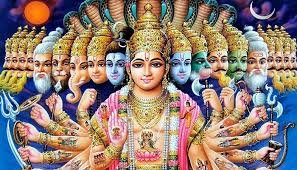
Hindu deity names permeate contemporary life far beyond temple walls, shaping everything from Silicon Valley startups to global wellness movements. This ancient lexicon remains remarkably vital in the 21st century, with Sanskrit terminology for gods and goddesses influencing business branding, digital religious practices, academic discourse, and cross-cultural spiritual movements worldwide. The persistence and adaptation of these sacred names reveals how millennia-old religious vocabulary continues to provide meaning, identity, and commercial value in our interconnected world. Understanding this phenomenon requires examining both the deep linguistic roots of deity names and their dynamic evolution across religious, secular, and global contexts.
Sanskrit roots reveal universal human aspirations
The etymology of Hindu deity names demonstrates sophisticated linguistic engineering that encodes philosophical concepts within memorable sounds. Shiva, derived from the Sanskrit śiva meaning “auspicious one,” exemplifies the euphemistic transformation of the fierce Vedic deity Rudra into a benevolent cosmic force.¹ This linguistic shift from “howler” to “gracious” reflects evolving theological understanding while preserving continuity with ancient traditions. Similarly, Vishnu’s name stems from the root viś- meaning “to pervade,” capturing the deity’s cosmic omnipresence in a single word that resonates across Indo-European language families.²
The compound nature of many deity names creates portable theological concepts. Ganesha combines gaṇa (group) with īśa (lord), efficiently communicating his role as “Lord of Categories” or master of Shiva’s celestial hosts.³ This compositional transparency allows speakers to understand divine functions through name analysis alone. Saraswati exemplifies multiple etymological layers, connecting “flowing water” with eloquent speech and ultimate knowledge, demonstrating how Sanskrit captures complex metaphysical relationships through morphological construction.
Regional linguistic adaptations showcase the flexibility of this sacred vocabulary. Tamil speakers add characteristic suffixes, transforming Rama into Ramar, while Hindi drops terminal vowels, creating Ram.⁴ These phonological adjustments maintain semantic continuity while allowing local ownership of pan-Indian deities. The systematic development from simple roots to elaborate epithets like Jagannath (Lord of the Universe) or Venkateswara (Lord of the Seven Hills) demonstrates how Hindu lexicon expanded to accommodate theological sophistication and regional devotion.
Digital darshan transforms traditional worship vocabulary
Contemporary Hindu religious practice seamlessly integrates ancient terminology with digital innovation, creating new compound concepts while preserving Sanskrit liturgical language. The Sri Mandir app, serving over 30 million users, exemplifies this synthesis by offering “virtual darshan” – a neologism combining the traditional concept of sacred viewing with online accessibility.⁵ Devotees now experience e-puja and receive digital prasad, extending millennia-old practices through technological mediation without abandoning core Sanskrit vocabulary.
Modern temple movements demonstrate creative theological naming. The BAPS Swaminarayan tradition’s Akshar-Purushottam philosophy coins new Sanskrit compounds to articulate contemporary interpretations of divinity.⁶ ISKCON’s global success stems partly from packaging complex Vaishnava theology into the accessible “Hare Krishna” mantra, making Sanskrit divine names internationally recognizable.⁷ These movements prove that Hindu deity lexicon remains generative, capable of producing new formulations for evolving spiritual needs.
Diaspora communities particularly rely on deity names as cultural anchors. Bala Vihars (children’s spiritual schools) across North America teach Sanskrit pronunciation alongside English explanations, ensuring second-generation immigrants maintain linguistic connections to ancestral traditions.⁸ The ubiquitous greeting “Namaste” and the popularity of deity-themed baby names among overseas Indians demonstrate how sacred vocabulary provides identity continuity across geographic displacement. Virtual Raksha Bandhan ceremonies conducted over video calls preserve Sanskrit mantras while adapting to transnational family structures.⁹
Corporate Krishna meets startup Ganesha in commercial spaces
The commercial adoption of Hindu deity names reveals both the perceived power of sacred branding and the commodification of religious symbols. Lakshmi dominates financial sector naming, with countless accounting firms, jewelry stores, and investment companies invoking the goddess of prosperity. This pattern extends globally – from London’s “Lakshmi’s Kitchen” restaurants to Silicon Valley’s “Ganesha Lab” tech incubators. Businesses explicitly leverage divine associations, believing deity names confer blessings and cultural authenticity.
Technology companies particularly embrace Sanskrit terminology, with Vedantu (knowledge network) achieving unicorn status by combining ancient wisdom vocabulary with modern educational technology.¹⁰ The semantic richness of Sanskrit provides distinctive branding while signaling cultural rootedness to Indian consumers and exotic sophistication to international markets. Terms like prajñā (wisdom), navonmeṣa (innovation), and saṅgaṇanā (computation) appear in company names and product lines, creating a contemporary technical Sanskrit vocabulary.¹¹
However, this commercial enthusiasm generates significant cultural tension. The transformation of haldi doodh into “golden milk lattes” selling for premium prices exemplifies how Hindu culinary-religious practices become decontextualized commodity trends.¹² Fashion brands printing Om symbols on swimwear or Ganesha images on shoes provoke outrage from Hindu communities who view such usage as sacrilegious.¹³ These controversies highlight the challenge of balancing free commerce with religious sensitivity in globalized markets.
Hollywood hinduism and the mythology entertainment complex
Popular culture’s engagement with Hindu deities ranges from reverential adaptation to problematic appropriation, creating a complex landscape of representation. Bollywood’s mythological film genre, dating to the 1920s, established cinematic conventions for depicting deities that now influence global media.¹⁴ “Baahubali” redefined epic storytelling by blending mythological aesthetics with contemporary visual effects, earning international acclaim while maintaining cultural authenticity. The 1987 television series “Ramayan” created shared national memory in India, demonstrating mythology’s power to unite diverse audiences through accessible deity narratives.
Western entertainment increasingly incorporates Hindu mythological elements, though often superficially. Marvel’s comic book pantheons occasionally reference Hindu deities, while video games like “Asura’s Wrath” reimagine Hindu cosmology through action gameplay. Krishna appears in everything from animated children’s shows to philosophical documentaries, his blue skin and flute becoming globally recognizable symbols.¹⁵ This popularization spreads awareness but risks reducing complex theological concepts to entertainment tropes.
The wellness industry’s wholesale adoption of Hindu terminology exemplifies both cultural diffusion and appropriation concerns. Yoga studios worldwide invoke Shiva as the “lord of yoga,” name poses after Hanuman, and decorate spaces with deity imagery.¹⁶ While spreading appreciation for Hindu philosophy, this commercialized spirituality often strips sacred concepts of religious context. The multi-billion dollar industry built on Hindu practices raises questions about economic justice and cultural ownership, particularly when Western “yoga entrepreneurs” profit from repackaged Indian traditions without acknowledgment.¹⁷
Academic sanskritization and the decolonization debates
Western universities’ Hindu studies programs reveal evolving approaches to deity-focused scholarship. Harvard’s “Hinduism Through Its Scriptures” course enrollment demonstrates growing mainstream interest in understanding Hindu theology beyond orientalist frameworks.¹⁸ The Oxford Centre for Hindu Studies leads efforts to develop insider-informed scholarship that respects practitioner perspectives while maintaining academic rigor.¹⁹ These institutions grapple with translating concepts like bhakti (devotion) and darshan (sacred viewing) for audiences lacking cultural context.
The field faces ongoing tensions between textual analysis and lived religion. Controversial psychoanalytic interpretations of deity imagery by scholars like Jeffrey Kripal sparked debates about appropriate methodological boundaries when studying others’ sacred traditions.²⁰ Hindu communities increasingly demand representation in academic discourse about their own traditions, challenging the monopoly of outsider perspectives. This push for “decolonizing” Hindu studies seeks to center indigenous knowledge systems and practitioner insights.
Translation challenges persist in rendering Sanskrit theological terminology into Western languages. The term deva connects etymologically to Latin deus and Greek Zeus, yet carries distinct metaphysical implications in Hindu thought.²¹ Ishvara variously translates as “God,” “Lord,” “Supreme Self,” or “Personal Deity” depending on philosophical context, demonstrating the impossibility of one-to-one linguistic mapping.²² These translation difficulties highlight deeper epistemological differences between Sanskrit and European language conceptual frameworks.²³
Soft power flows through festival diplomacy channels
India’s cultural diplomacy strategically deploys deity-centered festivals as soft power instruments, with International Yoga Day exemplifying this approach. The UN’s recognition legitimizes Hindu-derived practices on the global stage while carefully secularizing them for international consumption.²⁴ Diwali celebrations at the White House, 10 Downing Street, and other power centers normalize Hindu presence in Western political spaces. These events project India as a civilization offering timeless wisdom for contemporary challenges.²⁵
Diaspora communities serve as cultural ambassadors, organizing elaborate Durga Puja festivals that attract non-Hindu attendees and media coverage.²⁶ The economic impact proves substantial – London’s Diwali celebrations generate millions in tourism revenue while spreading awareness of Lakshmi worship. However, this visibility sometimes reduces complex religious observances to colorful cultural spectacles, privileging visual aesthetics over theological substance. The challenge lies in maintaining authenticity while adapting for multicultural audiences.
The globalization of Holi as a “color festival” demonstrates both successful cultural export and decontextualization risks. University campuses worldwide host Holi events that preserve the spring celebration aspect while often omitting Krishna mythology and religious significance. This selective adoption reflects broader patterns in how Hindu practices spread internationally – retaining appealing elements while discarding specifically religious content. Such adaptations raise questions about whether cultural appreciation requires understanding original contexts or whether evolution inevitably involves transformation.
Conclusion
The lexicon of Hindu deities demonstrates remarkable vitality in the 21st century, functioning simultaneously as living religious vocabulary, commercial branding tool, cultural identity marker, and global spiritual resource. This ancient terminology’s adaptability – from smartphone apps delivering virtual darshan to Sanskrit-named Silicon Valley startups – reveals language’s power to bridge temporal and cultural divides. The creative tension between preservation and innovation, between sacred authority and secular utility, continues generating new compounds and concepts that extend traditional meanings into unprecedented contexts.
Yet this global circulation of Hindu deity names also exposes fundamental challenges about cultural ownership, appropriate usage, and economic justice. When Ganesha helps remove obstacles for tech entrepreneurs worldwide but Hindu communities struggle economically, or when yoga studios invoking Shiva generate billions while Indian practitioners face marginalization, the inequitable distribution of benefits from cultural heritage becomes stark. The future vitality of Hindu deity lexicon depends on developing frameworks that honor source traditions while allowing organic evolution, that generate prosperity while ensuring cultural respect, and that spread wisdom while maintaining sacred boundaries.
The persistence of Sanskrit deity names across millennia and their accelerating global adoption suggests these ancient words tap into universal human needs for transcendence, meaning, and connection. As humanity faces unprecedented challenges requiring both technological innovation and spiritual wisdom, the vocabulary of Hindu deities offers linguistic resources for articulating experiences beyond material reality. Whether invoked in traditional temples, corporate boardrooms, or virtual reality environments, these names continue performing their essential function – pointing human consciousness toward divine possibilities encoded in sacred sound.
Bibliography
- Wikipedia. “Shiva.” Accessed August 4, 2025. https://en.wikipedia.org/wiki/Shiva.
- Etymonline. “Vishnu – Etymology, Origin & Meaning of the Name.” Accessed August 4, 2025. https://www.etymonline.com/word/Vishnu.
- Wikipedia. “Hindu iconography.” Accessed August 4, 2025. https://en.wikipedia.org/wiki/Hindu_iconography.
- Wikipedia. “Rama.” Accessed August 4, 2025. https://en.wikipedia.org/wiki/Rama.
- Sri Mandir. “Your Own Temple, Aarti, Bhajan, Chalisa, Online Puja & Chadhawa.” Accessed August 4, 2025. https://www.srimandir.com/.
- Wikipedia. “Bochasanwasi Akshar Purushottam Swaminarayan Sanstha.” Accessed August 4, 2025. https://en.wikipedia.org/wiki/Bochasanwasi_Akshar_Purushottam_Swaminarayan_Sanstha.
- Wikipedia. “International Society for Krishna Consciousness.” Accessed August 4, 2025. https://en.wikipedia.org/wiki/International_Society_for_Krishna_Consciousness.
- GRIN. “Religion in Diaspora – The Functions of Hindu Congregationalism in the United States of America.” Accessed August 4, 2025. https://www.grin.com/document/150980?lang=en.
- Remitly. “Raksha Bandhan Day: Traditions, Meaning & Modern Celebrations.” Accessed August 4, 2025. https://blog.remitly.com/lifestyle-culture/raksha-bandhan-day/.
- ReSanskrit. “Sanskrit Names for Businesses and Startups.” Accessed August 4, 2025. https://resanskrit.com/blogs/blog-post/sanskrit-names-for-businesses-and-startups.
- ReSanskrit. “Sanskrit Names for Businesses and Startups.” Accessed August 4, 2025. https://resanskrit.com/blogs/blog-post/sanskrit-names-for-businesses-and-startups.
- ThePrint. “Yoga, haldi doodh, and now Kolhapuris—Indian culture needs protection from Western plagiarism.” Accessed August 4, 2025. https://theprint.in/opinion/forthwrite/yoga-haldi-doodh-kolhapuris-indian-culture-protection-western-plagiarism/2675132/.
- LSE Blogs. “Cultural appropriation: Analysing the use of Hindu symbols within consumerism.” Religion and Global Society, September 2017. https://blogs.lse.ac.uk/religionglobalsociety/2017/09/cultural-appropriation-analysing-the-use-of-hindu-symbols-within-consumerism/.
- Indian Mythology. “Top Hindu Mythology Movies: Ancient Epics Meet Modern Cinematic Magic.” Accessed August 4, 2025. https://apam-napat.com/hindu-mythology-movies/.
- Wikipedia. “Krishna.” Accessed August 4, 2025. https://en.wikipedia.org/wiki/Krishna.
- Body Mind Light. “Hindu Gods and Goddesses of Yoga.” Accessed August 4, 2025. https://bodymindlight.com/hindu-gods-and-goddesses-of-yoga.
- Yoga Journal. “Difference Between Yoga Cultural Appropriation and Cultural Appreciation.” Accessed August 4, 2025. https://www.yogajournal.com/yoga-101/yoga-cultural-appropriation-appreciation/.
- Harvard University. “Hinduism Through Its Scriptures.” Accessed August 4, 2025. https://pll.harvard.edu/course/hinduism-through-its-scriptures.
- Oxford Centre for Hindu Studies. “Research Centre in Oxford.” Accessed August 4, 2025. https://ochs.org.uk/.
- Wikipedia. “Hindu studies.” Accessed August 4, 2025. https://en.wikipedia.org/wiki/Hindu_studies.
- Wikipedia. “Deva (Hinduism).” Accessed August 4, 2025. https://en.wikipedia.org/wiki/Deva_(Hinduism).
- Wisdom Library. “Narayana, Nārāyaṇa, Nārāyana, Narāyana, Nara-ayana, Nara-yana: 53 definitions.” Accessed August 4, 2025. https://www.wisdomlib.org/definition/narayana.
- Lumen Learning. “Sanskrit.” World Civilization. Accessed August 4, 2025. https://courses.lumenlearning.com/suny-hccc-worldcivilization/chapter/sanskrit/.
- Art of Living. “Gurudev Sri Sri Ravi Shankar.” Accessed August 4, 2025. https://gurudev.artofliving.org/.
- ClearIAS. “India’s soft power and cultural diplomacy.” Accessed August 4, 2025. https://www.clearias.com/india-soft-power-and-cultural-diplomacy/.
- Hindu Mythology. “Durga’s Role in Social Justice: A Goddess for the People.” Accessed August 4, 2025. https://hindu.mythologyworldwide.com/durgas-role-in-social-justice-a-goddess-for-the-people/.


