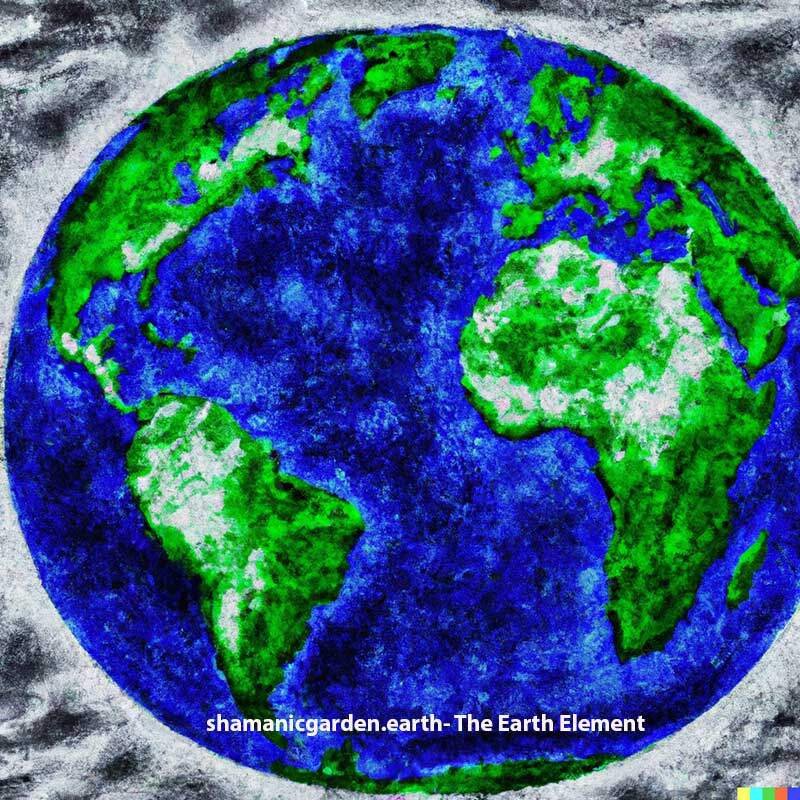
Frequencies of Gaia

Gaia Frequencies — The Voice of Earth · 600 CE

An Interactive Sonification

GAIA FREQUENCIES

The Voice of Earth · 600 CE

“`

In the year 600, the planet is singing.

Three hundred million humans share the world with an undiminished biosphere. The oceans are unpolluted. The forests unbroken. The atmosphere holds 280 parts per million of carbon dioxide — unchanged for millennia.

The Schumann resonance pulses at 7.83 hertz. Lightning fires renew the prairies. Glaciers breathe. Whales call across pristine seas.

Eight voices of a living Earth — transposed into audible sound.

“`

GAIA FREQUENCIES

600 CE

“`
MASTER

A companion to Mystic Ecology by Kevin Parker

“`

Latest Posts

More from Author

The Amazon on Trial: Latin America’s Battle to Criminalise Ecocide

From illegal gold mining to cattle-driven deforestation, the Amazon faces destruction. Can ecocide law protect its forests, rivers and Indigenous peoples?

Is Empathy Innate or Cultured?: The Human Capacity to Care

Are human beings naturally empathetic, or does compassion have to be learned? This essay argues that empathy is neither purely innate nor purely cultural. Instead, it emerges from an interaction between biology, upbringing, social norms and conscious practice, revealing both the promise and the limits of human moral concern.

When Destroying Nature Becomes a Crime: The Ecocide Revolution

On 25 January 2019 a tailings dam collapsed at Brumadinho, Brazil, killing 272 people. Nearly eight years on, no court has decided whether anyone is guilty. The first article in a ten-part investigation into ecocide asks whether the gravest destruction of nature should be a crime, and how far the law has come.

The Price of Admission: Toxic Masculinity, the Evidence Behind the Phrase, and What it Would Take to Build Something Better

Toxic masculinity has become a slogan, an insult and a tripwire. This Dossier strips the phrase back to its evidence: which norms harm, who pays, and why condemnation alone cannot compete with the grievance machine.

Read Now

The Amazon on Trial: Latin America’s Battle to Criminalise Ecocide

From illegal gold mining to cattle-driven deforestation, the Amazon faces destruction. Can ecocide law protect its forests, rivers and Indigenous peoples?

Is Empathy Innate or Cultured?: The Human Capacity to Care

Are human beings naturally empathetic, or does compassion have to be learned? This essay argues that empathy is neither purely innate nor purely cultural. Instead, it emerges from an interaction between biology, upbringing, social norms and conscious practice, revealing both the promise and the limits of human moral concern.

When Destroying Nature Becomes a Crime: The Ecocide Revolution

On 25 January 2019 a tailings dam collapsed at Brumadinho, Brazil, killing 272 people. Nearly eight years on, no court has decided whether anyone is guilty. The first article in a ten-part investigation into ecocide asks whether the gravest destruction of nature should be a crime, and how far the law has come.

The Price of Admission: Toxic Masculinity, the Evidence Behind the Phrase, and What it Would Take to Build Something Better

Toxic masculinity has become a slogan, an insult and a tripwire. This Dossier strips the phrase back to its evidence: which norms harm, who pays, and why condemnation alone cannot compete with the grievance machine.

Who Owns the Night? The Risks of Selling Sunlight After Dark

Can orbiting mirrors sell sunlight after dark? Investigating Reflect Orbital’s plans and the risks to wildlife, climate, astronomy and the night sky.

Give What You Command: Christianity and the Love that is Ordered

Christianity commands love, including love of enemies, and forgiveness without limit. Then it says none of this can be done by effort alone. From the Good Samaritan to a Charleston courtroom, an essay on a command that follows a gift

What Is Owed: Judaism, Islam and the Debt of Kindness

In 1943 a Muslim family in the Albanian mountains hid a Jewish family from the German army, and the whole neighbourhood knew. The code they kept took no interest in what they felt. Judaism and Islam build kindness the same way: as a debt, owed before it is felt, and tested at its edge.

Accra: The Metabolism of Health and Heat

To understand Accra’s ecological metabolism is to trace the flow of water, air, and humanity through a rapidly shifting coastal topography. Positioned on the Gulf of Guinea, Ghana’s capital is a delta city grappling with the intersecting forces of breakneck urbanisation, compound flooding, and a warming equatorial climate.

Adelaide, Australia: Water-Wise Greening in a Drying South

Adelaide is the driest capital city in the driest inhabited continent on Earth, and it has known this about itself for long enough to have developed some genuinely instructive responses. Its investment in recycled water infrastructure, its early and serious engagement with urban heat as a public health emergency, and its stewardship of one of the great metropolitan parkland systems in the Southern Hemisphere all represent hard-won lessons rather than inherited advantages. Whether those lessons are being applied at the speed and scale that a warming Mediterranean climate demands is a more complicated question — and one the city is still in the process of honestly answering

The Trainable Heart: Buddhism and the Discipline of Kindness

Buddhism treats kindness as something you practise rather than something that visits you. On mettā as a trainable skill, Buddhaghosa's near enemies, and what happens when the most developed doctrine of loving-kindness in the world is set beside its own record

The Mountain Has a Name: Nepal’s Rasuwa Flood Disaster, One Month On

The satellites have named the mountain — the same massif that destroyed Langtang village in 2015. K.J. Parker sorts a month of evidence into fact, inference, contested and speculation, states the Langtang hypothesis, and sets out how it could actually be tested

Melbourne, Australia: The Liveable City Under Heat Stress

Melbourne's liveability rankings measure the compact, tram-served inner city. They do not measure Tarneit on a 45-degree day. On 27 January 2026 the western suburbs ran three degrees hotter than the centre — and that gap, not the weather, is the story of a world-class urban forest, a sprawling metropolis, falling reservoirs and two cities under one name.