
By Kevin Parker
Introduction
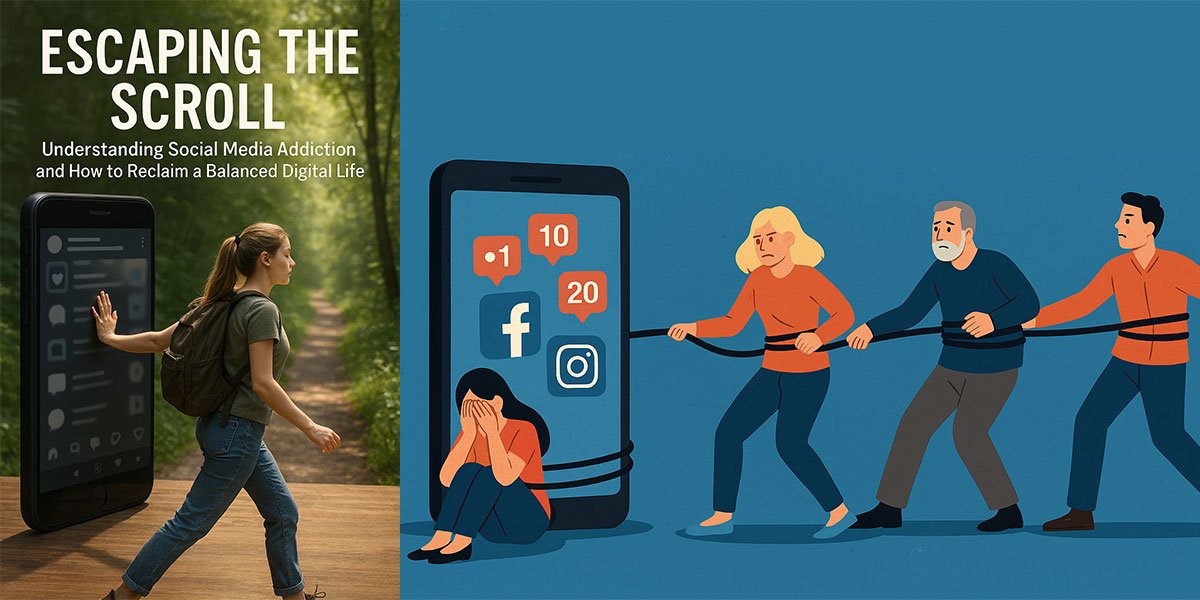
Social media has transformed modern communication, revolutionized the way we form and maintain relationships, and altered how we consume news, entertainment, and even our sense of self. While its benefits are indisputable, an alarming rise in problematic usage patterns has prompted experts to identify “social media addiction” as a growing public health concern. This behavioral addiction—characterized by compulsive engagement with social platforms despite adverse consequences—is now associated with anxiety, depression, attention disorders, and deteriorating offline relationships.
The Nature and Scope of Social Media Addiction
Social media addiction is often described as a subset of internet addiction. It is marked by excessive concern about social media, an irresistible urge to log on, and a devouring of time and energy that disrupts daily life and responsibilities (Andreassen, 2015). While not formally recognized in the DSM-5, a growing body of psychological literature treats it as a real and pressing behavioral disorder, especially among adolescents and young adults.
A key driver of addiction is the design of social media platforms themselves. Algorithms prioritize content that maximizes user engagement through intermittent rewards—similar to slot machines. This taps into the dopamine system, promoting habitual checking and scrolling (Montag et al., 2019). Notifications, likes, and shares act as digital reinforcers, training the brain for continuous interaction.
A 2022 Pew Research Center study found that 35% of U.S. teens reported being on at least one social media platform “almost constantly” (Vogels, 2022). Simultaneously, studies link excessive use with negative psychological outcomes. For example, Keles, McCrae, and Grealish (2020) conducted a meta-analysis revealing a consistent association between social media use and increased levels of anxiety and depression in adolescents.
Psychological and Physiological Consequences
Mental Health: Social media addiction contributes to a heightened risk of depression, anxiety, and low self-esteem. Constant comparison with curated images of others’ lives—often filtered and exaggerated—can foster feelings of inadequacy (Fardouly et al., 2015). The need for online validation through likes and comments reinforces extrinsic rather than intrinsic self-worth.
Sleep Disruption: Blue light emitted by devices suppresses melatonin production, delaying sleep onset. Additionally, the compulsion to check social feeds late into the night—often referred to as “revenge bedtime procrastination”—reduces sleep quality and quantity (Carter, Rees, Hale, Bhattacharjee, & Paradkar, 2016).
Attention and Academic Performance: Frequent switching between apps and notifications fragments attention spans and impairs cognitive control. Studies show that students who heavily use social media tend to have lower academic achievement and diminished executive functioning (Rosen et al., 2013).
Family and Social Relationships: Ironically, platforms designed to connect can isolate. Families report reduced quality of time together, with “technoference” (interruption of interactions by digital devices) undermining communication, empathy, and emotional connection (McDaniel & Coyne, 2016).
A Best-Practice Strategy for Digital Detox
Undertaking a digital detox—reducing or eliminating non-essential use of social media—can help reestablish healthier habits and improve well-being. The following best-practice strategy is informed by psychological research, mindfulness-based interventions, and digital well-being advocacy:
1. Awareness and Self-Assessment
Begin by identifying the scope of the issue. Tools like the Bergen Social Media Addiction Scale (BSMAS) can help quantify problematic use (Andreassen et al., 2012). Journaling your daily screen time and emotional states before and after usage provides insight into patterns and triggers.
2. Clarify Intentions and Set Goals
Determine your digital wellness goals: Are you aiming for moderation or abstinence? Do you want to reclaim time for hobbies, improve sleep, or reconnect with loved ones? Set specific, measurable, and time-bound objectives. For example, “Reduce Instagram usage from 2 hours to 30 minutes daily within one month.”
3. Use Technology to Fight Technology
Leverage digital wellbeing tools such as:
- Screen Time (iOS) or Digital Wellbeing (Android)
- App blockers (e.g., Freedom, Cold Turkey)
- Browser extensions (e.g., News Feed Eradicator)
Set limits and enforce “phone-free” zones or hours—especially during meals, conversations, or before bed.
4. Adopt Mindful Media Practices
Mindfulness-based interventions have shown efficacy in reducing compulsive media use. Mindful media consumption involves pausing to ask:
- Why am I reaching for my phone?
- What need am I trying to meet?
- How do I feel after consuming this content?
This promotes conscious choices and interrupts automatic behaviors (Elhai et al., 2017).
5. Reclaim Time for Analog Activities
Replace digital habits with enriching alternatives:
- Reading books or magazines
- Outdoor activities and exercise
- Creative pursuits: art, writing, music
- Face-to-face conversations and community engagement
These help satisfy social and emotional needs in more grounded and fulfilling ways.
6. Family and Group Digital Detox
When done collectively, detoxing becomes more sustainable. Families can set shared agreements, such as:
- No phones at the dinner table
- One “tech-free” day per week
- Digital sabbaticals during vacations
Open discussion and mutual accountability can foster empathy and support, especially when parents model healthy habits.
7. Evaluate and Reintegrate
After an initial detox period—often 7 to 30 days—reflect on the changes in mood, relationships, sleep, and focus. Consider reintroducing platforms with clearer boundaries, such as limited daily access or “batch checking” social media only at designated times.
Conclusion
While social media offers undeniable benefits, its overuse and addictive potential cannot be ignored. The path to digital wellness lies not in total renunciation but in the cultivation of mindful, intentional, and human-centered engagement with technology. By understanding the psychological mechanics of social media addiction and applying evidence-based strategies, individuals and families can reclaim agency, restore presence, and foster authentic connection in an increasingly mediated world.
References (Chicago Style)
Andreassen, Cecilie Schou. “Online Social Network Site Addiction: A Comprehensive Review.” Current Addiction Reports 2, no. 2 (2015): 175–184. https://doi.org/10.1007/s40429-015-0056-9.
Andreassen, Cecilie Schou, Torbjørn Torsheim, Geir Scott Brunborg, and Ståle Pallesen. “Development of a Facebook Addiction Scale.” Psychological Reports 110, no. 2 (2012): 501–517. https://doi.org/10.2466/02.09.18.PR0.110.2.501-517.
Carter, Ben, Katherine Rees, Lucinda Hale, Dhiya Bhattacharjee, and Vivek Paradkar. “Association Between Portable Screen-Based Media Device Access or Use and Sleep Outcomes.” JAMA Pediatrics 170, no. 12 (2016): 1202–1208. https://doi.org/10.1001/jamapediatrics.2016.2341.
Elhai, Jon D., Jason C. Levine, Robert D. Dvorak, and Brian J. Hall. “Fear of Missing Out, Need for Touch, Anxiety and Depression Are Related to Problematic Smartphone Use.” Computers in Human Behavior 63 (2017): 509–516. https://doi.org/10.1016/j.chb.2016.05.079.
Fardouly, Jasmine, Phillippa C. Diedrichs, Lenny R. Vartanian, and Helene Helga Becker. “Social Comparisons on Social Media: The Impact of Facebook on Young Women’s Body Image Concerns and Mood.” Body Image 13 (2015): 38–45. https://doi.org/10.1016/j.bodyim.2014.12.002.
Keles, Betul, Niall McCrae, and Aimee Grealish. “A Systematic Review: The Influence of Social Media on Depression, Anxiety and Psychological Distress in Adolescents.” International Journal of Adolescence and Youth 25, no. 1 (2020): 79–93. https://doi.org/10.1080/02673843.2019.1590851.
McDaniel, Brandon T., and Sarah M. Coyne. ““Technoference”: The Interference of Technology in Couple Relationships and Implications for Women’s Personal and Relational Well-Being.” Psychology of Popular Media Culture 5, no. 1 (2016): 85–98. https://doi.org/10.1037/ppm0000065.
Montag, Christian, Bernd Lachmann, Marc Herrlich, and Katharina Zweig. “Addictive Features of Social Media/Messenger Platforms and Freemium Games against the Background of Psychological and Economic Theories.” International Journal of Environmental Research and Public Health 16, no. 14 (2019): 2612. https://doi.org/10.3390/ijerph16142612.
Rosen, Larry D., L. Mark Carrier, Nancy A. Cheever. The Distracted Mind: Ancient Brains in a High-Tech World. Cambridge, MA: MIT Press, 2013.
Vogels, Emily A. “Teens, Social Media and Technology 2022.” Pew Research Center, August 10, 2022. https://www.pewresearch.org/internet/2022/08/10/teens-social-media-and-technology-2022/.