
Introduction
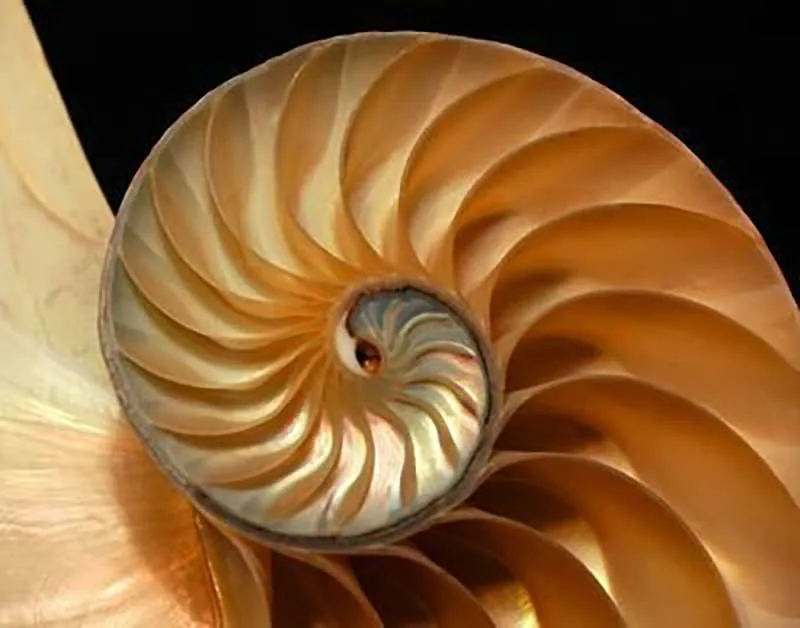
The spiral is among the most enduring and enigmatic symbols found across human cultures, tracing its roots back tens of thousands of years. It appears etched in Paleolithic caves, carved into Neolithic stones, woven into sacred dances, and echoed in modern labyrinth designs. As a symbol, the spiral transcends time and geography, pointing toward a shared human intuition of life’s cyclical, unfolding, and transformative nature. Whether viewed through the lens of shamanism, serpent cults, dragon mythology, geomancy, ritual magic, or sacred performance, the spiral remains a powerful emblem of the soul’s inward journey and outward evolution (Chevalier and Gheerbrant 1996).
This article explores the spiral’s role as a sacred symbol, focusing particularly on its expression in labyrinths—structures that invite contemplative movement through space as a metaphor for inner transformation. Drawing on anthropological, mythological, and esoteric perspectives, we uncover how this universal form embodies a perennial spiritual path.
The Sacred Spiral in Shamanic Practice
In indigenous and archaic spiritual systems, the spiral often represents the shaman’s path between worlds. The movement from the outer edge toward the center mirrors the journey from mundane consciousness into visionary realms. As Mircea Eliade notes, the shaman is a traveler between levels of reality, navigating an axis mundi that often manifests symbolically as a spiral or ladder (Eliade 2004, 259).
The spiral is not only conceptual but embedded in ritual art. Siberian, Amazonian, and Central Asian shamans traditionally painted spiral motifs on drums, costumes, or cave walls to mark thresholds between dimensions (Vitebsky 2001, 102). The drumming rhythm itself mimics the hypnotic, spiraling motion of descent or ascent into trance, enabling access to healing wisdom and ancestral guidance. This echo of the cosmos within the human body—breath spiraling, heartbeat rhythmic—connects the shaman to a fractal web of life, consciousness, and spirit.
Spiral Forms in Serpent Cults and Dragon Lore
The serpent, often depicted in a coiled or spiral posture, is one of humanity’s oldest mythic symbols. In Mesopotamian, Minoan, Indian, and African traditions, serpents represent death and rebirth, fertility, healing, and transformation. Their shedding of skin is a natural metaphor for spiritual renewal. The Ouroboros, the serpent devouring its tail, forms a spiral of eternal return and cosmic continuity (Linden 2003, 41).
In East Asian traditions, the dragon echoes this coiling form. Chinese cosmology envisions dragons spiraling through the clouds or winding around mountain peaks—symbols of harmony between the heavens and the earth. The dragon’s spiraled ascent reflects the spiritual practitioner’s own elevation of consciousness. As Girardot (1983, 217) explains, dragons are “agents of primordial chaos and cosmic renewal,” embodying the spiral movement from disorder to harmony.
The spiral also features prominently in Mesoamerican serpent deities such as Quetzalcoatl, the feathered serpent, whose winding form links sky and underworld, light and dark, god and human. These cults used spiral stairways and labyrinthine temple designs to initiate adherents into the mysteries of cyclical time and transformation.
Geomancy, Earth Mysteries, and the Labyrinth Path
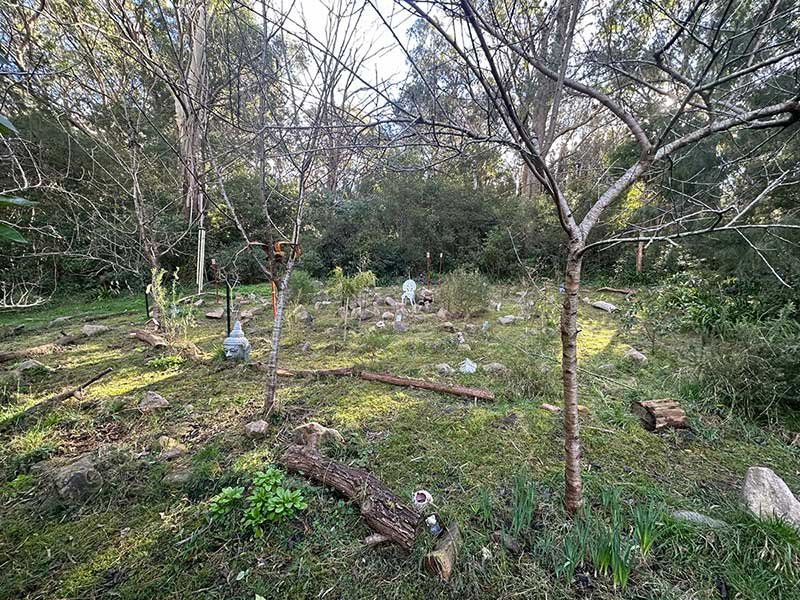
In geomantic traditions, the spiral is a map of energetic flow. Ley lines, earth currents, and telluric forces are said to spiral around sacred sites, drawing pilgrims and seekers toward transformation. The labyrinth, an architectural spiral, embodies this principle in physical form. Unlike a maze, which confuses, the labyrinth offers a singular, unbroken path—an archetype of the soul’s journey inward for insight and outward for integration.
Walking the labyrinth becomes a kinetic meditation. The spiral pattern disorients the rational mind and activates deeper modes of perception. As Lauren Artress (2006, 9) argues, “the labyrinth is an archetype, a mystical tradition that transcends dogma, inviting people into a direct experience of spiritual insight.” Modern labyrinths, such as the famous one at Chartres Cathedral, continue to draw seekers into their curving embrace, reminding us that wisdom is not linear but spiraled—evolving through repeated cycles of descent, integration, and return.
The Spiral in Magic and Mysticism
In Western esoteric traditions, the spiral appears frequently in alchemical, Hermetic, and magical texts. It symbolizes not only the transformation of base material into spiritual gold but also the initiate’s journey toward gnosis. The Hermetic maxim as above, so below reflects the spiral’s holographic logic—every part contains the whole, and every turn of the spiral echoes a cosmic unfolding (Linden 2003, 88).
Carl Jung’s psychological alchemy embraced the spiral as a symbol of individuation, the process by which the self is refined through encounters with the unconscious. Jung’s famous mandala drawings often contain spiral forms that represent inner equilibrium and the wholeness of the psyche (Jung 1968, 221). Spirals also appear in grimoires and magical sigils as pathways to summon, bind, or integrate spiritual forces (Grimassi 2003, 147).
In this mystical frame, the spiral is a blueprint of consciousness itself—constantly returning but never repeating, always evolving toward greater wholeness.
Spiral Symbolism in Ritual Dance and Sacred Art
Spiral movements permeate sacred dance traditions around the world. Aboriginal Australian sand paintings and body art incorporate spiral motifs that narrate Dreamtime journeys and ancestral paths. These images are not decorative but alive, dynamic, and interwoven with the land’s energy (Morphy 1998, 52).
The spiral reaches profound expression in Sufi mysticism. Whirling dervishes enact a living spiral through their dance—one hand extended upward to receive divine grace, the other downward to transmit it to the world. Their turning emulates the revolutions of the planets and stars, aligning body, soul, and cosmos in a meditative union. Friedlander (1992, 35) notes that this spiral movement is both prayer and cosmic alignment, a way to “annihilate the ego in the fire of divine love.”
Likewise, Balinese temple dances and Tibetan cham rituals feature spiraling steps and flowing patterns, choreographed to guide spirit and audience alike through symbolic death and renewal.
Conclusion: The Spiral as Universal Archetype
From the shaman’s vision to the alchemist’s flask, from serpent myths to labyrinth pilgrimages, the spiral recurs as a sacred archetype of transformation. It teaches that the path of the soul is not a straight line but a curved unfolding—ever deeper, ever higher. Across cultures and ages, the spiral reveals itself as a living symbol of unity, wholeness, and the interconnection between the self and the cosmos.
In walking the spiral, we participate in a sacred geometry of becoming. Labyrinths, dances, and myths offer us experiential invitations to embody this universal pattern—not just as an idea, but as a lived path of awakening.
References
Artress, Lauren. Walking a Sacred Path: Rediscovering the Labyrinth as a Spiritual Practice. Riverhead Books, 2006.
Chevalier, Jean, and Alain Gheerbrant. The Penguin Dictionary of Symbols. Translated by John Buchanan-Brown. Penguin Books, 1996.
Eliade, Mircea. Shamanism: Archaic Techniques of Ecstasy. Translated by Willard R. Trask. Princeton University Press, 2004.
Friedlander, Shems. The Whirling Dervishes: Being an Account of the Sufi Order Known as the Mevlevis and Its Founder the Poet and Mystic Mevlana Jalalu’ddin Rumi. SUNY Press, 1992.
Girardot, Norman J. Myth and Meaning in Early Taoism: The Theme of Chaos (Hun-Tun). University of California Press, 1983.
Grimassi, Raven. The Witches’ Craft: The Roots of Witchcraft and Magical Transformation. Llewellyn Publications, 2003.
Jung, C. G. Psychology and Alchemy. Translated by R. F. C. Hull. Princeton University Press, 1968.
Linden, Katherine V. D. Mysteries of the Snake Goddess: Art, Desire, and the Forging of History. Da Capo Press, 2003.
Morphy, Howard. Aboriginal Art. Phaidon Press, 1998.
Pennick, Nigel. The Sacred World of the Celts. Thorsons, 1995.
Vitebsky, Piers. Shamanism. University of Oklahoma Press, 2001.
Yang, Lihui, and Deming An. Handbook of Chinese Mythology. Oxford University Press, 2005.
Jung, C.G. (1968). Psychology and Alchemy. Princeton University Press.
Linden, K. V. D. (2003). Mysteries of the Snake Goddess: Art, Desire, and the Forging of History. Da Capo Press.
Morphy, H. (1998). Aboriginal Art. Phaidon Press.
Pennick, N. (1995). The Sacred World of the Celts. Thorsons.
Vitebsky, P. (2001). Shamanism. University of Oklahoma Press.
Yang, L., & An, D. (2005). Handbook of Chinese Mythology. Oxford University Press.