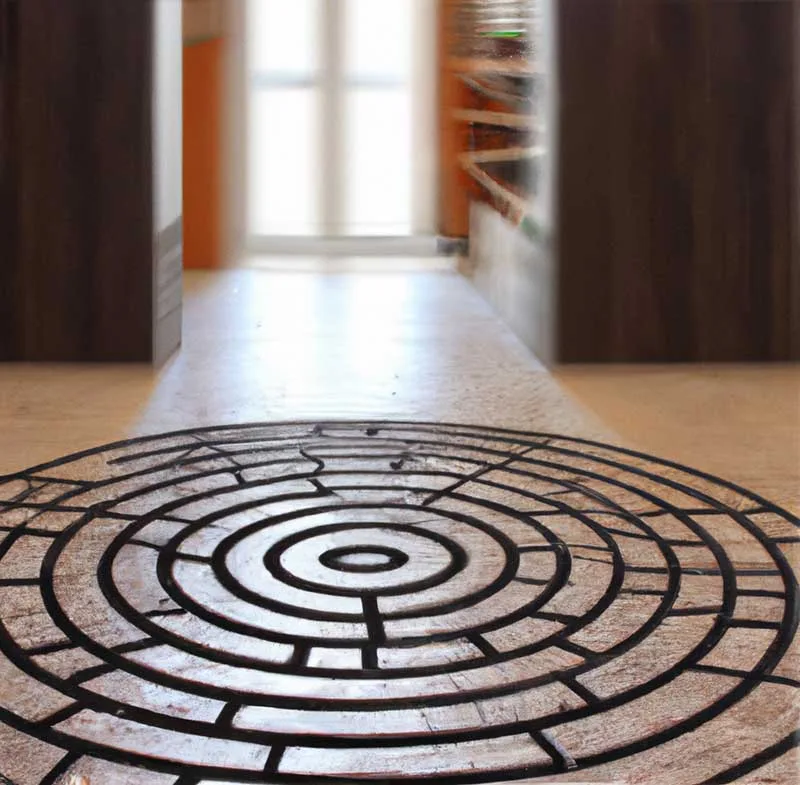

The Enduring Significance of Labyrinths: Myth, Psychology, and Modern Practice
The labyrinth stands as one of humanity’s most enduring and universal symbols, appearing across diverse cultures and epochs with remarkable consistency. From Bronze Age petroglyphs to contemporary therapeutic interventions, these intricate patterns have captured human imagination for over four millennia. Far from being mere architectural curiosities or artistic designs, labyrinths embody profound archetypal meanings that continue to resonate with our deepest psychological and spiritual needs. This exploration examines the multifaceted significance of labyrinths, tracing their mythological origins, psychological interpretations, artistic expressions, and emerging therapeutic applications.
Ancient Origins and Archetypal Foundations
Archaeological evidence reveals that labyrinth symbols date back to the Bronze Age (approximately 2500-2000 BCE), making them among humanity’s oldest continuous symbolic traditions.¹ These ancient patterns appear in petroglyphs across disparate geographical regions—from Galicia and León in Spain to the Camonica Valley in Italy, and from Sardinian tombs to sites across the ancient world. This widespread distribution suggests that the labyrinth taps into what Carl Jung termed the “collective unconscious,” representing universal human experiences that transcend cultural boundaries.²
The labyrinth’s fundamental structure—a single, winding path leading to a center and back out again—distinguishes it from the maze. While mazes present multiple paths with dead ends and wrong turns, designed to confuse and entrap, the labyrinth offers a singular journey of inevitable arrival and return. This distinction is crucial to understanding its symbolic power: the labyrinth represents a purposeful journey rather than a problem to be solved, embodying what modern practitioners call “walking meditation” or contemplative movement.
Mythological Narratives and Cultural Meanings
Greek Mythology and the Hero’s Journey
The most famous labyrinth in Western consciousness remains that of ancient Crete, home to the Minotaur in Greek mythology. The story of Theseus navigating Daedalus’s maze to confront the beast represents far more than a heroic adventure—it serves as an allegory for the psychological journey toward self-discovery and transformation.³ Joseph Campbell’s analysis of this myth within his “monomyth” framework reveals the labyrinth as a space of initiation, where the hero must confront their deepest fears to achieve enlightenment and maturation.
Significantly, it is Ariadne’s thread that enables Theseus’s safe return, symbolizing the guiding wisdom or inner knowing that allows us to navigate life’s complexities without losing our way. This feminine principle of guidance has been interpreted by Jungian analysts as representing the Self’s integrative function—the deeper psychological structure that provides coherence and direction to the individuation process.⁴
Cross-Cultural Manifestations
Native American Hopi traditions employ labyrinth patterns to represent the eternal cycle of birth, death, and rebirth, while Celtic and Nordic mythologies view them as protective symbols or pathways to the divine realm.⁵ In various African and Indian spiritual traditions, labyrinths symbolize transformative journeys leading to enlightenment or spiritual rebirth. These diverse cultural interpretations share common themes: the labyrinth as a threshold space, a place of transformation, and a metaphor for life’s circuitous journey toward wisdom and wholeness.
Psychological Dimensions: Jung and Beyond
The Unconscious Mind as Labyrinth
Carl Jung’s psychological interpretation of the labyrinth proved transformative for understanding its enduring appeal. In his extensive writings and personal reflections, Jung conceptualized the labyrinth as a powerful symbol of the unconscious mind—complex, intricate, and challenging to navigate. He wrote: “The labyrinth is indeed a primordial image which one encounters in psychology mostly in the form of the fantasy of a descent to the underworld.”⁶
For Jung, the labyrinth’s center represented the Self—not the conscious ego, but the totality of the psyche encompassing both conscious and unconscious elements. The journey to this center symbolizes individuation, the lifelong process of psychological integration and self-realization that he considered the primary task of human development.⁷ Jung often drew connections between labyrinth symbolism and mandala patterns, seeing both as expressions of the psyche’s inherent drive toward wholeness and balance.
Contemporary Psychological Applications
Modern psychological research has validated many of Jung’s insights about the labyrinth’s therapeutic potential. R.D. Laing utilized labyrinth metaphors in understanding schizophrenic experience, viewing the fragmented, chaotic mental state as a kind of psychological maze requiring careful navigation toward restored wholeness.⁸ More recently, clinical studies have documented the efficacy of labyrinth walking in various therapeutic contexts.
Research conducted with healthcare professionals found that labyrinth walking provided “time out” in hectic workplace environments, creating opportunities to “re-energize,” “re-focus,” “reduce stress,” and “seek clarity.”⁹ Studies with incarcerated populations demonstrated that six-week labyrinth walking programs could positively impact both physical and mental health, including measurable decreases in blood pressure and improvements in coping mechanisms.¹⁰
A groundbreaking 2023 study examining collective labyrinth walking during the COVID-19 pandemic revealed that participants experienced enhanced feelings of connectedness, transcendent experiences, and insights for compassionate action, even when walking in solidarity across different locations.¹¹ This research suggests that the labyrinth’s power extends beyond individual healing to encompass community wellbeing and social resilience.
Artistic and Literary Expressions
Literature and the Labyrinthine Imagination
The labyrinth has proven particularly fertile ground for literary exploration. Jorge Luis Borges, perhaps the most prominent literary architect of labyrinthine imagery, employed maze-like structures to represent the enigmatic, infinite nature of reality and the ultimately futile pursuit of absolute knowledge.¹² His stories present labyrinths as metaphors for the human condition itself—our endless seeking for meaning within an inherently mysterious universe.
Fairy tales frequently incorporate labyrinthine journeys, from the dark forest paths in “Hansel and Gretel” to the bewildering landscape of Lewis Carroll’s “Alice in Wonderland.” These narratives use the labyrinth’s symbolic structure to represent psychological transformation, the navigation of unconscious terrain, and the ultimate achievement of deeper self-understanding.¹³
Visual Arts and Musical Interpretations
In visual arts, the labyrinth has experienced renewed contemporary relevance. Artist Mark Wallinger’s 2013 project placed labyrinth designs in all 270 London Underground stations, serving as “a reminder that no matter how busy the Tube may get, there’s always a way out.”¹⁴ Similarly, Robert Morris’s modern triangular labyrinth amplifies confusion through transparency rather than traditional high walls, offering a postmodern commentary on contemporary disorientation.
Musical compositions have also drawn upon labyrinthine structures. Richard Wagner’s complex harmonic progressions in “Tristan und Isolde” mirror the labyrinth’s winding paths, reflecting the protagonists’ emotional and psychological torment through intricate musical architecture.¹⁵ These artistic interpretations demonstrate the labyrinth’s continued capacity to express contemporary anxieties and aspirations.
Modern Therapeutic and Spiritual Applications
Clinical Research and Healthcare Integration
Contemporary healthcare settings increasingly recognize the labyrinth’s therapeutic potential. Hospitals, healthcare facilities, and residential treatment centers now incorporate labyrinth designs as evidence-based interventions for personal and interpersonal development.¹⁶ Clinical research has demonstrated measurable benefits including stress reduction, improved focus, enhanced coping mechanisms, and increased sense of spiritual connection.
A comprehensive study of reflective labyrinth walking found that the practice serves as a physical, emotional, and sensory experience particularly relevant for therapeutic care planning.¹⁷ Participants reported learning “a new way of addressing their potential for concentration and establishing a connection with their experience at a present moment,” with beneficial effects for individuals undergoing therapy or seeking improved quality of life.
Contemplative Practice and Mindfulness
The labyrinth has found particular resonance within the growing field of contemplative practices. Unlike traditional sitting meditation, labyrinth walking engages the body, heart, mind, and spirit simultaneously, making it accessible to individuals who struggle with stationary mindfulness practices.¹⁸ The Tree of Contemplative Practice model identifies two foundational purposes served by such practices: increasing personal awareness and cultivating connection with the divine or transcendent.¹⁹
Modern spiritual practitioners emphasize the labyrinth’s capacity to blur boundaries between inner and outer landscapes. As author Rebecca Solnit observes: “A labyrinth is a symbolic journey…but it is a map we can really walk on, blurring the difference between map and world.”²⁰ This integration of physical movement with contemplative reflection creates unique opportunities for embodied spirituality and somatic healing.
Therapeutic Innovation in Diverse Settings
Labyrinth walking programs have demonstrated effectiveness across remarkably diverse populations and contexts. Applications range from palliative care patients and mental health clients to student nurses and schoolchildren.²¹ Correctional facilities have reported particular success, with programs showing measurable improvements in recidivism rates and overall wellbeing among incarcerated individuals.²²
Recent innovations include virtual labyrinths for cognitive rehabilitation, collective labyrinth walking for community healing during crises, and integration with other contemplative practices such as yoga and meditation. These developments suggest that the labyrinth’s therapeutic applications will continue expanding as our understanding of its mechanisms deepens.
Sacred Geometry and Contemporary Spirituality
The labyrinth’s power extends beyond psychological benefit to encompass what practitioners term “sacred geometry”—the belief that certain shapes and proportions carry inherent spiritual significance. The Chartres Cathedral labyrinth, constructed in the 13th century, exemplifies this tradition, serving as a walking pilgrimage for those unable to journey to Jerusalem.²³ Contemporary designers like Alberto Amura describe labyrinths as “like acupuncture to the planet,” suggesting their capacity to channel and focus environmental energies.²⁴
Modern Pagan and earth-based spiritual traditions have enthusiastically embraced labyrinth symbolism, viewing it as representing the sacred feminine, the cycles of nature, and the eternal wheel of birth, death, and rebirth.²⁵ This contemporary revival connects ancient wisdom with modern spiritual seeking, demonstrating the labyrinth’s continued relevance for addressing existential questions and spiritual yearning.
Conclusions: The Labyrinth as Living Symbol
The labyrinth’s extraordinary persistence across cultures and millennia testifies to its fundamental resonance with human consciousness. Unlike static symbols that become fixed in meaning, the labyrinth remains dynamically alive, continuously generating new interpretations and applications while maintaining its core significance as a metaphor for life’s journey.
Modern research validates ancient intuitions about the labyrinth’s transformative power. From measurable physiological benefits to profound psychological insights, from individual healing to community resilience, the labyrinth demonstrates remarkable versatility as both symbol and practice. Its integration into healthcare settings, therapeutic programs, and spiritual communities suggests a growing recognition of its unique capacity to address contemporary needs for meaning, connection, and healing.
Perhaps most significantly, the labyrinth offers hope in an age of increasing complexity and uncertainty. Unlike the maze’s dead ends and false paths, the labyrinth promises that every journey, however circuitous, leads ultimately to the center and back out again. In this simple but profound truth lies the labyrinth’s enduring gift: the assurance that in navigating life’s complexities, we need not fear becoming permanently lost. The path may wind, but it always continues, always leads somewhere meaningful, and always brings us home to ourselves.
As we face contemporary challenges requiring both individual resilience and collective wisdom, the labyrinth stands ready to serve as guide and companion. Its ancient wisdom, validated by modern research and practice, offers a timeless resource for the eternal human journey toward understanding, healing, and wholeness.
References
- Anonymous, “The Labyrinth Archetype,” Eternalised, September 6, 2024, accessed July 9, 2025, https://eternalisedofficial.com/2024/09/06/the-labyrinth-archetype/.
- Carl Gustav Jung, Aion: Researches into the Phenomenology of the Self (Princeton: Princeton University Press, 1959), 147-162.
- Joseph Campbell, The Hero with a Thousand Faces (New York: Pantheon Books, 1949), 78-89.
- Anonymous, “The Labyrinth in Jungian Psychology: Traversing the Winding Path of Individuation,” Get Therapy Birmingham, May 4, 2025, accessed July 9, 2025, https://gettherapybirmingham.com/the-labyrinth-in-jungian-psychology-traversing-the-winding-path-of-individuation/.
- Alexander Lys, “Labyrinth Symbolism & Meaning,” Symbolopedia, April 20, 2024, accessed July 9, 2025, https://symbolopedia.com/labyrinth-symbolism-meaning/.
- C.G. Jung, Letters, Vol. 1 (1906-1950) (Princeton: Princeton University Press, 1973), 397.
- Carl Gustav Jung, Psychology and Alchemy: Collected Works Vol. 12 (Princeton: Princeton University Press, 1968), 287-294.
- R.D. Laing, The Divided Self: An Existential Study in Sanity and Madness (London: Penguin Books, 1960), 112-125.
- Anonymous, “Walking the Labyrinth: Its Impact on Healthcare Professionals in a Hospital Setting,” The Labyrinth Society, accessed July 9, 2025, https://labyrinthsociety.org/research-bibliography/4205-walking-the-labyrinth-its-impact-on-healthcare-professionals-in-a-hospital-setting.
- Doris M. Zucker and Anjana Sharma, “Labyrinth Walking in Corrections,” Journal of Addictions Nursing 23, no. 1 (2012): 47-54.
- Susan K. Schaarsberg et al., “A sense of connectedness, transcendent experiences, and insights for compassionate action emerge through an international collective labyrinth walk with a shared intention during the COVID-19 pandemic,” Frontiers in Psychology 14 (2023): 1232784.
- Jaime Alazraki, Borges and the Kabbalah: Paths to the Word (Cambridge: Cambridge University Press, 1988), 156-171.
- Jack Zipes, Why Fairy Tales Stick: The Evolution and Relevance of a Genre (New York: Routledge, 2006), 89-102.
- Anonymous, “The Psychology of the Maze as a Modern Symbol,” Culture Decanted, August 3, 2014, accessed July 9, 2025, https://culturedecanted.com/2014/07/31/the-psychology-of-the-maze-as-a-modern-symbol/.
- Bryan Magee, The Tristan Chord: Wagner and Philosophy (New York: Holt Paperbacks, 2001), 201-218.
- Donna S. Lizier et al., “Effects of Reflective Labyrinth Walking Assessed Using a Questionnaire,” Medicines 5, no. 4 (2018): 111.
- Ibid., 9-11.
- Anonymous, “Walking the Labyrinth: An Exercise in Self-healing,” American Nurse Journal, October 11, 2019, accessed July 9, 2025, https://www.myamericannurse.com/walking-the-labyrinth-an-exercise-in-self-healing-2/.
- Center for Contemplative Mind in Society, “The Tree of Contemplative Practices” (Florence, MA: Center for Contemplative Mind and Society, 2021).
- Rebecca Solnit, Wanderlust: A History of Walking (New York: Penguin Books, 2001), 87.
- Anonymous, “Labyrinth Research Bibliography – Mental Health/Counseling/Psychology,” The Labyrinth Society, accessed July 9, 2025, https://labyrinthsociety.org/research-bibliography/categories/1445-mental-healthcounselingpsychology.
- Clark Patrick Heard, Jared Scott, and Stephen Yeo, “Walking the Labyrinth: Considering Mental Health Consumer Experience, Meaning Making, and the Illumination of the Sacred in a Forensic Mental Health Setting,” Journal of Pastoral Care & Counseling 69, no. 4 (2015): 240-250.
- Hermann Kern, Through the Labyrinth: Designs and Meanings over 5,000 Years (Munich: Prestel Publishing, 2000), 167-183.
- Anonymous, “Labyrinth symbol spirituality,” Six Senses, June 18, 2024, accessed July 9, 2025, https://www.sixsenses.com/en/corporate/news/peace-pathways/.
- Jessica Moon, “The Labyrinth as a Sacred Symbol: Origins and Modern Pagan Practice,” Jessica and the Moon, September 26, 2024, accessed July 9, 2025, https://www.jessicaandthemoon.com/en-us/blogs/grimoire-pages/the-labyrinth-as-a-sacred-symbol-origins-and-modern-pagan-practice.
Additional Sources Consulted:
Artress, Lauren. Walking a Sacred Path: Rediscovering the Labyrinth as a Spiritual Practice. New York: Riverhead Books, 2006.
Gretchen Stratton, “The World of Scary and the Pathology of Evil in Pan’s Labyrinth,” Journal of Religion and Film 12, no. 2 (2008): 1-15.
Jenny R. Woolf, Alice in Wonderland: Interpreting the Classics (New York: Chelsea House Publishers, 1995).
Zucker, Doris M., Linda Villemaire, Cathy Rigali, and Karen Callahan, “The evolution of a labyrinth walking program in corrections,” Journal of Forensic Nursing 9, no. 2 (2013): 101-104.