
Executive Summary
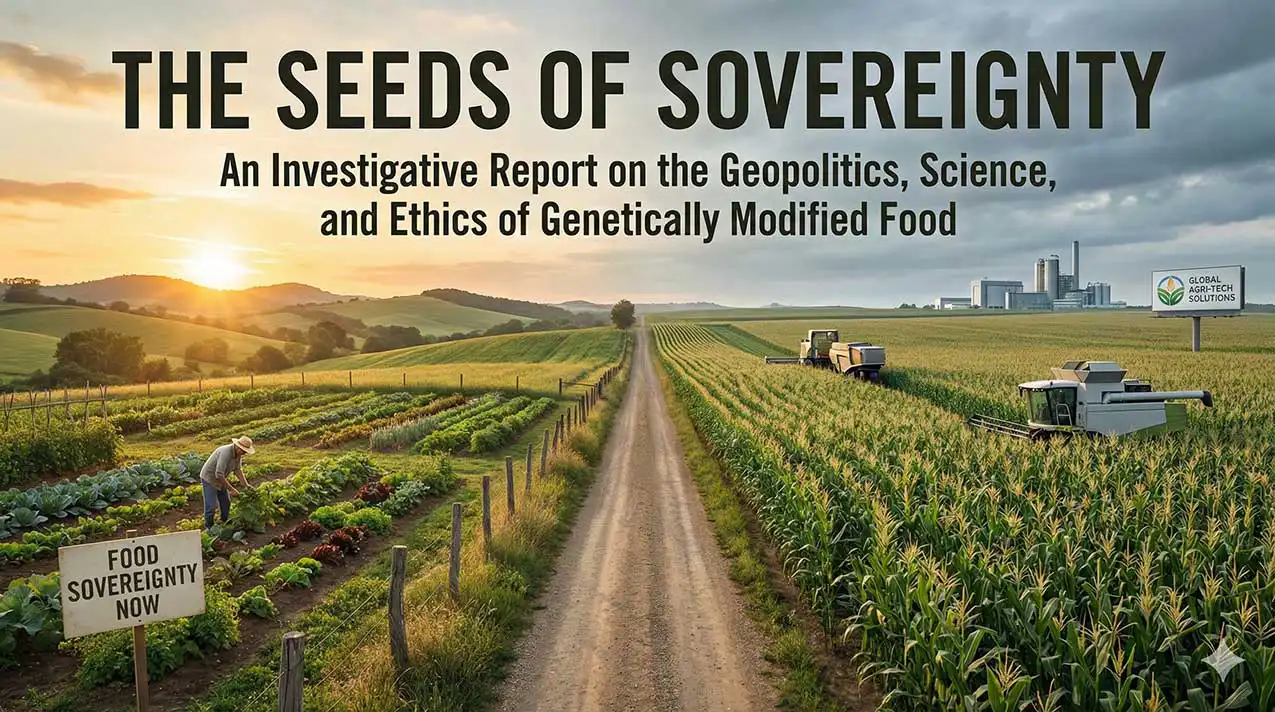
This investigative report examines the political, scientific, and ethical dimensions of Genetically Modified Organisms (GMOs) in the twenty-first century. It argues that the “gene revolution” is defined less by scientific consensus than by a struggle for control over the global food system.
- The Legal and Regulatory Battlefield: The report opens with the landmark 2024 Philippine Court of Appeals decision to halt Golden Rice and Bt Eggplant, illustrating a shift toward the “Precautionary Principle” in the Global South. This contrasts with the divergence in global governance, where the US pursues a product-based deregulation of gene-edited crops (CRISPR), while the EU grapples with political deadlocks over dereguating New Genomic Techniques (NGTs) amidst patent concerns.
- Corporate Consolidation: The industry is dominated by a “Big Four” oligopoly (Bayer, Corteva, Syngenta, BASF) that controls the majority of the proprietary seed market. Through legal precedents like Bowman v. Monsanto, these corporations have enclosed the seed as intellectual property, criminalizing traditional seed saving and enforcing strict technology use agreements.
- Health and Environmental Impacts: The report highlights the “technological treadmill” of herbicide-tolerant crops leading to the spread of resistant superweeds like Palmer Amaranth. It also details the contentious safety debate surrounding glyphosate, contrasting the EPA’s safety assurances with the IARC’s cancer classification and new systematic reviews linking the chemical to intestinal dysbiosis.
- Global Case Studies:
- India: The initial yield gains of Bt cotton have stagnated due to the resurgence of resistant pests like the Pink Bollworm and rising input costs, contributing to farmer indebtedness.
- Burkina Faso: The suspension of “gene drive” mosquito trials by the government highlights the geopolitical tensions inherent in deploying technologies capable of altering entire ecosystems.
- Conclusion: The report concludes that while gene editing offers powerful tools, its current deployment entrenched in an industrial, profit-driven model fails to address the root causes of hunger. It suggests that a just food future requires decoupling innovation from corporate control and prioritizing food sovereignty and agroecology.
Audio overview
Introduction: The Verdict in Manila
In the humid, wood-paneled chambers of the Philippine Court of Appeals, a decision was rendered in April 2024 that sent shockwaves through the global infrastructure of agricultural biotechnology. The case, Magsasaka at Siyentipiko Para sa Pag-Unlad ng Agrikultura (MASIPAG) et al. v. Secretary of the Department of Agriculture, was not merely a local dispute over farming regulations; it was a judicial referendum on the defining technological capability of the twenty-first century: the power to rewrite the genetic code of the food we eat.
The court, in a move that stunned international observers and galvanized environmental activists, issued a Writ of Kalikasan—a unique Philippine legal remedy designed to protect one’s constitutional right to a balanced and healthful ecology.1 The writ effectively revoked the biosafety permits for two of the most symbolically significant genetically modified organisms (GMOs) in existence: Golden Rice, genetically engineered to combat Vitamin A deficiency, and Bt Eggplant, designed to resist the devastation of the fruit and shoot borer.2
For decades, Golden Rice has been the poster child of the biotechnology industry’s humanitarian narrative. It was the “good GMO,” developed not for corporate profit but to save the sight and lives of malnourished children in the Global South.3 Its prohibition by a court in the very country that hosted its development at the International Rice Research Institute (IRRI) suggests a profound rupture in the technocratic consensus that has governed global agriculture since the Green Revolution. The court’s reasoning was explicit: in the face of scientific uncertainty regarding long-term environmental and health impacts, the state must err on the side of caution. It cited a lack of “full scientific certainty” and failures in government monitoring mechanisms as grounds for halting commercial propagation.1
This ruling serves as the entry point into a vast, tangled web of science, capital, and power. The story of GMOs is often presented as a binary debate between pro-science rationalists and anti-science luddites. However, a deep investigation reveals a reality far more complex. It is a story about the ownership of life itself, where the reductionist precision of CRISPR gene editing collides with the chaotic complexity of ecological systems. It is a story where the benevolent rhetoric of “feeding the world” masks a fierce consolidation of corporate power that has transferred control of the global seed supply to a cartel of four mega-corporations.4
From the suicide-plagued cotton belts of Maharashtra to the herbicide-saturated soy fields of the American Midwest, and from the gleaming laboratories of Basel to the protest encampments of Burkina Faso, this report investigates the current state of the genetic revolution. It examines the shifting science from transgenics to gene editing, traces the flow of billions of dollars in lobbying and patent rents, and analyzes the diverging regulatory frameworks that are fracturing the global food system.
Part I: The Molecular Toolbox – From Transgenics to Gene Editing
To understand the political economy of modern agriculture, one must first deconstruct the biological architecture that underpins it. The term “GMO” has become a cultural catch-all, often obscuring the significant technical evolution that has occurred over the last thirty years. We are currently witnessing a transition from the “Fordist” era of genetic engineering—characterized by crude, mass-market traits—to a “post-Fordist” era of precision editing.
The Era of Transgenics: The Shotgun Approach
For the past three decades, the dominant form of agricultural biotechnology has been transgenesis. This process involves the transfer of genetic material from one species to another—crossing the species barrier in a way that would never occur in nature.5 The quintessential example is the insertion of genes from the soil bacterium Bacillus thuringiensis (Bt) into the genome of corn or cotton. This bacterial gene forces the plant to express a crystalline protein (Cry toxin) that is lethal to specific insect larvae, effectively turning the plant into its own pesticide factory.6
Another pillar of the transgenic era is herbicide tolerance (HT). Scientists isolated genes from bacteria resistant to glyphosate (the active ingredient in Roundup) and spliced them into soy, corn, and canola. This allowed farmers to spray broad-spectrum herbicides over their entire fields, killing everything green except the crop.7
The methodology of this early era was often imprecise. In the “biolistic” method, scientists literally blasted gold particles coated with DNA into plant cells using a “gene gun,” hoping for a successful integration. Later methods used the bacterium Agrobacterium tumefaciens as a vector to deliver the genetic payload. While effective, these methods were characterized by “random integration.” The foreign gene could land anywhere in the plant’s genome, potentially disrupting other genes or regulatory elements—a phenomenon known as “insertional mutagenesis” or pleiotropy.8 This randomness necessitated years of expensive safety testing to ensure that the insertion hadn’t inadvertently ramped up the production of natural toxins or allergens.
The CRISPR Revolution: The Molecular Scalpel
The landscape shifted seismically with the advent of CRISPR-Cas9 (Clustered Regularly Interspaced Short Palindromic Repeats). If transgenesis was a shotgun, CRISPR is a scalpel. This technology, adapted from a bacterial immune system, allows scientists to program a protein (Cas9) to find a specific sequence of DNA within an organism’s genome and make a precise cut.5
Once the DNA is cut, the cell’s natural repair mechanisms kick in. Scientists can exploit this to delete a gene (silencing a trait, like the browning enzyme in mushrooms), or to insert a new sequence with high precision. This capability has given rise to a new class of crops often termed “gene-edited” or “New Genomic Techniques” (NGTs).9
The distinction is critical for the industry’s regulatory strategy. Proponents argue that many gene-edited crops are “cisgenic” rather than “transgenic.” Cisgenesis involves transferring genes between sexually compatible species (e.g., from a wild potato to a commercial potato), or simply tweaking the plant’s own existing DNA.6 The argument follows that since these changes could theoretically occur through traditional breeding or natural mutation (albeit over centuries), they should not be regulated as GMOs.5
The Persistence of Uncertainty
Despite the precision of CRISPR, the biological reality remains complex. The scientific literature indicates that “off-target” effects—where the Cas9 enzyme cuts the wrong section of DNA—can still occur, though less frequently than with older methods. Furthermore, even “on-target” edits can have unintended consequences. Genes often perform multiple functions (pleiotropy), and altering a gene to improve drought tolerance might inadvertently affect the plant’s susceptibility to pests or its nutritional profile.8
A 2024 review in Frontiers in Plant Science highlighted that while editing is precise, the cellular response to that edit is mediated by the plant’s complex metabolic networks, which are not fully understood.6 This creates a “scientific gray zone” that regulators are struggling to navigate: does the lack of foreign DNA guarantee safety, or does the intervention itself pose a risk?
The shift from transgenics to gene editing is not just a scientific upgrade; it is a strategic maneuver to bypass the heavy regulatory burdens and public stigma associated with the first generation of GMOs. By rebranding these crops as “nature-identical” or “precision-bred,” the industry hopes to unlock a new wave of commercialization.
Part II: The Architecture of Control – Consolidation and Capital
The scientific breakthrough of genetic engineering did not occur in a vacuum; it occurred in a marketplace driven by the imperatives of shareholder value. The commercialization of GM crops precipitated one of the most rapid and profound consolidations of corporate power in the history of capitalism, fundamentally altering the political economy of food.
The Big Four: An Oligopoly of Life
In the mid-1990s, the global seed and agrochemical industries were relatively fragmented, with dozens of regional companies competing. Today, following a frenetic period of mergers and acquisitions culminating in 2018-2020, the sector is dominated by four mega-corporations that control the vast majority of proprietary germplasm and crop protection chemicals.4
Table 1: The Concentration of Corporate Power in Agriculture
| Corporation | Headquarters | Key Acquisitions / Mergers | Dominant Market Position |
| Bayer | Germany | Acquired Monsanto (2018) for $63B | World’s largest seed and agrochemical company. Controls the Roundup Ready empire and vast vegetable seed portfolio. |
| Corteva | USA | Spun off from Dow + DuPont merger (2019) | Dominant in US corn and soybean markets; holds massive library of germplasm and patents. |
| Syngenta Group | China/Switzerland | Acquired by ChemChina (2017); merged with Sinochem assets | State-backed powerhouse; strategic instrument of Chinese food security policy. |
| BASF | Germany | Acquired divested assets from Bayer/Monsanto | Major player in chemical crop protection and increasingly in seeds (cotton, soy). |
4
This concentration of power has profound implications. First, it aligns the direction of agricultural innovation with the commercial interests of these firms. Research and development are overwhelmingly skewed toward broad-acre commodity crops (corn, soy, cotton, canola) that offer the highest return on investment through patent rents and bundled chemical sales. “Orphan crops” vital to food security in the Global South—such as cassava, sorghum, and millet—receive a fraction of the investment because their growers cannot afford premium technology fees.13
Second, the “Big Four” possess immense pricing power. Between 1990 and 2020, the price of seed in the US increased dramatically, far outpacing inflation and the market price of the crops themselves. For farmers, this increases the financial risk of every planting season, driving a “get big or get out” dynamic that further consolidates land ownership and empties rural communities.12
Intellectual Property: The Enclosure of the Seed
The economic engine of this consolidation is the patent. Prior to the GM era, the right of farmers to save, replant, and exchange seed was the foundation of agriculture. The introduction of patented genetic traits criminalized this age-old practice for adopting farmers, transforming the seed from a renewable resource into a rented commodity.
The legal architecture of this enclosure was solidified in the landmark US Supreme Court case Bowman v. Monsanto (2013). Vernon Bowman, an Indiana farmer, attempted to circumvent Monsanto’s high seed prices by purchasing commodity soybeans from a grain elevator—intended for feed—and planting them. He correctly guessed that most would contain the Roundup Ready trait. When Monsanto sued, Bowman argued the doctrine of “patent exhaustion”—that Monsanto’s patent rights were exhausted after the first sale of the seed to the grain elevator.15
The Supreme Court unanimously rejected Bowman’s defense. Justice Elena Kagan wrote that the exhaustion doctrine does not permit a purchaser to “make new copies” of the patented invention. Because seeds are self-replicating, planting them effectively creates a new, infringing copy. This ruling established that the patent extends to the progeny of the seed, effectively granting the company ownership rights over future generations of life.15
This legal victory is enforced through “Technology Stewardship Agreements” (TSAs)—dense contracts that farmers must sign (or agree to by opening the bag) to purchase GM seeds. These agreements explicitly forbid seed saving and grant the company the right to audit the farmer’s records and inspect their fields.18 The result is a system of surveillance agriculture, where farmers are monitored to ensure they do not “steal” the intellectual property growing in their own soil.
The Lobbying Machine
Maintaining this regulatory and legal environment requires immense political capital. In the European Union and the United States, the agrochemical lobby is a titan. In 2023 and 2024, Bayer and its trade associations spent millions of euros and dollars lobbying to influence key legislative battles, particularly the re-authorization of glyphosate in the EU and the deregulation of New Genomic Techniques (NGTs).20
Public disclosures reveal that Bayer’s lobbying expenditures in the US consistently run into the millions per quarter. In the first quarter of 2024 alone, Bayer Corporation reported $2.23 million in lobbying expenses.22 This spending secures access to policymakers and shapes the language of legislation, often drowning out the voices of civil society organizations and smallholder farmers who lack comparable resources. The “revolving door” between regulatory agencies like the EPA and the corporations they regulate further cements this influence, creating a culture of capture where industry data is often accepted as the gold standard for safety assessments.
Part III: Chemical Dependencies – The Glyphosate Knot
No single molecule tells the story of the GM era better than glyphosate. Marketed by Monsanto as Roundup, it was the perfect partner for the first generation of GM crops. The premise was elegant in its simplicity: engineer the crop to survive the herbicide, then spray the entire field. It was a miracle of efficiency that fundamentally changed farming practices—until biology fought back.
The Rise of Superweeds
The widespread, repeated application of a single mode of action created immense evolutionary pressure. Nature responded with “superweeds.” By 2024, glyphosate-resistant populations of weeds like Palmer Amaranth (Amaranthus palmeri) and Waterhemp (Amaranthus tuberculatus) infest millions of acres in the US, particularly in the South and Midwest.7
The situation in states like Georgia and Tennessee has become desperate. Palmer Amaranth is an aggressive competitor that can grow inches a day and decimate cotton yields. Farmers who once relied solely on glyphosate now face a hydra-headed problem. To control resistant weeds, they must resort to older, more toxic herbicides like 2,4-D and dicamba, or return to mechanical tillage, undoing the soil conservation benefits of no-till farming.24
The economic toll is staggering. In Georgia alone, cotton growers have spent over $1 billion fighting Palmer Amaranth since it developed resistance. The cost of weed control has skyrocketed from negligible amounts to over $75-$100 per acre in some infested areas, eating into the razor-thin margins of producers.25 The industry’s response has been the “technological treadmill”: introducing new GM stacks (like Xtend or Enlist crops) that tolerate multiple herbicides (glyphosate plus dicamba or 2,4-D), effectively doubling down on the chemical warfare model rather than diversifying the system.26
The Cancer Controversy: IARC vs. EPA
The safety of glyphosate for humans remains one of the most contentious issues in science policy, characterized by a stark divergence between international health bodies and national regulators.
- The IARC Verdict (2015): The World Health Organization’s International Agency for Research on Cancer (IARC) classified glyphosate as a “Group 2A probable human carcinogen.” This decision was based on “limited evidence” of cancer in humans (specifically non-Hodgkin lymphoma) and “sufficient evidence” of carcinogenicity in experimental animals (rats and mice), along with strong mechanistic evidence that glyphosate causes genotoxicity and oxidative stress.27
- The EPA Stance (2020): The US Environmental Protection Agency (EPA), conversely, concluded that glyphosate is “not likely to be carcinogenic to humans.” The EPA emphasized that risks are negligible when the product is used according to the label. This finding was crucial for the continued registration of the chemical in the US market.29
The discrepancy stems from methodological differences. IARC assesses hazard (can it cause cancer?), while the EPA assesses risk (will it cause cancer at real-world exposure levels?). However, critics argue that the EPA relied too heavily on unpublished, industry-funded studies, effectively allowing the manufacturer to grade its own homework, while IARC relied exclusively on peer-reviewed, publicly available literature.28 This regulatory schism has fueled thousands of lawsuits against Bayer (Monsanto), resulting in settlements worth nearly $11 billion, even as the chemical remains the most widely used herbicide in history.
The Microbiome Frontier: A New Mechanism of Harm
Beyond cancer, a new front in the health debate has emerged: the gut microbiome. For decades, regulators accepted the industry’s claim that glyphosate is safe because it targets the shikimate pathway—an enzyme system found in plants and bacteria, but not in animals.
However, recent science has turned this argument on its head. Because the human gut is populated by trillions of bacteria that do possess the shikimate pathway, glyphosate residues in food and water can theoretically act as a chronic, low-dose antibiotic.
A landmark systematic review published in Food & Function in July 2024 provided the most comprehensive evidence to date of this effect. The review, authored by Ignácio et al., analyzed available studies and concluded that glyphosate and its commercial formulations are capable of inducing “intestinal dysbiosis.” The review found that exposure alters bacterial metabolism, increases intestinal permeability (often called “leaky gut”), damages microvilli, and disrupts mucus secretion.30
The implications are profound. Dysbiosis is increasingly linked to a range of systemic issues, from neurodegenerative diseases like Alzheimer’s to autoimmune disorders. The 2024 review noted that metabolic damages observed in animal models included disruptions to lipid and energy metabolism.31 This research challenges the current regulatory paradigm, which focuses primarily on acute toxicity and cancer, failing to account for the subtle, chronic disruption of the microbial ecology that sustains human health.
Part IV: The Indian Paradox – Bt Cotton and the Suicide Narrative
While the West debates herbicides, the debate in India centers on Bt cotton, the country’s only approved GM food/fiber crop. Introduced in 2002, Bt cotton was engineered to kill the American Bollworm, a pest that was devastating yields. The story of Bt cotton in India is a tragedy in two acts: an initial boom of productivity followed by an ecological and social unraveling.
Act I: The Boom
Initially, Bt cotton appeared to be a resounding success. Yields surged, pesticide spraying for bollworms dropped, and India transformed into the world’s second-largest cotton exporter.32 Adoption rates skyrocketed, reaching near 95% of the cotton acreage within a decade. Proponents hailed it as proof that GM technology could uplift smallholder farmers.
Act II: The Stagnation and the Pest
However, the long-term data reveals a plateau and subsequent decline. By 2024, cotton productivity in India has stagnated, and in key states like Maharashtra, it is declining.33 The primary culprit is the Pink Bollworm (Pectinophora gossypiella).
Unlike the American Bollworm, the Pink Bollworm has developed widespread resistance to the Bt toxins (Cry1Ac and Cry2Ab) expressed by the cotton plants. By 2017-2018, infestation rates in Maharashtra reached catastrophic levels, damaging 30-50% of the crop in some districts.34 A 2024 report highlighted that farmers are now forced to spray significant amounts of chemical insecticides again to control the resistant Pink Bollworm and secondary pests like whitefly, which have surged to fill the ecological void left by the suppression of bollworms.35
The “technology fee” embedded in the seed price remains, but the technology itself is failing. Farmers are paying for a trait—insect resistance—that no longer effectively functions in many regions, while also paying for the chemical sprays the technology was supposed to replace.
Deconstructing the Farmer Suicide Narrative
A persistent and harrowing narrative in the media connects Bt cotton directly to the phenomenon of farmer suicides in India. The argument posits that the high cost of GM seeds drives farmers into deep debt; when the crop fails (due to rainfed conditions or pests), they face financial ruin and, in a final act of despair, take their own lives.
Peer-reviewed literature paints a more nuanced picture. A comprehensive review of suicide data from 2002 to 2007 found no aggregate increase in the national suicide rate that correlated perfectly with the timeline of Bt adoption.37 Suicide is a complex, multi-causal phenomenon driven by chronic indebtedness, the collapse of institutional credit (forcing farmers to turn to predatory moneylenders), climatic variability, and social pressures.
However, Bt cotton is a significant factor in the “debt trap.” Bt seeds are significantly more expensive than traditional varieties and, crucially, they are resource-intensive. They require precise irrigation and fertilizer application to reach their yield potential. In the Vidarbha region of Maharashtra, where the vast majority of cotton is rainfed and irrigation is scarce, planting Bt cotton is a high-stakes gamble. A delay in the monsoon can turn a high-input investment into a total loss.
While Bt cotton may not be the sole cause of suicide, it acts as a “risk multiplier.” It integrated small, resource-poor farmers into a high-cost, high-risk global commodity market without the necessary safety nets. When the gamble fails—as it increasingly does due to pest resistance and climate change—the consequences are fatal.39
Table 2: The Efficacy Gap in Bt Cotton (India)
| Metric | Early Adoption Period (2002-2007) | Current Status (2018-2024) |
| Adoption Rate | Rapid growth (<1% to 85%) | Saturation (~93-95%) |
| Primary Pest Status | American Bollworm effectively controlled | Pink Bollworm widespread resistance |
| Pesticide Use | Significant reduction | Resurgence (targeting Pink Bollworm & sucking pests) |
| Farmer Economics | Initial income gains due to yield bumps | High input costs, yield stagnation, debt cycles |
32
Part V: The Golden Grain – Humanitarianism vs. Precaution
No GMO project has been as symbolically charged as Golden Rice. Engineered to produce beta-carotene (provitamin A) in the grain’s endosperm, it was designed to prevent the blindness and death associated with Vitamin A deficiency (VAD) in rice-dependent populations. Unlike Bt cotton or Roundup Ready soy, Golden Rice is a public sector project, with the humanitarian license allowing royalty-free distribution to resource-poor farmers earning less than $10,000 a year.3
The Delay and the Blame
Development of Golden Rice began in the 1990s. Proponents argue that the 20-year delay in its deployment is a moral outrage, a “crime against humanity” perpetuated by excessive regulation and activist obstructionism. They cite data showing that VAD continues to kill or blind hundreds of thousands of children annually, a tragedy they argue could have been mitigated had the rice been released earlier.3
However, the delay was also scientific. The first iteration of Golden Rice produced insufficient amounts of beta-carotene. It took years to develop “Golden Rice 2,” using a gene from maize, which produced viable levels of the vitamin. Furthermore, integrating the trait into local rice varieties that farmers actually want to grow proved to be a slow breeding process.3
The 2024 Writ of Kalikasan: A Legal Earthquake
In 2021, the Philippines became the first country to approve Golden Rice for commercial propagation. It seemed the long battle was over. But in April 2024, the Court of Appeals (CA) issued the Writ of Kalikasan, revoking the biosafety permit and halting all activities.2
The Court’s decision was grounded in the Precautionary Principle. The judges argued that the burden of proof lies with the proponents to demonstrate “full scientific certainty” of safety, rather than with the opponents to prove harm. The court found that:
- Lack of Consensus: There were conflicting scientific views regarding the long-term safety of the crop for human health and the environment.
- Monitoring Failures: The government agencies (Bureau of Plant Industry) had failed to implement sufficient monitoring mechanisms to track the rice once released. The court noted that without a way to segregate the GM rice from conventional rice, there was a risk of irreversible contamination of the country’s rice supply.1
This ruling was a victory for MASIPAG, a farmer-scientist network that advocates for seed sovereignty. They argued that Golden Rice poses a threat to the genetic diversity of traditional rice varieties through cross-pollination. Furthermore, they contended that VAD is a symptom of poverty and malnutrition that is better addressed through diversified diets and access to fresh vegetables, rather than a “technological band-aid” that entrenches dependence on industrial seeds.42
The decision has polarized the country. Farmers in provinces like Isabela, who had adopted Bt corn and were eyeing Golden Rice, expressed frustration, viewing the ban as a denial of a tool that could improve their livelihoods and health.44 Meanwhile, the scientific community at UPLB and PhilRice warned that the ruling sets a precedent that could stifle all future agricultural research in the country.46
Part VI: Fragmented Governance – A World Divided
The governance of GMOs is characterized by a deep transatlantic divide that influences regulations across the globe.
The United States: The Product-Based Fast Lane
The US regulatory system focuses on the product, not the process. If a GM crop is “substantially equivalent” to a non-GM crop in terms of composition and toxicity, it is generally deemed safe. The USDA’s “SECURE Rule” (Sustainable, Ecological, Consistent, Uniform, Responsible, Efficient), fully implemented in 2020/2021, further streamlined the process. It created broad exemptions for gene-edited crops where the modification could have been achieved through traditional breeding.47
This creates a “fast lane” for CRISPR innovation. Companies can often self-determine that their edited crop falls under an exemption, meaning it does not require a lengthy regulatory review or environmental assessment. This approach encourages investment but draws criticism for a lack of transparency; consumers may never know they are eating gene-edited food because it requires no label.11
The European Union: The Process-Based Fortress
The EU focuses on the process. The act of modifying the genome itself triggers a rigorous risk assessment, mandatory labeling, and traceability requirements. This is driven by the precautionary principle and strong consumer resistance.49
However, the EU is currently in the midst of a fierce political battle over New Genomic Techniques (NGTs). In early 2024, the European Parliament voted on a proposal to deregulate “Category 1” NGT plants (those with simple edits equivalent to conventional breeding). The proposal aimed to exempt these crops from the strict GMO directive to foster innovation and climate resilience.10
The vote revealed deep fissures. While the Parliament supported the deregulation in principle, they attached amendments that the industry opposes—specifically, a ban on patenting NGT plants. The Parliament argues that if these plants are “natural enough” to avoid safety regulation, they should be “natural enough” to be unpatentable. This is a “poison pill” for the seed industry, which relies on patents for revenue. As of 2025, the legislation remains in limbo, with the Council of the EU struggling to reach a consensus, leaving European scientists and breeders in a state of uncertainty.52
The Global South: Caught in the Crossfire
Countries in the Global South often find themselves navigating between these two superpowers.
- Africa: Historically cautious due to the influence of European export markets (who reject GM crops). However, countries like Nigeria and Kenya (despite recent legal reversals) are moving toward adopting Bt cowpea and cotton, driven by severe pest pressures.54
- Latin America: Brazil and Argentina are aggressive adopters, aligning closer to the US model to support their massive soy and corn export industries. They have developed specific norms for gene editing that allow for rapid approval if no foreign DNA is present.50
- Philippines: As demonstrated by the recent court ruling, the judiciary is asserting a strong precautionary stance, even as the executive branch and research institutes push for biotechnology.1
Part VII: Editing the Wild – Gene Drives and Future Trajectories
The frontier of agricultural biotechnology is moving beyond the farm and into the wild. The most radical application of CRISPR is the “gene drive.”
The Mechanics of Extinction
A standard genetic trait has a 50% chance of being passed to offspring. A gene drive uses CRISPR to copy itself into the opposing chromosome, ensuring that nearly 100% of offspring inherit the trait. This allows a genetic modification to race through an entire population, even if that modification is harmful to the organism (like sterility).56
The primary application currently in development is Target Malaria, a project funded largely by the Bill & Melinda Gates Foundation. The goal is to release mosquitoes with a gene drive that spreads female sterility, crashing the population of Anopheles mosquitoes (the vector for malaria) in Africa.56
The Burkina Faso Suspension
This is no longer agriculture; it is ecological engineering. The risks are profound and transboundary. If a gene drive mosquito crosses a border, or if the drive jumps to a related species, it could destabilize ecosystems in ways that are impossible to predict or reverse.57
In Burkina Faso, the Institut de Recherche en Sciences de la Santé (IRSS) partnered with Target Malaria to conduct initial phases of research, including the release of genetically modified (non-gene drive) sterile male mosquitoes. However, in 2025, the situation shifted dramatically. Reports indicate that the Burkina Faso government suspended the activities of Target Malaria, following growing localized resistance and concerns about the lack of informed consent from local communities.58
The suspension highlights the growing tension between “philanthro-capitalist” science—where solutions are designed in Western labs and funded by private foundations—and the sovereignty of African nations to decide their own ecological futures. It suggests that the path for gene drives will be fraught with even greater political hurdles than transgenic crops.
Part VIII: Sovereignty and Resistance – The Agroecological Alternative
The resistance to GMOs is rarely just about “Frankenfoods” or safety data. It is about Food Sovereignty. This concept, championed by the transnational peasant movement La Via Campesina, asserts the right of peoples to healthy and culturally appropriate food produced through ecologically sound methods, and their right to define their own food and agriculture systems.60
The Argument for Agroecology
Food sovereignty advocates argue that the “feed the world” narrative of the biotech industry is fundamentally flawed. The world already produces enough food to feed 10 billion people; hunger is a problem of poverty, distribution, and lack of access, not a lack of production.61 They advocate for agroecology—a farming approach that mimics natural ecosystems, using crop diversity, composting, and biological pest control rather than patented seeds and synthetic chemicals.
Research supports the viability of this approach. Meta-analyses of yield gaps indicate that while industrial monocultures may have higher peak yields under ideal conditions, diversified agroecological systems are often more resilient to climate shocks (droughts, floods) and provide better nutrition and economic stability for smallholders.62 A 2024 meta-analysis found that diversified farming systems can reduce the yield gap significantly while providing critical ecosystem services like carbon sequestration and soil health regeneration, which industrial monocultures destroy.63
For La Via Campesina, the imposition of GM seeds is a violation of the rights of peasants, particularly the right to save, use, exchange, and sell their farm-saved seeds. This right is now recognized in international law through the UN Declaration on the Rights of Peasants and Other People Working in Rural Areas (UNDROP), adopted in 2018. Article 19 of UNDROP explicitly protects the right to seeds, placing it in direct conflict with the intellectual property regimes (like UPOV 91) that the biotech industry enforces.64
Conclusion: The Wicked Problem
The story of GMOs is a “wicked problem”—a social complexity where the solution to one aspect creates problems in another.
The science of gene editing offers undeniable tools. It can create cassava resistant to brown streak virus, or rice that survives submersion—traits that are not trivial in a warming world. In the hands of public researchers working for the public good, these tools could be part of a diverse strategy for survival.
However, the actual deployment of this science over the last 30 years has been inextricably linked to a model of industrial agriculture that prioritizes profit over resilience, uniformity over diversity, and corporate control over farmer sovereignty. The failure of Bt cotton to prevent farmer distress in India, the rise of superweeds in the US, and the judicial rejection of Golden Rice in the Philippines are not just “regulatory hurdles”; they are systemic feedbacks. They are signals that biology and society are rejecting the reductionist imposition of control.
The future of food will not be decided by a single court ruling or a new CRISPR breakthrough. It will be decided by how we answer the fundamental political questions: Who controls the seeds? Who bears the risks of the technology? And does the innovation serve the collective good, or the shareholder’s bottom line?
As the sun sets on the fields of Luzon, where Golden Rice cannot be planted, and on the plains of Burkina Faso, where gene drive mosquitoes have been grounded, it is clear that the “gene revolution” has stalled not because of a lack of science, but because of a deficit of trust and justice. Until the technology is decoupled from the architecture of extraction and control, it will remain a seed that struggles to take root in the soil of a democratic society.
Research assistance for this article provided by Gemini 3.0 Pro
Endnotes
- Court of Appeals (Philippines), Magsasaka at Siyentipiko Para sa Pag-Unlad ng Agrikultura (MASIPAG) et al. v. Secretary of the Department of Agriculture et al., CA-G.R. SP No. 00038, Decision (April 17, 2024), 2, 142.
- “SC Issues Writ of Kalikasan on Genetically Modified Rice and Eggplant Products,” Supreme Court of the Philippines Public Information Office, April 19, 2023, accessed via sc.judiciary.gov.ph; see also Greenpeace Philippines, “Greenpeace Statement on the Court of Appeals Updated Decision on GM Crops,” Press Release, August 2024.
- Adrian Dubock, “Golden Rice: Humanitarian Project or Trojan Horse?” Medical Research Archives 12 (2024), https://doi.org/10.18103/mra.v12i7.5884.
- Phil Howard, “Seed & Digital Consolidation: The Big Four,” PhilHoward.net, January 4, 2023; see also USDA Economic Research Service, Concentration in Seed Markets (Washington, DC: USDA, 2023).
- Stacy D. Singer and Dominique Michaud, “Global Regulatory Policies on GM Crops,” ISAAA Blog, September 3, 2025.
- Muhammad Aamer Mehmood et al., “Prospects for potato genome editing,” GM Crops & Food 10, no. 1 (2019), cited in Genetic Literacy Project Global Gene Editing Regulation Tracker, accessed November 2025.
- A. Singerman and S.H. Lence, “A Growing Common Challenge: Herbicide Resistance and Farmers’ Attitudes,” Choices 39, no. 1 (2024).
- National Academies of Sciences, Engineering, and Medicine, Genetically Engineered Crops: Experiences and Prospects (Washington, DC: The National Academies Press, 2016), 145–148.
- European Parliament, Plants produced by certain new genomic techniques, Legislative Train Schedule (Brussels: European Parliament, 2024), accessed via europarl.europa.eu.
- Ibid; see also Morrison Foerster, “April 2025 Update on NGT Regulation,” MoFo Insights, April 25, 2025.
- DigiComply, “Comparative Analysis of Regulation of GMO Products Worldwide,” DigiComply Blog, accessed November 2025.
- Dean Cavey, quoted in “Consolidation Continues in Seed Industry,” DTN Progressive Farmer, October 15, 2024.
- Infosys Knowledge Institute, Agrochem Industry Market Outlook 2024 (2024), Executive Summary.
- Grand View Research, Agrochemicals Market Size, Share & Trends Analysis Report 2024-2030 (2024).
- Bowman v. Monsanto Co., 569 U.S. 278 (2013).
- “Bowman v. Monsanto Co.,” Harvard Law Review 127, no. 1 (November 2013): 378–388.
- Justice Elena Kagan, Opinion of the Court, Bowman v. Monsanto Co., 569 U.S. 278 (2013).
- Center for Food Safety, Monsanto vs. U.S. Farmers (Washington, DC: Center for Food Safety, 2005), 23.
- Vermont Law and Graduate School, Seeds for Rent: The Farmers’ Guide to Technology Use Agreements (South Royalton, VT: Center for Agriculture and Food Systems, 2025), 5–6.
- Bayer AG, Bayer Political Advocacy Transparency Report 2023 (Leverkusen: Bayer AG, 2024), 3.
- Corporate Europe Observatory, Bayer’s Lobbying Expenditure in the EU, Transparency Register Data (Brussels, 2024).
- “Lobbying Report: Bayer Corporation (Consolidated Report) – 1st Quarter 2024,” United States Senate Lobbying Disclosure Act Database, filed April 22, 2024, https://lda.senate.gov.
- Charles Geddes et al., “Herbicide-resistant weeds in Saskatchewan: distribution and impact,” Canadian Journal of Plant Science 104 (2024); see also Bayer CropScience Canada, “Glyphosate Resistance: Understanding the Challenge,” 2024.
- Stanley Culpepper, quoted in “Glyphosate-resistant Palmer amaranth still a concern for Georgia cotton growers,” UGA Cooperative Extension Field Report, 2016.
- Ibid; see also “Palmer Amaranth’s American Roadtrip,” DTN Progressive Farmer, January 30, 2019.
- Michigan State University Extension, “Zombie Weeds are Coming for America’s Fields,” MSU News, 2016.
- International Agency for Research on Cancer (IARC), Monograph Volume 112: Some Organophosphate Insecticides and Herbicides (Lyon: IARC, 2015).
- C.J. Portier et al., “Differences in the carcinogenic evaluation of glyphosate between the International Agency for Research on Cancer (IARC) and the European Food Safety Authority (EFSA),” Journal of Epidemiology and Community Health 70 (2016): 741–745.
- US Environmental Protection Agency, “EPA Releases Draft Risk Assessments for Glyphosate,” Press Release, April 30, 2020.
- Demétrio Sierra-Mercado et al., cited in “More Data Finds Long-Term Exposure to Toxic Pesticides Alters Human Gut Microbiome,” Beyond Pesticides Daily News, April 2024.
- Amanda da Cunha Ignácio et al., “Effects of glyphosate exposure on intestinal microbiota, metabolism and microstructure: a systematic review,” Food & Function 15, no. 14 (July 29, 2024): 7520–7540, https://doi.org/10.1039/d4fo00660g.
- Nimish Gangrade, “The Journey of Bt Cotton in India: A Historical Overview,” Global Agriculture, October 2, 2024.
- Zia Haq, “From large exporter to net importer: India’s looming cotton crisis,” Hindustan Times, September 8, 2025.
- Third World Network, “Pink Bollworm Resistance to Bt Cotton in India,” Biosafety Information Service, 2018; see also “Escalating Resistance of Pink Bollworm in Bt Cotton Across Northern India,” AgriTech Today 2, no. 7 (October 2024).
- “No Pink Bollworm Resistant Seeds May Derail Punjab’s Big Cotton Push,” Hindustan Times, 2024.
- Mordor Intelligence, Global Crop Protection Chemicals Market Industry Report (2024).
- Guillaume P. Gruère and Debdatta Sengupta, “Bt Cotton and Farmer Suicides in India: An Evidence-based Assessment,” Journal of Development Studies 47, no. 2 (2011): 316–337.
- Genetic Literacy Project, “GM cotton failed India’s farmers? Another study says yes, but relies on false assumptions,” GLP, November 10, 2020.
- K.R. Kranthi and G.D. Stone, “Long-term impacts of Bt cotton in India,” Nature Plants 6 (2020): 188–196.
- Andrew Paul Gutierrez et al., “Bt Cotton, Climate Change and Suicide in India,” Environmental Sciences Europe 32 (2020), cited in Research Note 12.
- Golden Rice Humanitarian Board, “The Project,” accessed via Medical Research Archives 12 (2024).
- MASIPAG, “Farmer-Scientist Network MASIPAG Lauds CA’s Firm Ban on Golden Rice,” Masipag.org, 2024.
- Greenpeace Philippines, “Greenpeace Statement on the Court of Appeals Updated Decision,” August 2024.
- “Filipino farmers reaction to Golden Rice court ban,” ISAAA Blog, August 10, 2022 (reprinted/contextualized 2024).
- Clement Dionglay, “Farmers’ Voices on the Golden Rice Ban,” Sustainability 14, no. 13 (2022): 7919.
- Philippine Rice Research Institute (PhilRice), “Statement on CA Ruling,” May 8, 2024, cited in ISAAA Blog.
- USDA Animal and Plant Health Inspection Service (APHIS), Biotechnology Regulatory Services: 7 CFR part 340 Updates, accessed November 2025 via aphis.usda.gov.
- The Breakthrough Institute, “Will Sidestepping NEPA Unleash Innovation at USDA?” Food & Agriculture, 2025.
- Campden BRI, Comparing International Approaches to Food Safety Regulation of GM and Novel Foods, Report for UK FSA (March 2021).
- Frontiers in Plant Science, “GMO regulatory framework comparison US EU India Brazil,” Frontiers in Plant Science 12 (2021): 630396.
- European Parliament, “Plants produced by certain new genomic techniques,” Legislative Observatory Procedure 2023/0226(COD), vote on February 7, 2024.
- Bird & Bird, “Latest Developments: Regulation Proposal – New Genomic Techniques,” Insight, 2025.
- Morrison Foerster, “April 2025 Update on NGT Regulation,” MoFo Insights, April 25, 2025.
- La Via Campesina, “We condemn the lifting of the ban on genetically modified crops in Kenya,” LVC Press Release, October 2022.
- Stacy D. Singer, “Global Regulatory Policies,” ISAAA Blog, September 2025.
- Target Malaria, “Our Approach: Gene Drive,” accessed via targetmalaria.org, 2025.
- Save Our Seeds, “Burkina Faso halts Target Malaria project,” News, August 29, 2025.
- Burkina Faso Ministry of Higher Education, Research and Innovation, Communiqué on the Suspension of Target Malaria Activities, August 22, 2025.
- Samantha O’Loughlin, “ASTMH 2025: Advancing Gene Drive Conversations,” Target Malaria Blog, November 27, 2025.
- La Via Campesina, Food Sovereignty: A Guide (2018), 2.
- La Via Campesina, “We Fight for Food Sovereignty for Agroecological Peasant Agriculture,” Position Paper on COP16, October 2024.
- FiBL, Cultivating Change with Agroecology and Organic Agriculture in the Tropics (2024).
- DeSIRA-LIFT, Scientific Evidence for Agroecology, Knowledge Brief #4 (February 2024).
- United Nations General Assembly, United Nations Declaration on the Rights of Peasants and Other People Working in Rural Areas (UNDROP), Resolution 73/165 (2018), Article 19.