HomeConsciousness & SpiritSacred Geometry: Unlocking the...

Sacred Geometry: Unlocking the Secrets of the Universe

Sacred geometry involves the study of geometric shapes and patterns found throughout the natural world and in various spiritual and religious artworks and structures. This discipline ascribes symbolic and sacred meanings to certain geometric proportions and shapes. Here, we’ll start with the Pythagorean Solids and then discuss other sacred patterns, including the Flower of Life.

Pythagorean Solids (Platonic Solids)

The Pythagorean Solids, more commonly known as Platonic Solids, are a set of five three-dimensional shapes that are highly symmetrical and were studied by the ancient Greeks, including Pythagoras and later Plato, from whom they derive their most popular name. These solids are unique because each face is the same regular polygon, the same number of polygons meet at each vertex, and the angles and edges are all congruent. The five Platonic Solids are:

  1. Tetrahedron – Composed of 4 equilateral triangles, symbolizing fire.
  2. Cube (Hexahedron) – Made of 6 square faces, representing earth.
  3. Octahedron – Consisting of 8 equilateral triangles, symbolizing air.
  4. Dodecahedron – Made up of 12 pentagons, often associated with the universe or ether.
  5. Icosahedron – Composed of 20 equilateral triangles, representing water.
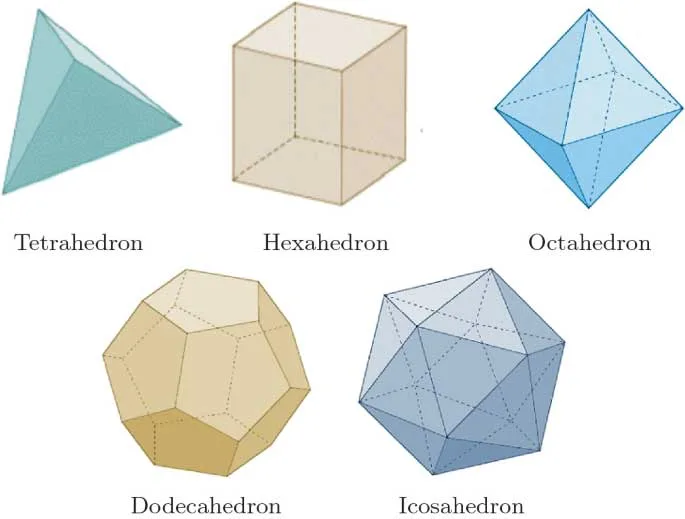
platonic solids
The Platonic Solids

These solids are considered sacred in various spiritual traditions due to their perfect, symmetrical shapes and the belief that they represent the fundamental structures of the natural world.

Other Sacred Patterns

Flower of Life

The Flower of Life is a geometric pattern consisting of multiple evenly-spaced, overlapping circles arranged in a flower-like pattern with a sixfold symmetry, like a hexagon. This pattern forms a part of the sacred geometry and is believed to represent the cycle of creation, depicting how all life comes from one singular source, represented by the circle in the center of the pattern.
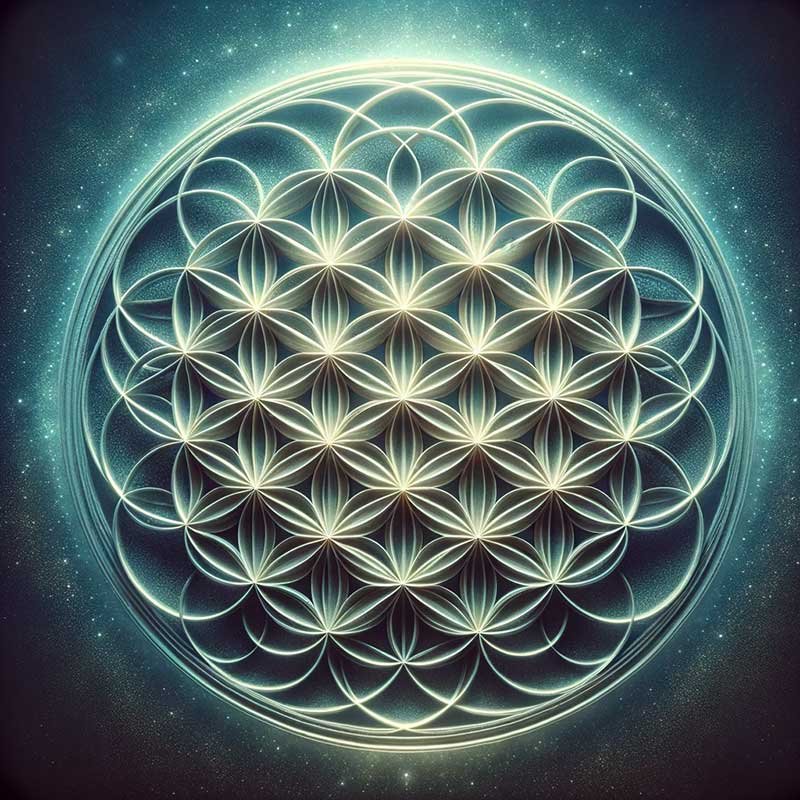
flower of life
Flower of Life. Credit. The Shamanic Garden.Earth. Creative impulse Kevin Parker. Execution Dalle-E

Seed of Life

The Seed of Life is a symbol made of seven interlocking circles. It is considered the basic unit of the Flower of Life’s pattern and symbolizes the seven days of creation, serving as a template from which the Flower of Life arises.
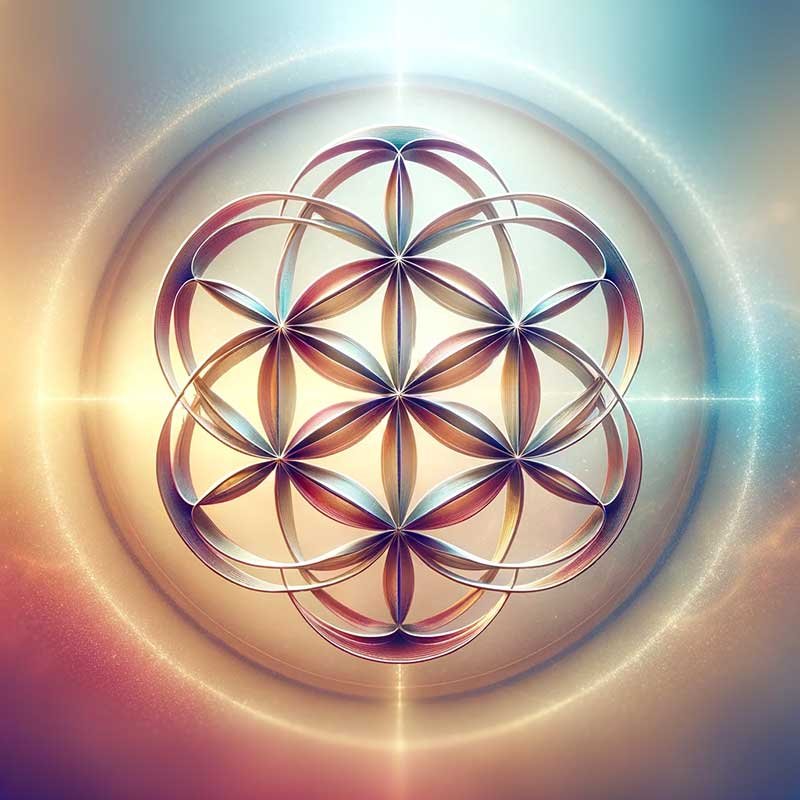
Seed-of-Life
Seed of Life. Credit shamanicgarden.earth. Creative impulse Kevin Parker. Execution Dalle-E

Tree of Life

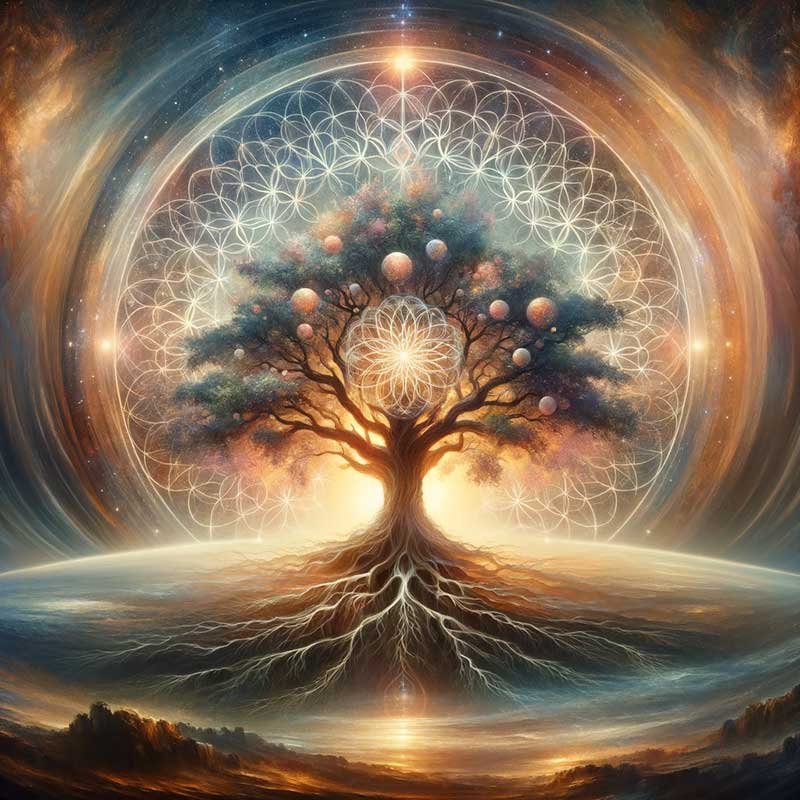
The Tree of Life is another significant symbol found in many spiritual and religious traditions around the world. It is often depicted as a large tree with spreading branches and roots, symbolizing the interconnectedness of all life on Earth and the link between the earth and the heavens.
Colourful-Tree-of-Life
Tree of Life. Credit shamanicgarden.eart. Creative impulse Kevin Parker. Execution Dalle-E

Metatron’s Cube

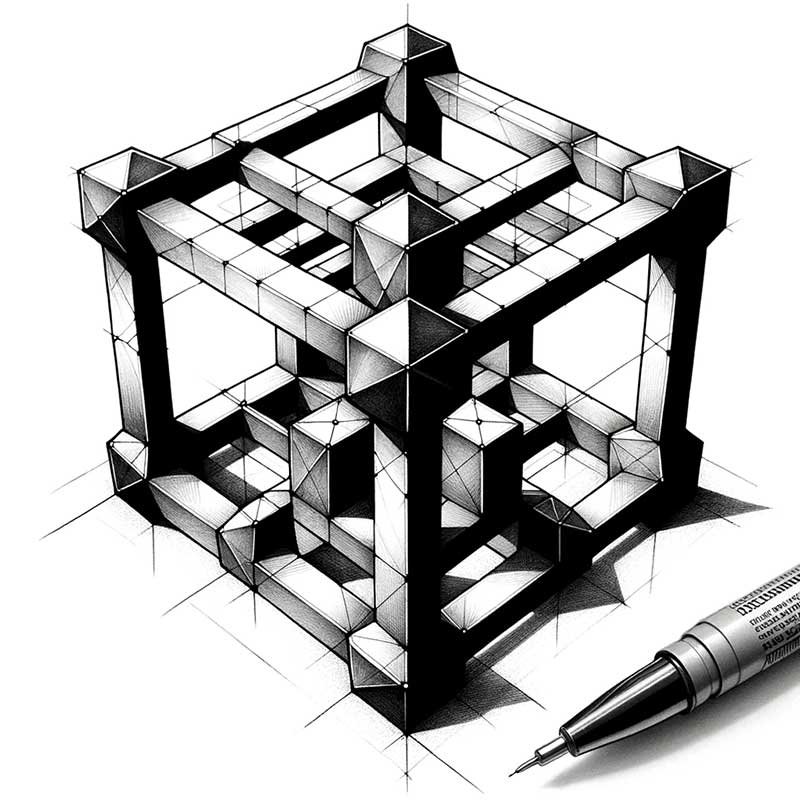
Derived from the Flower of Life, Metatron’s Cube contains all five Platonic Solids. This symbol is named after the Archangel Metatron, who is said to watch over the flow of energy in creation and provides a connection to the divine. It is believed to represent the balance and harmony in the cosmos.
Metatrons-Cube-in-a-3-Dt
Metatrons Cube in 3-D Pen and Ink. Credit shamanicgarden.earth. Creative impulse Kevin Parker. Execution Dalle-E

Sri Yantra

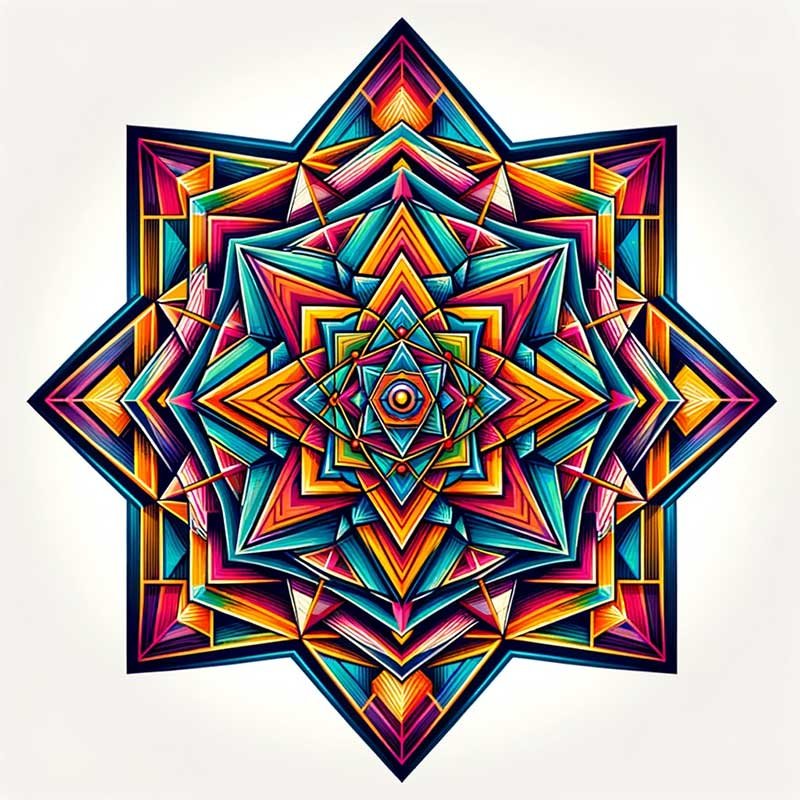
The Sri Yantra, or Shri Chakra, is a complex geometric figure that consists of nine interlocking triangles that radiate out from the central point. Four triangles point upwards, representing Shiva or the masculine, and five downward-pointing triangles represent Shakti or the feminine. This symbol is used in the Hindu tantra to represent the union of the divine masculine and feminine, creating a representation of the entire cosmos.
Sri-Yantra-also-known-as-the-Shri-Chakra
Sri Yantra also known as the Shri Chakra. Credit shamanicgarden.earth. Creative impulse Kevin Parker. Execution Dalle-E

Conclusion

Sacred geometry is a vast field that encompasses various symbols and shapes, each with its own unique significance and symbolism. The study of these shapes, from the perfect symmetry of the Platonic Solids to the intricate patterns of the Flower of Life, reflects the human quest for understanding the universe and finding spiritual significance in the patterns and structures that make up the world around us.

Latest Posts

More from Author

The Chromatic Deception: The Systemic Degradation of the Global Salmon Commons

A forensic autopsy of Big Salmon, exposing the ecological collapse, regulatory rot, and colonial theft behind the industry's dyed pink flesh.

Read Now

The Sapphire Empire: A Chronicle of Britain’s Blue Belt and the Resurrection of the Wild

Introduction: The Map and the Territory The ocean is a memory. It remembers the iron taste of the harpoon and the heavy drag of the trawl. It remembers the silence of the extinction and the cacophony of the hunt. But it also remembers how to heal. Beneath the...

The AI Landscape of April 2026: Agents, Alignment, and the Quiet Politics of Machine Intelligence

The artificial intelligence industry has always oscillated between the roar of spectacle and the cold logic of consolidation. If late 2025 was defined by a "Cambrian explosion" of frontier models—a dizzying period of multimodal breakthroughs and benchmark obsession—then April 2026 represents the arrival of a "Permian" maturity....

The Chromatic Deception: The Systemic Degradation of the Global Salmon Commons

A forensic autopsy of Big Salmon, exposing the ecological collapse, regulatory rot, and colonial theft behind the industry's dyed pink flesh.

The Architects of Memory: An Investigative Report on the Elephant in the Anthropocene

From the deep-time silence of the Eocene swamps to the seismic rumblings of the modern savanna, the elephant is not merely a charismatic giant but the keystone of our planetary machinery—and its dismantling is a crisis of both biology and conscience. Introduction: The Silence of the Giants In the...

David Abram: Perception, Language, and the More-Than-Human World

I. The Prestidigitator at the Edge of the World In the landscape of contemporary ecological philosophy, David Abram cuts a figure both enigmatic and essential. He is not a scientist in the conventional sense, tallying parts per million of carbon dioxide or cataloguing extinction rates, though his work...

The Large Language Model Landscape of March 2026

The agent economy emerges: browsers, sovereign stacks, and the quiet consolidation of intelligence March 2026 feels strangely calm for an industry that only months ago seemed permanently electrified. The headlines have slowed. The benchmark fireworks have dimmed. Yet beneath the surface the machinery of artificial intelligence is turning faster...

Singapore: Engineered Nature in a Tropical City-State

GREEN CITIES SERIES  |  ARTICLE 4 Singapore has spent sixty years turning a cleared island into a green city, and the results are, in many respects, extraordinary. But the question the city-state now faces is different from the ones it has already answered: how do you make a...

Paris, or the Hard Work of a Breathing City

Green Cities Series | Article 02 How the French capital turned against the car, rewrote its streets, and discovered that a green city is not a mood but a struggle Paris has become one of the emblematic urban transformations of the climate era. In the space of two decades,...

GREEN CITIES

The City Must Breathe An introduction to the Green Cities series: what we mean, how we will judge, and why the urban future is now the decisive environmental story StandfirstThe green city has become one of the great promises of the twenty-first century. Yet the phrase is often used...

Compassion: The Architecture of Human Connection

There is a peculiar alchemy that occurs when one human heart turns toward another’s suffering—not to fix it, not to flee from it, but simply to acknowledge it. This turning, this quiet revolution of attention, is what we have come to call compassion. It is neither sentiment...

From Vertical Jungles to Deep-Sea Cooling: Ten Green Hotels Rewriting the Rules of Regeneration

The global hospitality sector is facing an existential reckoning. As international tourist arrivals climb toward 1.4 billion annually, the industry’s massive carbon footprint and its strain on local resources have moved from the periphery to the centre of the climate conversation. Yet, a vanguard of properties is...

The Mountain Sage: Arne Naess and the Deep Ecological Turn

Arne Naess's Deep Ecology: Life-centered philosophy on the intrinsic value of all life, urging a shift from Shallow Ecology to Ecological Self-realization.