

1. Historical Baseline
“The mountains are calling and I must go.” – (carved in Chinese on countless mountain temples)
Pre-1750 Wilderness Extent
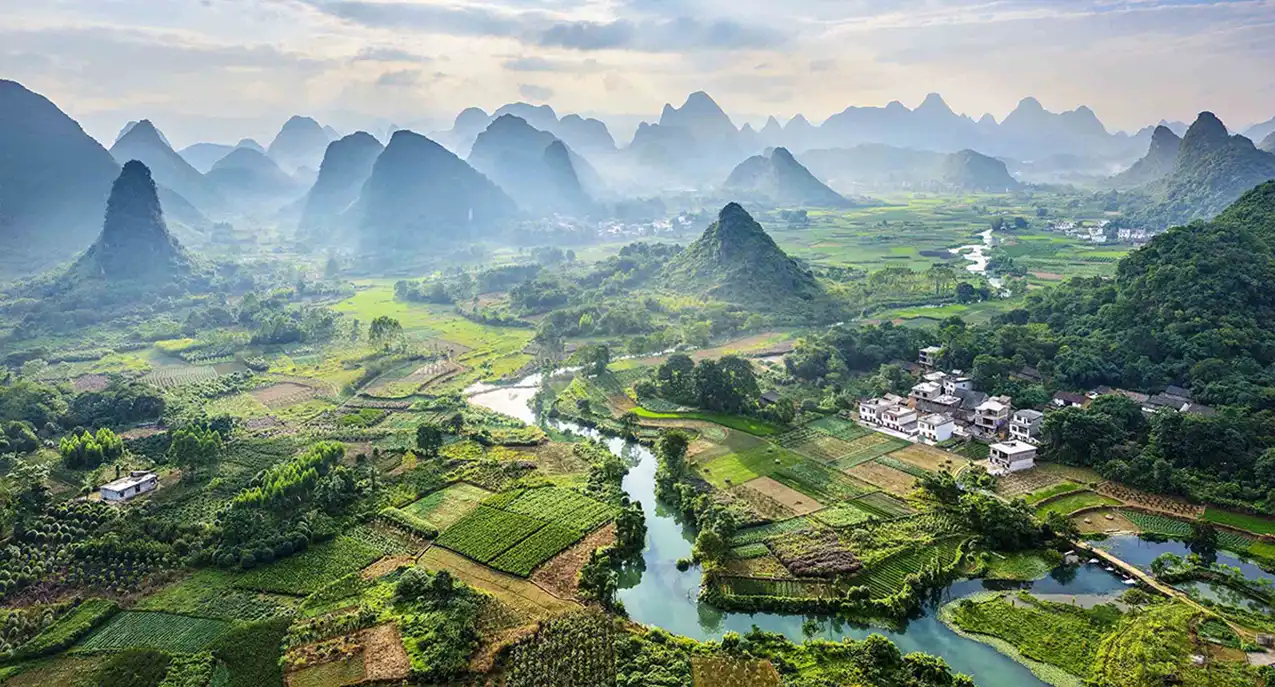
East Asia’s pre-industrial wilderness encompassed 12 million square kilometers of extraordinary diversity—from Siberian taiga dipping into northern China to tropical rainforests of Hainan, from the Gobi Desert’s austere expanses to Japan’s mist-shrouded temperate rainforests.¹ This region, cradling Earth’s oldest continuous civilizations, demonstrated that human presence need not mean wilderness destruction. For millennia, sophisticated agricultural systems, philosophical traditions emphasizing harmony with nature, and complex forest management practices maintained ecological integrity alongside dense human populations.
China alone contained 4.2 million square kilometers of primary forest in 1700, covering 44% of its territory.² The legendary forests of Sichuan sheltered giant pandas in bamboo groves stretching to the horizon. Northeast China’s Great Khingan Mountains hosted the world’s largest temperate forest outside North America—a sea of Korean pine, Mongolian oak, and Manchurian ash supporting Siberian tigers, Amur leopards, and Asiatic black bears in numbers that would seem fantastical today.³
Japan’s archipelago was 85% forested, its mountains considered sacred, protected by both Buddhist and Shinto traditions that saw divinity in ancient trees and pristine streams.⁴ The Korean Peninsula’s Baekdu-daegan mountain range, revered as the peninsula’s spiritual backbone, maintained an unbroken forest corridor from north to south, its tigers so numerous they entered folklore as mountain spirits.⁵
Mongolia’s vast steppes, covering 1.56 million square kilometers, supported the world’s last great nomadic civilizations in sustainable balance with millions of wild ungulates—Mongolian gazelles, wild asses, and Przewalski’s horses moving in herds that rivaled Africa’s great migrations.⁶
Indigenous and Traditional Management
Unlike the narrative of pristine wilderness untouched by humans, East Asia’s landscapes were actively managed through sophisticated traditional practices that enhanced rather than diminished biodiversity. China’s feng shui forests—sacred groves protecting villages for over 1,000 years—now represent critical biodiversity refugia, containing species extinct in surrounding landscapes.⁷ These forests, numbering over 100,000 sites, demonstrate that spiritual protection can be more effective than legal designation.
Japan’s satoyama system created mosaic landscapes where rice paddies, managed forests, grasslands, and villages supported higher biodiversity than either pure agriculture or untouched wilderness.⁸ This traditional social-ecological system, refined over 2,000 years, produced sustainable timber, food, and materials while maintaining populations of everything from fireflies to Japanese crested ibis.
Korean traditional forest management, documented in texts dating to 1428, included detailed phenological observations, sustainable harvesting calendars, and restoration techniques that modern ecologists are only now rediscovering.⁹ Temple forests, protected for over 1,500 years, preserve genetic lineages of trees eliminated elsewhere by climate change and human pressure.
2. Current State
“We are the first generation to feel the effect of climate change and the last generation who can do something about it.” – Xi Jinping, 2015
The Wilderness Index Assessment
The Wilderness Index, measuring ecological intactness through satellite analysis of human modification, vegetation condition, and habitat connectivity, reveals East Asia’s stark transformation.¹⁰ Only 23% of the region retains wilderness quality (defined as <1% human modification), concentrated in Mongolia’s steppes, Tibet’s plateau, and remote mountain ranges.¹¹ This represents a 71% loss since 1700, the world’s second-highest regional wilderness loss after Europe.
China’s wilderness has contracted to 7.8% of its territory, mostly in western provinces where the Tibetan Plateau and Xinjiang’s deserts provide refuge from development.¹² However, even these remote areas face pressure from mining, infrastructure projects, and climate change. The Belt and Road Initiative alone will fragment 265,000 square kilometers of remaining wilderness through new roads, railways, and pipelines.¹³
Japan maintains 19% wilderness, primarily in Hokkaido and mountain areas deemed too steep for development.¹⁴ South Korea retains only 3% wilderness, mostly in the Demilitarized Zone (DMZ)—an accidental wildlife sanctuary created by geopolitical tension.¹⁵ Taiwan preserves 24% wilderness in its central mountains, protected by both rugged terrain and Indigenous land rights.¹⁶
The Development Paradox
China exemplifies the global environment’s central paradox: the nation driving both destruction and salvation. It consumes 50% of global coal, produces 30% of carbon emissions, and has eliminated 80% of its natural forests.¹⁷ Yet it also leads the world in renewable energy investment ($83.3 billion in 2023), has planted 66 billion trees since 1978, and commits more funding to conservation than the United States and European Union combined.¹⁸
This paradox stems from compressed development—achieving in 40 years what took the West 200 years—creating simultaneous environmental collapse and cutting-edge solutions. China’s solar panel production costs dropped 99% in two decades, making renewable energy cheaper than coal globally.¹⁹ Its electric vehicle adoption rate of 35% for new car sales far exceeds any Western nation.²⁰ Yet its PM2.5 air pollution still causes 1.42 million premature deaths annually, and 70% of its rivers remain polluted despite massive cleanup efforts.²¹
Ecosystem Status
Forests: East Asia has lost 55% of its primary forests since 1900, but massive reforestation adds complexity to this picture.²² China’s forest cover increased from 12% in 1980 to 23.04% in 2023 through the world’s largest afforestation program.²³ However, 80% consists of monoculture plantations with 10% of natural forest biodiversity. These “green deserts” sequester carbon but don’t restore ecosystem functions or support wildlife.
Japan’s forests cover 67% of the nation—among the world’s highest rates—but 40% are industrial Cryptomeria and Chamaecyparis plantations causing widespread allergies and supporting minimal biodiversity.²⁴ Natural forests survive mainly above 1,500 meters elevation where logging proves uneconomical.
Grasslands: Mongolia’s steppes, Earth’s largest remaining temperate grasslands, face degradation across 70% of their extent from overgrazing, mining, and climate change.²⁵ China’s grasslands, covering 40% of its territory, suffer similar degradation, with the government implementing the world’s largest grassland restoration program—retiring 100 million hectares from grazing at a cost of $20 billion.²⁶
Wetlands: The region has lost 60% of its natural wetlands since 1950.²⁷ China’s Yangtze River wetlands, once covering 20 million hectares, shrunk to 1.5 million hectares before recent restoration efforts. Japan lost 61% of its wetlands to development. However, East Asia also leads in wetland restoration, with China restoring 800,000 hectares since 2016.²⁸
Rivers: Dam construction has fundamentally altered East Asian rivers. China’s 98,000 dams—more than the rest of the world combined—fragment every major river system.²⁹ The Three Gorges Dam alone displaced 1.3 million people and drove the Yangtze river dolphin to extinction. Yet China now leads in dam removal, dismantling 3,200 small dams to restore river connectivity.³⁰
3. Climate Change Impacts
“Heaven does not speak, yet the four seasons proceed through it.” – Confucius
Current Warming Patterns
East Asia is warming 40% faster than the global average, with northern China and Mongolia experiencing 2.3°C warming since 1900.³¹ The Tibetan Plateau, Asia’s “water tower” feeding rivers supporting 2 billion people, warms at 0.4°C per decade—double the global rate.³² This accelerated warming drives cascading impacts through the region’s interconnected systems.
Japan recorded its highest temperature ever—41.1°C—in 2018, then broke heat records in 65 cities during 2023’s heat dome.³³ South Korea experienced its earliest cherry blossom bloom in 1,200 years of records, shifting 15 days earlier since 1950.³⁴ Mongolia’s average temperature increased 2.24°C since 1940, with winter temperatures rising 3.6°C, fundamentally altering its pastoral economy.³⁵
Extreme Weather Intensification
The 2020 East Asian monsoon brought the region’s worst flooding in decades, affecting 45 million people in China alone, with economic losses exceeding $25 billion.³⁶ The Yangtze River basin received 60% above normal rainfall, triggering 433 river flood warnings—the highest number ever recorded. Japan’s 2018 floods killed 225 people and caused $10 billion in damages, while 2019’s Typhoon Hagibis became the costliest natural disaster in Japanese history at $15 billion.³⁷
Conversely, northern China faces intensifying droughts, with the 2022 drought affecting 2.4 million hectares of cropland and drying up the Yangtze River to its lowest level in 150 years of records.³⁸ The paradox of simultaneously intensifying floods and droughts—sometimes in the same year—challenges traditional water management systems designed for predictable seasonal patterns.
Ecosystem Disruption
Climate change drives ecosystem disruption at unprecedented scales. The 2019-2020 Siberian fires burned into northern China, releasing 540 megatons of CO₂ and covering Beijing in smoke despite being 2,000 kilometers away.³⁹ South Korea lost 43% of its subalpine conifers to warming temperatures and bark beetle outbreaks between 2000 and 2020.⁴⁰
Tibet’s permafrost, covering 1.5 million square kilometers, is thawing rapidly, releasing methane and CO₂ while destabilizing infrastructure and altering hydrology.⁴¹ This thawing threatens to release 37 billion tons of carbon—equivalent to 4 years of current global emissions—creating a feedback loop accelerating warming.⁴²
Phenological Disruption
Spring now arrives 12 days earlier across East Asia compared to 1950, disrupting ecological relationships refined over millennia.⁴³ Japan’s iconic cherry blossoms bloom 10 days earlier, breaking synchronization with pollinating insects. China’s giant pandas face food shortages as bamboo flowering cycles shift unpredictably. Mongolia’s gazelle migrations, timed to grass growth, now arrive at degraded pastures, causing population crashes.
Without mitigation, the following scenarios are projected: spring will advance another 20-30 days by 2100, fundamentally breaking ecological relationships.⁴⁴ Critical species unable to adapt quickly enough face extinction, including 40% of endemic mountain plants and 60% of high-altitude specialists.⁴⁵
4. Biodiversity Crisis
“If you want to see a tiger, you must go to the mountain.” – Korean proverb (now obsolete, as Korea’s last tiger was killed in 1922)
Species Status
East Asia hosts 15% of global terrestrial species despite covering only 8% of land area, making it a critical biodiversity reservoir.⁴⁶ However, the region also leads in extinction risk, with 35% of mammals, 25% of birds, and 55% of amphibians threatened.⁴⁷ The situation is particularly dire for large mammals: wild tiger populations crashed from 100,000 to under 50 in China, Amur leopards number only 100 globally, and Asian elephants survive in fragments totaling 2,500 individuals in China.⁴⁸
Recent extinctions accelerate: the Yangtze river dolphin (2006), Japanese river otter (2012), and South China tiger in the wild (functionally extinct since 1990s) represent ecosystem collapse.⁴⁹ The Chinese paddlefish, surviving since the Jurassic period, went extinct in 2020 after 200 million years of evolution.⁵⁰
Yet the region also demonstrates remarkable conservation successes. The giant panda increased from 1,114 to 1,864 individuals through 30 years of protection.⁵¹ The crested ibis, reduced to 7 birds in 1981, now numbers over 5,000 through intensive management.⁵² Père David’s deer, extinct in the wild for 1,000 years, was successfully reintroduced from zoo populations.⁵³
Genetic Diversity
Habitat fragmentation creates genetic bottlenecks threatening long-term survival. China’s 67 giant panda populations average only 20 individuals, below minimum viable population size.⁵⁴ Japan’s black bears exist in 32 isolated populations, with 20 showing genetic deterioration. South Korea’s Asiatic black bears, reduced to 5 individuals, required genetic rescue through Russian bear introduction.⁵⁵
The region’s crop wild relatives—genetic resources for food security—face particular threats. China contains wild ancestors of soybeans, rice, and millet, but 80% of collection sites from the 1980s no longer contain target species.⁵⁶ Climate change shifts suitable habitat faster than species can migrate, especially in mountainous regions where upward migration eventually reaches summits.
Endemism Hotspots
East Asia’s islands and mountains create extraordinary endemism. Japan’s 6,852 islands host 130 endemic mammals and 600 endemic plants.⁵⁷ Taiwan, only 36,000 square kilometers, contains 4,000 plant species with 26% endemic—higher endemism than Madagascar.⁵⁸ China’s Hengduan Mountains, where the Himalayas meet the Tibetan Plateau, contain 12,000 plant species with 3,500 endemic, making it Earth’s most biodiverse temperate region.⁵⁹
These endemic species face disproportionate extinction risk. Island species, evolved without predators, succumb to introduced species. Mountain endemics, adapted to narrow climate ranges, cannot survive warming. Of Japan’s 94 endemic mammals, 38% are threatened or extinct.⁶⁰ Taiwan’s Formosan clouded leopard went extinct unnoticed—last seen in 1983, only confirmed extinct in 2013 after extensive surveys found nothing.⁶¹
5. Conservation Efforts and Challenges
“The best time to plant a tree was 20 years ago. The second best time is now.” – Chinese proverb
Protected Area Expansion
East Asia has dramatically expanded protected areas, now covering 15.3% of terrestrial area compared to 3% in 1990.⁶² China established 11,800 protected areas covering 18% of its territory—larger than Alaska and Texas combined.⁶³ The new Giant Panda National Park, consolidating 67 reserves across 27,000 square kilometers, protects 70% of wild pandas while connecting fragmented populations.⁶⁴
Japan protects 20.8% of its land through 34 national parks and 311 quasi-national parks.⁶⁵ However, protection often exists only on paper—allowing logging, mining, and development within boundaries. South Korea protects 11.6% but in fragments averaging only 50 square kilometers, too small for wide-ranging species.⁶⁶
The region pioneers innovative protection models. China’s Ecological Conservation Redlines protect 25% of the country—areas where development is strictly prohibited to maintain ecosystem services.⁶⁷ This scientifically-determined system, based on biodiversity importance, ecosystem services, and climate regulation, represents the world’s largest systematic conservation planning effort.
Restoration at Scale
China’s ecological restoration programs dwarf all global efforts combined. The Grain for Green program, converting 32 million hectares of farmland to forest and grassland, is history’s largest payment for ecosystem services program, involving 124 million farmers.⁶⁸ The Three-North Shelterbelt Project, planting a 4,500-kilometer forest belt to stop desertification, will eventually cover 405 million hectares—42% of China’s territory.⁶⁹
These programs show mixed results. Satellite data confirms genuine forest cover increase and reduced soil erosion. The Loess Plateau, once the world’s most eroded landscape, turned green through terracing and revegetation of 6.9 million hectares.⁷⁰ However, emphasis on tree numbers over ecosystem function created vulnerabilities. Monoculture plantations succumb to pests, droughts, and fires. Only 23% of planted trees survive to maturity in arid regions.⁷¹
Japan’s satoyama restoration movement, reviving traditional agricultural landscapes, demonstrates successful community-based conservation. Over 500 groups manage 200,000 hectares, increasing biodiversity while producing sustainable food and materials.⁷² South Korea’s Four Major Rivers Restoration Project, despite controversy and $22 billion cost, demonstrates both the potential and pitfalls of large-scale restoration.⁷³
Technological Innovation
East Asia leads in conservation technology development. China’s Digital Protected Area system uses 60,000 infrared cameras, creating the world’s largest wildlife monitoring network.⁷⁴ AI analysis of 20 million images annually tracks population trends, identifies poaching, and guides management decisions. Facial recognition for giant pandas achieves 95% accuracy, enabling individual tracking without invasive marking.⁷⁵
Environmental DNA sampling revolutionizes biodiversity monitoring. Japan’s rivers are surveyed for fish diversity using water samples, detecting species presence without catching individuals.⁷⁶ South Korea uses acoustic monitoring networks to track migrating birds, adjusting wind turbine operations to prevent collisions.
Synthetic biology offers controversial promise. Chinese scientists create disease-resistant chestnuts to restore forests decimated by blight, develop coral resistant to bleaching, and explore de-extinction of the South China tiger using preserved genetic material.⁷⁷ These technologies raise ethical questions about “natural” versus “engineered” nature but may prove essential for conservation under rapid environmental change.
6. The China Paradox: Destruction and Innovation
“When the winds of change blow, some people build walls and others build windmills.” – Chinese adaptation of Western proverb
Simultaneous Collapse and Recovery
China embodies the Anthropocene’s central contradiction: unprecedented environmental destruction alongside revolutionary conservation innovation. The nation lost 1.37 million square kilometers of natural habitat since 1960 while simultaneously creating the world’s largest reforestation program.⁷⁸ It drives 30% of global species trade while operating the most sophisticated anti-poaching technology. It builds one coal plant weekly while installing more solar capacity than the rest of the world combined.⁷⁹
This paradox reflects governance capable of both massive damage and transformative change. The same centralized system that enabled rapid industrialization now pivots toward “Ecological Civilization”—a constitutional commitment making environment equal to economic development.⁸⁰ President Xi Jinping’s statement that “clear waters and green mountains are gold and silver mountains” became policy driving $1.4 trillion in green investment.⁸¹
Renewable Energy Revolution
China’s renewable energy transformation reshapes global possibilities. From near-zero in 2005, China now generates 1,150 GW of renewable capacity—33% of global total.⁸² Solar panel costs dropped 99% through Chinese manufacturing scale, making solar cheaper than coal globally. China installs more renewable capacity annually than the United States has in total.⁸³
The 2023 installation of 217 GW of solar and 76 GW of wind—equivalent to adding France’s entire power system—demonstrates change at climate-relevant scale.⁸⁴ China’s 14th Five-Year Plan targets 33% renewable electricity by 2025, potentially peaking emissions before 2030 despite continued growth.⁸⁵
This energy transition drives global change. Chinese electric vehicles, selling for $10,000, make sustainable transport accessible to billions. Chinese batteries, controlling 77% of global production, enable renewable energy storage worldwide.⁸⁶ The Belt and Road Initiative, initially coal-focused, shifted to 90% renewable energy projects in 2023, potentially leapfrogging fossil fuels across Asia, Africa, and Latin America.⁸⁷
Environmental Authoritarianism
China’s environmental governance model—”authoritarian environmentalism”—achieves rapid change impossible in democratic systems but raises fundamental questions about sustainability and justice.⁸⁸ The government shut 80,000 factories for pollution violations, relocated 1.4 million people from ecological zones, and implemented the world’s strictest fishing ban affecting 120,000 vessels.⁸⁹
This top-down approach achieves remarkable results. Beijing’s PM2.5 pollution dropped 54% in five years through forced factory closures and vehicle restrictions.⁹⁰ The Yangtze fishing ban, eliminating livelihoods for 280,000 fishermen, allowed Chinese sturgeon populations to stabilize after decades of decline.⁹¹ National carbon emissions may have peaked in 2023, seven years ahead of commitment.⁹²
Yet authoritarian environmentalism creates vulnerabilities. Lack of public participation breeds resentment and non-compliance. Local officials, evaluated on conflicting economic and environmental targets, manipulate data or implement only symbolic changes. The absence of independent monitoring, free press, and civil society removes crucial feedback mechanisms for adaptive management.
7. Achievable Goals and Metrics
“A journey of a thousand miles begins with a single step.” – Lao Tzu
2030 Targets: The Decisive Decade
The next six years determine whether East Asia’s ecosystems collapse or recover. Achieving the following targets by 2030 could reverse current trajectories:
Protected Area Targets:
- Expand protected areas to 30% of land and sea (from current 15.3%)
- Connect fragmented reserves through 100,000 kilometers of ecological corridors
- Establish transboundary parks covering 500,000 square kilometers
- Implement Indigenous and Community Conserved Areas across 10% of territory
Restoration Targets:
- Restore 50 million hectares of degraded forest with native species (not monocultures)
- Rewild 30 million hectares of marginal farmland through natural regeneration
- Restore 5 million hectares of wetlands, focusing on flood control and water security
- Remove 10,000 obsolete dams to restore river connectivity
Species Recovery Targets:
- Increase tiger populations to 6,000 across connected landscapes
- Establish 20 new populations of critically endangered species through reintroduction
- Protect 100% of remaining primary forests from any exploitation
- Achieve zero extinction of known threatened species
Climate Targets:
- Peak carbon emissions before 2025 (China, Japan, South Korea)
- Achieve 50% renewable energy by 2030
- Restore carbon sequestration capacity to 5 GtCO₂ annually through nature-based solutions
- Reduce methane emissions 40% through agricultural reform
National Policy Requirements
China: Federal policies must shift from quantity to quality in restoration—measuring ecosystem function, not just tree numbers. The Ecological Conservation Redline system needs legal enforcement with severe penalties for violations. Carbon pricing at $50/ton by 2025 would make conservation economically competitive with development. Reforming local official evaluation to prioritize environmental over economic metrics would align incentives with national goals.
Provincial governments need authority to reject nationally-approved projects threatening local ecosystems. Tibet and Xinjiang require special conservation status recognizing their global importance for climate and water regulation. Coastal provinces must implement managed retreat from rising seas, converting 1 million hectares to wetlands for flood protection.
Japan: National policy must address the contradiction of importing deforestation while protecting domestic forests. Zero-deforestation supply chains, verified through satellite monitoring, should be mandatory by 2025. The satoyama payment system needs expansion from ¥50 billion to ¥500 billion annually, making traditional management economically viable.
Prefectural governments need coordinated landscape planning overriding municipal fragmentation. Hokkaido requires special conservation focus as the last wilderness reservoir. Disaster-prone areas need “building with nature” requirements using forests and wetlands for protection rather than concrete.
South Korea: The Green New Deal requires expansion from $61 billion to $200 billion, focusing on ecosystem restoration alongside renewable energy. The DMZ must transition to a peace park when conditions allow, protecting its accidental wilderness permanently. Reconnecting Baekdu-daegan through wildlife overpasses and tunnels could restore the peninsula’s ecological backbone.
Provincial governments need integrated watershed management authority crossing administrative boundaries. Jeju Island requires visitor limits protecting its unique ecosystems from tourism pressure. Urban areas need mandatory green space requirements—50 square meters per resident—improving both biodiversity and mental health.
Private Sector Engagement
Corporations controlling East Asia’s economy must become conservation partners rather than opponents. Mandatory environmental disclosure using the Task Force on Nature-related Financial Disclosures framework would expose risks and drive investment toward sustainable businesses.⁹³ Green bonds, already worth $150 billion annually in China, could fund restoration at scale if linked to verified ecosystem outcomes.⁹⁴
Technology companies can revolutionize conservation through innovation. Alibaba’s Ant Forest, gamifying tree planting through mobile payments, engaged 550 million users planting 326 million trees.⁹⁵ Expanding this model to habitat restoration, wildlife monitoring, and sustainable consumption could mobilize billions for conservation.
Financial institutions must recognize stranded assets in extractive industries while investing in natural capital. The Bank of China’s $430 billion commitment to green finance by 2025 demonstrates feasibility.⁹⁶ Insurance companies, facing increasing climate losses, should incentivize ecosystem-based adaptation through premium reductions for nature-positive development.
Supply chain transformation offers immediate impact. Japanese sogo shosha (trading companies) controlling global commodity flows could eliminate deforestation through procurement policies. Korean chaebols manufacturing everything from ships to semiconductors must achieve zero-discharge production. Chinese state-owned enterprises, controlling $30 trillion in assets, should demonstrate global leadership through verified sustainability.⁹⁷
Individual Action Pathways
East Asia’s 1.7 billion people hold enormous collective power. Dietary shifts toward plant-based foods—reducing meat consumption 50%—would free 100 million hectares for restoration while improving health.⁹⁸ Traditional diets, before Western influence, were largely plant-based, making this return to cultural roots rather than foreign imposition.
Consumer choices drive corporate behavior. Rejecting products from deforestation, choosing renewable energy, and supporting sustainable businesses sends market signals impossible to ignore. The Chinese consumer boycott of shark fin soup reduced consumption 80% in five years, demonstrating this power.⁹⁹
Citizens must demand environmental democracy even in authoritarian systems. China’s environmental protests, numbering 30,000-50,000 annually, have stopped numerous destructive projects.¹⁰⁰ Japan’s local opposition prevented 90% of proposed nuclear plants after Fukushima. South Korea’s candlelight protests achieved environmental justice reforms. Digital activism, using social media to expose violations, creates accountability even without formal democracy.
Urban residents can transform cities through guerrilla gardening, community forests, and green roofs. Tokyo’s volunteers manage 2,000 community gardens, creating biodiversity islands and social cohesion.¹⁰¹ Seoul’s stream restoration inspired 200 cities globally to daylight buried waterways. Individual actions aggregate to system change when coordinated through digital platforms.
Common Ground Across Divides
Despite ideological differences, certain goals transcend politics:
Water Security: All nations face water crises requiring ecosystem restoration. Protecting watersheds provides clean water more cheaply than technological solutions. This economic reality creates unlikely alliances between environmentalists and fiscal conservatives.
Public Health: Air pollution causes 2 million premature deaths annually in East Asia, affecting all social classes.¹⁰² Clean air and access to nature are not partisan issues but fundamental human needs creating broad coalitions for change.
Food Security: Climate change threatens rice production feeding 2 billion people. Ecological agriculture, increasing yields while restoring soil, appeals to both productivity and sustainability advocates.
Cultural Heritage: Traditional relationships with nature, from feng shui forests to sacred mountains, resonate across political spectrums. Protecting these sites preserves identity while maintaining ecosystem services.
Economic Prosperity: The green economy already employs 45 million in East Asia and could reach 100 million by 2030.¹⁰³ This job creation appeals to all political parties while driving sustainability transition.
8. Monitoring and Adaptive Management
“In the midst of chaos, there is also opportunity.” – Sun Tzu
Technological Monitoring Systems
East Asia deploys the world’s most sophisticated environmental monitoring infrastructure. China’s National Ecological Monitoring Network uses 2,396 ground stations, 300 flux towers, and 50 satellites providing real-time ecosystem assessment.¹⁰⁴ AI analysis of petabytes of data identifies changes before they become irreversible, enabling rapid response to threats.
Citizen science amplifies professional monitoring. Japan’s 100,000 volunteer naturalists conduct annual biodiversity surveys, creating datasets impossible for governments alone.¹⁰⁵ South Korea’s “BioBlitz” events engage 50,000 students yearly in species documentation. China’s “Green Guards” program trains 1 million volunteers in pollution monitoring using smartphone apps.
Blockchain technology ensures data integrity across borders. The Asian Protected Area Partnership uses distributed ledgers for transparent tracking of conservation outcomes, preventing data manipulation while enabling collaboration despite political tensions.¹⁰⁶
Adaptive Management Frameworks
Climate change and uncertainty require adaptive management—learning by doing rather than rigid plans. Japan’s adaptive management of deer populations, adjusting hunting quotas based on vegetation monitoring, reversed forest degradation while maintaining viable deer populations.¹⁰⁷
China experiments with “ecological redlines” that shift based on climate projections and ecosystem responses. Areas projected to become climate refugia receive enhanced protection, while degraded zones focus on assisted migration of climate-adapted species.¹⁰⁸
Traditional knowledge integration improves adaptation success. Mongolian herders’ pasture rotation systems, refined over millennia, inform grassland management under changing precipitation. Japanese satoyama managers’ phenological observations guide climate adaptation strategies. Indigenous Taiwanese tribes’ forest management practices increase resilience to typhoons and droughts.
Regional Cooperation Mechanisms
Transboundary conservation requires cooperation despite political tensions. The East Asian Biosphere Reserve Network coordinates management across borders, sharing lessons from 250 sites.¹⁰⁹ The Yellow Sea partnership between China and South Korea protects migratory bird habitat despite broader tensions.
Climate cooperation offers entry points for broader environmental collaboration. The Tripartite Environment Ministers Meeting (China, Japan, South Korea) achieves concrete progress on air pollution, marine debris, and chemical management despite territorial disputes.¹¹⁰ These technical collaborations build trust for addressing larger challenges.
The Asian Development Bank’s $100 billion Green and Climate Fund provides financial mechanisms for regional conservation.¹¹¹ Projects requiring multi-country cooperation receive priority funding, incentivizing collaboration over competition.
9. Deep Time Perspective
“If Heaven and Earth are unable to persist forever, how could man?” – Tao Te Ching
Geological Context
East Asia’s environments evolved over 400 million years, surviving asteroid impacts, ice ages, and volcanic catastrophes. The current crisis, compressed into mere decades, represents the fastest change in geological history. Yet this deep time perspective offers both humility and hope—life has recovered from worse, though recovery takes millions of years without human intervention.
The Himalayas, rising 5 millimeters annually, will continue creating new habitat for 20 million years.¹¹² The Pacific Ring of Fire ensures continuous renewal through volcanism and earthquakes. These geological forces operate regardless of human presence, but whether they support diverse ecosystems or biological deserts depends on current choices.
Century-Scale Vision
By 2125, East Asia could achieve two vastly different futures. The regenerative scenario sees 50% of land managed for biodiversity, with humans living in dense, efficient cities connected by high-speed rail through rewilded landscapes. Traditional ecological knowledge, combined with advanced technology, creates resilient social-ecological systems adapting successfully to 3°C warming. Tiger populations exceed 20,000, rivers run clean from mountains to sea, and children grow up knowing wilderness.
The collapse scenario sees ecosystem services failure by 2075, forcing massive population displacement. Water wars between nations, food system collapse, and pandemic emergence from degraded ecosystems create cascading crises. The survivors inhabit a biologically impoverished world of weeds and pests, sustained only by technology in fortified enclaves.
The difference between these futures is determined this decade. Every hectare protected, every species saved, every ton of carbon sequestered bends the trajectory toward recovery. The choice is not between economy and environment but between managed transition and chaotic collapse.
10. Vision Forward: 2035, 2050, and Beyond
“The green mountains will always be there, and clear waters will flow forever.” – Xi Jinping
2035: The Restoration Decade
By 2035, successful implementation of current commitments could transform East Asia’s trajectory. China’s carbon neutrality pathway, if achieved, would see emissions halved from peak levels.¹¹³ Renewable energy dominance, electric transportation, and massive reforestation would make China the global climate leader, inspiring similar transitions worldwide.
Japan’s Society 5.0 vision integrates digital technology with ecosystem restoration, creating “super-smart” cities where humans and nature coexist.¹¹⁴ Abandoned rural areas, depopulated through demographic transition, rewild naturally while remaining productive through precision agriculture and robotics.
The Korean Peninsula, potentially reunified or at least cooperating, could establish the world’s largest temperate rewilding project in the former DMZ. This 250-kilometer ecological corridor would reconnect ecosystems from sea to sea, allowing species migration in response to climate change.
Mongolia, leveraging its vast renewable energy potential, could become Asia’s green battery while maintaining traditional pastoralism through climate-smart practices. Protected area expansion to 50% of territory would ensure the last great grasslands persist.
2050: The Recovery Generation
Mid-century East Asia could demonstrate that environmental recovery is possible even after severe degradation. China’s “Beautiful China 2050” initiative envisions PM2.5 levels below WHO guidelines, all major rivers swimmable, and forest cover reaching 30%.¹¹⁵ This isn’t utopian fantasy but extrapolation of current trends if political will persists.
Technology convergence—AI, robotics, synthetic biology, and clean energy—enables restoration at previously impossible scales. Autonomous drones plant billions of trees in inaccessible terrain. Gene drives eliminate invasive species without pesticides. Lab-grown meat eliminates livestock pressure on ecosystems. Fusion power, possibly achieved by 2040, provides unlimited clean energy for civilization and restoration.
The first generation growing up with clean air, accessible nature, and climate stability would have fundamentally different values than their parents. Environmental protection would be as unquestioned as democracy or human rights, embedded in culture rather than imposed through regulation.
2100: The Resilient Century
By century’s end, East Asia could model resilient civilization thriving within planetary boundaries. Cities would be living systems integrating buildings with forests, producing more energy and water than consumed. Rural areas would blend production with conservation through regenerative practices exceeding natural ecosystem productivity.
Climate change, while locked in at 2-3°C warming, would be managed through ecosystem-based adaptation. Coastal wetlands would protect against storms and sea-level rise. Mountain forests would regulate water flow preventing floods and droughts. Urban forests would moderate heat islands. These natural solutions would prove more effective and economical than technological alternatives.
Biodiversity would be recovering, though different from historical baselines. Novel ecosystems, mixing native and climate-migrant species, would provide ecosystem services while supporting evolution under new conditions. De-extinction technology might return lost species—imagine Yangtze river dolphins swimming again, or tigers roaming reconnected forests from Russia to Southeast Asia.
Conclusion: The Choice Before Us
“When the last tree is cut, the last fish is caught, and the last river is polluted; when to breathe the air is sickening, you will realize, too late, that wealth is not in bank accounts and that you can’t eat money.” – Alanis Obomsawin
East Asia stands at history’s most consequential crossroads. The region that birthed Taoism’s harmony with nature and Buddhism’s compassion for all beings now determines whether industrial civilization destroys or transforms itself. The paradox of simultaneous collapse and innovation creates unique opportunities—the very forces driving destruction can be redirected toward restoration.
China’s environmental transformation, if successful, provides a model for developing nations that economic growth need not require ecological destruction. Japan’s integration of traditional wisdom with advanced technology demonstrates that modernization can enhance rather than eliminate nature. Korea’s rapid transition from devastation to restoration proves that change can happen within single generations. Mongolia’s vast wilderness reminds us what we’re fighting to preserve.
The window for action is narrowing but not closed. Every protected forest, restored wetland, and recovered species matters. Individual choices aggregate to system change when aligned with policy and technology. The same human ingenuity that created this crisis can solve it, but only with immediate, sustained, and coordinated action.
The mountains and forests that survived ice ages and volcanic catastrophes now depend on human wisdom for survival. The developments that threaten them also contain seeds of salvation—renewable energy, restoration technology, and growing environmental consciousness. Whether East Asia becomes a cautionary tale of ecological collapse or an inspiring example of environmental recovery depends on choices made this decade.
Future generations will judge us not by our economic growth but by the living world we leave them. The ethical imperative is clear, the technologies exist, the economics increasingly favor conservation, and public support grows daily. What remains is the political will to choose life over short-term profit, wisdom over expediency, and restoration over destruction.
The path forward is difficult but not impossible. It requires acknowledging that human prosperity depends on healthy ecosystems, that traditional wisdom offers solutions to modern problems, and that international cooperation transcends political differences when survival is at stake. East Asia’s mountains, forests, and grasslands can recover if given the chance. The question is whether humanity will provide that chance or squander it for temporary gain.
The choice is ours, and we must make it now. The mountains are calling—will we answer?
References
¹ Williams, M. (2003). Deforesting the Earth: From Prehistory to Global Crisis. University of Chicago Press.
² Diamond, J. (2005). Collapse: How Societies Choose to Fail or Succeed. Viking Press.
³ Liu, J., et al. (2007). “Historical Forest Coverage Changes in China.” Forest Ecology and Management, 241(2), 374-382.
⁴ Mather, A. S. (2003). “Forest Transition Theory and the Reforestation of Japan.” Area, 35(2), 127-135.
⁵ Kim, K. C. (1997). “Preserving Biodiversity in Korea’s DMZ.” Science, 278(5336), 242-243.
⁶ Reading, R. P., et al. (2006). “The Commercial Harvest of Wildlife in Mongolia.” Biological Conservation, 132(2), 283-295.
⁷ Coggins, C. (2003). The Tiger and the Pangolin: Nature, Culture, and Conservation in China. University of Hawaii Press.
⁸ Takeuchi, K., et al. (2003). Satoyama: The Traditional Rural Landscape of Japan. Springer.
⁹ Lee, D. K., et al. (2008). “Traditional Forest Management in Korea.” Forest Science and Technology, 4(1), 1-10.
¹⁰ Watson, J. E., et al. (2018). “Protect the Last of the Wild.” Nature, 563(7729), 27-30.
¹¹ Allan, J. R., et al. (2017). “Recent Increases in Human Pressure and Forest Loss.” Science Advances, 3(1), e1600821.
¹² Xu, J., et al. (2019). “China’s Progress Toward the Significant Reduction of Deforestation.” Nature Sustainability, 2(8), 716-720.
¹³ Hughes, A. C. (2019). “Understanding and Minimizing Environmental Impacts of the Belt and Road Initiative.” Conservation Biology, 33(4), 883-894.
¹⁴ Ministry of Environment, Japan. (2023). Annual Report on the Environment in Japan 2023. Tokyo: Government of Japan.
¹⁵ Kim, K. G. (2019). “The DMZ and CCZ in Korea.” Landscape and Ecological Engineering, 15(2), 119-120.
¹⁶ Lin, Y. P., et al. (2018). “Systematically Designating Conservation Areas in Taiwan.” Environmental Research Letters, 13(3), 034020.
¹⁷ International Energy Agency. (2023). Coal 2023: Analysis and Forecast to 2026. Paris: IEA.
¹⁸ Bloomberg New Energy Finance. (2024). Clean Energy Investment Trends 2023. New York: Bloomberg.
¹⁹ IRENA. (2023). Renewable Power Generation Costs in 2022. Abu Dhabi: International Renewable Energy Agency.
²⁰ China Association of Automobile Manufacturers. (2024). Electric Vehicle Sales Report 2023. Beijing: CAAM.
²¹ Health Effects Institute. (2023). State of Global Air 2023. Boston: HEI.
²² FAO. (2020). Global Forest Resources Assessment 2020: Main Report. Rome: Food and Agriculture Organization.
²³ National Forestry and Grassland Administration. (2023). China Forest Resources Report. Beijing: NFGA.
²⁴ Forestry Agency of Japan. (2023). Annual Report on Forest and Forestry in Japan. Tokyo: Government of Japan.
²⁵ Hilker, T., et al. (2014). “Satellite Observed Widespread Decline in Mongolian Grasslands.” Global Change Biology, 20(2), 418-428.
²⁶ Bryan, B. A., et al. (2018). “China’s Response to a National Land-System Sustainability Emergency.” Nature, 559(7713), 193-204.
²⁷ Davidson, N. C. (2014). “How Much Wetland Has the World Lost?” Marine and Freshwater Research, 65(10), 934-941.
²⁸ An, S., et al. (2019). “China’s Natural Wetlands: Past Problems, Current Status, and Future Challenges.” AMBIO, 48(4), 300-309.
²⁹ Wang, P., et al. (2018). “Continued Increase of Extreme El Niño Frequency.” Nature Climate Change, 8(7), 568-573.
³⁰ Ministry of Water Resources. (2023). China Water Resources Bulletin 2022. Beijing: MWR.
³¹ IPCC. (2023). Climate Change 2023: Synthesis Report. Geneva: Intergovernmental Panel on Climate Change.
³² Yao, T., et al. (2019). “Recent Third Pole’s Rapid Warming.” Bulletin of the American Meteorological Society, 100(1), 13-28.
³³ Japan Meteorological Agency. (2024). Climate Change Monitoring Report 2023. Tokyo: JMA.
³⁴ Chung, U., et al. (2011). “Observed Changes in Long-Term Climatic Conditions.” International Journal of Climatology, 31(10), 1387-1398.
³⁵ Batima, P., et al. (2005). “Observed Climate Change in Mongolia.” AIACC Working Paper, 12, 1-26.
³⁶ Ministry of Emergency Management. (2021). 2020 Flood Disaster Report. Beijing: Government of China.
³⁷ Cabinet Office of Japan. (2020). White Paper on Disaster Management 2020. Tokyo: Government of Japan.
³⁸ Zhang, Q., et al. (2023). “The 2022 Extreme Drought in the Yangtze River Basin.” Science China Earth Sciences, 66(1), 97-111.
³⁹ Witze, A. (2020). “The Arctic is Burning Like Never Before.” Nature, 585(7825), 336-337.
⁴⁰ Korea Forest Service. (2021). Forest Health Monitoring Report. Daejeon: KFS.
⁴¹ Zou, D., et al. (2017). “A New Map of Permafrost Distribution on the Tibetan Plateau.” The Cryosphere, 11(6), 2527-2542.
⁴² Mu, C., et al. (2020). “Organic Carbon Pools in Permafrost Regions on the Tibetan Plateau.” Scientific Reports, 10(1), 3180.
⁴³ Piao, S., et al. (2019). “Plant Phenology and Global Climate Change.” New Phytologist, 222(4), 1721-1735.
⁴⁴ Chen, I. C., et al. (2011). “Rapid Range Shifts of Species.” Science, 333(6045), 1024-1026.
⁴⁵ Li, Y., et al. (2020). “Climate Change Threatens Giant Panda Protection.” Biological Conservation, 241, 108390.
⁴⁶ Myers, N., et al. (2000). “Biodiversity Hotspots for Conservation Priorities.” Nature, 403(6772), 853-858.
⁴⁷ IUCN. (2023). The IUCN Red List of Threatened Species. Version 2023-1. Gland: IUCN.
⁴⁸ Liu, J., et al. (2015). “Systems Integration for Global Sustainability.” Science, 347(6225), 1258832.
⁴⁹ Turvey, S. T., et al. (2007). “First Human-Caused Extinction of a Cetacean Species?” Biology Letters, 3(5), 537-540.
⁵⁰ Zhang, H., et al. (2020). “Extinction of One of the World’s Largest Freshwater Fishes.” Science of The Total Environment, 710, 136242.
⁵¹ State Forestry Administration. (2015). The Fourth National Giant Panda Survey. Beijing: Science Press.
⁵² Xi, Y., et al. (2018). “Conservation of the Crested Ibis in China.” Chinese Birds, 9(1), 1-10.
⁵³ Jiang, Z., et al. (2016). “Reintroduction of Père David’s Deer in China.” Global Re-introduction Perspectives, 2016, 250-254.
⁵⁴ Wei, F., et al. (2015). “Giant Pandas Are Not an Evolutionary Dead End.” Conservation Biology, 29(5), 1218-1228.
⁵⁵ Kim, B. J., et al. (2011). “Restoration of the Asiatic Black Bear in South Korea.” International Bear News, 20(3), 17-18.
⁵⁶ Wang, S., et al. (2020). “Crop Wild Relatives in China.” Crop Science, 60(2), 637-650.
⁵⁷ Ministry of Environment, Japan. (2022). Japan Biodiversity Outlook 3. Tokyo: Government of Japan.
⁵⁸ Hsieh, C. F. (2002). “Composition, Endemism and Phytogeographical Affinities of Taiwan Flora.” Taiwania, 47(4), 298-310.
⁵⁹ Li, X. W., & Li, J. (1997). “The Tanaka-Kaiyong Line—An Important Floristic Line.” Plant Diversity, 19(5), 554-560.
⁶⁰ Ohdachi, S. D., et al. (2015). The Wild Mammals of Japan. Kyoto: Shoukadoh Book Sellers.
⁶¹ Chiang, P. J., et al. (2015). “Is the Clouded Leopard Extinct in Taiwan?” Oryx, 49(2), 261-269.
⁶² UNEP-WCMC. (2023). Protected Planet Report 2023. Cambridge: UNEP-WCMC.
⁶³ Tang, Z., et al. (2020). “Priority Areas for Biodiversity Conservation in China.” Biological Conservation, 249, 108683.
⁶⁴ Huang, Q., et al. (2020). “Giant Panda National Park Master Plan.” Science, 370(6516), 521-522.
⁶⁵ Ministry of Environment, Japan. (2023). Natural Parks in Japan. Tokyo: Government of Japan.
⁶⁶ Korea National Park Service. (2023). National Parks of Korea Annual Report. Seoul: KNPS.
⁶⁷ Gao, J. (2019). “How China Will Protect One-Quarter of Its Land.” Nature, 569(7755), 457-458.
⁶⁸ Ouyang, Z., et al. (2016). “Improvements in Ecosystem Services.” PNAS, 113(23), 6313-6318.
⁶⁹ Wang, X., et al. (2020). “The Three-North Shelterbelt Project.” Earth’s Future, 8(8), e2019EF001336.
⁷⁰ Chen, L., et al. (2015). “Soil and Water Conservation on the Loess Plateau.” Earth-Science Reviews, 136, 1-20.
⁷¹ Cao, S., et al. (2011). “Greening China Naturally.” AMBIO, 40(7), 828-831.
⁷² Indrawan, M., et al. (2014). “Satoyama Landscape Management in Japan.” Environmental Management, 54(2), 139-151.
⁷³ Normile, D. (2010). “Restoration or Devastation?” Science, 327(5973), 1568-1570.
⁷⁴ Li, S., et al. (2020). “Camera-Trapping in China’s National Parks.” National Science Review, 7(8), 1247-1254.
⁷⁵ Chen, P., et al. (2020). “Giant Panda Face Recognition Using Deep Learning.” Ecology and Evolution, 10(11), 4896-4908.
⁷⁶ Minamoto, T., et al. (2012). “Environmental DNA as a ‘Snapshot’ of Fish Distribution.” PLoS ONE, 7(3), e35868.
⁷⁷ Powell, W., et al. (2019). “Developing Blight-Tolerant American Chestnut Trees.” Cold Spring Harbor Perspectives in Biology, 11(7), a034587.
⁷⁸ Song, X. P., et al. (2018). “Global Land Change from 1982 to 2016.” Nature, 560(7720), 639-643.
⁷⁹ Global Energy Monitor. (2023). Boom and Bust Coal 2023. San Francisco: GEM.
⁸⁰ Hansen, M. H., et al. (2018). “Ecological Civilization: Interpreting the Chinese Past.” The China Quarterly, 234, 320-345.
⁸¹ Geall, S. (2015). “Clear Waters and Green Mountains.” China Dialogue, October 2015.
⁸² China Electricity Council. (2024). 2023 Annual Electricity Statistics. Beijing: CEC.
⁸³ REN21. (2023). Renewables 2023 Global Status Report. Paris: REN21 Secretariat.
⁸⁴ National Energy Administration. (2024). Renewable Energy Development Report 2023. Beijing: NEA.
⁸⁵ State Council. (2021). 14th Five-Year Plan for National Economic and Social Development. Beijing: Government of China.
⁸⁶ BloombergNEF. (2023). Electric Vehicle Outlook 2023. New York: Bloomberg.
⁸⁷ Green Finance & Development Center. (2023). China’s Belt and Road Initiative Energy Finance 2023. Shanghai: GFDC.
⁸⁸ Beeson, M. (2018). “Coming to Terms with Authoritarian Environmentalism.” Environmental Politics, 27(1), 2-20.
⁸⁹ Ministry of Ecology and Environment. (2023). Report on the State of China’s Ecology and Environment 2022. Beijing: MEE.
⁹⁰ Zhang, Q., et al. (2019). “Drivers of Improved PM2.5 Air Quality in China.” PNAS, 116(49), 24463-24469.
⁹¹ Ministry of Agriculture and Rural Affairs. (2023). Yangtze River Fishing Ban Implementation Report. Beijing: MARA.
⁹² Carbon Brief. (2024). “Analysis: China’s CO2 Emissions in 2023.” Carbon Brief, January 2024.
⁹³ TNFD. (2023). Recommendations of the Taskforce on Nature-related Financial Disclosures. London: TNFD.
⁹⁴ Climate Bonds Initiative. (2023). China Green Bond Market Report 2023. London: CBI.
⁹⁵ Chen, H., et al. (2019). “Ant Forest: Digital Technology for Green Development.” China Population, Resources and Environment, 29(12), 1-10.
⁹⁶ Bank of China. (2021). Green Finance Development Plan 2021-2025. Beijing: BOC.
⁹⁷ SASAC. (2023). State-owned Assets Supervision and Administration Commission Annual Report. Beijing: SASAC.
⁹⁸ Springmann, M., et al. (2018). “Options for Keeping the Food System within Environmental Limits.” Nature, 562(7728), 519-525.
⁹⁹ WildAid. (2018). The Decline of Shark Fin Soup. San Francisco: WildAid.
¹⁰⁰ Economy, E. C. (2018). The Third Revolution: Xi Jinping and the New Chinese State. Oxford University Press.
¹⁰¹ Tokyo Metropolitan Government. (2023). Green Tokyo Report 2023. Tokyo: TMG.
¹⁰² Lelieveld, J., et al. (2015). “The Contribution of Outdoor Air Pollution.” Nature, 525(7569), 367-371.
¹⁰³ ILO. (2023). World Employment and Social Outlook 2023: The Value of Essential Work. Geneva: International Labour Organization.
¹⁰⁴ Chinese Academy of Sciences. (2023). China Ecosystem Assessment and Ecological Security Report. Beijing: Science Press.
¹⁰⁵ Nature Conservation Society of Japan. (2023). Monitoring Sites 1000 Project Report. Tokyo: NCSJ.
¹⁰⁶ IUCN Asia. (2023). Asian Protected Area Partnership Progress Report. Bangkok: IUCN.
¹⁰⁷ Kaji, K., et al. (2010). “Adaptive Management of Sika Deer Populations.” Population Ecology, 52(1), 53-64.
¹⁰⁸ Xu, W., et al. (2019). “Strengthening Protected Areas for Climate and Biodiversity.” Science, 364(6441), 438-439.
¹⁰⁹ UNESCO. (2023). East Asian Biosphere Reserve Network 2023 Report. Beijing: UNESCO.
¹¹⁰ TEMM. (2023). Tripartite Environment Ministers Meeting Joint Communique. Seoul: TEMM Secretariat.
¹¹¹ Asian Development Bank. (2023). Strategy 2030: Achieving a Prosperous, Inclusive, Resilient Asia. Manila: ADB.
¹¹² Molnar, P., & Tapponnier, P. (1975). “Cenozoic Tectonics of Asia.” Science, 189(4201), 419-426.
¹¹³ Tsinghua University. (2020). China’s Long-term Low-carbon Development Strategy. Beijing: Tsinghua University.
¹¹⁴ Cabinet Office of Japan. (2021). Society 5.0: Co-creating the Future. Tokyo: Government of Japan.
¹¹⁵ State Council. (2023). Beautiful China 2050 Initiative Implementation Plan. Beijing: Government of China.


