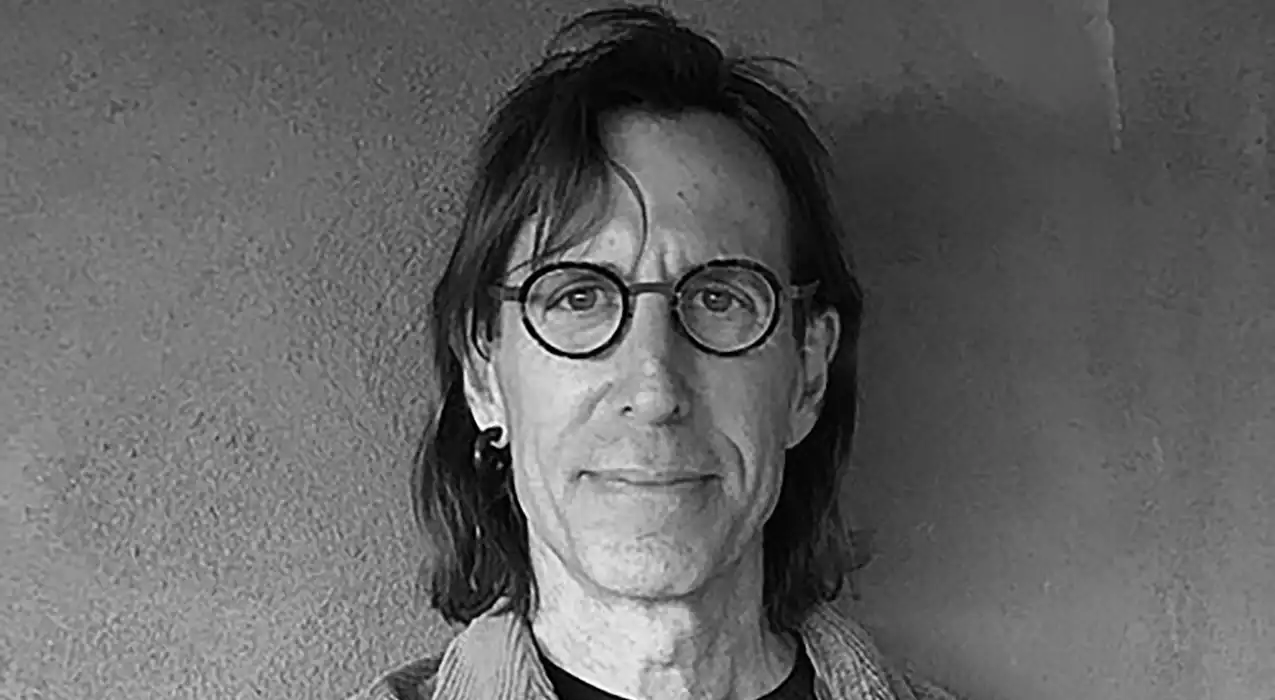

I. The Prestidigitator at the Edge of the World
In the landscape of contemporary ecological philosophy, David Abram cuts a figure both enigmatic and essential. He is not a scientist in the conventional sense, tallying parts per million of carbon dioxide or cataloguing extinction rates, though his work is intimately concerned with the biological collapse of the biosphere. Nor is he a typical academic philosopher, content to dissect propositions in the sterile air of the seminar room, though he holds a doctorate and occupies a unique space in the lineage of European phenomenology.
Listen to an Audio overview of this essay
David Abram is, by his own definition, a cultural ecologist and a geophilosopher, but perhaps most crucially, he is a sleight-of-hand magician.1 This is not a trivial biographical footnote; it is the skeleton key to his entire intellectual project. For Abram, the magician is not merely an entertainer but a technician of perception—an individual who understands the fluid, participatory nature of the senses and how the human nervous system negotiates reality with the world around it.1
His life’s work has been a sustained attempt to perform a planetary sleight-of-hand, or rather, a “counter-spell.” He argues that Western civilisation has fallen under a potent enchantment—the spell of the alphabet and the written word—which has trapped the human mind inside a self-referential hall of mirrors, severing our ancient, visceral connection to the animate earth.3 His mission is to snap his fingers, to break the trance of abstraction, and to redirect the gaze of the species back to the breathing, sensuous terrain that sustains us.
The urgency of Abram’s work cannot be overstated. As the planet enters the Anthropocene—or what Abram, with characteristic poetic precision, has recently termed the “Humilocene,” the epoch of humility 2—his thesis suggests that our ecological crisis is not primarily a problem of technology or policy, but of perception. We are destroying the earth because we can no longer see it. We see only “resources,” “timber,” and “real estate” where we once saw a community of subjects: the “more-than-human world”.2
This report offers an exhaustive examination of Abram’s life, his philosophical contributions, and the controversies that trail in his wake. It explores his journey from the magic shops of New York to the rice paddies of Indonesia; his synthesis of Merleau-Ponty’s phenomenology with indigenous animism; and the fierce debates regarding Romanticism, the “Noble Savage,” and the validity of his critique of literacy.
II. The Education of a Sorcerer
The Magician’s Genesis
Born in 1957 in the suburbs of Nassau County, New York, Abram’s early life was marked by a fascination with the hidden and the tactile.5 While his peers might have been drawn to the explicit wonders of space travel or the mechanical certainty of engineering, Abram found himself drawn to the shadows, to the gaps in perception where magic occurs. He began practising sleight-of-hand magic at a young age, eventually working professionally in clubs and restaurants throughout his university years at Wesleyan.5
This vocation instilled in him a profound scepticism regarding the “objectivity” of the senses. A magician knows, better than anyone, that what we see is not a camera-like recording of reality, but a dynamic construction. The eye can be led; the attention can be suspended. If the senses could be manipulated to create an illusion of impossibility, Abram reasoned, they could also be tuned to reveal deeper possibilities. The magician stands at the threshold of the visible and the invisible, a position that would later define his philosophical stance.1
The Fellowship and the Fieldwork
Upon graduating from Wesleyan, Abram did not immediately retreat to the ivory tower. Instead, he embarked on a journey that would fundamentally alter the trajectory of environmental philosophy. Secured by a Watson Fellowship and later a grant from the Rockefeller Foundation, he set out to study the relationship between magic and medicine in indigenous cultures in Southeast Asia, specifically Indonesia (Java and Bali) and Nepal.1
His initial hypothesis was sociological: he wished to understand how traditional sorcerers—dukuns in Indonesia, jhankris in Nepal—utilised sleight-of-hand techniques in their healing rituals. Did they use flash powder and hidden pockets to trick their patients into health? Was it a placebo effect induced by theatricality?.7
What he found was far more complex. In the humid, teeming rainforests of Java and the terraced rice paddies of Bali, Abram discovered that the “magic” of these practitioners was not supernatural, but supremely ecological. The village magician was not merely a healer of human ailments; he was an intermediary between the human community and the “more-than-human” community of the forest, the volcano, and the river.1
Abram observed that when a villager fell ill, the healer would often diagnose the malady as a result of a disruption in the web of relations between the person and the land. Perhaps the villager had taken too much firewood from a certain grove, or dammed a stream without making the necessary offerings to the spirits of the water. The “spirits,” Abram realised, were not immaterial ghosts floating in a transcendent heaven. They were the distinct, sentient presences of the land itself. The spirit of the river was the river, experienced as a volitional, communicative agency.8
The Logic of the Others
In one pivotal instance during his fieldwork, Abram lived in a compound in Bali where he began to notice the profound attentiveness of the local people to the non-human world. He writes of how the women would leave offerings of rice at the edge of the compound for the “spirits.” Abram, with his Western scientific training, initially viewed this as superstition.
However, he soon noticed that the offerings were quickly consumed by legions of ants. He realised that the ritual was not just symbolic; it was functional. By feeding the ants at the perimeter, the villagers kept them out of the house. The “offering” was a diplomatic negotiation with the insect world, a way of maintaining a boundary through reciprocity rather than extermination. The “magic” was a form of interspecies communication.9
This was the revelation that would anchor his career: “Magic” is the ability to shift one’s consciousness out of the human-centred feedback loop and participate in the wider intelligence of the biosphere. The shaman is the diplomat of the wild, ensuring that the human village does not take more than the land can give, and that the balance of the ecosystem is maintained through a constant exchange of respect, offerings, and awareness.1
In Nepal, amidst the towering silence of the Himalayas, Abram deepened this understanding. He spent time with Tibetan lamas and traditional shamans who spoke of the mountains not as geological formations, but as potent, brooding personalities. He began to experience the “synesthesia” of oral culture—where the wind has a voice, and the rock has a gaze. He found that when he ceased to view the world as a collection of inert objects, his own senses woke up. He could hear more, see more, and feel more. The landscape became a “speaking land”.10
The Return and the Rupture
The true shock came when Abram returned to the United States. He describes the experience as a form of sensory trauma. Stepping back into the urbanised, electrified West, he felt the world fall silent. The cars, the billboards, and the concrete did not speak back. He observed that his fellow Americans seemed to be walking through a dead world, their attention entirely absorbed by human-made surfaces—screens, pages, signs. They were oblivious to the birds, the wind, and the texture of the ground.11
He realised that Western civilisation suffered from a collective perceptual disorder. We had severed the vocal cords of the earth. We had retreated into a purely human dimension, a “house of language” that had no windows onto the wild. This “great severance” became the subject of his doctoral research at the State University of New York (SUNY) at Stony Brook, where he sought a philosophical language that could explain how we had lost our senses.5
III. The Philosophical Turn: Phenomenology and the Flesh
To articulate the experience of the animate earth, Abram turned to the European tradition of Phenomenology. While Anglo-American philosophy (Analytic philosophy) was obsessed with logic and linguistics, Phenomenology—spearheaded by Edmund Husserl and later radicalised by Maurice Merleau-Ponty—was concerned with the “lived experience” of the world.10
The Legacy of Merleau-Ponty
Abram found his intellectual father in Maurice Merleau-Ponty, the French philosopher who argued for the “primacy of perception.” Merleau-Ponty challenged the Cartesian dualism that separated the “mind” (res cogitans) from the “body” (res extensa). Descartes had famously argued, “I think, therefore I am,” locating existence in the abstract realm of thought.
Merleau-Ponty countered that we are not minds in bodies, but “body-subjects.” We know the world not because we think about it, but because we are of it. Our body is made of the same “flesh” as the world. When I touch a tree, the tree is also touching me. Perception is not a one-way street; it is a reciprocity, a “chiasm” or crossing-over between the perceiver and the perceived.12
Abram took Merleau-Ponty’s concept of “The Flesh” and expanded it ecologically. If perception is participation, then to perceive the world is to enter into a relationship with it. We are not spectators looking at a picture; we are participants in a breathing field. The air we breathe is the same air the trees exhale. The gravity that pulls us is the earth embracing us. Abram argued that Merleau-Ponty’s philosophy was an “incipient ecology,” a way of thinking that could heal the rift between culture and nature.12
The More-Than-Human World
It was during this period that Abram coined the phrase that has since become a cornerstone of environmental humanities: the “more-than-human world”.2 He deliberately avoided the term “non-human,” which defines nature by what it is not (a negation), and “environment,” which implies a passive backdrop that surrounds us.
“More-than-human” suggests that the human world is a subset of a larger, wilder order. It implies that the human is derivative of the earth, not the other way around. It is a phrase that demands humility, placing the human species back within the “commonwealth of breath” alongside the wolf, the spider, and the storm cloud.2
IV. The Spell of the Sensuous: A Thesis of Enchantment
In 1996, Abram published The Spell of the Sensuous: Perception and Language in a More-than-Human World. The book was a sensation, bridging the gap between academic philosophy and nature writing. It won the Lannan Literary Award and established Abram as a visionary voice.1 The central thesis of the book is an investigation into the origins of the “Great Severance.” If humans are naturally animists—if our nervous systems are wired to converse with the land—how did we become so alienated?
Abram places the blame—or at least the causal weight—on a specific technology: the phonetic alphabet.4
The Technology of the Alphabet
Abram argues that for tens of thousands of years, human culture was oral. In oral cultures, language is a physical event. Words are sounds shaped by the breath, spoken in a specific place, to a specific audience (human or non-human). In these cultures, language is tied to the landscape. Stories are “held” by the mountains and rivers. To pass a certain rock is to recall the story associated with it. The land acts as a mnemonic device, a memory palace that sustains the culture.15
With the invention of writing, this changed. However, Abram distinguishes between different forms of writing. Pictographic scripts (like Egyptian hieroglyphs or early Chinese ideograms) still retain a visual link to the world. The character for “sun” looks somewhat like the sun. The character for “tree” resembles a tree. The reader is still reminded of the sensible world.17
The rupture occurred with the Semitic aleph-beth and its subsequent adoption and modification by the Greeks.
The Ox and the Alpha
Abram offers a fascinating genealogy of the letter ‘A’. In the ancient Semitic alphabet, the first letter was Aleph. The word Aleph is the Hebrew word for “Ox.” The written character was a stylized drawing of an ox’s head (a triangle pointing down, with horns). When a reader saw the letter, they said the sound, but they also saw the animal. The script was still tethered to the more-than-human world.17
However, when the Greeks adopted this alphabet, they made two crucial changes. First, they rotated the characters (the ox head turned upside down to become the Greek Alpha, and eventually the Roman ‘A’). Second, and most importantly, the name of the letter lost its worldly referent. Alpha means nothing in Greek except the letter itself. It does not mean “ox” or “house” or “camel.”
For the first time in history, humans had a system of communication that referred entirely to itself. The letters referred to human speech sounds, not to the world. We could now read a page of text without ever thinking of a physical object in nature. We entered the “house of language” and locked the door.4
Synesthesia Hijacked
Abram argues that the act of reading is a form of synesthesia—a crossing of the senses. We look at dead black marks on a white page, and we “hear” voices. We see visions. We feel emotions. We are animating the inert page.
Abram suggests that this is not a new skill, but an old one redirected. Our ancestors used this same “reading” skill to track a deer, to read the weather in the clouds, to understand the message of a bird’s cry. We have not lost our animistic capacity; we have simply transferred it from the landscape to the text. We now hallucinate with books (and screens) rather than with the land. The “spell” of the sensuous has been replaced by the “spell” of the written word.14
Table 1: The Phenomenology of Oral vs. Literate Cultures (Derived from Abram)
| Feature | Oral / Indigenous Culture | Literate / Alphabetic Culture |
| Locus of Meaning | The landscape (topography), animals, weather phenomena. Meaning is “out there.” | The text, the library, the abstract concept. Meaning is “in here” (mind/book). |
| Time Perception | Cyclical (seasons, day/night). Time is a round dance or a pool. | Linear (historical timeline, progress). Time is a vector or arrow. |
| Language | Breath-borne, ephemeral, somatic. Words are powers/actions. | Fixed, visible, archival. Words are objects/things. |
| Relation to Nature | Subject-to-Subject (I-Thou). Nature speaks and has agency. | Subject-to-Object (I-It). Nature is mute matter/resources. |
| Truth | Relational / Situational. Truth is “right relationship” with the context. | Universal / Objective. Truth is a static fact valid everywhere. |
V. Becoming Animal: The Physics of Perception
Fourteen years after The Spell of the Sensuous, Abram released his second major work, Becoming Animal: An Earthly Cosmology (2010). If his first book was a diagnosis of the disease (literate alienation), this second volume was the prescription for the cure.6
Written in a more lyrical, experimental style, Becoming Animal is a phenomenological guidebook. It attempts to teach the reader how to reinhabit their animal body.
The Commonwealth of Breath
One of the central insights of this work is the “Commonwealth of Breath.” Abram meditates on the atmosphere, noting that the air is the most forgotten element. We treat it as empty space, a void through which we move. But for Abram, the air is a thick, fluid medium that connects all living things. The air I exhale is inhaled by the oak tree; the oxygen the oak releases becomes my blood.20
He points out the linguistic connection between “spirit” and “air.” In Hebrew (ruach), Greek (pneuma), Latin (spiritus), and Navajo (nilch’i), the word for “mind” or “spirit” is identical to the word for “wind” or “breath”.20 He argues that our ancestors experienced the mind not as a private computer inside the skull, but as a collective field—the wind—in which we all participate. To be “inspired” is literally to breathe in.
Gravity as Eros
Abram also reframes the laws of physics. He describes gravity not as a mechanical force, but as a form of desire—Eros. We do not “fall” because of a mathematical equation; we fall because the earth desires us, and we desire the earth. Our bodies are heavy with love for the ground. This erotic reimagining of physics is typical of Abram’s strategy: he seeks to re-enchant the scientific worldview without denying its validity, adding a layer of felt experience to the mathematical fact.19
The Shadow and the House
The book also contains a profound meditation on the “House.” Abram contrasts the rectilinear geometry of the modern house—with its flat floors and right angles—with the chaotic, fractal geometry of the wild. He argues that the house is a “second skin” we have built to protect ourselves from the overwhelming diversity of the wild. However, this protection has become a prison. We have become “indoor” species, and our thoughts have become “indoor” thoughts—linear, predictable, and safe. To “become animal” is to venture out of the house, to allow the shadow and the unknown to penetrate our awareness.21
VI. The Critical Landscape: Controversies and Rebuttals
Despite the acclaim, David Abram’s work has been a lightning rod for criticism. His interdisciplinary approach—blending anthropology, philosophy, linguistics, and magic—invites scrutiny from specialists in each field.
1. The Spectre of the “Noble Savage”
The most persistent and damaging critique levelled against Abram is that he peddles the myth of the “Ecologically Noble Savage.” Critics, including some anthropologists and historians, argue that Abram presents an idealised, sanitised version of indigenous life.22
The argument is that Abram creates a binary opposition: the “fallen,” alienated Westerner versus the “pure,” ecologically harmonic Indigene. Critics point out that indigenous peoples have also caused extinctions (such as the megafauna die-offs in the Pleistocene) and that “animism” does not always equate to conservation. By portraying indigenous people as inherently “spiritual” and “earth-connected,” critics argue, Abram denies them their complexity, their history, and their capacity for error. It is a form of “positive racism” that freezes indigenous people in a timeless, romantic past.24
Abram’s Rebuttal: Abram has vigorously defended himself against this charge. He argues that he is not making a claim about moral perfection, but about technological orientation. He asserts that while indigenous people are flawed human beings like anyone else, their cultures possess “technologies of restraint”—stories, taboos, and rituals—that act as a check on human hubris.8
He cites the specific ethnographies of Keith Basso (Western Apache) and Richard Nelson (Koyukon) to show that his claims are grounded in detailed fieldwork, not vague romanticism.26 He argues that dismissing indigenous wisdom as “Noble Savage” fantasy is often a cynical ploy by Western academics to avoid confronting the reality that other cultures have managed to live more sustainably than we have.28
2. The Cultural Appropriation Debate
Closely linked to the “Noble Savage” charge is the accusation of cultural appropriation. Is it ethical for a white, Jewish-American academic to build a career interpreting and selling the spiritual insights of Indonesian shamans and Native American elders?.24
The Defense: Abram’s defenders argue that he models “allyship” rather than appropriation. He does not claim to be a shaman; he claims to be a philosopher learning from them. He consistently directs attention and credit back to his teachers and supports indigenous land rights struggles. Furthermore, Abram argues that the “animistic” mode of perception is not the property of one race; it is the birthright of the human species—a biological capacity that lies dormant in everyone.30
3. The Anti-Literacy Paradox
Scholars in literary studies have pointed out the irony of writing a 300-page book to critique the written word. If writing is the cause of our alienation, why is Abram writing?.31
Abram’s Nuance: Abram clarifies that he is not a Luddite. He does not want to abolish the alphabet. He acknowledges that writing is a powerful form of magic that has given us science, democracy, and literature. His goal is “literate animism.” He wants us to use the alphabet to point back to the world, rather than to replace it. He wants us to be “bilingual”—fluent in the abstract language of the text, but also fluent in the wind and the rain. He envisions a culture where we can step in and out of the “book” at will, rather than being trapped inside it.14
4. The Toadvine Debate: Phenomenological Technicalities
In the pages of the journal Environmental Ethics, the philosopher Ted Toadvine engaged Abram in a rigorous technical debate. Toadvine argued that Abram’s desire for a “pre-reflective” contact with nature is a fantasy. He suggested that human perception is always mediated by language and reflection. To claim we can access a “pure” nature before language is to misunderstand the human condition.28
Abram’s Reply: Abram countered that Toadvine was confusing “reflection” with “abstraction.” Abram argued that oral cultures are highly reflective—they think deeply—but their reflection happens in the world, in dialogue with the land. He rejected the idea that we are trapped in language, insisting on the primacy of the “flesh”—the silent, somatic contact that precedes all words. He argued that to deny this is to trap philosophy inside the human skull.28
VII. Current Work: The Alliance for Wild Ethics and the Humilocene
In recent years, Abram has moved from pure philosophy to activism. In 2006, he co-founded the Alliance for Wild Ethics (AWE), a consortium of thinkers and activists dedicated to “depth ecology”.1 AWE works to articulate a cultural response to climate change, arguing that data alone will not save us. We need a shift in the “erotic” relationship to the earth—we will only save what we love.32
The Humilocene
Abram has recently proposed a renaming of the current geological epoch. While “Anthropocene” (The Age of Man) has gained traction, Abram finds it arrogant, as it centres the human agent yet again. He suggests the “Humilocene”—derived from humus (earth/soil) and humility. This epoch, he argues, will be defined by the necessary humiliation of the human species as we are forced by the climate to recognise our dependence on the biosphere.2
He is currently working on a new book tentatively titled The Commonwealth of Breath or Earthly Wonder, focusing on the atmosphere and the metaphysics of breathing.1 He also holds a fellowship at Harvard University, bringing his radical animism into the centre of the academic establishment, a sign that the crisis of the times has made his once-fringe ideas increasingly central to the discourse.6
VIII. Conclusion: The Magician’s Encore
David Abram stands as a singular figure in the attempt to heal the modern mind. He is a bridge-builder: between the indigenous and the academic, the magical and the scientific, the oral and the literate.
His thesis is challenging. It asks us to accept that the silence of the world is an illusion created by our tools. It asks us to believe that the ground beneath our feet is sensuate, that the wind is thinking, and that the letters on this page are stealing our souls unless we are careful.
The strength of his work lies not in its empirical provability—one cannot “prove” that a mountain is listening—but in its pragmatic efficacy. As Abram suggests, a culture that treats the earth as a pile of inert resources will inevitably destroy it. A culture that treats the earth as a “Thou”—a speaking, feeling subject—might just survive.
In the end, Abram remains the magician. He knows that reality is a matter of attention. For centuries, we have been staring at the mirror of our own minds. Abram gently takes our chin and turns our face toward the window, to the rain falling on the glass, to the green chaos beyond, and whispers: Look. It is looking back.
Detailed Analysis of Key Concepts
The Mechanics of the “Great Severance”
Abram’s analysis of the alphabet is not merely historical; it is a form of cognitive archaeology. He details how the process of reading short-circuits the brain’s innate tendency to animate the world.
- The Animistic Instinct: The human brain is hard-wired to detect agency. When we see a shape in the grass, we wonder if it is a snake. When we hear a sound, we ask “Who is there?” This is an evolutionary survival mechanism.
- The Hijacking: Reading recycles this instinct. When we look at black squiggles on a page, our brain “animates” them—we hear voices, see visions, and feel emotions. The letters “speak” to us. The “magic” of reading is that it hacks the brain’s animistic wiring.14
- The Consequence: Because the text effectively satisfies our need for animistic engagement, we withdraw that projection from the landscape. The trees and rivers fall silent because our animistic attention is fully absorbed by the book (and now, the smartphone). We have a finite amount of “animistic energy,” and the alphabet consumes it all.4
The Role of the Magician in Ecology
Abram’s background in magic provides a unique insight into the “ecology of perception.” He argues that stage magic works because the senses are expectant; they fill in the gaps.
- The Metaphor: Just as a magician uses gesture and gaze to direct the audience’s attention away from the secret move, technology uses bright lights and constant stimulation to direct our attention away from the deterioration of the biosphere.
- The Counter-Magic: The role of the ecological philosopher is to perform “counter-magic”—to use language to break the spell of the machine and redirect attention back to the “more-than-human” world. Abram writes not to inform, but to evoke. His prose is designed to be a “spell” that wakes the reader up.12
Table 2: Abram’s Critical Reception Matrix
| Critic / School | Core Criticism | Abram’s Counter-Argument |
| Anthropologists (e.g., Redford) | “Noble Savage” Myth: Idealizes indigenous people; ignores historical over-hunting/alteration of land. | Phenomenological Focus: Not claiming moral purity, but perceptual difference. Oral structures inherently demand reciprocity with the land. |
| Literary Critics | Appropriation: A white academic using indigenous wisdom for his own career/theories. | Allyship & Universality: Animism is a human trait, not just indigenous. He credits sources (Basso, Nelson) and supports indigenous sovereignty. |
| Phenomenologists (Toadvine) | Pre-reflective Fallacy: We cannot access a world “before” language; we are always mediated by concepts. | Corporeal Reflection: There is a “flesh” deeper than words. Oral cultures reflect with the world, not apart from it. |
| Biologists / Materialists | Romanticism / Anti-Science: Animism is superstition. Rocks do not have “minds.” | Panpsychism / Radical Empiricism: Science ignores the “lived experience.” Matter is vibrant and self-organizing. “Mind” is a property of the field, not the brain. |
IX. Deeper Insights: The Ripple Effects of Abram’s Work
1. The Precursor to New Materialism
While Abram was writing in the 1990s, his work prefigured the explosion of “New Materialism” and “Object-Oriented Ontology” (OOO) in the 2010s. Thinkers like Jane Bennett (Vibrant Matter) and Timothy Morton (Dark Ecology) have since popularised the idea that matter is not passive but active and agentic. Abram’s work provides the phenomenological grounding for this shift. While OOO often relies on abstract theory, Abram provides the somatic practice—the feeling of the vibrant matter.13
2. The Solution to “Eco-Anxiety”
Abram’s work offers a potent reframing of “eco-anxiety” or “climate grief.” In the Western model, grief is a private pathology inside the individual. In Abram’s “commonwealth of breath,” grief is the earth feeling itself through the human instrument. The pain we feel for the dying forest is not “our” pain; it is the forest’s pain, felt by us. This reframing removes the pathology and turns grief into a form of connection and solidarity. It suggests that feeling pain for the world is a sign of mental health, not illness, because it proves the connection is still intact.35
3. The Future of Language
Abram’s critique of the alphabet implies a future trajectory for human communication. If the alphabet alienated us, could new media restore us? Or will it worsen the severance?
- Abram is sceptical of the digital. He views the screen as an intensification of the alphabet’s trap—a “second-order” abstraction.
- However, his work implies that a return to “orality”—perhaps through audiobooks, podcasts, and spoken word—might be a path to re-engaging the auditory/somatic centres of the brain. The “return of the ear” in digital culture (podcasts) might be an unexpected ally in his project of recovering oral awareness.15
Works cited
- David Abram – Aspen Global Change Institute,https://www.agci.org/people/0034x000013tCEXAA2/david-abram
- David Abram | Center for Humans & Nature,https://humansandnature.org/david-abram/
- The Spell of the Sensuous Summary and Study Guide – SuperSummary,https://www.supersummary.com/the-spell-of-the-sensuous/summary/
- Book Review: The Spell of the Sensuous by David Abram – Sam Woolfe,https://www.samwoolfe.com/2016/06/book-review-spell-of-the-sensuous-by-david-abram.html
- David Abram Facts for Kids,https://kids.kiddle.co/David_Abram
- David Abram – Wikipedia,https://en.wikipedia.org/wiki/David_Abram
- No Going Back, Coming Full Circle: “The Spell of the Sensuous,” by David Abram,https://jungpage.org/learn/articles/book-reviews/876-no-going-back-coming-full-circle-qthe-spell-of-the-sensuousq-by-david-abram
- Book Review: The Spell of the Sensuous – The Spiritual Naturalist Society,https://www.snsociety.org/book-review-the-spell-of-the-sensuous/
- the spell – Shikshantar,https://shikshantar.org/sites/default/files/PDF/spell_of_the_sensuous.pdf
- David Abram, The Spell of the Sensuous: Perception and Language in a More-Than-Human World – Reading and Walking,https://readingandwalking.ca/2021/07/12/david-abram-the-spell-of-the-sensuous-perception-and-language-in-a-more-than-human-world/
- Jonathan Dawson’s reviews of The Spell of the Sensuous, by David Abram, and The Other Side of Eden, by Hugh Brody – Feasta,https://www.feasta.org/documents/review2/spell_eden.htm
- Merleau-Ponty and the Voice of the Earth – David Abram,https://www.davidabram.org/essays/magic-and-machine-65hd4-fj357-c3fbd
- “Relating to the Worlds at Hand” Inaugural Panel 2025 – Mind and Life Europe,https://mindandlife-europe.org/events/inaugural-panel-2025/
- Dr. David Abram – The Spell of Literacy – Children of the Code,https://childrenofthecode.org/interviews/abram.htm
- Honoring the Wild Proliferation of Earthly Perspectives – with Merlin Sheldrake and David Abram – Emergence Magazine,https://emergencemagazine.org/conversation/honoring-the-wild-proliferation-of-earthly-perspectives/
- Brief Notes on David Abram’s “Becoming Animal” | how to save the world – Dave Pollard,https://howtosavetheworld.ca/2010/08/29/brief-notes-on-david-abrams-becoming-animal/
- DEPTH OF ATTENTION / David Abram & Anders Dunker – Forfatternes klimaaksjon,https://forfatternesklimaaksjon.no/2022/08/12/depth-of-attention-david-abram-anders-dunker/
- THE SINUOUS CALLIGRAPHY OF RIVERS – TEETH, FEET & FINGERS,https://teethfeetandfingers.wordpress.com/2019/06/24/the-sinuous-calligraphy-of-rivers/
- Becoming Animal by David Abram: 9780375713699 | PenguinRandomHouse.com: Books,https://www.penguinrandomhouse.com/books/318/becoming-animal-by-david-abram/
- Mind Matters Talk with David Abram – Mind and Life Europe,https://mindandlife-europe.org/events/mind-and-life-on-a-breathing-planet/
- The Beauty of a Difficult Read: A Review of ‘Becoming Animal’ – Earthzine,https://earthzine.org/the-beauty-of-a-difficult-read-a-review-of-becoming-animal/
- Be true to the earth – Faculty of Arts,https://arts.monash.edu/__data/assets/pdf_file/0007/1761199/issue12.pdf
- The Other Geography: Representations of the Turkish Landscape in English Travel Writings | Ağustos 2007, Cilt 71 – Sayı 261 | Belleten,https://belleten.gov.tr/tam-metin/2726/eng
- More than Stories, More than Myths: Animal/Human/Nature(s) in Traditional Ecological Worldviews – MDPI,https://www.mdpi.com/2076-0787/6/4/78
- The Ecology of Enchantment: David Abram’s Earth-Centered Philosophy -,https://gettherapybirmingham.com/the-ecology-of-enchantment-david-abrams-earth-centered-philosophy/
- The Kinship Project | Center for Humans & Nature,https://humansandnature.org/the-kinship-project/
- casting for conservation: religion, popular culture, and the – UNIVERSITY OF FLORIDA THESIS OR DISSERTATION FORMATTING TEMPLATE,https://ufdcimages.uflib.ufl.edu/UF/E0/02/28/13/00001/snyder_s.pdf
- Between the Body and the Breathing Earth: A Reply – David Abram,https://www.davidabram.org/essays/magic-and-machine-65hd4-fj357-5886a
- Human-Nature Relationship And Faery Faith In The American Pagan Subculture – UVM ScholarWorks,https://scholarworks.uvm.edu/cgi/viewcontent.cgi?article=1401&context=graddis
- Earthbound in the Anthropocene: Spirituality, Collective Identity, and Participation in the Direct Action Climate Movement – PDXScholar,https://pdxscholar.library.pdx.edu/cgi/viewcontent.cgi?article=7509&context=open_access_etds
- Featured: Becoming Animal by David Abram [Vol. 4, #1] – The Englewood Review of Books,https://englewoodreview.org/featured-becoming-animal-by-david-abram-vol-4-1/
- Annual Confluence 2024 – Animate Earth,https://animate-earth.org/animate-earth-annual-confluence-2024/
- Dr. David Abram – Google Scholar,https://scholar.google.com/citations?user=F1sVZMwAAAAJ&hl=en
- earth & gaia — Essays by David Abram,https://www.davidabram.org/essays/tag/earth+%26+gaia
- What David Abram’s Environmental Philosophy Can Teach Us – Sonic Acts | Archive,https://sonicacts.com/archive/under-the-spell-of-the-sensuous
- haagen_daz’s review of The Spell of the Sensuous – BookWyrm,https://bookwyrm.social/user/haagen_daz/review/39113/s/review-of-the-spell-of-the-sensuous-on-goodreads
- 1. Crafting in a more-than-human world – Scandinavian University Press,https://www.scup.com/doi/full/10.18261/9788215069197-23-01
References (my apologies as my referencing got totally out of kilter and time not available to sort it out at present – Kevin Parker)
- 1 AGCI. “David Abram biography.”
- 2 Humans and Nature. “David Abram.”
- 6 Wikipedia. “David Abram.”
- 15 Emergence Magazine. “Honoring the Wild Proliferation of Earthly Perspectives.”
- 3 SuperSummary. “The Spell of the Sensuous Summary.”
- 4 Sam Woolfe. “Book Review: The Spell of the Sensuous.”
- 7 Jung Page. “No Going Back, Coming Full Circle.”
- 16 How to Save the World. “Brief Notes on David Abram’s Becoming Animal.”
- 19 Penguin Random House. “Becoming Animal.”
- 12 David Abram. “Magic and the Machine.”
- 10 Reading and Walking. “David Abram The Spell of the Sensuous.”
- 28 David Abram. “Between the Body and the Breathing Earth.”
- 8 SN Society. “Book Review: The Spell of the Sensuous.”
- 11 Feasta. “The mistaken turning on humankind’s path.”
- 35 Sonic Acts. “Under the Spell of the Sensuous.”
- 31 Englewood Review. “Becoming Animal by David Abram.”
- 14 Children of the Code. “Dr. David Abram – The Spell of Literacy.”
- 6 Wikipedia. “David Abram Education.”
- 5 Kiddle. “David Abram Facts.”
- 22 Arts Monash. “Criticism Romanticism Noble Savage.”
- 23 Belleten. “Turkish Landscape and Noble Savage.”
- 34 David Abram. “Animism, Perception, and Earthly Craft.”
- 33 Google Scholar. “David Abram Citations.”
- 10 Reading and Walking. “Fieldwork Indonesia Nepal.”
- 20 Mind & Life Europe. “Mind and Life on a Breathing Planet.”
- 9 Shikshantar. “Spell of the Sensuous PDF.”
- 26 Humans and Nature. “The Kinship Project.”
- 24 MDPI. “Noble Savage Criticism.”
- 36 BookWyrm. “Review of The Spell of the Sensuous.”
- 25 Get Therapy Birmingham. “The Ecology of Enchantment.”
- 18 Teeth Feet and Fingers. “Aleph Ox Head.”
- 17 Forfatternes Klimaaksjon. “Depth of Attention.”
- 1 AGCI. “Book on Earthly Wonder.”
- 27 UFDC Images. “Keith Basso Influence.”
- 9 Shikshantar. “Richard Nelson Influence.”
- 25 Get Therapy Birmingham. “Noble Savage Critique.”
- 21 Earthzine. “The Beauty of a Difficult Read.”
- 24 MDPI. “Cultural Appropriation Critique.”
- 29 ScholarWorks UVM. “Paganism and Cultural Appropriation.”
- 30 PDX Scholar. “Indigenous Identity and Appropriation.”
- 32 Animate Earth. “Alliance for Wild Ethics.”
- 13 Mind & Life Europe. “Inaugural Panel 2025.”
- 37 SCUP. “Alliance for Wild Ethics History.”
- 28 David Abram. “Between the Body and the Breathing Earth: A Reply.”