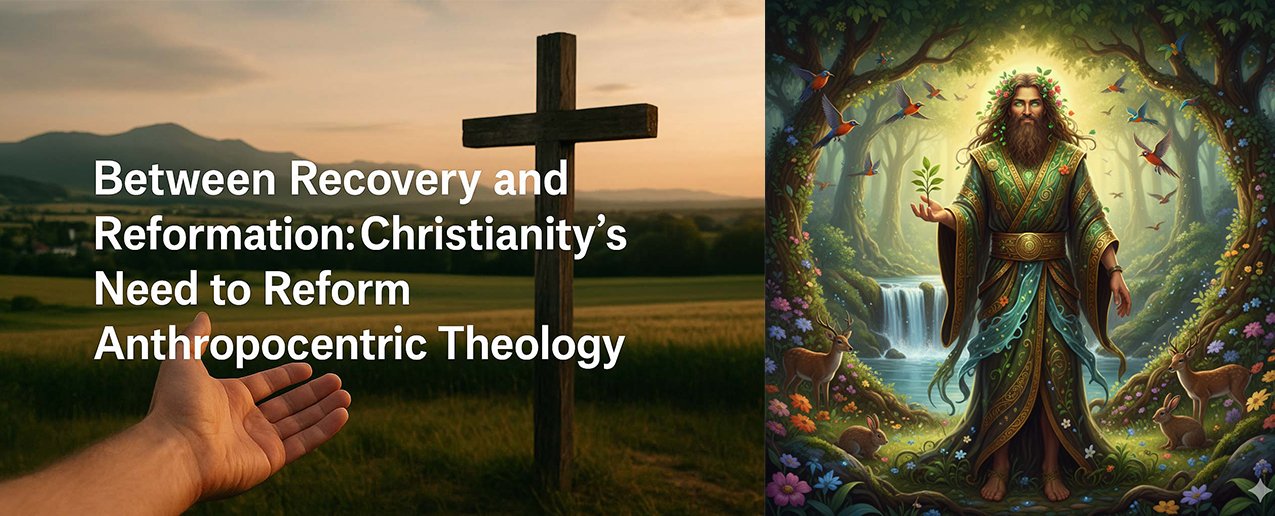

The question of whether Christianity can become genuinely “green” forces us into uncomfortable theological and philosophical territory. It requires confronting not merely lapses in practice but potential flaws in foundational doctrine, while simultaneously excavating buried wisdom that mainstream Christianity has systematically suppressed. The tension between recovering lost traditions and fundamentally reforming Christian theology represents more than academic debate—it reveals whether Christianity possesses resources adequate to the ecological emergency we face, or whether its core architecture remains fundamentally incompatible with ecocentric ethics.
The Case for Recovery: Excavating the Suppressed Tradition
Those arguing for recovery rather than reformation point to a rich vein of creation-centered spirituality running through Christian history, consistently marginalized by institutional power but never entirely extinguished. This counter-tradition suggests Christianity already contains the ecological wisdom needed; the task is retrieval, not reinvention.
Celtic Christianity offers perhaps the most compelling example. The early Irish and Scottish monks developed a theology of creation as continuous divine theophany—nature itself as sacred text. The Carmina Gadelica prayers address sun, moon, elements, and creatures as participants in sacred order. Pelagius, condemned as heretic partly for emphasizing creation’s inherent goodness against Augustinian original sin, represents theological roads not taken. This Celtic stream treated thin places where heaven and earth interpenetrate not as supernatural intrusions but as recognition of creation’s intrinsic sacredness.
Francis of Assisi represents another suppressed possibility. His radical kinship with “Brother Sun,” “Sister Moon,” and “Sister Death” transcended mere metaphor. Francis preached to birds, negotiated with wolves, and experienced all creation as family rather than resource. The Canticle of the Creatures presents nature not as backdrop for human drama but as community of subjects praising their creator. Significantly, the Church managed Francis by domesticating his radicalism—channeling it into acceptable mysticism while ensuring mainstream theology remained anthropocentric and hierarchical.
Hildegard of Bingen’s concept of viriditas—the greening power of divine creativity perpetually flowing through creation—offered theological grounding for nature’s sacred vitality. Her visions presented cosmic interconnection, the human microcosm reflecting the macrocosm, ecology as sacred order. Yet Hildegard too was marginalized, her theological sophistication buried under institutional suspicion of visionary women.
Orthodox Christianity maintains what Western churches largely abandoned: a theology of cosmic transfiguration. The Eastern tradition holds that Christ’s incarnation and resurrection initiated the transformation of all materiality, not merely human souls. Creation groans awaiting redemption not because it is fallen and worthless but because it participates in humanity’s journey toward deification. This sacramental cosmology sees divine energies permeating nature, making environmental destruction literal desecration.
The recovery argument gains force when we recognize how systematically these traditions were suppressed. The Celtic church’s defeat by Roman Christianity at Whitby, the persecution of Creation Spirituality advocates like Matthew Fox, the marginalization of Franciscan radicalism, the suspicion directed at nature mystics—all suggest institutional Christianity deliberately chose anthropocentrism and dualism over alternatives already present within the tradition. If this genealogy is accurate, Christianity’s environmental failure represents betrayal of its own deepest wisdom rather than inevitable consequence of its theology.
Contemporary movements like Creation Spirituality, deep incarnational theology, and Pope Francis’s Laudato Si’ attempt such recovery. They argue Christianity’s ecological resources were always there, buried under centuries of Cartesian dualism, Baconian instrumentalism, and colonial theology. The Papal encyclical’s concept of “integral ecology” connecting environmental degradation with social injustice suggests Christianity can address our current crisis without abandoning orthodox doctrine—merely by emphasizing neglected strands already woven through tradition.
The Case for Reformation: The Irredeemable Core
Yet this recovery narrative may be too optimistic, underestimating how deeply anthropocentrism and dualism structure Christian theology at foundational levels. The reformation argument holds that Christianity’s ecological failures stem not from betrayed wisdom but from core doctrines incompatible with genuine ecocentrism.
Consider Genesis itself. Even granting that “dominion” might be reinterpreted as stewardship and “subdue” as careful cultivation, the text remains unambiguously hierarchical. Humans are created imago Dei, uniquely positioned between creator and creation, possessing rational souls and eternal destinies denied to other creatures. This exceptional status—however benevolently exercised—establishes nature as fundamentally other and subordinate. The garden exists for Adam; animals are brought to him for naming, establishing linguistic and therefore cognitive mastery. Even in stewardship readings, humans remain owners’ representatives managing divine property, not participants in creaturely community.
The dualism runs deeper than Cartesian overlay. Gnostic influence in early Christianity established matter as inferior to spirit, body as soul’s prison, earthly existence as exile from true home. Though mainstream Christianity rejected full Gnostic dualism, it retained matter/spirit hierarchy that devalued physical creation. Augustine’s original sin theology positioned nature as fallen, corrupted, groaning under divine curse. Salvation became evacuation from material existence rather than its transformation.
Lynn White Jr.’s thesis retains force here. By desacralizing nature—stripping away animist protections that made trees, rivers, and mountains subjects rather than objects—Christianity enabled instrumental rationality to treat nature as mere resource. Medieval Europe’s “disenchantment” preceded and facilitated industrial exploitation. The Protestant work ethic’s valorization of “improving” wilderness, transforming “waste” into productive order, provided ideological justification for treating untouched nature as offense against divine mandate.
Colonial Christianity reveals these theological structures in brutal clarity. Missionaries accompanied conquistadors and colonists, sanctifying the conquest of “empty” lands and “savage” peoples. The doctrine of terra nullius—lands belonging to no one because indigenous inhabitants lacked Christian property concepts—enabled genocidal displacement. Christian civilization’s mission to “redeem” wilderness by transforming it into productive farmland, ordered settlements, and Christian communities justified ecological destruction as divine service.
The deeper philosophical problem concerns whether stewardship theology—even in its most sophisticated forms—can support genuine ecocentrism. If nature’s value derives from its place in the human redemption narrative, or its status as divine property we must respectfully manage, has Christianity truly transcended anthropocentrism? Deep ecology insists nature possesses intrinsic value independent of any human or divine purpose. Arne Naess’s concept of ecological self—the realization that we are nature, not separate observers managing it—seems incompatible with Christianity’s human exceptionalism.
Warwick Fox’s ecocentric analysis exposes the problem sharply. Even benevolent stewardship retains the manager/managed hierarchy. Humans remain outside nature, responsible for it rather than participants within it. The very concept of stewardship presupposes distance and superiority. True ecological ethics, Fox argues, requires abandoning anthropocentric frameworks entirely—recognizing all beings’ equal right to flourish, accepting human interests as one consideration among many rather than paramount concern around which others orbit.
Christianity’s eschatology compounds the difficulty. If Earth is merely temporary stage for soul-drama, if believers await heavenly home transcending material existence, why prioritize planetary health? The Left Behind theology that captured millions of American evangelicals explicitly embraces environmental destruction as sign of prophesied end times, making ecological concern heretical interference with divine plan. While not all Christianity embraces apocalyptic escapism, the basic structure—Earth as temporary, Heaven as permanent—undermines ecological commitment at fundamental level.
Historical Complicity: The Reckoning Required
Any honest engagement with Christianity’s ecological potential must confront its active complicity in environmental destruction, not merely acknowledge theological abstractions. The historical record documents Christianity enabling, justifying, and celebrating ecological devastation across centuries and continents.
The European enclosure movements that privatized commons, destroyed subsistence agriculture, and displaced peasant populations were sanctified by Christian concepts of property and improvement. John Locke’s labor theory of property—unused land belongs to whoever makes it productive—drew explicitly on Genesis mandate to subdue Earth. Enclosure enabled agricultural intensification that degraded soil, destroyed hedgerows, eliminated wetlands, and extirpated wildlife, all in the name of Christian civilization improving God’s creation.
Colonial conservation represents particularly perverse synthesis of Christianity and environmental destruction. European powers expelled indigenous peoples from African forests, Asian grasslands, and American wilderness to create “pristine” nature reserves that served white tourist fantasies of untouched Eden. The theological logic positioned indigenous inhabitants as corrupting presence in creation, their removal necessary to restore nature to prelapsarian purity. Yellowstone’s creation required expelling Shoshone, Crow, and Blackfeet peoples who had shaped those landscapes for millennia. Africa’s great game reserves were cleared of pastoralists practicing sophisticated ecological management, replaced by colonial hunting grounds later transformed into conservation areas still excluding local communities.
Christian missions to indigenous peoples systematically destroyed ecological knowledge systems integrated with spiritual practice. Polynesian navigation informed by intimate observation of stars, currents, and wildlife; Aboriginal Australian songlines encoding environmental knowledge in ceremonial geography; Amazonian botanical expertise grounded in shamanic plant communication—all dismissed as primitive superstition, replaced with Christian doctrines severing spiritual practice from land relationship. The residential schools that forcibly separated indigenous children from families aimed explicitly to “kill the Indian, save the child,” erasing ecological wisdom accumulated across centuries.
Traditional Chinese Medicine provides contemporary example of Christianity’s complex environmental relationship. Western missionaries and colonial administrators often condemned TCM as backward superstition, yet modern evangelical prosperity theology in Asia sometimes encourages conspicuous consumption of exotic animal products as demonstration of divine blessing. Meanwhile, Western pharmaceutical companies have appropriated indigenous plant knowledge—initially dismissed as primitive—without compensation or acknowledgment, transforming spiritual medicine into patented commodities.
The prosperity gospel that dominates much American evangelical Christianity explicitly rejects environmental concern as contrary to God’s mandate that believers prosper materially. Megachurches celebrate SUVs, suburban sprawl, and unlimited consumption as signs of divine favor. Dominion theology interprets Genesis literally: Earth exists for human exploitation, environmental limits are sinful rejection of abundance God provides. This isn’t marginal heresy but mainstream theology shaping millions of believers’ environmental attitudes.
The Synthesis: Dialectical Necessity
Yet framing this as simple choice between recovery or reformation may itself be inadequate. Perhaps Christianity’s ecological transformation requires dialectical movement embracing both poles—recovering suppressed wisdom while simultaneously reforming foundational structures, acknowledging that authentic recovery inevitably transforms what is recovered.
Consider how recovering Celtic Christianity’s creation-centered theology necessarily challenges orthodox Christology. If nature itself is sacred text, perpetual theophany revealing divine creativity, the sharp distinction between natural and supernatural revelation collapses. Special revelation through Christ, scripture, and church loses monopoly status. This recovery transforms Christianity from redemption-focused religion prioritizing human salvation into creation-focused spirituality celebrating ongoing divine creativity in all beings. The recovery process itself becomes reformation.
Similarly, excavating Hildegard’s viriditas concept or Orthodox cosmic transfiguration theology requires confronting how profoundly mainstream Western Christianity diverged from these alternatives. Recovering these traditions means acknowledging that Augustinian original sin theology, with its emphasis on human depravity and nature’s fallenness, may have been wrong turn rather than authentic development. Such recovery necessarily reforms core doctrines.
The mystical traditions point toward possibility of Christianity becoming genuinely ecocentric through radical immanence. Meister Eckhart’s concept of God as ground of being rather than external creator, his insistence that all creatures flow from divine nature, approaches panentheism—God in all things, all things in God—that dissolves subject/object dualism. This isn’t merely recovering marginalized tradition but transforming Christianity’s fundamental metaphysics.
Process theology, inspired by Alfred North Whitehead, offers another synthesis. It reformulates God not as external creator but as participant in cosmic evolution, affected by and responding to creation’s development. This philosophical theology abandons omnipotent sovereign for relational divinity evolving with creation. Such radical reformation draws on biblical traditions of covenant and incarnation while fundamentally reimagining divine-creation relationship in ecological rather than hierarchical terms.
The tension between recovery and reformation may be productive rather than contradictory. Thomas Berry’s work demonstrates this dialectical movement. Berry recovered patristic theology’s cosmic Christology while simultaneously arguing Christianity must undergo its most fundamental transformation since Nicaea, reimagining itself within evolutionary cosmology and Earth community rather than human redemption narrative. His “New Story” both recovers Christianity’s suppressed wisdom and reforms it beyond recognition.
This synthesis requires facing Christianity’s historical complicity without either defensive apologetics or wholesale rejection. The Christian tradition enabled environmental destruction not through simple misunderstanding but through theological structures serving colonial, capitalist, and patriarchal power. Recovering suppressed alternatives means acknowledging they were suppressed for reason—they threatened institutional authority grounded in anthropocentric hierarchy.
Yet those suppressed alternatives—Francis’s radical kinship, Celtic sacramental cosmology, Hildegard’s viriditas, Orthodox transfiguration theology—suggest Christianity contains resources for its own transformation. The mystical tradition’s emphasis on divine immanence, cosmic interconnection, and nature’s intrinsic sacredness provides theological foundation for ecocentric reformation.
The Ecocentric Challenge
The ultimate question remains whether Christianity reformed along these lines still constitutes Christianity or becomes something entirely new. Deep ecology’s insistence on biocentrism, the recognition that all beings possess equal right to flourish independent of human purposes, seems incompatible with Christianity’s salvific focus on human souls. Arne Naess’s ecological self, the recognition that subjective experience extends throughout nature, challenges Christian metaphysics positioning consciousness in human souls uniquely created in divine image.
Yet mystical Christianity approaches such recognition. Francis experienced kinship with all creatures. Hildegard envisioned cosmic vitality flowing through all being. The Celtic tradition perceived consciousness throughout creation. Orthodox theology holds all materiality participates in divine energies. These traditions suggest Christianity might embrace panpsychism or ecocentric consciousness while remaining identifiably Christian.
The critical test concerns practice. Does reformed Christianity enable genuine ecological transformation—renewable energy transition, wilderness preservation, degrowth economics, indigenous land return, animal rights—or does it baptize existing power structures with green language? The prosperity gospel demonstrates how easily Christian theology adapts to serve dominant interests. Environmental Christianity risks similar cooptation, providing guilt relief for affluent believers while maintaining consumptive lifestyles.
Authentic ecological Christianity would require structural changes threatening institutional power. Questioning unlimited growth contradicts capitalism Christianity has long blessed. Defending wilderness against development opposes property rights Christianity has sanctified. Advocating animal rights challenges human dominion Christianity proclaims. Supporting indigenous land sovereignty confronts colonial legacy Christianity enabled. The ecological transformation Christianity requires threatens the political-economic order from which institutional Christianity has benefited for centuries.
Conclusion: The Wager
Perhaps the question “Can Christianity become truly green without fundamental theological transformation?” resolves through recognizing that genuine recovery is fundamental transformation. Retrieving suppressed traditions buried under sixteen centuries of imperial Christianity necessarily transforms what Christianity has become. The mystical, creation-centered, ecocentric strands marginalized as heretical or eccentric actually represent roads not taken—alternatives that, if recovered, would make contemporary Christianity unrecognizable.
This suggests Christianity faces not choice between recovery and reformation but necessity of both occurring simultaneously through dialectical process. Recovering Celtic creation spirituality reforms Augustinian anthropology. Excavating Franciscan kinship ethics transforms dominion theology. Reclaiming Orthodox cosmic transfiguration challenges Western dualism. Each recovery becomes reformation; each reformation recovers possibilities suppressed.
Yet this wager demands more than theological adjustment. It requires confronting Christianity’s active complicity in colonialism, capitalism, and ecological destruction—acknowledging these weren’t betrayals of Christian principles but expressions of doctrines positioning humanity above nature, civilization above wilderness, Christian property above indigenous commons. Authentic ecological Christianity must repent not merely for failures to practice stewardship but for stewardship theology itself, which retains hierarchical distance between human managers and managed nature.
The question remains whether such transformed Christianity would remain Christianity at all, or become post-Christian ecological spirituality wearing familiar symbols. Perhaps this uncertainty is precisely the creative tension required—Christianity must risk losing itself to find authentic ecological vocation, must die to be reborn, must surrender institutional power and doctrinal certainty to become servant of Earth community rather than master.
Whether Christianity proves capable of this transformation will determine not its theological correctness but its practical relevance to the ecological emergency defining our era. The mystical traditions suggest resources exist. The historical record documents profound complicity. The synthesis requires courage to recover buried wisdom while fundamentally reforming structures that buried it, acknowledging that genuine recovery and authentic reformation may be ultimately indistinguishable.